The Billion Oyster Project collects used restaurant shells and converts them into living oyster reefs to help revive New York Harbor. The initiative has restored 19 acres and grown about 200 million oysters from 3.2 million pounds of recovered shells, aiming for 100 acres and 1 billion oysters by 2035. Oysters filter pollutants, create habitat, and help dissipate wave energy, while the hatchery can raise up to 10 million baby oysters at once. The effort is part of a larger trend of repurposing waste into environmental solutions.
From Trash to Tide: How NYC Turns 3.2 Million Pounds of Oyster Shells Into Living Reefs
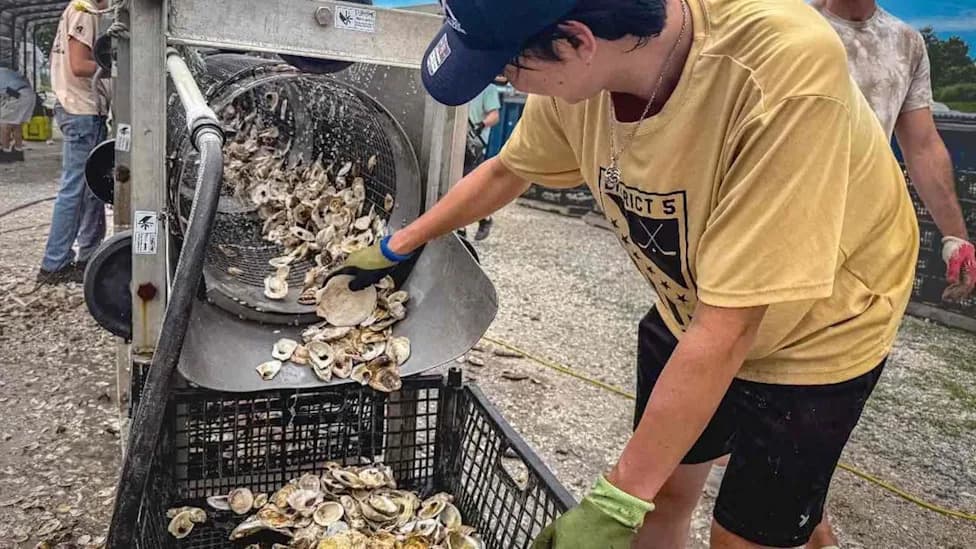
Photo Credit: Billion Oyster Project
A New York nonprofit is transforming used restaurant oyster shells into living reefs that are helping restore New York Harbor, improve water quality, and strengthen coastal resilience.
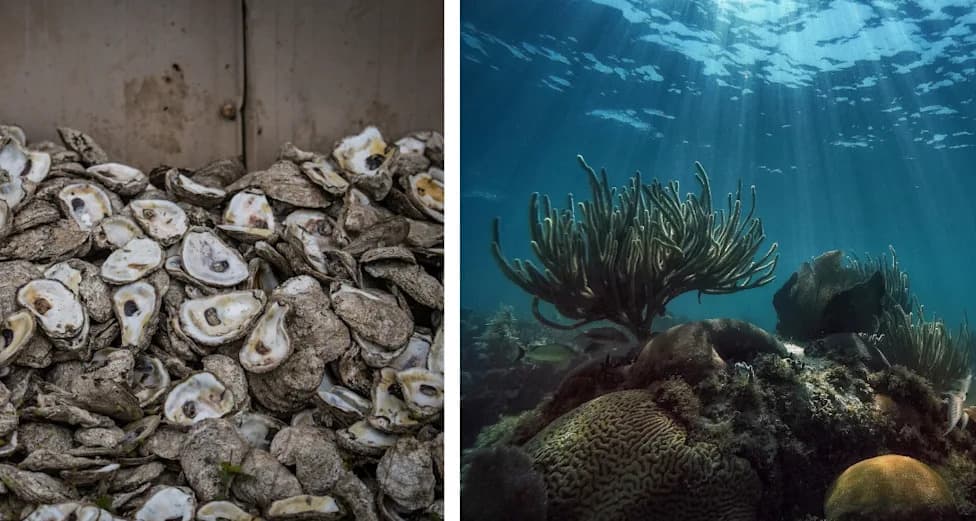
The Billion Oyster Project partners with roughly 75 New York City restaurants to divert shells from landfills and reuse them in reef restoration on Governor's Island and across the harbor. Since its founding in 2008, the organization reports it has rebuilt 19 acres of oyster reef by growing about 200 million live oysters on 3.2 million pounds of recovered shells — roughly one-fifth of its goal to restore 100 acres and reach 1 billion oysters by 2035.
How The Program Works
Restaurants donate cleaned shells, which are cured on land to remove bacteria, invasive species, and disease. After curing, the shells are brought to the project hatchery on the south end of Governor's Island. There, oyster larvae are introduced; they settle on the shells, grow into juveniles, and are later placed into mesh bags and deployed at designated reef sites.
The hatchery can raise up to 10 million baby oysters at a time. When deployed, these young oysters help rebuild reef structure and create habitat for other marine life.
Environmental and Community Benefits
Oysters are a keystone species for estuarine ecosystems. They naturally filter pollutants, improving water clarity and quality, and their reefs help dissipate wave energy, which can reduce local flooding during storms. The project estimates its oysters have already filtered tens of trillions of gallons of harbor water — a large-scale ecosystem service that benefits wildlife and waterfront communities.
"Oysters are what we call a keystone species, meaning if the oysters are thriving in an environment all other biodiversity is thriving in that environment," said Bela Altman, volunteer coordinator for the Billion Oyster Project.
Altman told Reuters that with 100 new reefs the oyster population could refresh the entire water volume of New York Harbor every three days. A growing, sustainable oyster population may also increase supply for the seafood market and could ultimately lower costs for restaurants and diners.
Scaling Circular Solutions
New York's oyster restoration is part of a broader effort to repurpose materials that would otherwise become waste. Similar circular innovations include converting shrimp shells into activated carbon for water cleanup, developing washing-machine microfiber filters to keep microplastics out of waterways, and startups like Genecis turning food waste into biodegradable plastics. Together, these projects illustrate multiple pathways for turning discarded materials into useful infrastructure and products.
Why It Matters: Restoring oyster reefs supports biodiversity, improves water quality, and increases resilience for coastal cities facing stronger storms and rising seas — all while keeping tons of organic waste out of landfills.
Help us improve.