Vanuatu has trimmed but not abandoned a UN draft resolution urging states to act on an ICJ advisory opinion on climate obligations after pressure from the Trump administration and other fossil-fuel producing countries. The original proposal’s call for a formal "loss and damage" registry was dropped, but the revised text still urges compliance with international law and a rapid, just phase-out of fossil fuels to limit warming to 1.5C. Backers say the non-binding resolution could nevertheless help build future international climate law.
Vanuatu Pushes UN Climate Resolution Forward Despite Trump Administration Opposition
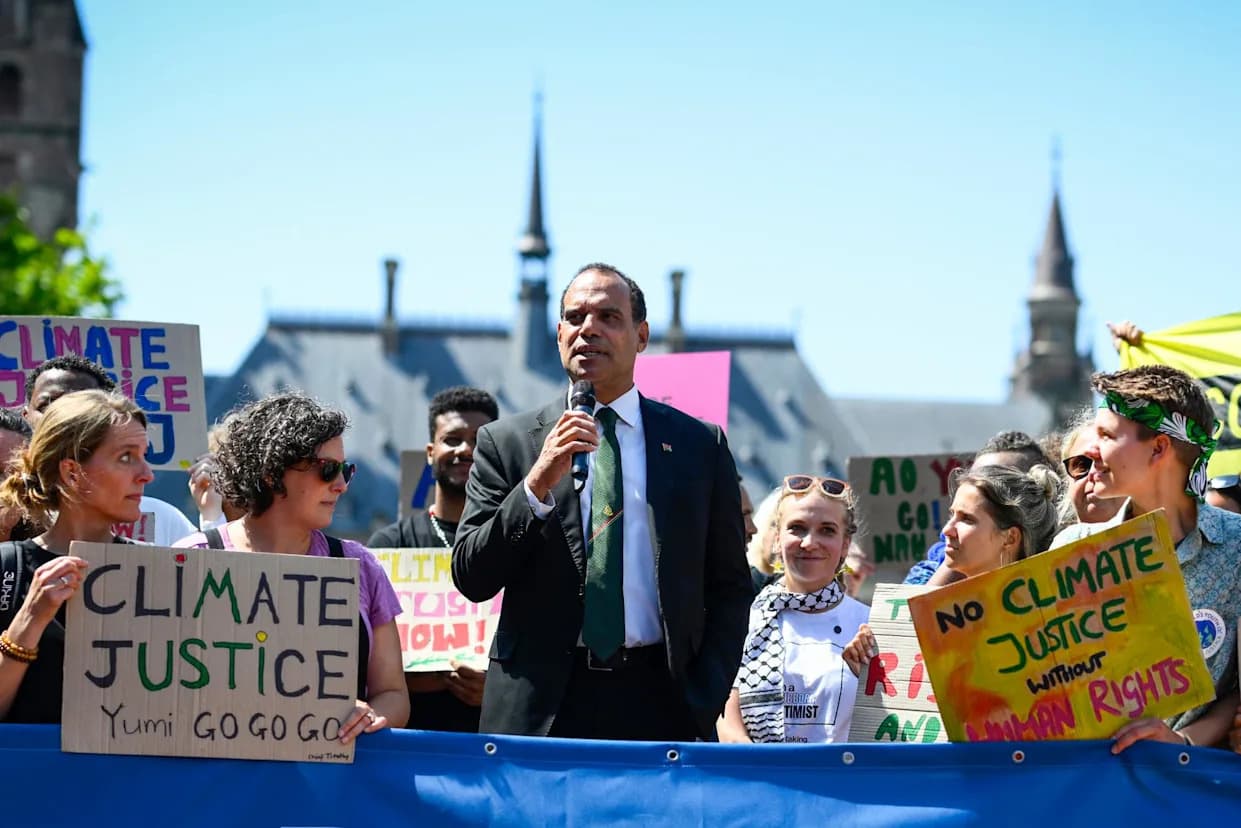
Ralph Regenvanu, Vanuatu's minister for climate change adaption, at a demonstration ahead of an ICJ session on 23 July.Photograph: John Thys/AFP via Getty Images(Photograph: John Thys/AFP via Getty Images)
Vanuatu, the small Pacific island state leading a push at the United Nations, says it has trimmed but will not abandon a draft resolution that urges countries to follow an International Court of Justice (ICJ) advisory opinion linking climate inaction to possible legal responsibilities.
Background
The United States has urged Vanuatu to withdraw the draft resolution. Washington warned in diplomatic guidance that the measure — although non-binding — "could pose a major threat to US industry." The ICJ advisory opinion cited in the draft argued nations have international law obligations to address climate change and suggested legal avenues could be pursued where states fail to act.
What Changed
Faced with opposition from the US and several major fossil-fuel producing states, including Saudi Arabia and Russia, Vanuatu removed a controversial proposal to create a formal registry of "loss and damage" — an accounting of harms from storms, floods and drought — which critics said could expose countries to legal claims.
The revised draft still calls on UN member states to "comply fully with their obligations under international law as they relate to climate change," consistent with the ICJ advisory opinion, and reaffirms the goal of limiting warming to 1.5C above pre-industrial levels through "a rapid, just and quantified phase-out of fossil fuel production and use."
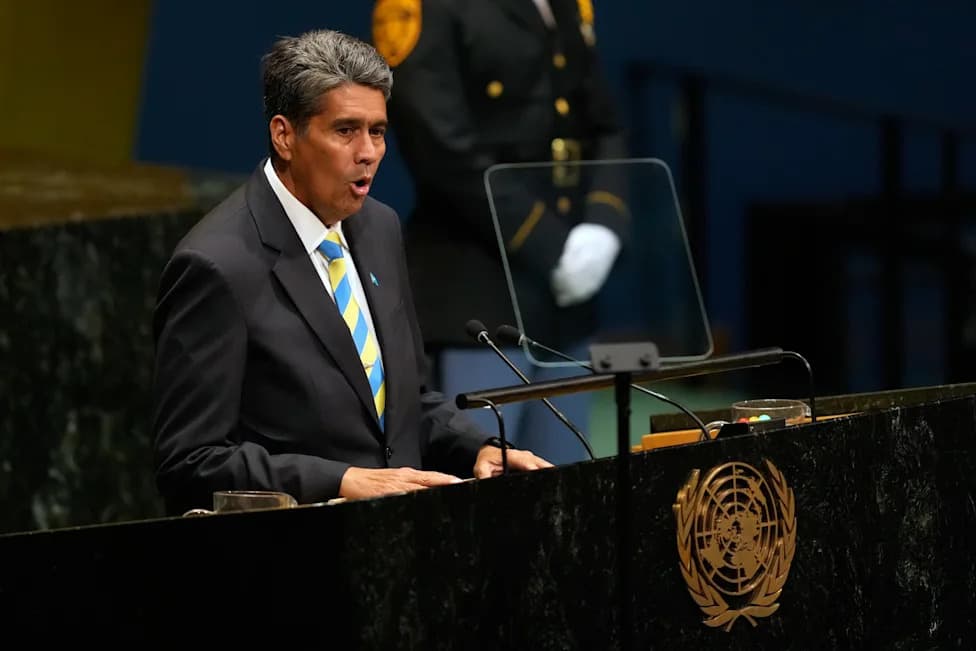
“Having the Trump administration actively intervening in the market to stop the phase-out of fossil fuels is very frustrating — it’s beyond what you’d expect a government to do,” said Ralph Regenvanu, Vanuatu’s minister for climate change adaptation. “It’s going to have a huge harmful effect on the world and future generations.”
Support, Opposition and Stakes
Vanuatu has rallied a coalition of supporters including the Netherlands, Colombia, Barbados, Kenya, Jamaica and the Philippines. But Regenvanu said opponents have been more effective so far and lamented that the European Union "has not been as helpful as we expected."
Experts say the resolution, if adopted, would be largely symbolic but consequential: it could help establish precedents that lawyers and judges reference as international climate norms evolve. "This is the beginning of the world building up a body of law for when the politics are different and the world takes more serious action on climate," said Noah Gordon of the Carnegie Endowment for International Peace.
Why It Matters
For Vanuatu and other island states, the climate crisis is existential. Regenvanu noted a 2015 tropical cyclone that devastated the country and wiped out an estimated 64% of its GDP. Increasingly intense storms, rising seas and other extreme weather events are also inflicting heavy economic and humanitarian costs in many other countries.
US Response
A US State Department spokesperson said Washington had asked Vanuatu to "withdraw this performative resolution that, if adopted, could pose a major threat to US industry." The spokesperson added that the United States did not support seeking the ICJ advisory opinion and had "strong concerns about its conclusions," saying the opinion "does not provide a basis for the demands included in the draft resolution, which could have broader legal and economic impacts."
Outlook
Vanuatu hopes the diluted draft will still secure adoption in a UN vote scheduled for later this month. Even if the Trump administration ignores or opposes the measure, backers argue its symbolic force could contribute to the development of international climate law and keep pressure on major emitters to accelerate the transition away from fossil fuels.
Help us improve.