The Alliance of Small Island States (AOSIS), representing 39 small island and low-lying coastal nations, urged the UN General Assembly not to abandon the 1.5°C warming limit, calling it a legally affirmed obligation. AOSIS said recent science shows an overshoot could be limited and reversed if countries act quickly — including tripling renewables, doubling energy efficiency by 2030 and reaching net-zero by 2050. The bloc demanded climate finance that is accessible, affordable, predictable and responsive, and urged COP31 to fast-track island-led projects through the Global Implementation Accelerator.
Small Island States Tell World Leaders: “Do Not Surrender” the 1.5°C Climate Goal

US President Donald Trump (C) attends a Gulf Cooperation Council (GCC) multilateral meeting alongside (L/R) Iraqi Prime Minister Ali al-Zaidi, Turkey's President Recep Tayyip Erdogan, King Abdullah II of Jordan, Qatar's Emir Sheikh Tamim bin Hamad al-Thani and Syrian President Ahmed al-Sharaa on the sidelines of the 81st United Nations General Assembly in New York (AFP/Getty)
The Alliance of Small Island States (AOSIS), a coalition of 39 small island and low-lying coastal nations, urged world leaders at the United Nations General Assembly in New York not to abandon the 1.5°C global warming limit — describing it as a legally affirmed obligation rather than a mere aspiration.
Anne Rasmussen, AOSIS’s lead climate negotiator, delivered the statement during the UNGA’s 81st session and warned that the latest science shows it is still possible to limit any overshoot of 1.5°C and then bring temperatures back below that threshold if countries act urgently and decisively.
"We absolutely cannot surrender our pursuit of 1.5°C," the statement read, calling for "clear, concrete commitments" to realign global actions with the 1.5°C target.
Rasmussen urged nations to treat escalating climate impacts with the urgency the crisis demands and outlined priority measures: a just transition away from fossil fuels, tripling renewable energy capacity, doubling energy efficiency by 2030, and achieving net-zero emissions by 2050.
Scientific Warnings and Recent Losses
The World Meteorological Organization reported at the launch of the COP31 Action Agenda that the previous two months were the hottest on record and that sea level rise is reaching unprecedented levels. A September UN Environment Programme (UNEP) report warned the world is on a trajectory to cross the 1.5°C threshold within the next few years, though it noted temperatures could be brought back down if governments pursue rapid emissions cuts and large-scale carbon removal.
Rasmussen also cited the Global Tipping Points Report, which indicates ice sheets have been at risk since about 1°C of warming, with a likely tipping point around 1.5°C — reinforcing the stakes for small island and low-lying nations facing sea-level rise and irreversible impacts.
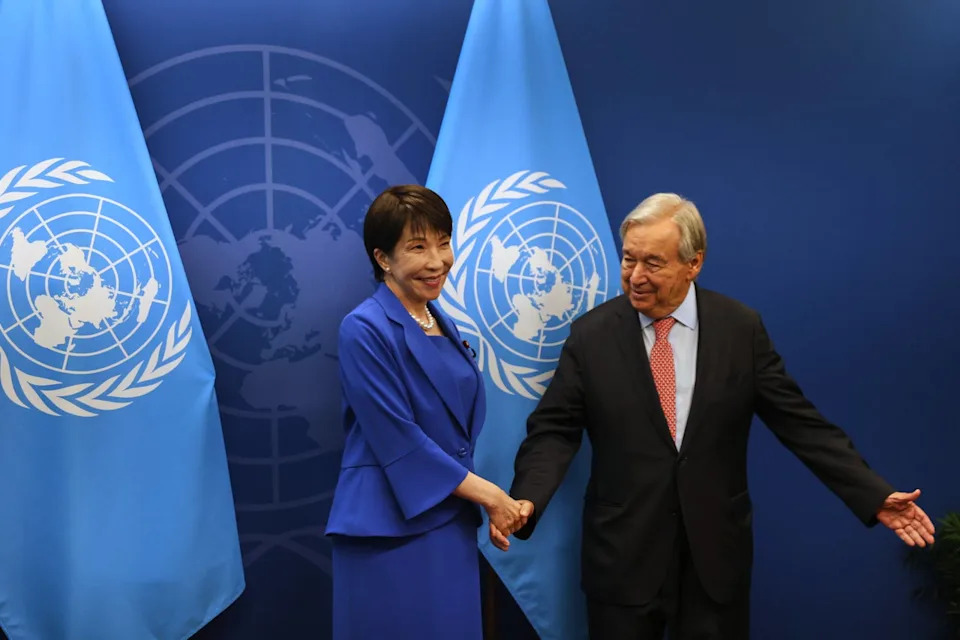
Japan's Prime Minister Sanae Takaichi, left, shakes hands with United Nations Secretary-General Antonio Guterres at United Nations (AP)
Human Impacts and Calls for Finance
Rasmussen highlighted recent climate-driven catastrophes to illustrate immediate risks: Nepal suffered a devastating glacial lake outburst flood in late August that killed and displaced many, and Pacific and Caribbean islands are already grappling with forced relocations, landslides, extreme rainfall, prolonged droughts and heat extremes.
AOSIS demanded that climate finance for small island states become a declared priority. The coalition said funding must be "accessible, affordable, predictable and responsive" to the specific vulnerabilities of island nations. Nepal is reportedly awaiting $20 million in relief from the UN's new loss-and-damage fund following the glacial lake disaster.
The bloc also urged the incoming COP31 presidency to commit to selecting and accelerating state-led island projects through the Global Implementation Accelerator, a mechanism designed to fast-track country-driven climate solutions.
Global Accountability
Beyond AOSIS, UN Secretary-General António Guterres appealed to major emitters to do more: "Those who polluted the most — and profited the most — must do far more to repair the damage they caused. Polluters must pay," he told the General Assembly, urging sustained pressure from leaders, cities, civil society and citizens.
As nations prepare for COP31, AOSIS’s intervention underscores the urgent, concrete actions and predictable finance small island states say are essential to avoid the most catastrophic consequences of climate change.
Help us improve.