KM3NeT recorded an exceptionally energetic neutrino in early 2023 with an estimated energy up to 220 quadrillion eV (2.2×10¹⁷ eV), far above previous neutrino observations. A paper accepted by Physical Review Letters proposes the particle originated from an exploding primordial black hole (PBH), specifically a speculative 'quasi-extremal' PBH carrying a hypothetical dark charge that couples to a heavy 'dark electron.' The idea could explain why other detectors like IceCube saw no signal, but it remains unproven. If confirmed, such explosions could reveal new particles and might have implications for dark matter, though independent verification is required.
Impossibly Energetic 'Ghost Particle' May Have Come From An Exploding Primordial Black Hole
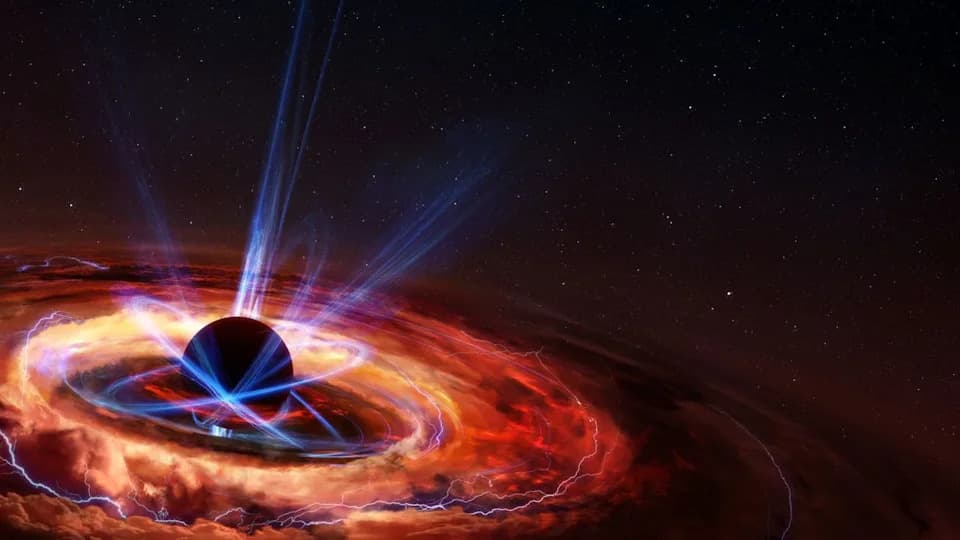
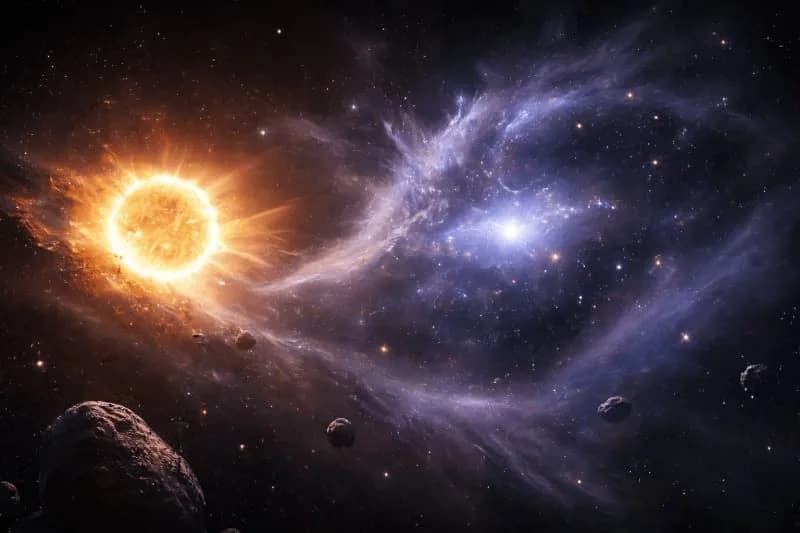
A new paper suggests that an impossibly energetic neutrino, that slammed into Earth in 2023, may have been unleashed by an exploding black hole. | Credit: Illustration by Tobias Roetsch for All About Space magazine/Future Publishing via Getty Images
In early 2023, the Cubic Kilometre Neutrino Telescope (KM3NeT), an array of sensors anchored to the floor of the Mediterranean Sea, recorded an extraordinarily energetic neutrino — a nearly massless, weakly interacting particle sometimes called a "ghost particle." What made this detection remarkable was the estimated energy: up to 220 quadrillion electron volts (2.2×10¹⁷ eV), at least 100 times greater than any previously observed neutrino and roughly 100,000 times the energies produced at the Large Hadron Collider.
Routine Explanations And A More Exotic Hypothesis
Scientists first considered conventional sources. The neutrino might have been produced when a high-energy cosmic ray struck Earth's atmosphere and triggered a cascade of secondary particles. But the magnitude of this event motivated researchers to explore less ordinary origins.
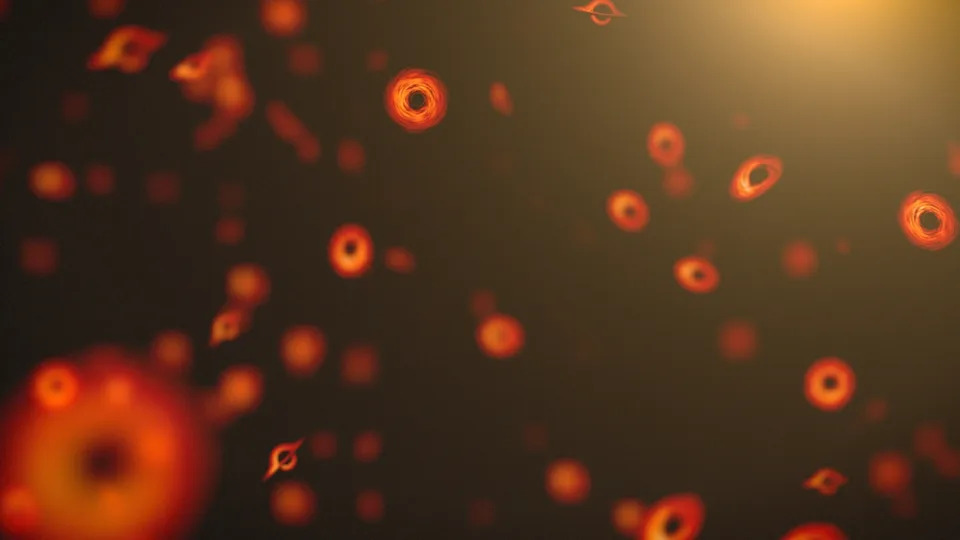
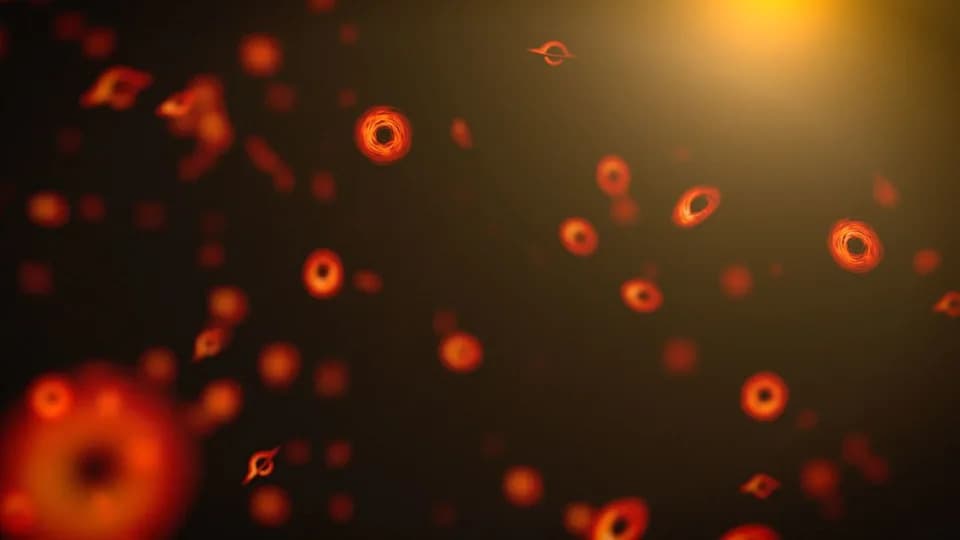
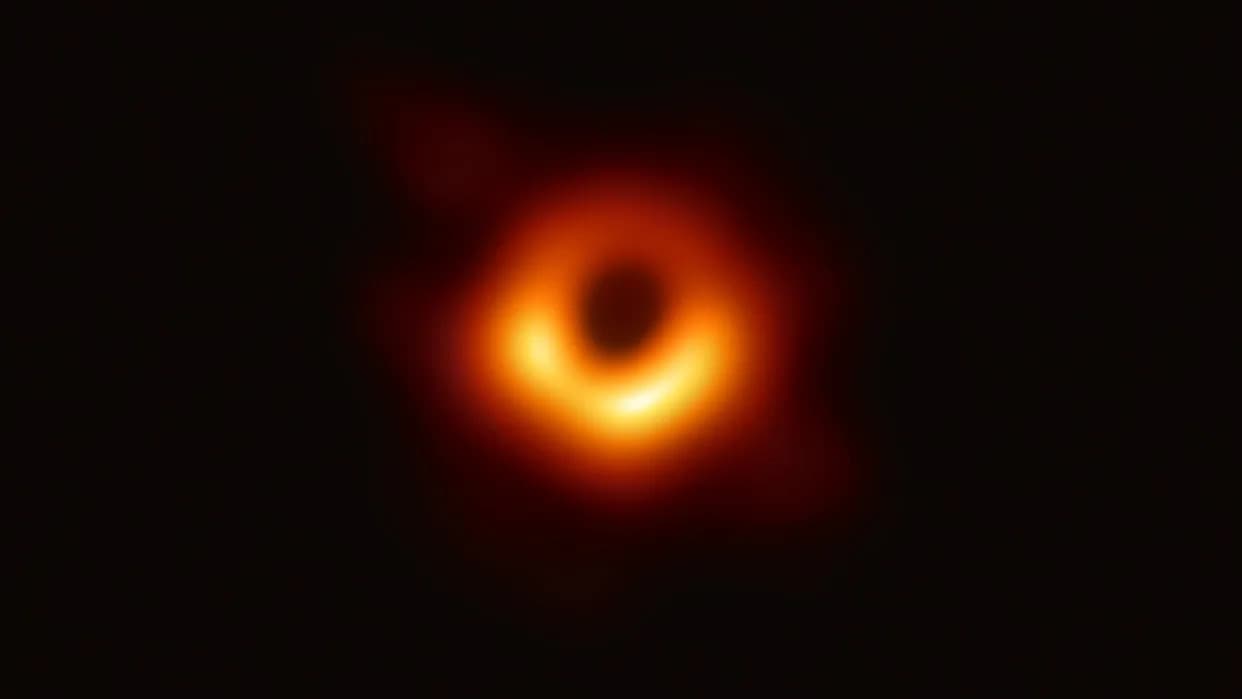
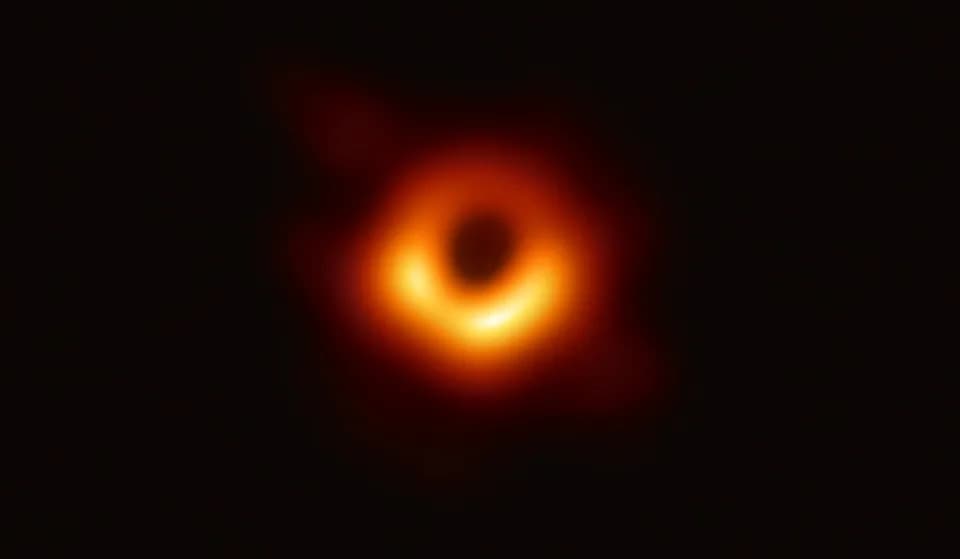
Some scientists believe that countless primordial black holes permeate the universe. These tiny singularities, which have never been directly observed, likely date back to the first moments after the Big Bang. | Credit: NASA’s Goddard Space Flight Center
Primordial Black Hole Hypothesis
In a paper accepted by Physical Review Letters, one research team proposes the particle was emitted by an exploding primordial black hole (PBH) — a hypothetical class of very small black holes that could have formed in the first moments after the Big Bang. PBHs were popularized in the 1970s by Stephen Hawking, who also showed that black holes should emit Hawking radiation and can evaporate over time; very small black holes could end their lives in a dramatic burst of particles.
'The lighter a black hole is, the hotter it should be and the more particles it will emit,' said Andrea Thamm, a theoretical physicist at the University of Massachusetts Amherst and co-author of the study. 'As PBHs evaporate, they become ever lighter, and so hotter, emitting even more radiation in a runaway process until explosion.'
Quasi-Extremal PBHs And A Dark Sector
The team focuses on a specific variant called a "quasi-extremal" PBH that carries a speculative 'dark charge' linked to a heavy, hypothesized particle sometimes termed a 'dark electron.' According to the authors, this dark-sector coupling would alter the pattern of emitted particles and could make explosions harder to detect with conventional neutrino observatories — possibly explaining why IceCube and other detectors reported no concurrent signal.
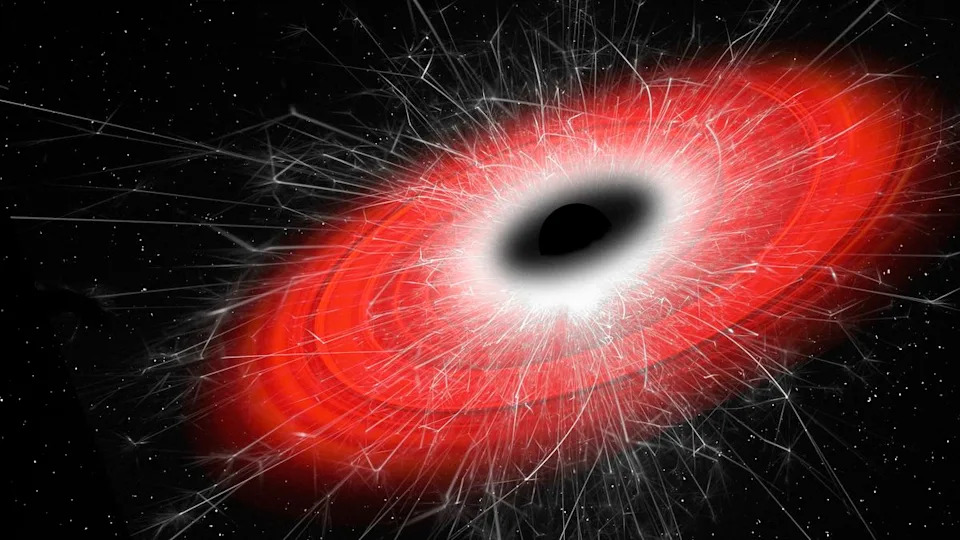
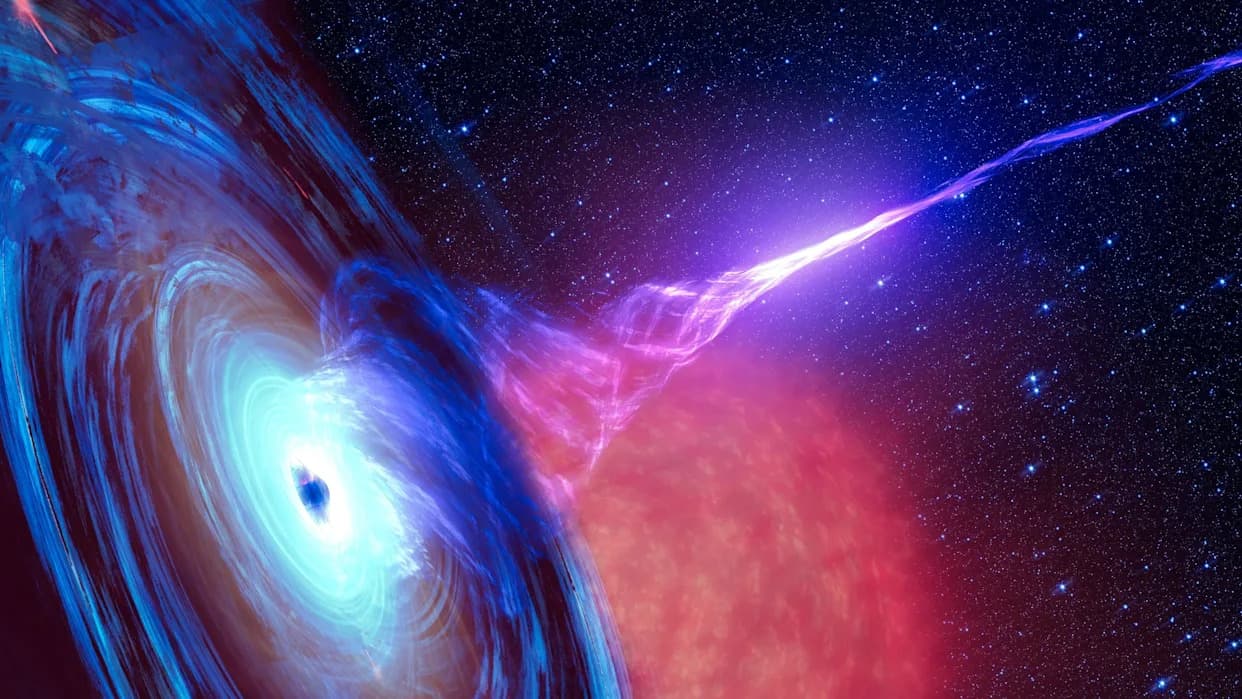
PBHs could theoretically explode due to their high levels of Hawking Radiation, which leaks from these mini singularities as they "evaporate" away. | Credit: VICTOR de SCHWANBERG/SCIENCE PHOTO LIBRARY via Getty Images
The paper argues that dark-charge PBHs would produce emission signatures different from simpler PBH models, and that some past, weaker neutrino detections might be partial or obscured instances of similar events.
Why This Remains Speculative
Important caveats apply. Regular primordial black holes have never been directly observed, and the quasi-extremal, darkly charged variant is a theoretical extension rather than an established object. The KM3NeT event is intriguing but does not by itself confirm this model.
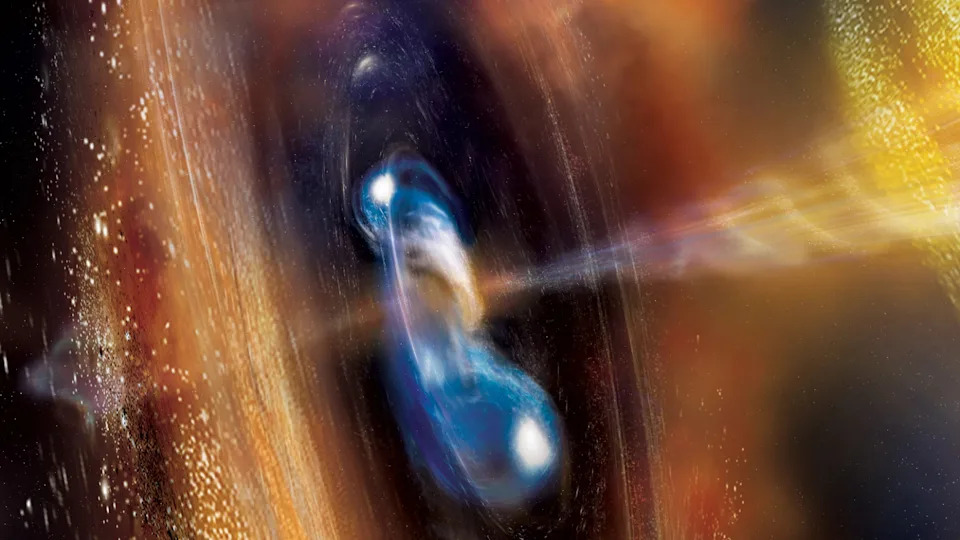
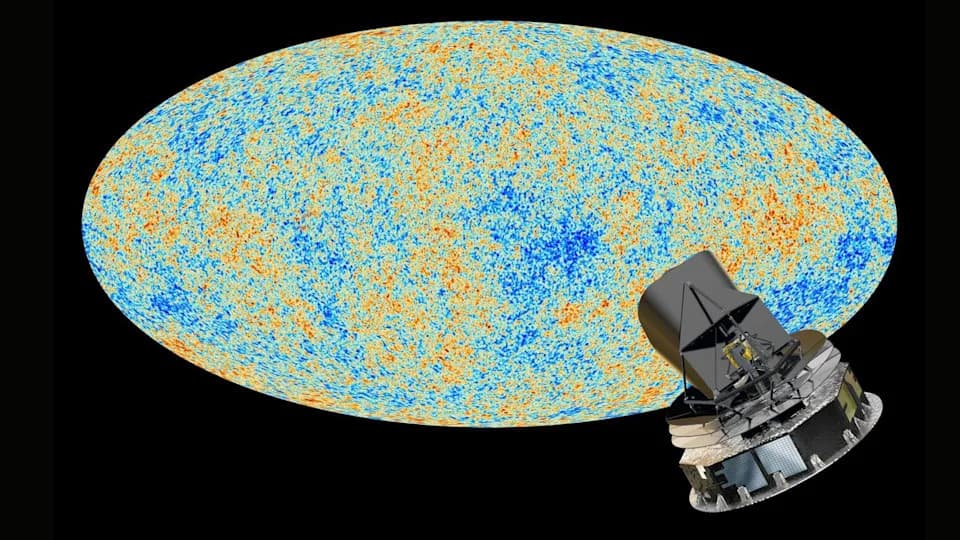
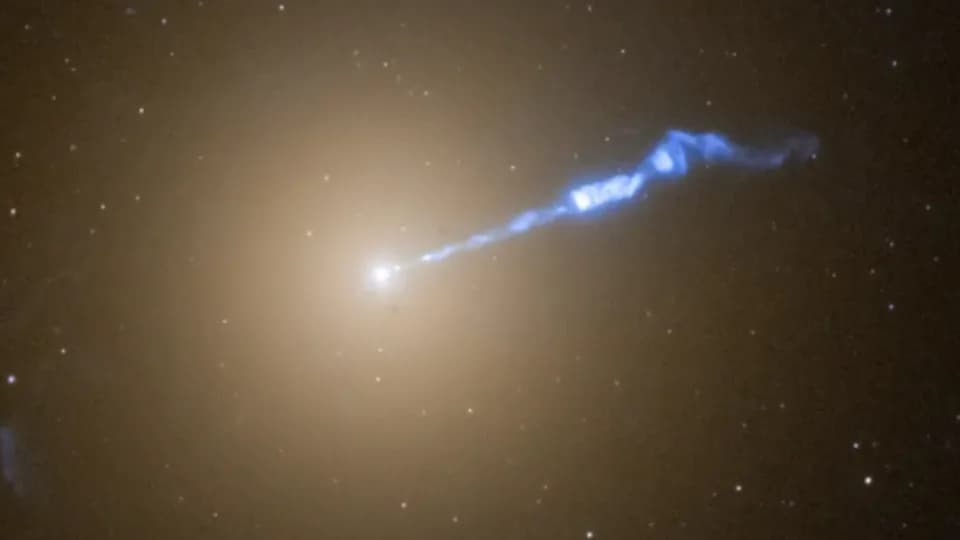
The researchers predict that exploding PBHs could include a definitive catalog of all subatomic particles in existence. | Credit: A. Simonnet (Sonoma State Univ.) and NASA’s Goddard Space Flight Center
'This incredible event would provide a new window on the universe and help us explain this otherwise unexplainable phenomenon,' said Michael Baker, lead author of the study and a theoretical physicist at UMass Amherst.
Potential Implications If Confirmed
If such explosions are real, they could be transformative. The authors suggest a final PBH burst might release a broad spectrum of particles — from known particles like the Higgs boson to hypothetical entities — revealing new physics. The team also notes that quasi-extremal PBHs could, in principle, account for some or all of the universe's dark matter, though they emphasize this is speculative and distinct from the notion of dark charge.
What Comes Next
The researchers estimate, in related work, roughly a 90% chance of observing a quasi-extremal PBH explosion by 2035 if their model is correct. The global network of neutrino detectors and multi-messenger observatories will be essential to corroborate any future candidate events. Until then, the PBH explanation remains an intriguing hypothesis that requires independent detections and further theoretical and experimental scrutiny.
Help us improve.