The bipartisan U.S.-China Economic and Security Review Commission warns that Chinese-funded runways, ports and other Pacific Island projects—though labeled civilian—are often "dual use" and could be repurposed for military access. Commissioners Randall Schriver and Michael Kuiken highlighted a pattern of "debt diplomacy" that creates leverage for Beijing and cited undersea cable attacks and potential aircraft deployments as key warning signs. They urged greater intelligence transparency, planned hearings on undersea infrastructure, and recommended a multilayered U.S. response including Coast Guard cooperation and a Pacific Island Security Initiative.
U.S. Commission Warns Chinese-Funded Pacific Projects Could Be Repurposed for Military Use
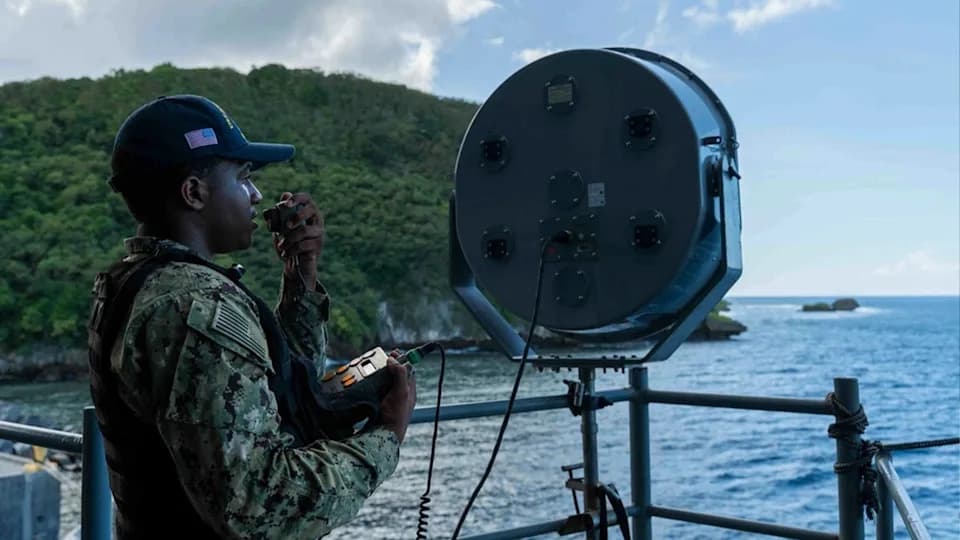
Image shows an LRAD being tested in Guam, December 2025.(Fox News)
Senior members of the bipartisan U.S.-China Economic and Security Review Commission told Fox News Digital that infrastructure financed by the People’s Republic of China across Pacific Island nations—while presented as civilian projects—could be adapted in the future to provide Beijing with military access.
Dual-Use Infrastructure and Strategic Concerns
Commission Chair Randall Schriver said runways, ports and other facilities funded by China are often "dual use," fitting into a broader strategic pattern that mixes economic investment with long-term security aims. "When you see a broader trend of militarization of the region… you see a lot of activities that suggest there are at least some security and military-related interests involved," Schriver said. "Even if it’s declared for civilian use… it is by its very character dual-use and could be used for military purposes."

Chinese laborers work at a construction site. June 22, 2005.
Debt, Leverage and a Recurring Playbook
Vice Chair Michael Kuiken described a recurring pattern in which infrastructure financing is paired with financial leverage. "There’s a cycle of debt diplomacy here," Kuiken said. "China loads these islands up with debt and then uses their position of weakness to gain access… to build runways, to do things with respect to ports." He called it a "flywheel of debt diplomacy," noting similar tactics have been used across the region, from Palau and Micronesia to the Solomon Islands.
U.S. Response and Strategic Timing
Both commissioners acknowledged that U.S. recognition of the security implications lagged behind China’s expanding presence. Schriver answered "In a word, yes" when asked whether Washington reacted too slowly, highlighting that Chinese projects advanced near Guam even as the U.S. invested in major military infrastructure there. He emphasized Guam’s central role in U.S. logistics and combat operations and warned that proximity matters.

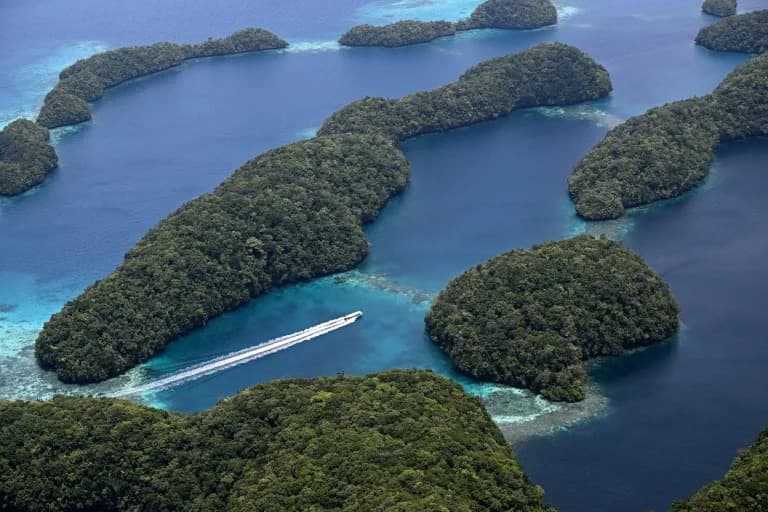
Palau, an island in the Philippine Sea, Northern Pacific Ocean, Oct. 6, 2015.
Warning Signs: Cables, Aircraft and Access
Schriver identified several indicators that civilian projects could shift toward operational military use. He singled out undersea cable cutting as a provocative practice potentially tied to military contingencies and warned that visible deployments of Chinese military aircraft to Pacific facilities would represent a major escalation—mirroring patterns previously seen in the South China Sea.
Recommendations: Transparency, Cooperation, and a Layered Strategy
Kuiken urged Congress to increase scrutiny and transparency, recommending that lawmakers request imagery and intelligence reporting to "raise the alarm, shine a light on it and expose the activities." The commission plans a future hearing focused on undersea infrastructure and the security risks posed by attacks on data cables.
The commission’s proposed response includes expanded U.S. Coast Guard cooperation, broader support to strengthen resilience in Pacific Island nations, and a "Pacific Island Security Initiative" combining economic assistance, law enforcement partnerships and defense engagement. Kuiken described the approach as "a layered cake"—civilian, law enforcement, and military efforts layered together to counter influence effectively.
Bottom line: The commission urges heightened oversight and a coordinated, multidisciplinary U.S. strategy to ensure China’s Pacific investments remain civilian and do not become strategic military footholds.
Help us improve.