Researchers using MEG and machine-learning found that different meditation techniques produce distinct neural states: Samatha (focused attention) created stable, concentrated activity, while Vipassana (open awareness) moved brain dynamics closer to a hypothesized optimal "critical" state. The study of 12 experienced monks also reported decreased gamma oscillations and suggested that long-term practice may make resting brain activity more meditative. However, the small, homogeneous sample and reports of potential adverse effects mean further research is needed to confirm and generalize these findings.
Meditation Can Reshape Your Brain: Study Finds Focused and Open Practices Produce Distinct Neural States
Meditation Can Reshape Your Brain Activity, Study Reveals
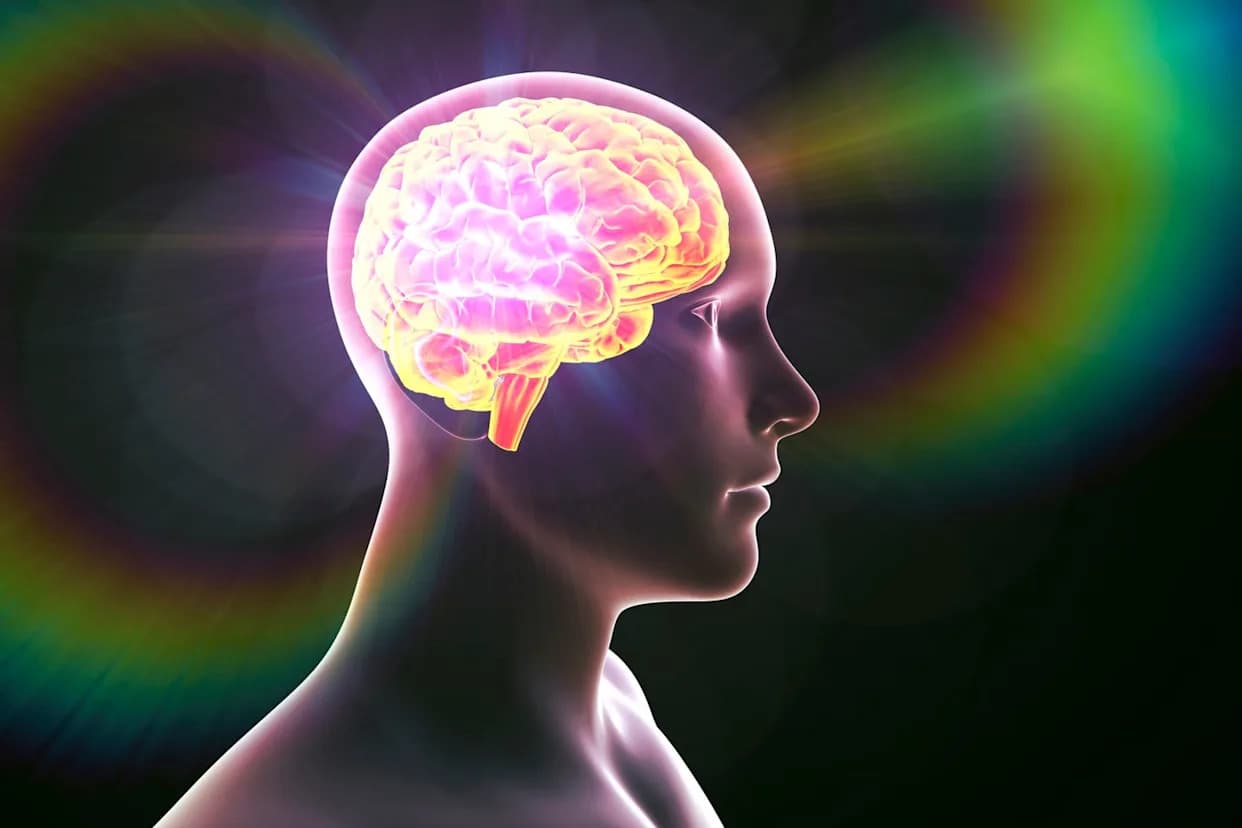
Meditation is widely known for its calming effects, but new research suggests it can also reorganize brain dynamics and strengthen neural connections — in some ways resembling neural changes reported after psychedelic experiences.
Led by neurophysiologist Annalisa Pascarella at the Italian National Research Council, the study combined high-resolution magnetoencephalography (MEG) with machine-learning analyses to examine how different meditation practices alter brain activity and push neural systems toward an optimal balance between order and chaos, a state researchers call brain criticality.
Who Was Studied and How
The team recorded MEG signals from 12 professional male meditators (ages 25–58) from the Santacittarama monastery near Rome. On average, participants had logged more than 15,000 hours of meditation practice and belonged to the Thai Forest tradition of Theravada Buddhism. MEG measures the magnetic fields generated by neuronal electrical activity, allowing millisecond-resolution tracking of whole-brain dynamics.
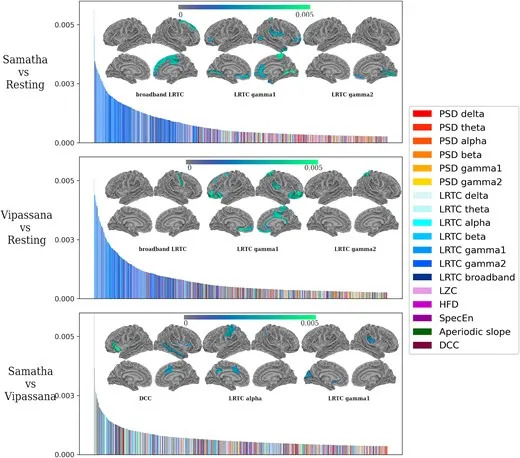
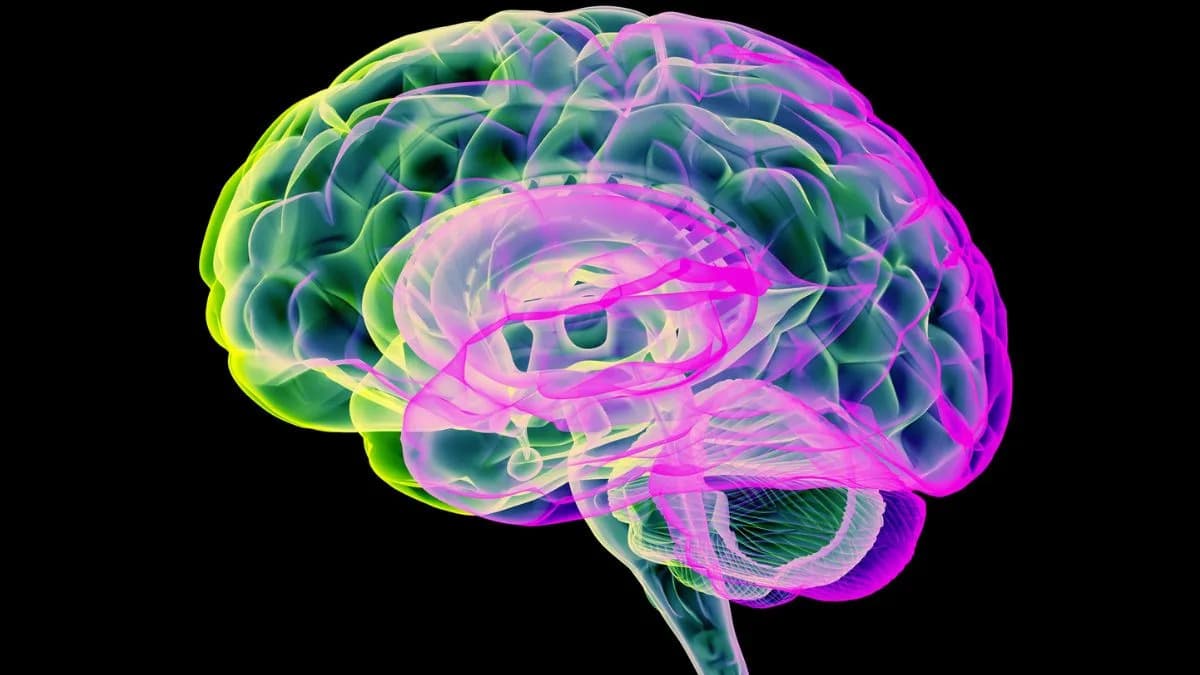
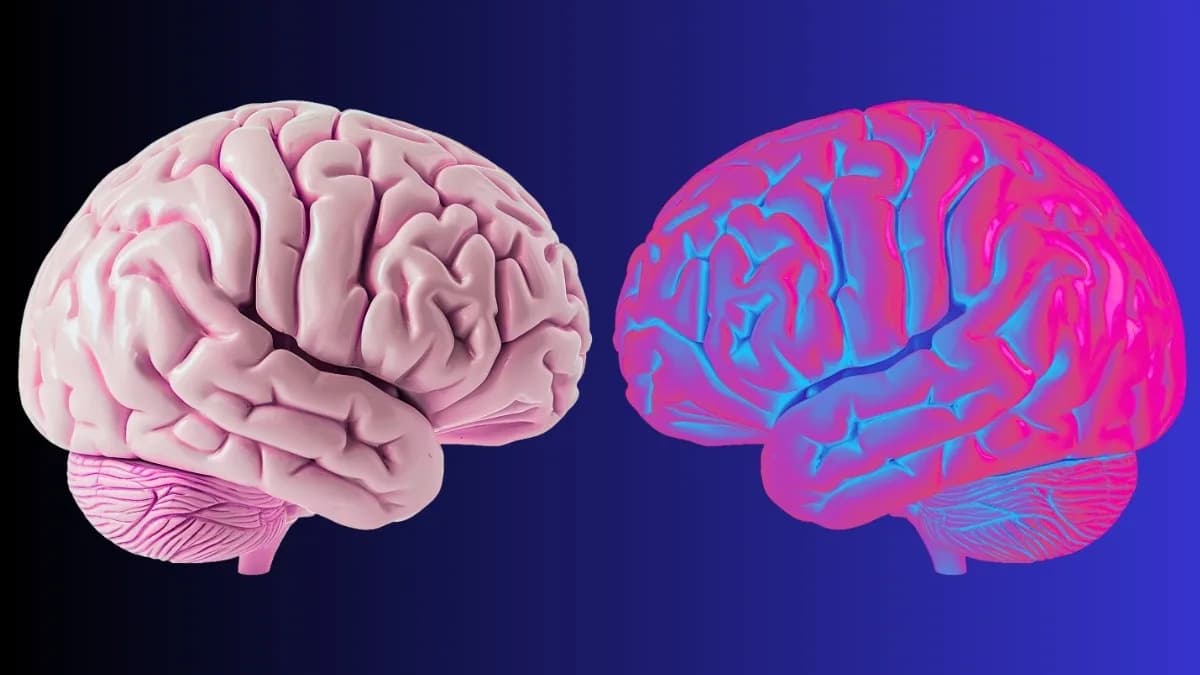
Brain activity comparisons across different meditative methods and during rest, showing the spectral power (red to yellow) of different frequency bands, and features associated with neural complexity and criticality (in blue, violet, green). (Pascarella et al.,Neuroscience ofConsciousness, 2025)
Meditation Techniques Compared
Researchers compared two classical practices: Samatha, a focused-attention technique that narrows attention to a single object (for example, the breath), and Vipassana, an open-awareness practice that cultivates nonjudgmental observation of sensations, thoughts and emotions. According to Karim Jerbi, senior author and neuroscientist at the University of Montreal, "With Samatha, you narrow your field of attention, somewhat like narrowing the beam of a flashlight; with Vipassana, on the contrary, you widen the beam."
Main Findings
Analysis of the MEG data revealed distinct neural signatures for the two practices. Samatha produced more focused, stable brain states that engaged sensory and attentional networks, supporting deep concentration. Vipassana moved brain dynamics closer to the hypothesized critical regime, characterized by an optimal trade-off between stability and flexibility.
"At the critical point, neural networks are stable enough to transmit information reliably, yet flexible enough to adjust quickly to new situations," Jerbi explains. "This balance optimizes the brain's processing, learning and response capabilities."
Unexpectedly, the researchers observed a reduction in gamma oscillations — a high-frequency rhythm often linked to sensory processing and attention — during meditation. Previous studies sometimes reported gamma increases; the authors suggest their advanced signal-processing and machine-learning methods may have isolated different components of meditative brain activity.

Subscribe to ScienceAlert's free fact-checked newsletter
Experience, Limitations and Risks
More experienced meditators in the sample showed smaller differences between meditative and resting states, suggesting that long-term practice can make baseline brain dynamics more meditative-like. However, the study has limitations: the sample was small, homogeneous (all male, from a single tradition), and cross-sectional, so findings may not generalize and cannot establish causation.
The authors and prior literature also note possible adverse effects in some practitioners, including increased anxiety, depression, or psychotic-like experiences. These events are likely underreported and underscore the need for careful guidance and further research into who benefits most from different practices and when risks may arise.
Although the results offer refined, high-resolution insight into how meditation can shape brain activity, the mechanisms and long-term implications remain incompletely understood. The work appears in the journal Neuroscience of Consciousness.
Help us improve.