Immigrant‑led organizations, including Seattle’s WAISN and several Maryland coalitions, have publicly asked predominantly White rapid‑response allies to stop using whistles at anti‑ICE actions, citing concerns about fear, escalation, and a "White Savior" dynamic. Some rapid responders defend whistles as an effective tool to alert communities and disrupt enforcement. The disagreement reveals deeper debates about who sets tactics in solidarity work and how to balance immediate intervention with community safety and trust.
Whistles Ignite Rift Between Immigrant‑Led Groups and White Rapid Responders in Anti‑ICE Movement

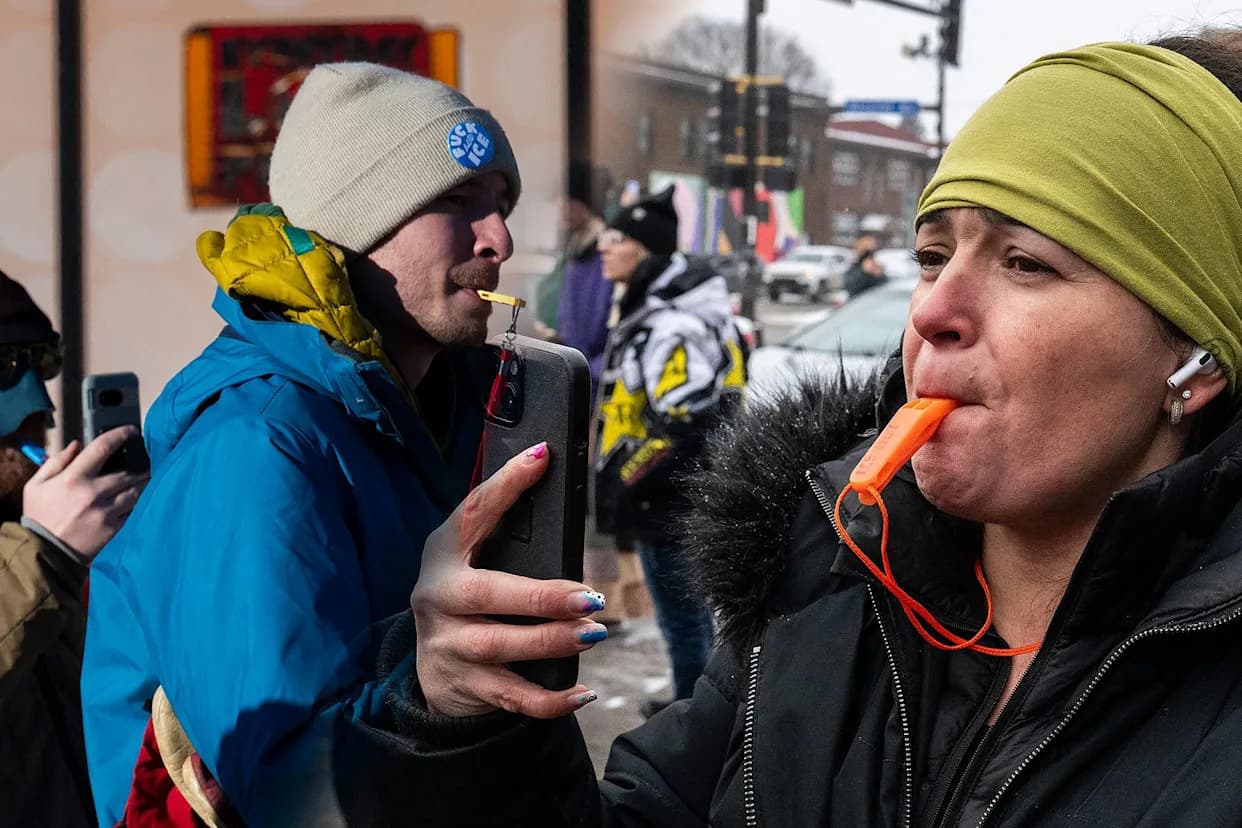
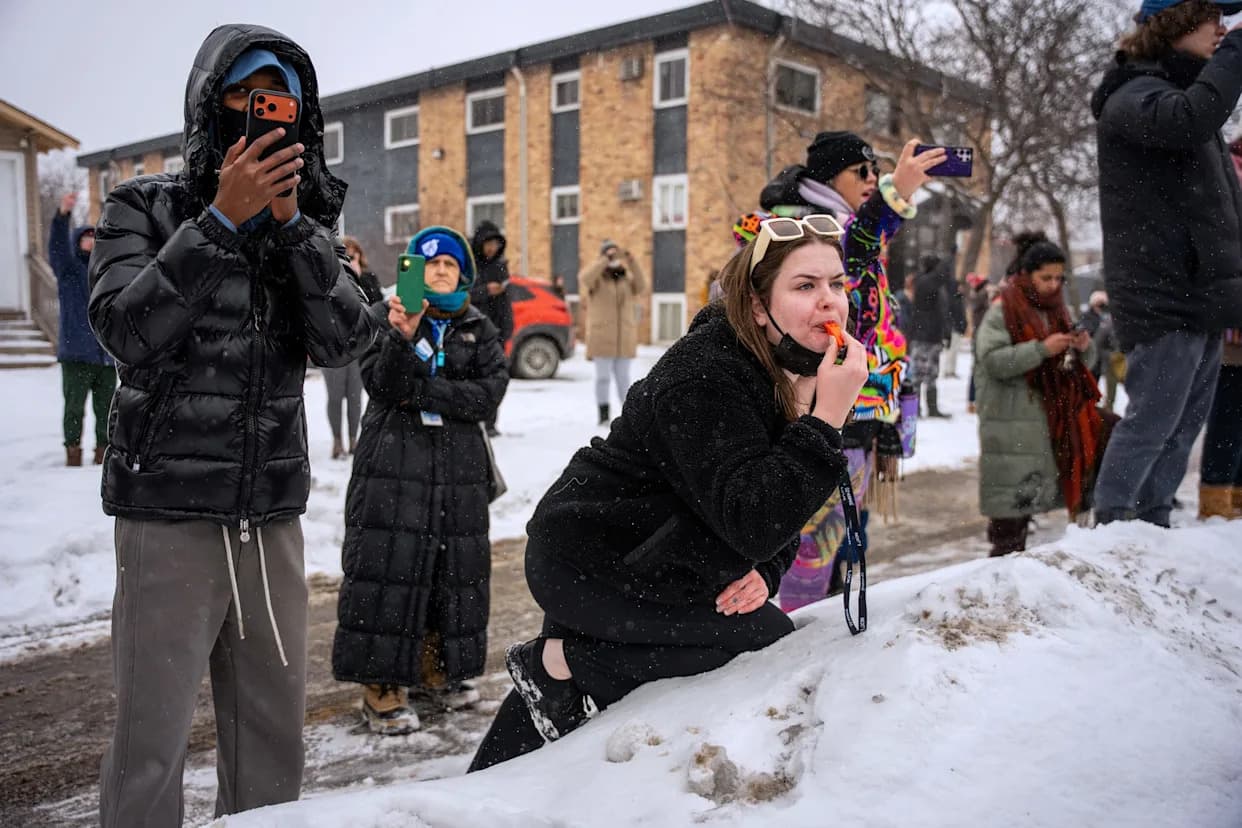
Anti-ICE "rapid responders" use whistles to warn residents as federal immigration agents raid a house on Jan. 13, 2026 in Minneapolis, Minn.(Getty Images)
A heated debate over the use of whistles during anti‑ICE interventions has opened a sharp divide between immigrant‑led organizations and predominantly White rapid‑response networks that have adopted whistle‑blowing as a common tactic.
What Happened
Seattle’s Washington Immigrant Solidarity Network (WAISN) publicly urged allies to stop using whistles during rapid‑response actions, saying the tactic can increase fear, draw unwanted attention, interfere with coordinated efforts, and reproduce a harmful "White Savior" dynamic. The guidance, published in an Instagram post titled "WHY WAISN RAPID RESPONSE DOES NOT USE WHISTLES," emphasizes care, nonviolence and centering the well‑being of people most vulnerable to immigration enforcement.
Internal Signal chat messages reviewed by reporters show the guidance provoked pushback from some rapid‑response volunteers. In a Seattle chat labeled "WA Whistles," one participant wrote, "We believe in whistles, people want whistles. Nothing change [sic] no matter what WAISN says." Other messages in the chats included dismissive and critical language directed at immigrant‑led nonprofits.

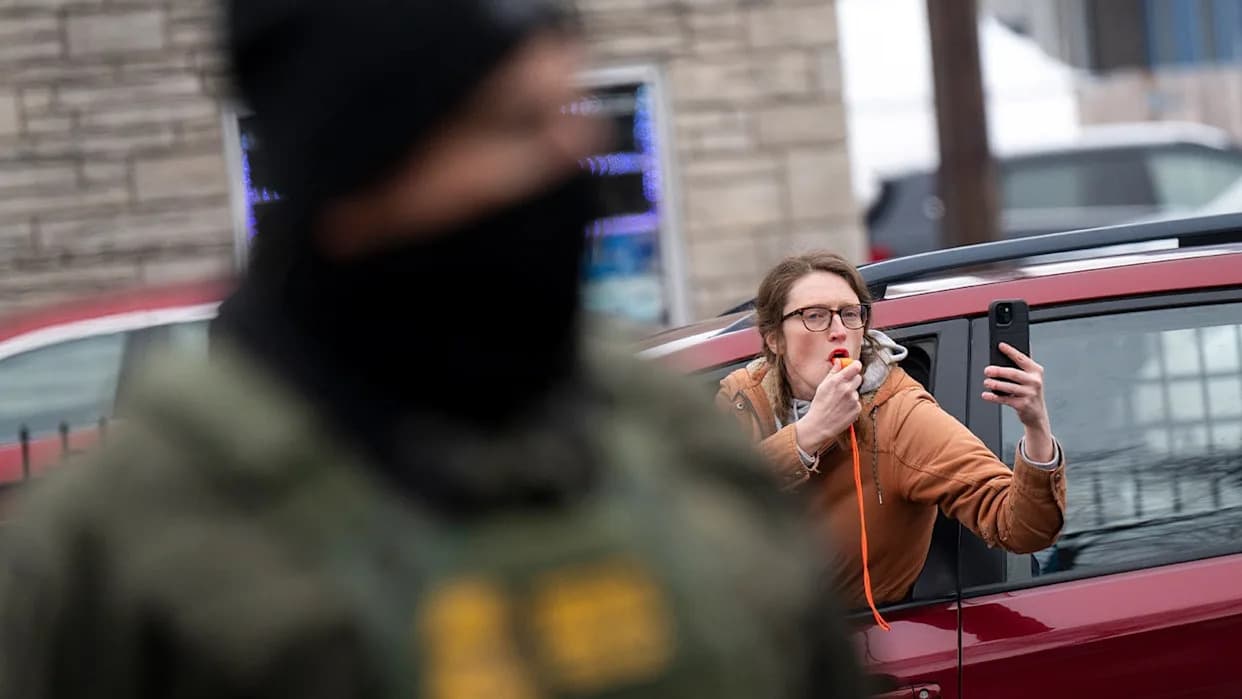
A woman blows her whistle at US Border Patrol agents at a gas station in Minneapolis, Minn. on Jan. 21, 2026.
Local Responses and Shifts
Some groups heeded the immigrant‑led guidance. Snohomish County Indivisible announced it would "pause distribution of whistle kits" and publicly warned volunteers to avoid centering themselves as rescuers. Several Maryland immigrant coalitions issued a similar directive after consulting more than 120 community members; they advised "white allies" not to treat rapid response as a moment to assume authority or play a heroic role.
Those immigrant‑led groups list multiple concerns: whistles can escalate interactions with enforcement agents, make it harder to document what happens, increase the risk of aggression toward bystanders or the detained person, create confusion—particularly for children—and contribute to noise exposure in Black and Brown neighborhoods already facing disproportionate health impacts from chronic noise.
Defenders Of Whistles
At the same time, several predominantly White rapid‑response networks and individuals maintain that whistles are effective: they alert neighbors, disrupt enforcement actions, and can help prevent detentions. Groups and activists who make and distribute whistles—some producing them on 3‑D printers—have publicly defended the tool, with one collective posting, "WHISTLES WORK," and calling them "a call to courage and a decision to care out loud."
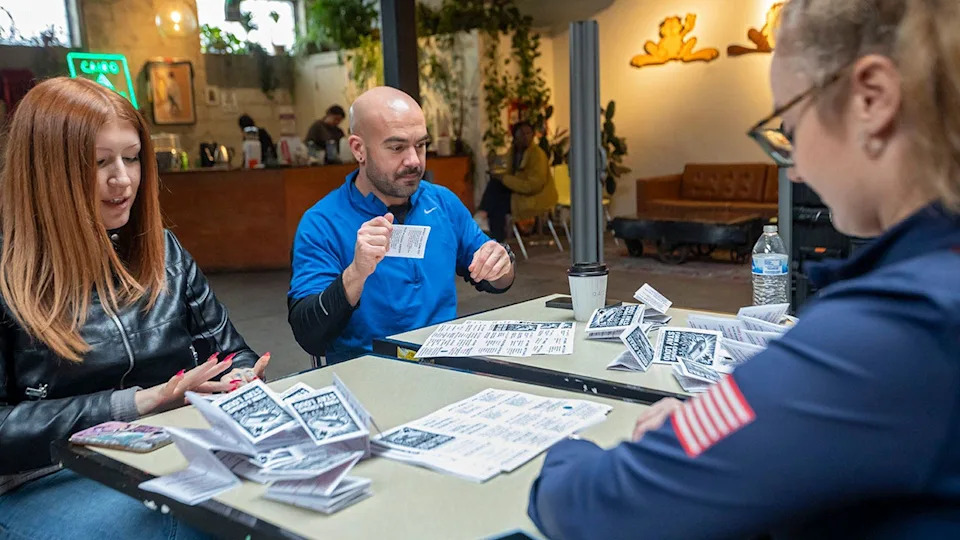
Detroit, Michigan, Volunteers with the Detroit Peoples Assembly put together whistle kits. The whistles are designed to alert others in the community when immigration agents are nearby. These volunteers are preparing a bilingual sheet of tips for dealing with immigration agents.
Broader Political And Ideological Context
The debate has also highlighted wider ideological tensions. Organizations on the left, including The People’s Forum, the Party for Socialism and Liberation, and others, have promoted whistle tactics as part of more confrontational strategies. Reporting has linked some of these groups to funding or support networks that critics say have international ties; advocates and critics disagree on the significance of those connections.
WAISN: "We show up with care and accountability, not noise or panic."
WAISN emphasized it will follow the direction of organizations with established trust and experience in rapid response work and that community consultation informed its stance. Rapid‑response volunteers who oppose the ban say that, in their view, the tactic can avert harm in urgent moments.
What This Means
The disagreement underscores a central question for solidarity work: who gets to set tactics and how should allies show up—especially when actions carry risks for the people directly affected? Both sides frame their approach as protecting vulnerable people, but they prioritize different tradeoffs between immediate interruption of enforcement and minimizing broader community harm and trauma.
The dispute remains unresolved in many places. Some rapid‑response groups have paused certain activities, while others continue using whistles. The conversation has prompted renewed attention to listening to impacted communities, clarifying roles for allies, and weighing the short‑term benefits of disruptive tactics against potential long‑term harms.
Help us improve.