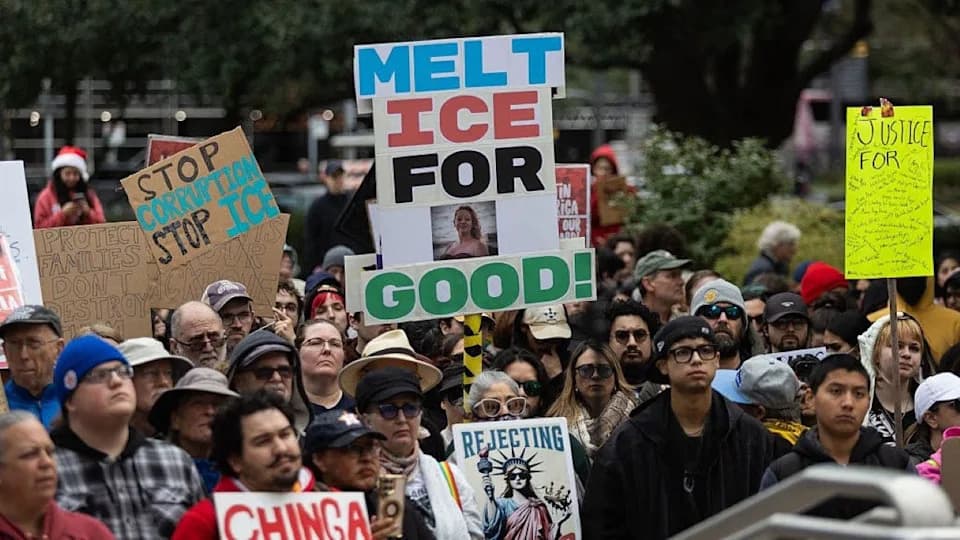
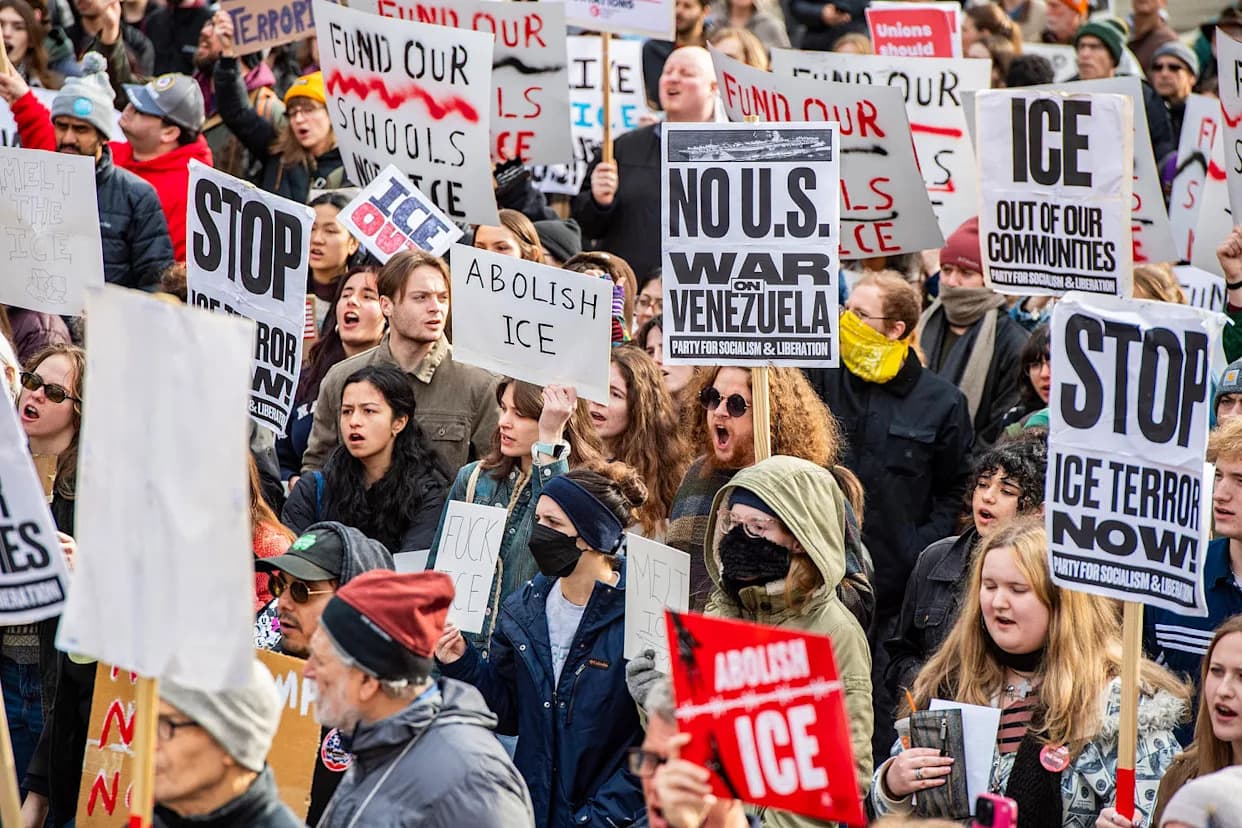
Small, rapid-response groups called Visibility Brigades have staged hundreds of overpass protests across the U.S., responding to events such as the killing of ICE observer Renee Nicole Goodin. These local actions prioritise short, high-visibility messages aimed at commuters and rely on distributed organising, toolkits and platforms like Mobilize.us. Organisers cite social-proof dynamics and Erica Chenoweth's 3.5% theory to explain how sustained local visibility can spur wider political change.
Hyperlocal, Highly Visible: How Overpass Protests Are Amplifying Resistance in the Trump 2.0 Era
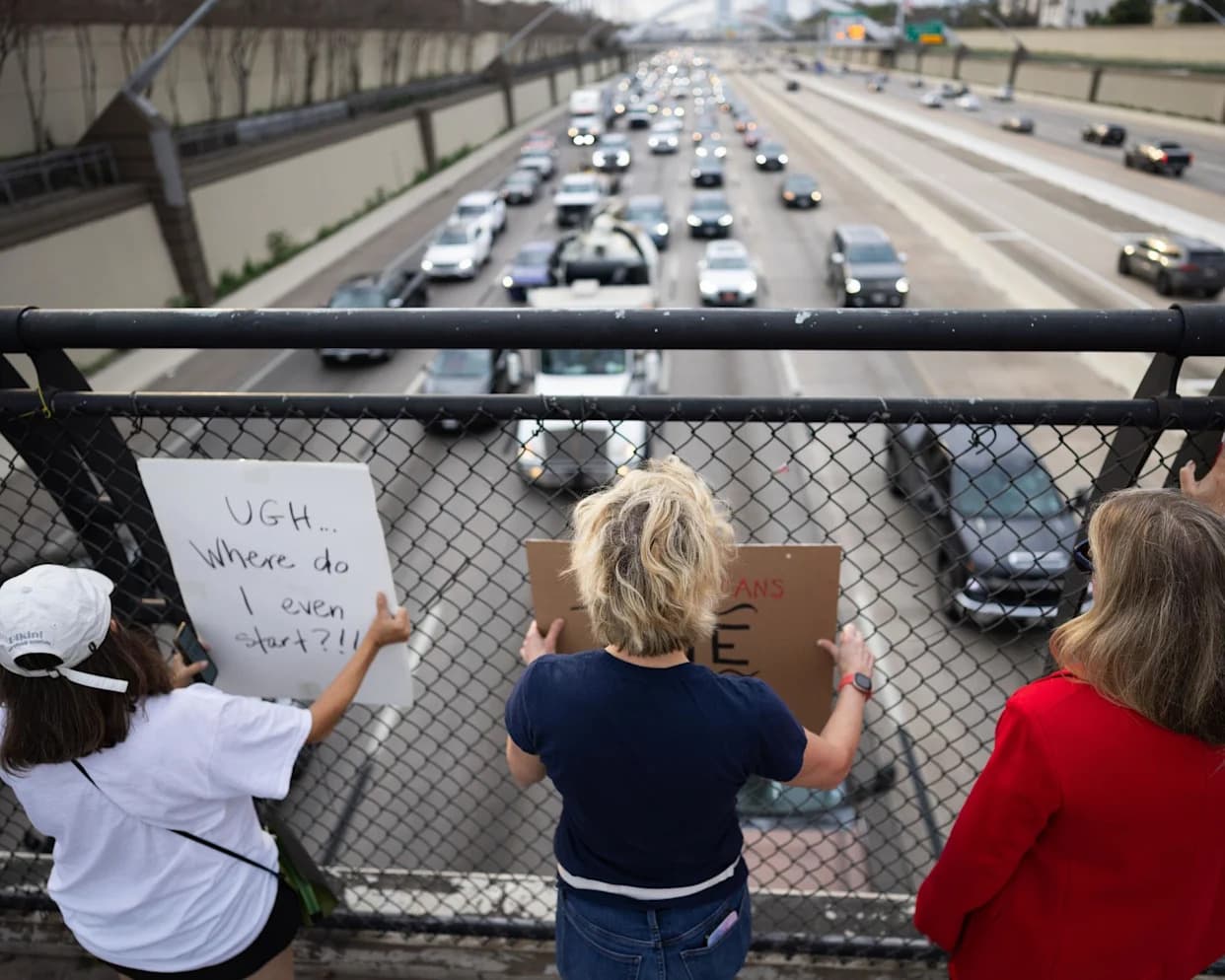
Protesters hold signs on a bridge in Houston, Texas, on Thursday, during a demonstration against ICE.Photograph: Reginald Mathalone/NurPhoto/Shutterstock
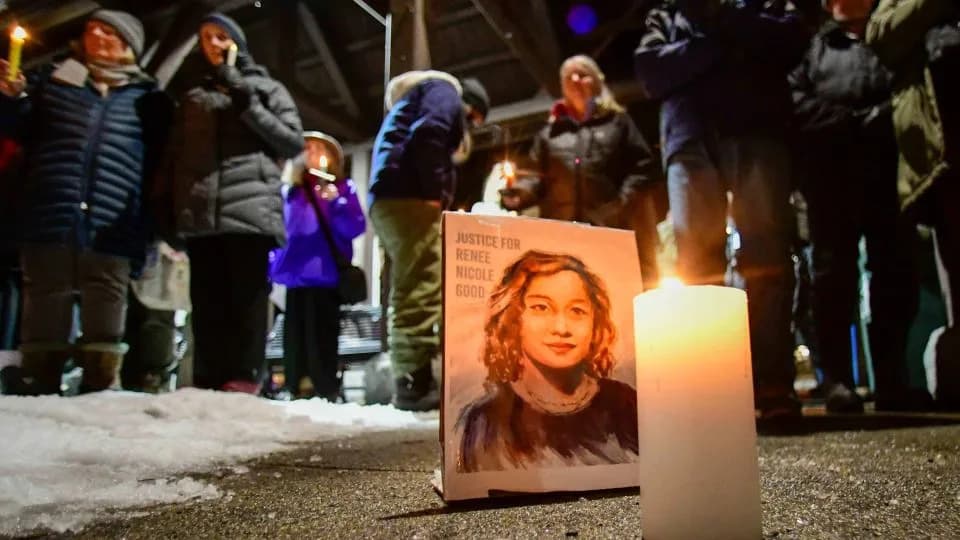
Bonnie Connery says she was horrified when she read reports of the killing of ICE observer Renee Nicole Goodin in Minneapolis on 7 January. Within minutes she and members of her Missoula Visibility Brigade were messaging each other. By about 3:30 p.m., roughly 20 people stood on the South Reserve Street pedestrian bridge, cutting letters from craft paper, mounting them on black foam, and fastening banners across the bridge with bungee cords. During rush hour thousands of cars passed beneath messages that read: “ICE THUGS KILL CITIZEN” and “DHS LIES.”
The tactic is simple and deliberate: short, shocking messages designed to seize attention in seconds. “These cars are driving out of Missoula, which is blue, into the very red areas outside of the city,” Connery said — underlining the brigades’ strategic aim to reach commuters who might not otherwise encounter protest messaging.
Within hours of Goodin’s death, similar Visibility Brigades mobilised nationwide. In Paramus, New Jersey, activists draped signs reading “ICE MURDERS WOMAN IN MN” over state Route 4. Volunteers in Palo Alto, St. Paul and Louisville assembled quick, high-visibility banners on local overpasses. Organisers say these actions look spontaneous but rest on months of grassroots groundwork and distributed organising.
Small Actions, Wide Reach
Unlike large, headline-grabbing national demonstrations, local brigades concentrate on repeatable, sustainable actions that interrupt everyday routines. Dana H. Glazer, a national leader with Visibility Brigade, explains the strategy: “People only act accordingly when they’re constantly faced with the fact that there’s a huge problem.” The brigades aim to pierce the veneer of normalcy commuters experience every day.
Since March 2025, organisers report more than 250 Visibility Brigades have formed across urban and rural communities in both blue and red areas. Groups such as Visibility Brigade and 50501 — one of the organisations behind the No Kings protests — are promoting smaller, frequent actions to complement larger national events.
Local Organisers, National Impact
When a U.S. military strike was reported in Caracas on the night of 3 January, Robert Quinlan used social media to call for an overpass protest in Clinton, New Jersey. By morning, the former police chief had gathered about 35 people on an ice-slick bridge holding signs that read “NO WAR FOR OIL.” Quinlan says the Hunterdon County Brigade drew people because there were few existing resistance groups in the area and because their discreet, visible actions reach a broad swath of commuters: he estimates up to 20,000 drivers see their banners during two-hour events on Interstate Route 78.
Organisers point to behavioural science — notably the concept of social proof and Erica Chenoweth’s 3.5% theory — to explain how visible, sustained local presence can help shift public norms and build momentum for broader political change. “Our purpose is to deliver information and remind people that they’re not alone,” Glazer said.
Tools, Training and Joyful Resistance
Groups such as Mass 50501 provide action toolkits, adult liaisons and social media playbooks so small groups can organise quickly and safely. Rebecca Winter, executive director of Mass 50501 in Massachusetts, says these toolkits help build local safety nets, share resources and create action networks: “The solidarity combats paralysis.”
Platforms like Mobilize.us have also played a role. Chelsea Thompson, general manager for the platform’s parent company, says sign-ups surged after the start of the president’s second term: “Sixty-four percent of these users are using the platform for the first time, and a much greater share of these events are hosted by volunteers themselves, which is a real indication of distributed, local organising.”
Despite urgent messaging, many brigades adopt a creative, upbeat tone to attract participation. In Orlando, Candy Powell’s Visibility Brigade donned black-and-white jailbird costumes, played dance music and unfurled a banner reading “REMEMBER JANUARY 6TH.” In Brooklyn, artist Julie Peppito and co-organiser Kate Fermoile run weekly “Freedom Fridays”: short, music-driven intersections actions using clear, single-glance signs and symbols to reach drivers quickly.
“If there was a protest like this in every corner of America, that would be the largest protest in the country,” Peppito said. “People would see our messaging everywhere, and it would be undeniable.”
Whether somber or playful, these hyperlocal overpass protests combine rapid response, distributed organising and creative tactics to make local streets into visible sites of civic pressure — reaching thousands of commuters and steadily expanding a network of engaged neighbors.
Help us improve.