Apple snails and rice delphacid insects are increasingly afflicting rice and crawfish farms in southern Louisiana. Apple snails have proliferated since a 2016 flood and now affect about 78 square miles of the state. Tiny delphacids spread a virus and caused up to 50% ratoon losses in Texas, and have been detected in multiple rice-producing states. Farmers face costly, limited control options and scientists warn warmer conditions may ease pest spread.
Giant Apple Snails and Tiny Delphacid Bugs Threaten Louisiana Rice and Crawfish Farms
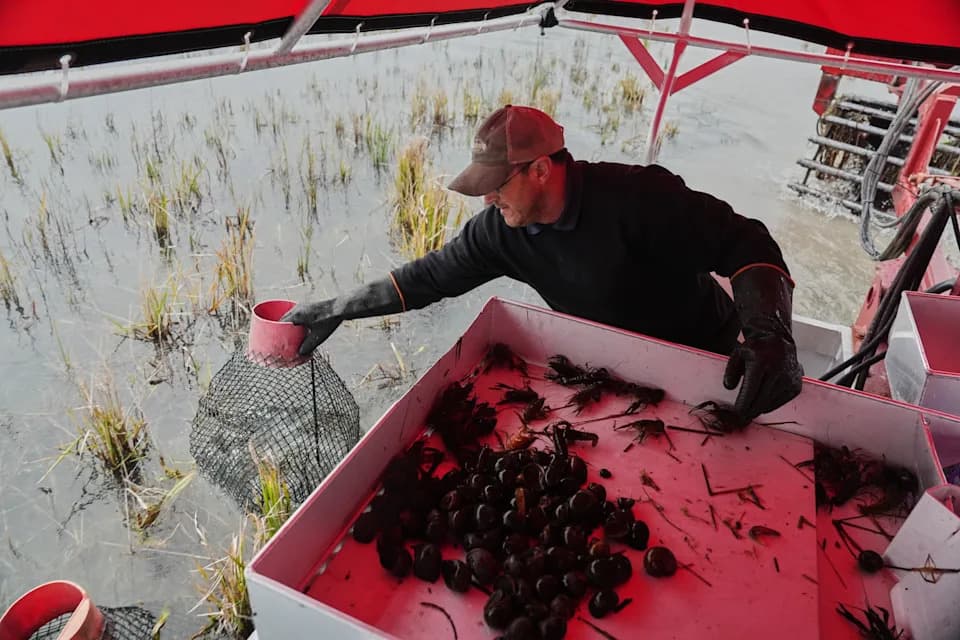
Josh Courville replaces a crawfish trap while harvesting Wednesday, Jan. 21, 2026, in Kaplan, La. (AP Photo/Joshua A. Bickel)(ASSOCIATED PRESS)
KAPLAN, La. — For generations, Josh Courville and other workers in southern Louisiana have harvested crawfish from flooded rice fields. Lately their traps are bringing up a different catch: large invasive apple snails that chew young rice plants — and tiny sap-sucking delphacid insects that spread a virus and can devastate rice yields.
Snails Overrun Fields
Apple snails, roughly the size of a baseball when fully grown, survive in wet fields, pipes and drainage ditches and lay thousands of pink, bubblegum-colored eggs. Farmers first noticed an uptick in snail numbers after a severe 2016 flood, and Louisiana State University researchers now estimate roughly 78 square miles (202 square kilometers) of the state regularly see infestations.
“It’s very disheartening. The most discouraging part, actually, is not having much control over it,” said crawfish harvester Josh Courville.
Tiny Insects, Big Losses
Entomologists have also been tracking rice delphacids — minute insects that pierce rice plants to feed and transmit a virus that magnifies plant damage. Last year’s delphacid surge in Texas caused as much as a 50% decline in ratoon (second-crop) yields and prompted many growers to cut planted acreage and worry about financing.
Why Control Is Difficult
Controlling either pest is complicated. Many molluscicides and insecticides that might work can also harm crawfish, and because rice and crawfish are food products, chemical options are limited. Some farmers are testing treatments such as copper sulfate, but these raise operating costs by thousands of dollars and can carry environmental risks.
How Farmers Are Adapting
To protect young rice plants from snails, growers increasingly begin planting on dry ground so rice can reach a few inches of growth before fields are flooded — a method that significantly raises costs. Harvest workers report more time spent sorting snails from crawfish, adding labor and stress during busy seasons.
Climate, Shipping And Uncertainty
Researchers are investigating multiple drivers behind the pests’ spread, including farming practices, pesticide use, global shipping and extreme weather. While experts say the role of climate change is not fully clear, warming trends generally make it easier for invasive pests to establish in new regions. The delphacid has now been detected in four of six U.S. rice-producing states — Texas, Louisiana, Arkansas and Mississippi — and scientists are racing to determine whether it will overwinter here permanently.
What’s next: Scientists and extension specialists are testing nonlethal management strategies, refining monitoring, and studying whether rice rotated with crawfish faces different risks than rice grown alone. Farmers say there is no single fix: managing these pests will require combined approaches and support to limit economic harm.
Reporting contributed by The Associated Press. The AP’s climate and environmental coverage receives foundation support; AP retains editorial control.
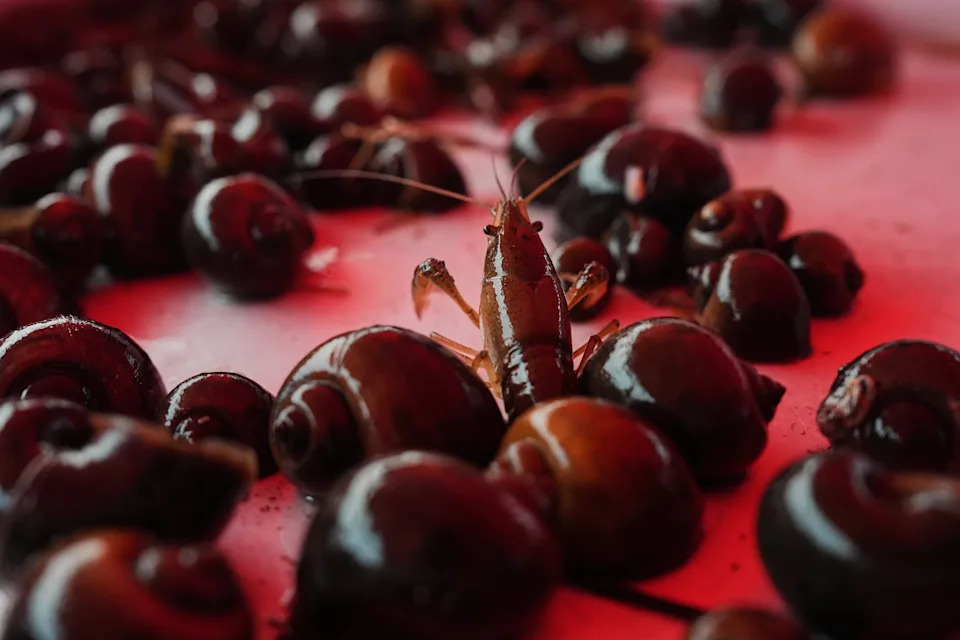
A crawfish crawls through apple snails after harvest Wednesday, Jan. 21, 2026, at a farm in Kaplan, La. (AP Photo/Joshua A. Bickel)(ASSOCIATED PRESS)
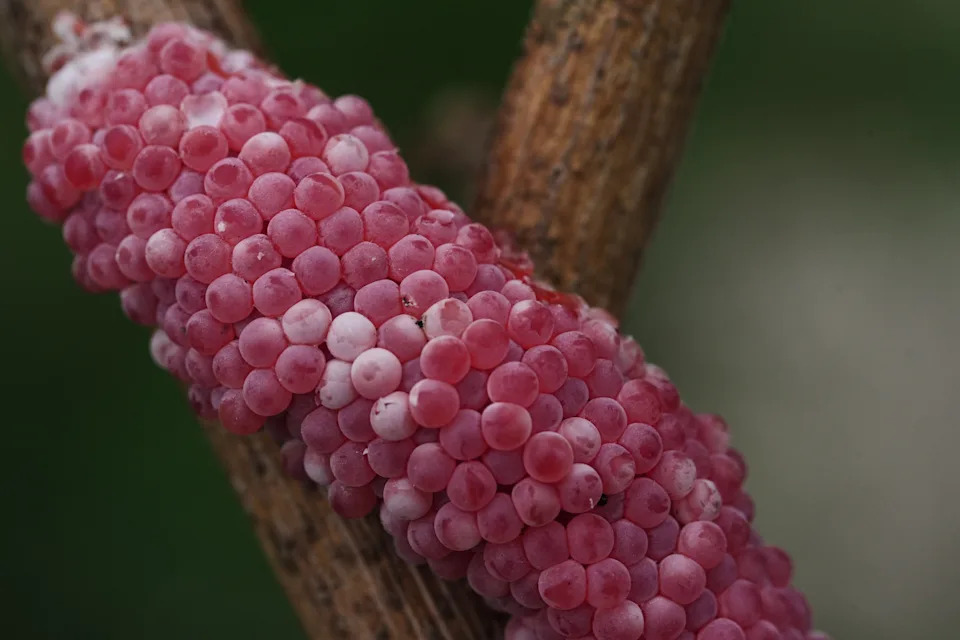
Apple snail eggs stick to a plant Wednesday, Jan. 21, 2026, in Kaplan, La. (AP Photo/Joshua A. Bickel)(ASSOCIATED PRESS)
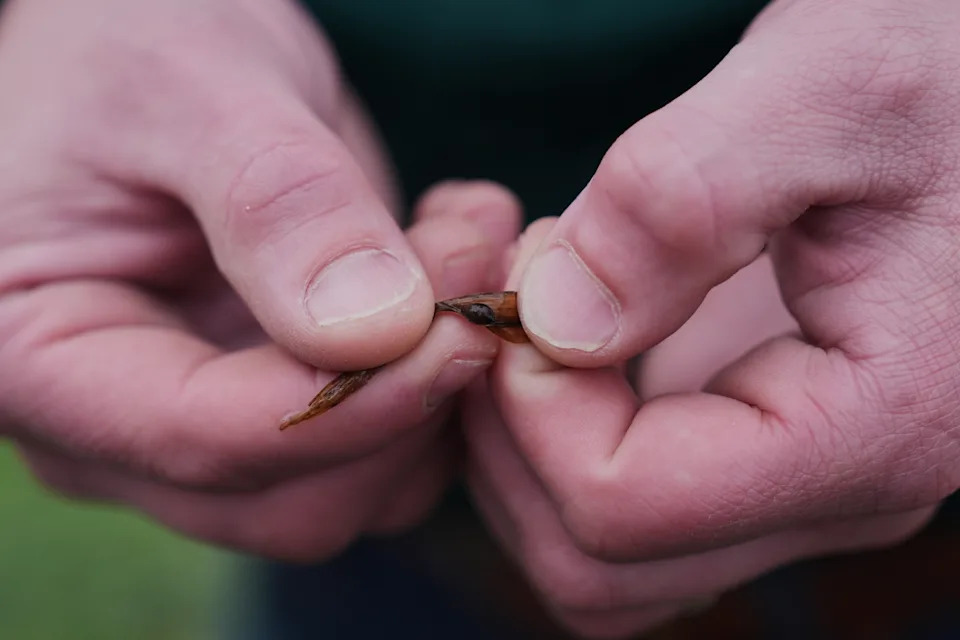
Blake Wilson, an entomologist at Louisiana State University, inspects a baby apple snail Wednesday, Jan. 21, 2026, at a crawfish farm in Kaplan, La. (AP Photo/Joshua A. Bickel)(ASSOCIATED PRESS)
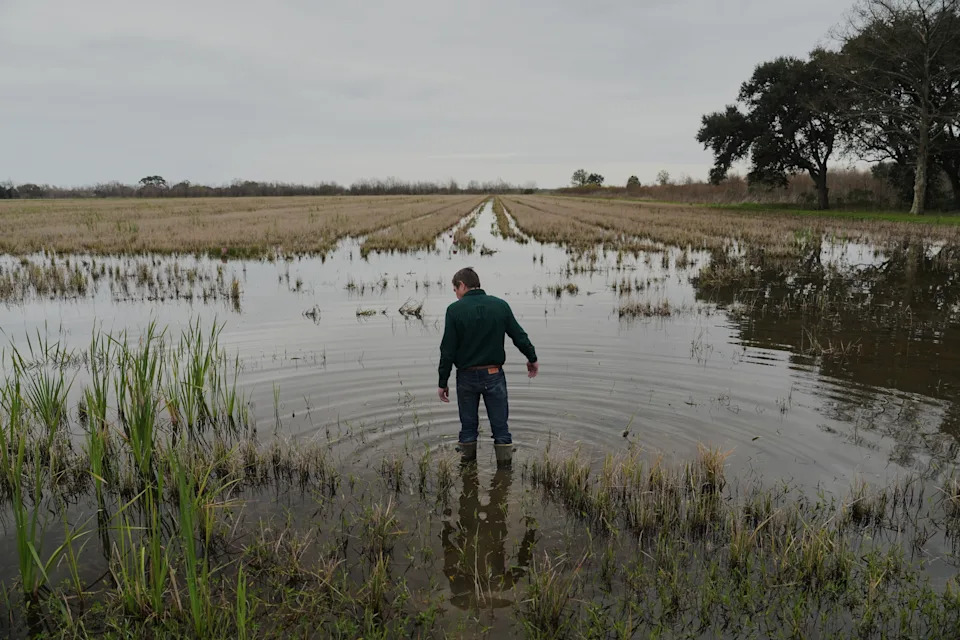
Blake Wilson, an entomologist at Louisiana State University walks into a crawfish pond while looking for apple snails Wednesday, Jan. 21, 2026, in Kaplan, La. (AP Photo/Joshua A. Bickel)(ASSOCIATED PRESS)
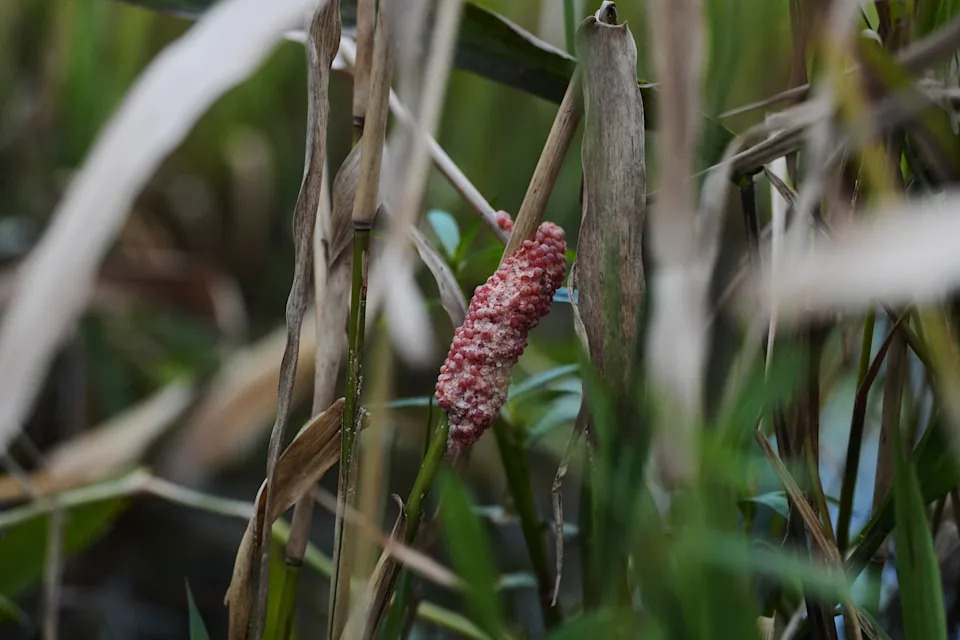
A cluster of apple snail eggs, with some that have hatched, sticks to a plant Wednesday, Jan. 21, 2026, in Kaplan, La. (AP Photo/Joshua A. Bickel)(ASSOCIATED PRESS)
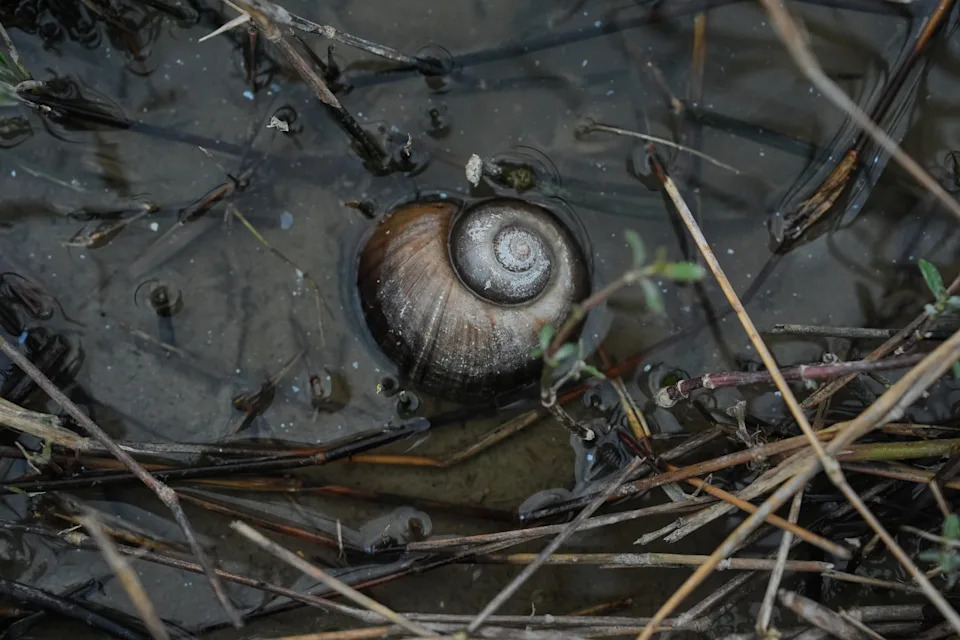
An apple snail sits in a drainage ditch Wednesday, Jan. 21, 2026, near a crawfish pond in Kaplan, La. (AP Photo/Joshua A. Bickel)(ASSOCIATED PRESS)
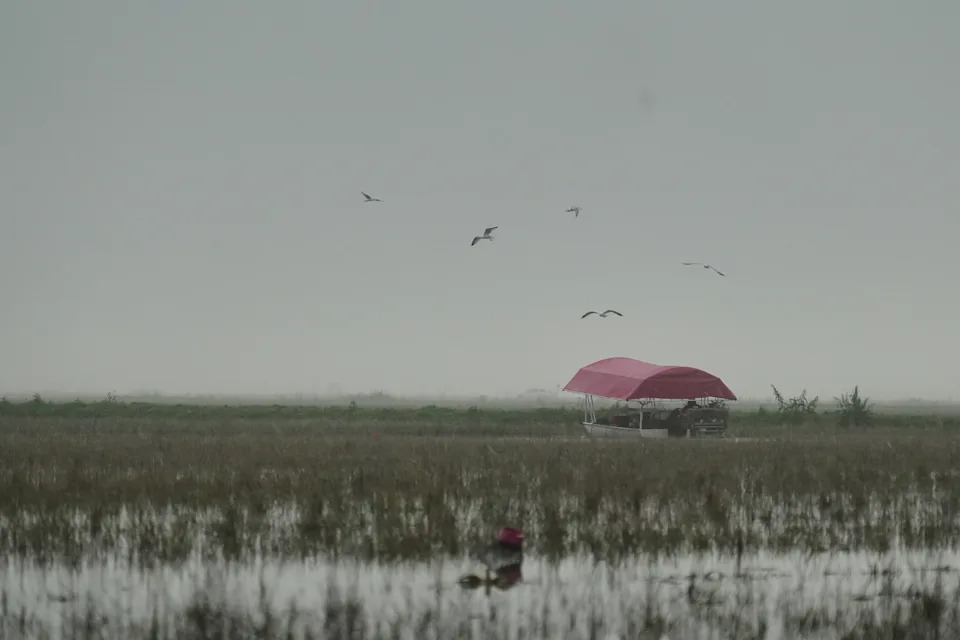
Birds fly overhead as a crawfish boat moves through a pond while harvesting Thursday, Jan. 22, 2026, in Kaplan, La. (AP Photo/Joshua A. Bickel)(ASSOCIATED PRESS)
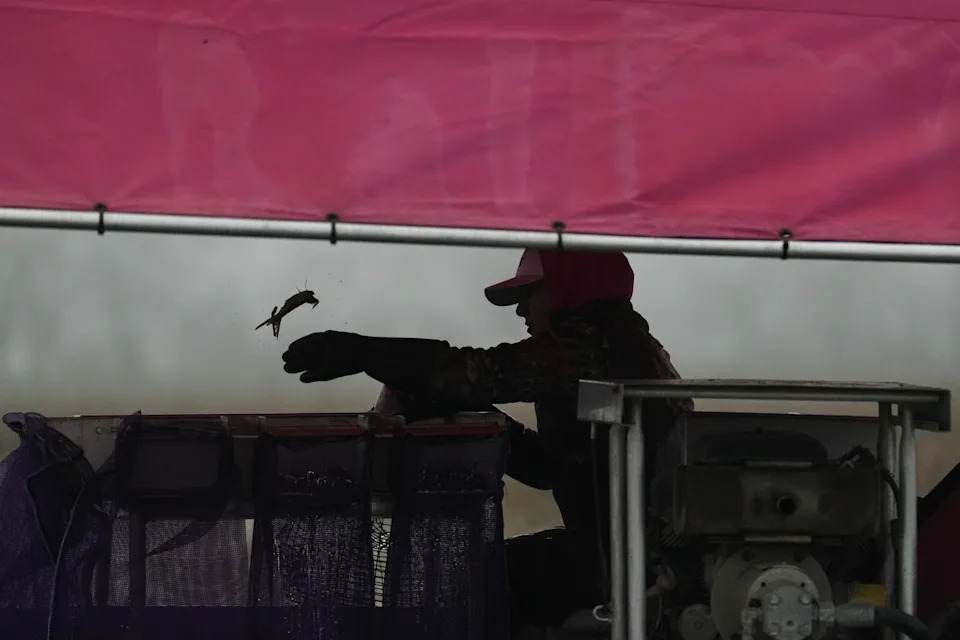
Cecilia Gallegos tosses out used bait while harvesting crawfish Thursday, Jan. 22, 2026, at a farm in Kaplan, La. (AP Photo/Joshua A. Bickel)(ASSOCIATED PRESS)
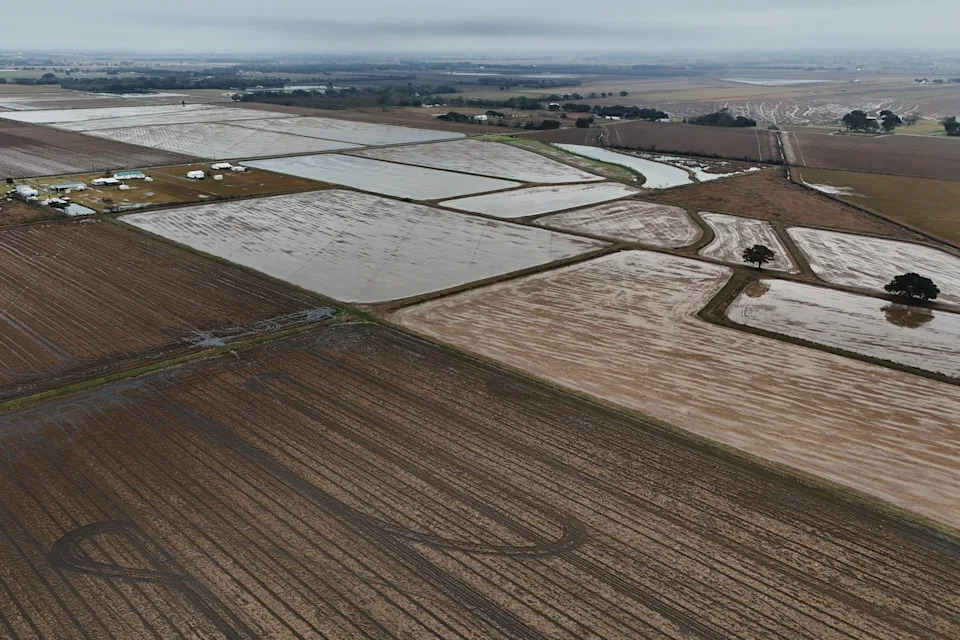
Water fills crawfish ponds, back, next to rice fields Thursday, Jan. 22, 2026, in Kaplan, La. (AP Photo/Joshua A. Bickel)(ASSOCIATED PRESS)
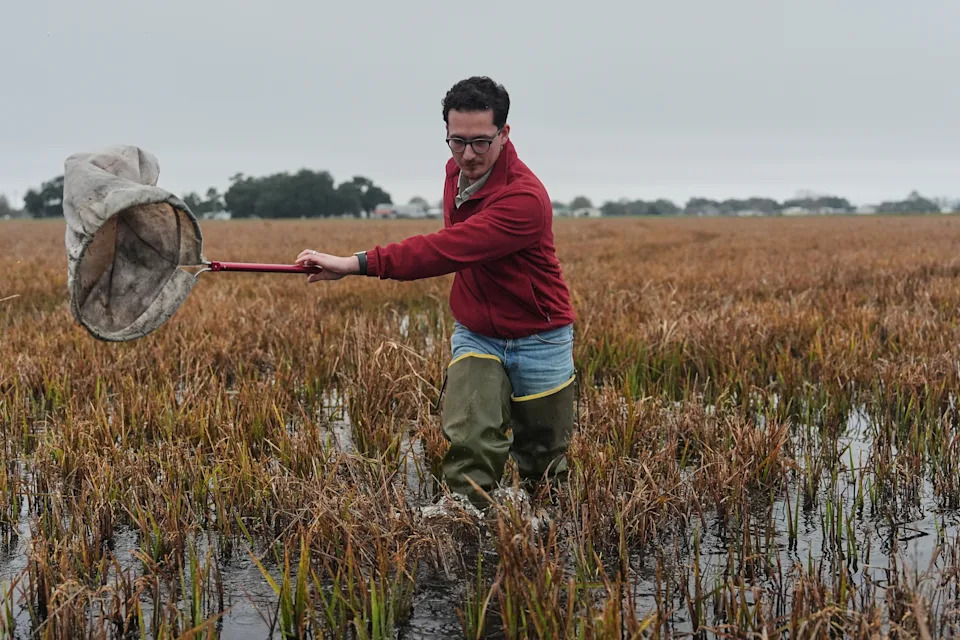
Tyler Musgrove, a rice extension specialist with Louisiana State University, uses a net to catch insects in a rice field Thursday, Jan. 22, 2026, at a farm in Kaplan, La. (AP Photo/Joshua A. Bickel)(ASSOCIATED PRESS)
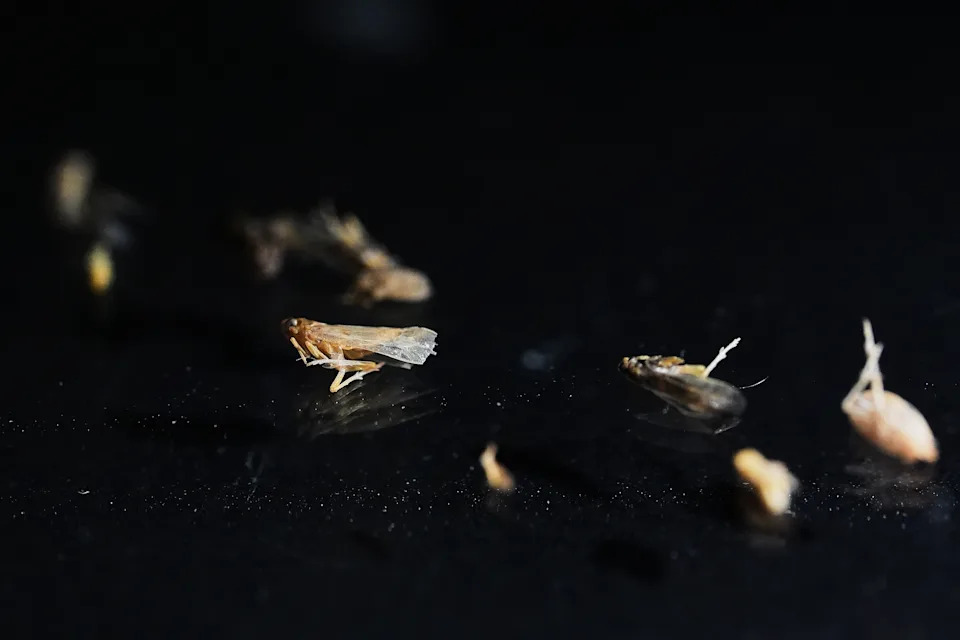
Rice delphacid specimens, invasive insects, sit under a microscope Thursday, Jan. 22, 2026, at a laboratory in Rayne, La. (AP Photo/Joshua A. Bickel)(ASSOCIATED PRESS)
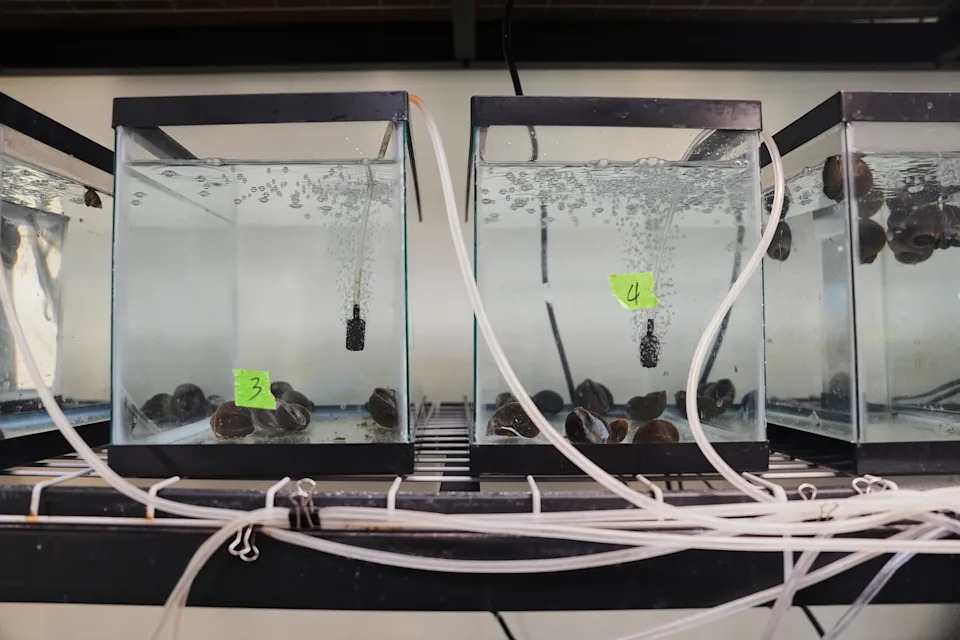
Apple snails sit in tanks as part of an experiment testing concentrations of copper sulfate used to kill the snails Thursday, Jan. 22, 2026, at Louisiana State University in Baton Rouge, La. (AP Photo/Joshua A. Bickel)(ASSOCIATED PRESS)
Help us improve.