Kansas wildlife officials report removing about 109,000 pounds of invasive Asian carp from the Kansas River since 2022, with 2025 the most productive year at 36,863 pounds. The campaign targets silver, bighead and black carp, which outcompete native species and can pose safety hazards. KDWP uses electrofishing, gill nets and an electrified dozer trawl and expanded efforts by 15 miles in 2025. The efforts are supported by regional funding, including nearly $19 million from the U.S. Fish and Wildlife Service for Mississippi-basin carp management.
Kansas Biologists Remove Over 109,000 Pounds of Invasive Carp to Protect Kansas River
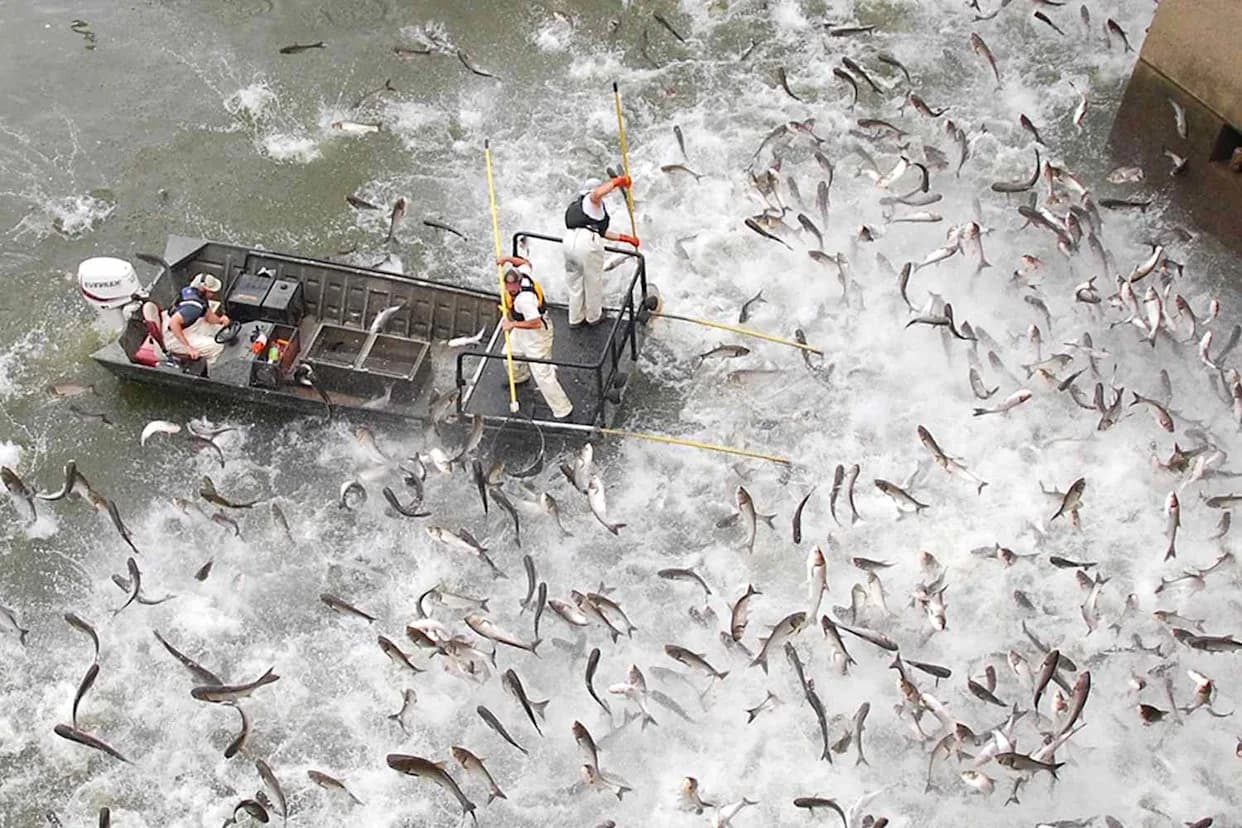
Silver carp jump from the water at Barkley Dam in Kentucky, where an experiment with acoustic technology and a bubble curtain is occurring.Kristen Peters/USFWS
Kansas wildlife officials and biologists have removed roughly 109,000 pounds of invasive Asian carp from the Kansas River since organized removal efforts began in 2022, a milestone officials say is helping restore native fish populations and improve river health.
A Record Year
Officials reported that 2025 was the program's most productive year, with crews hauling out 36,863 pounds of carp — the highest single-year total so far. The removals focused on three nonnative species: silver carp, bighead carp and black carp, all introduced to the U.S. in the 1970s for aquaculture before escaping into Midwestern waterways.
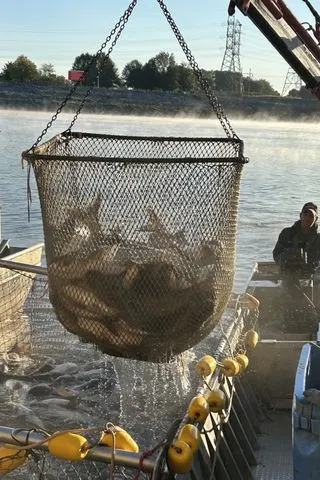
Transferring invasive carp from gathered seine to brailer bags.USFWS
Why Removal Matters
These carp grow quickly, consume large amounts of plankton and other food resources, and can outcompete native fish and other aquatic life. In addition to ecological impacts, invasive carp present safety risks: silver carp are known to leap from the water when startled by boat engines, sometimes striking boaters, while bighead carp can reach very large sizes, with individuals exceeding 100 pounds.
How They're Being Removed
The Kansas Department of Wildlife and Parks (KDWP) uses a combination of methods including electrofishing, gill nets and newer specialized equipment. In recent seasons KDWP added an electrified dozer trawl — a device designed to stun and collect carp as crews move through infested stretches by boat — to increase removal efficiency.
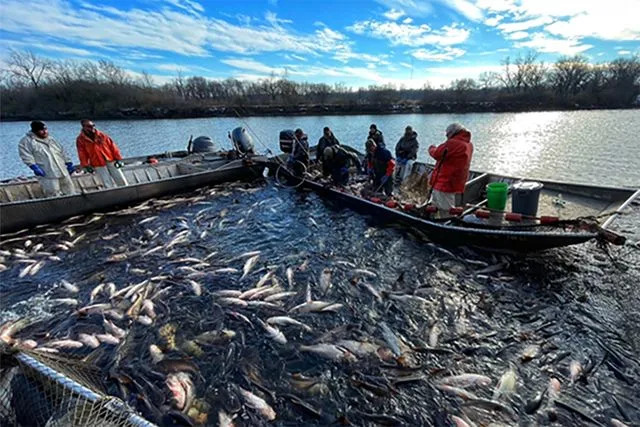
Targeted mass removal of invasive carp from the Illinois River.Illinois Department of Natural Resources
“These removal efforts appear to have produced positive effects in Kansas waterways and for native species,” said Liam Odell, an invasive carp biologist with KDWP, noting that biologists are beginning to observe carp declines in treated areas alongside increases in native fish.
Scope and Partnerships
In 2025 KDWP expanded removal efforts roughly 15 miles downstream, while the Bowersock Dam in Lawrence continues to act as an important barrier that limits upstream spread. Kansas’ work is part of a larger regional initiative: in August 2025 the U.S. Fish and Wildlife Service announced nearly $19 million in funding for invasive carp management across 18 states in the Mississippi River basin to support removal, monitoring and prevention activities.
What Comes Next
KDWP says removals will continue year-round and may expand as research and funding permit. Officials urge the public to never release nonnative fish into waterways, to report sightings of carp outside known infested rivers, and to follow local safety guidance when boating in affected waters.
Help us improve.