U.S. housing scarcity is driven not only by exclusionary zoning but also by a web of building codes, fire-safety rules and technical standards that disproportionately burden small multifamily construction. Requirements such as sprinkler mandates, two-stair rules, oversized elevator standards and bespoke engineering reviews can make triplexes and fourplexes uneconomical. State-level tweaks and precedents show progress, but broader, more transparent and performance-based reforms are needed to expand safe, affordable housing supply.
How Hidden Building Rules Are Fueling America’s Housing Crisis
default
For more than a century, U.S. planning and regulatory practices have built up layers of rules that, in practice, discourage apartments and other modest multifamily homes. Policymakers are now discovering that changing zoning is only the first step: a second, less visible set of building codes, safety regulations, utility rules and tax policies often makes small apartment buildings financially infeasible.
Two Problems: Zoning And Code
Zoning frequently prevents denser housing by reserving most residential land for detached single-family homes. But even when cities legalize duplexes, triplexes and fourplexes, model building codes and other rules often treat anything with three or more units as a commercial structure. That classification triggers a jump to more stringent, costlier requirements.
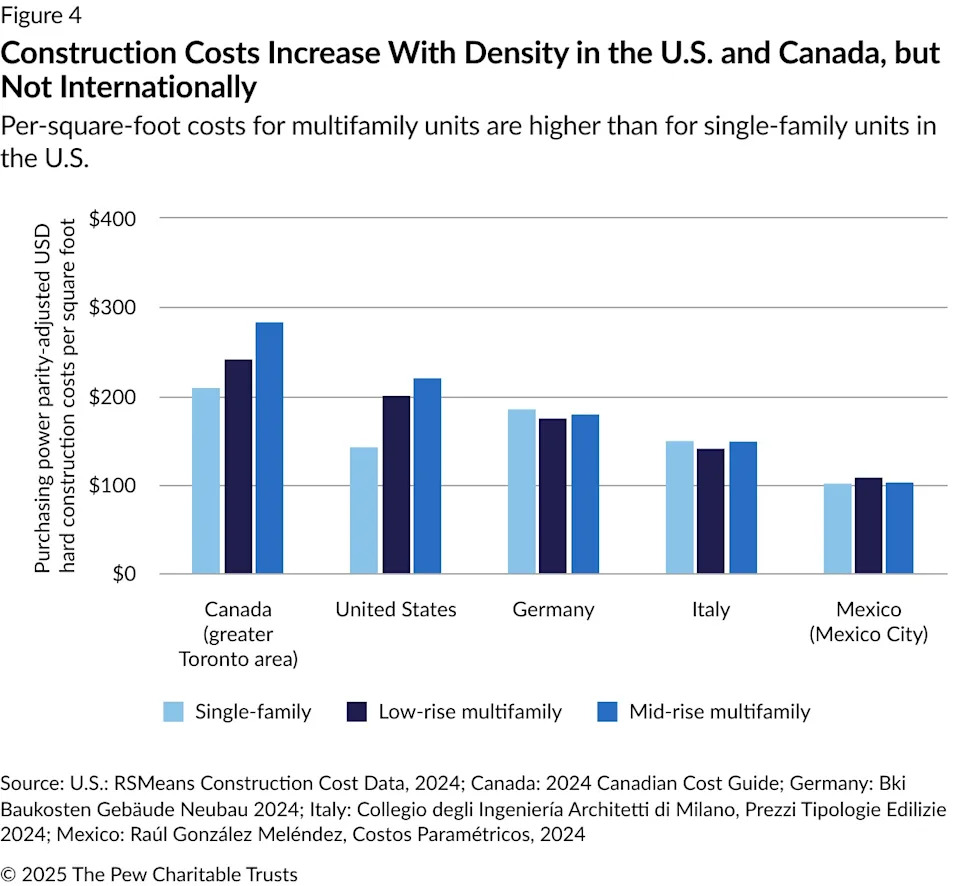
Bar chart comparing construction costs per square foot for single-family, low-rise multifamily, and mid-rise multifamily buildings in Canada, the United States, Germany, Italy, and Mexico City. Costs rise with density in Canada and the US, while Germany, Italy, and Mexico show similar or slightly lower costs for multifamily; Canada has the highest mid-rise costs and Mexico City the lowest overall.
How Technical Rules Block The 'Missing Middle'
Several specific regulations have outsized effects on small multifamily projects:
Sprinkler Mandates
Most jurisdictions require extensive automatic sprinkler systems in buildings classified under the commercial code. While sprinklers save lives in large complexes, their high upfront installation and ongoing maintenance costs can make a small triplex or fourplex economically impossible. Some reformers argue that alternative, evidence-based fire protections could be allowed for modest buildings.
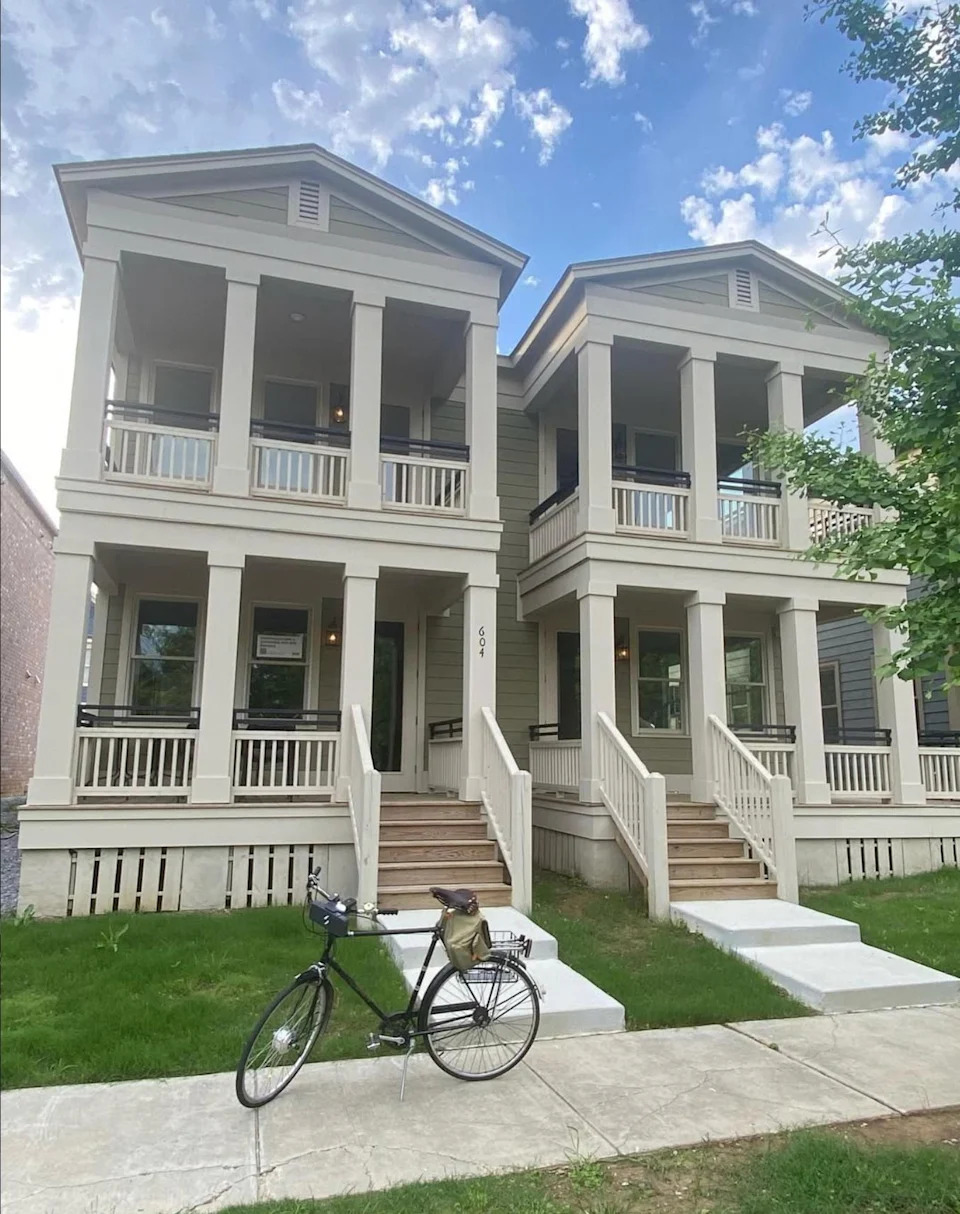
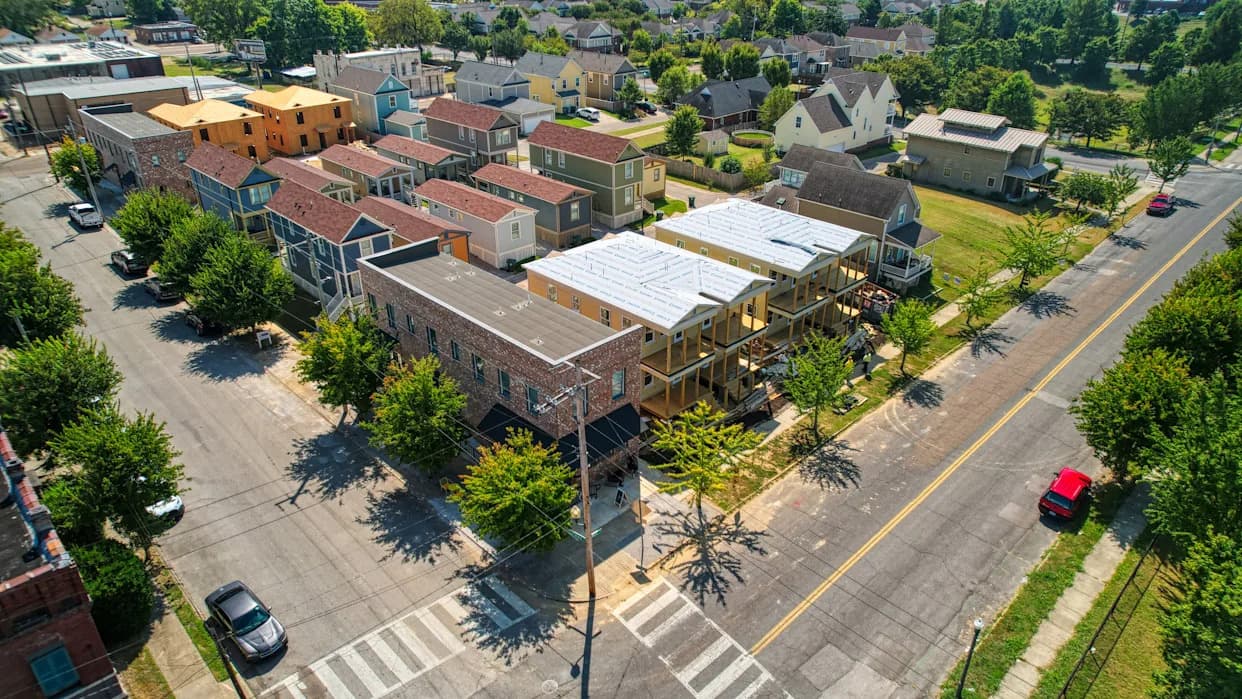
A fourplex built by Andre Jones in his development at Malone Park Commons. According to the developer, they’re the “first true fourplexes in Memphis and Shelby County since World War II.” | Courtesy of Andre D. Jones
Mandatory Two Staircases
Many new apartment buildings taller than three stories must include two separate staircases. Providing a second stair adds substantial construction cost, reduces usable floor area, and often forces designs toward long central corridors and larger footprints. By contrast, single-stair designs — used safely in many European countries and in some U.S. cities — allow more flexible, family-friendly unit layouts.
Elevator Requirements
U.S. elevator specifications — such as car sizes sized to fit a seven-foot stretcher and a wheelchair turning radius — make elevators substantially more expensive than their European equivalents. Other factors, including technical standards incompatible with the global market and limits on factory preassembly, further raise costs and delay installation, discouraging mid-rise construction.
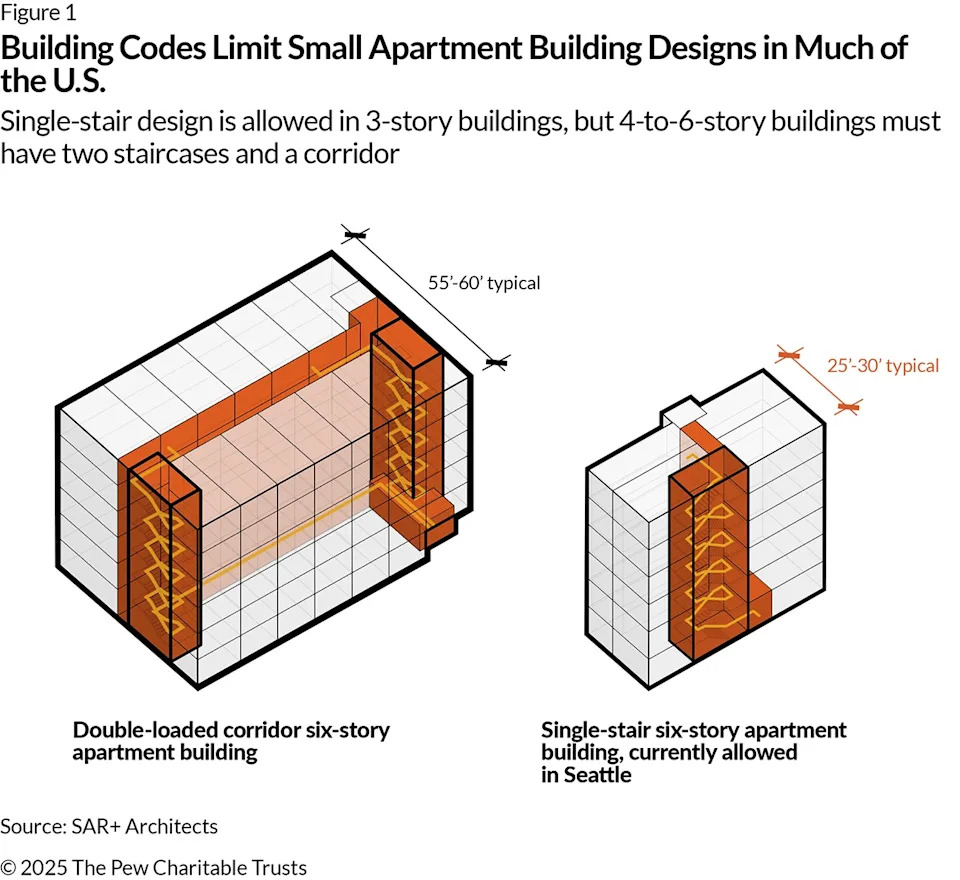
Diagram comparing two six-story apartment building layouts to show how building codes shape design. On the left, a wide “double-loaded corridor” building has two stairwells at opposite ends and a central hallway with units on both sides. On the right, a slimmer “single-stair” six-story building, has one stairwell serving units without a double-loaded corridor.
Design And Approval Burdens
One- and two-family homes can often be built using prescriptive, pre-approved plans. But in many places, triplexes and fourplexes require custom-engineered plans signed off by licensed architects or engineers, increasing upfront fees and approval time for projects that are often similar in scale to large single-family houses.
Evidence And Consequences
Reports from Pew Charitable Trusts and the Center for Building in North America find that multifamily construction costs more per square foot in the U.S. than in peer countries — a reversal of expected economies of scale. Research from Purdue University estimates that recent code-driven cost increases can raise the break-even rent for a two-bedroom unit in a new three-story building by roughly $169 to $279 per month.
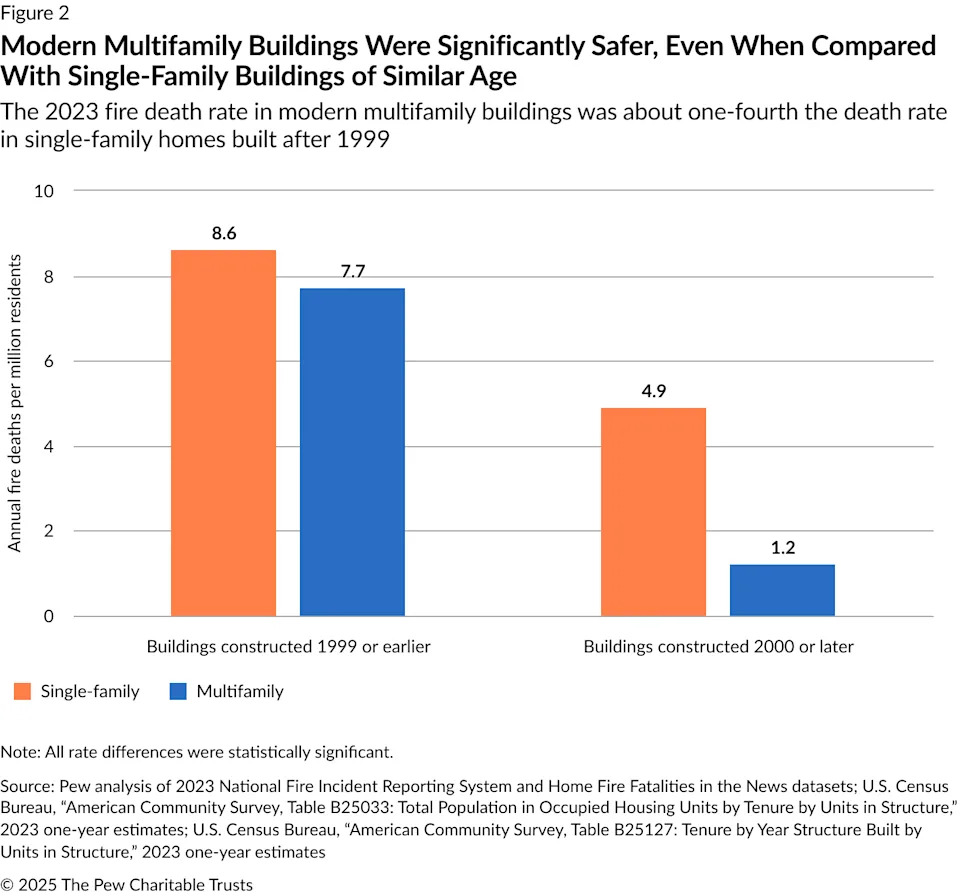
Bar chart of annual fire deaths per million residents comparing single-family and multifamily buildings by construction era. For buildings built 1999 or earlier, rates are high and similar. For buildings built 2000 or later, multifamily is much lower than single-family, showing modern multifamily buildings are significantly safer.
"Simply allowing a fourplex on paper does not guarantee that one will be built." — John Zeanah, Memphis chief of development and infrastructure
There are real-world policy responses. For example, Tennessee passed a law allowing many small buildings up to four units to forgo sprinklers if they meet two-hour fire-resistant separations between walls, floors and ceilings. Seattle and New York permit certain single-stair configurations, and several states are pursuing narrow code exceptions to encourage missing-middle construction.
Politics, Process, And Reform
Model codes in the U.S. are drawn largely from documents created by the International Code Council (ICC), a private organization whose proposals are adopted (or adapted) at state and local levels. Critics contend that the ICC process can be opaque and heavily influenced by industry stakeholders, while defenders say code changes receive expert review and public input. Either way, many advocates call for more transparent, evidence-driven cost-benefit analysis when rules change.
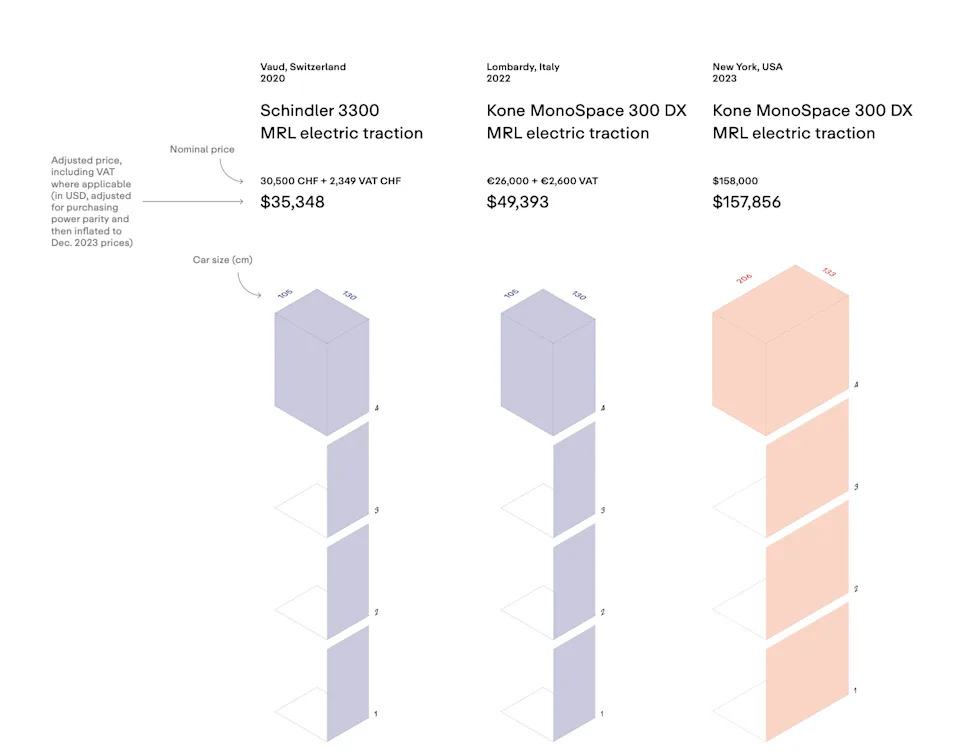
Side-by-side graphic comparing elevator costs in three places: Vaud, Switzerland (2020), Lombardy, Italy (2022) and New York, USA (2023). It shows prices: $35,348 (Switzerland), $49,393 (Italy), and $157,856 (New York). Below, 3D diagrams illustrate elevator car dimensions — smaller in Switzerland and Italy versus a much larger car in New York.
Longer-term reform ideas include broader use of performance-based codes, which set required safety outcomes without mandating specific technologies, and federal support for more consistent, transparent code processes. These approaches aim to preserve safety while reducing unnecessary barriers to building more homes.
Bottom Line
Raising the cost of building housing — intentionally or not — means less housing gets built. To restore supply and affordability, policymakers must look past zoning to the many technical rules that silently shape whether small multifamily homes are feasible. Targeted, evidence-based reforms can make missing-middle housing practical without compromising safety.
Help us improve.