The Trump administration’s proposed overhaul of HUD’s Continuum of Care program would shift most of the $4bn annual budget from permanent supportive housing toward temporary shelter and add treatment mandates—changes that advocates, providers and people with lived experience say could displace tens of thousands and raise local costs. Courts have temporarily blocked parts of the plan and HUD has issued interim guidance while litigation continues. Experts and local officials argue housing-first remains evidence-based, cost-effective, and essential for keeping people stably housed.
Advocates Warn HUD Overhaul Could Push Tens Of Thousands Back Onto The Streets
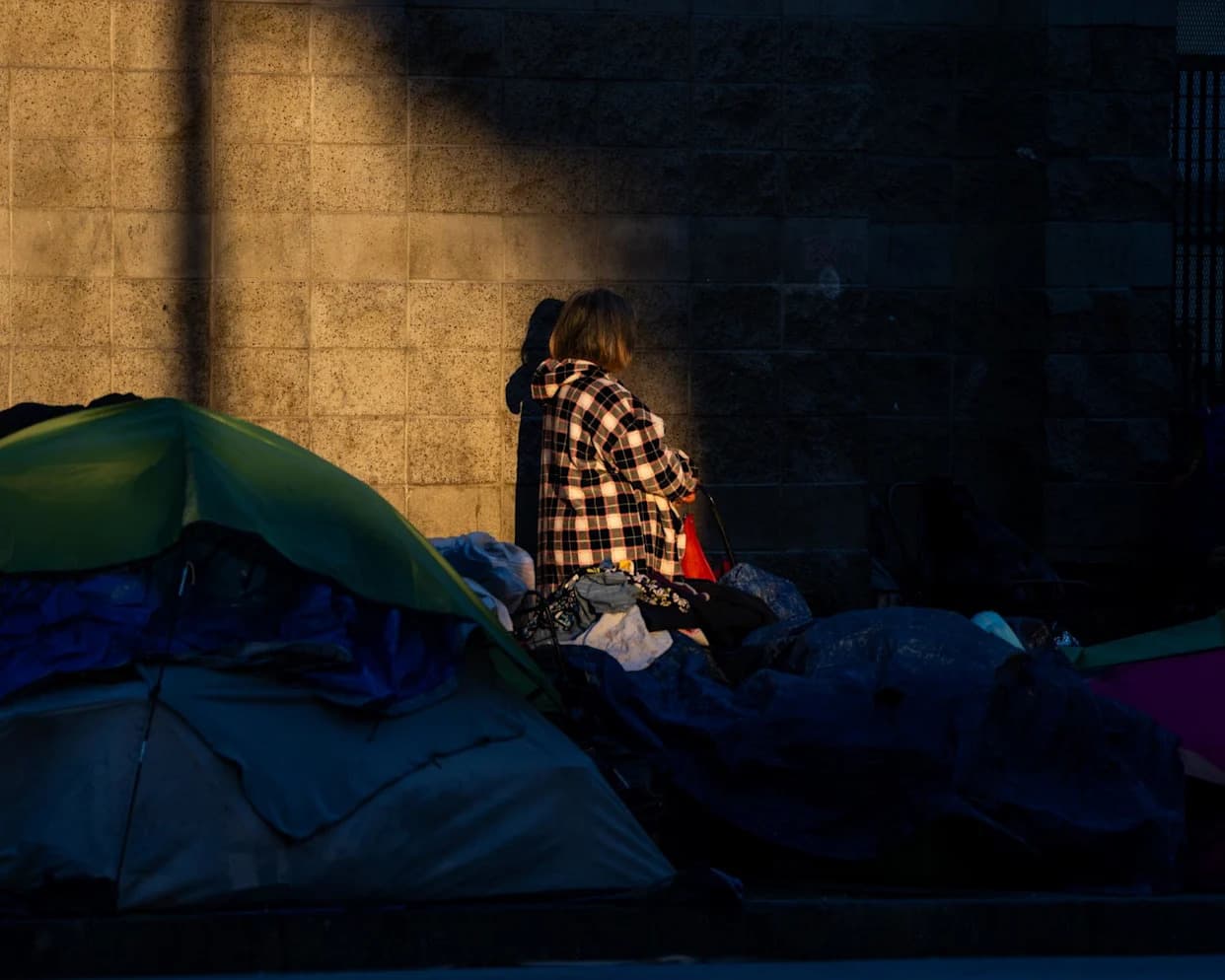
Unhoused people and tents are seen on a sidewalk on 24 July 2025 in Los Angeles, California.Photograph: VCG/Getty Images(Photograph: VCG/Getty Images)
When Shawn Pleasants first heard the federal government was overturning nearly two decades of homelessness policy, the news sent a chill through him. Pleasants, 58, said it transported him back to the day he lost his car and began living on the streets of Los Angeles. “That feeling of, you could never be safe – there’s no more future,” he recalled.
Pleasants spent roughly a decade sleeping in Koreatown before he and his husband received a Section 8 voucher through the U.S. Department of Housing and Urban Development’s Continuum of Care (CoC) program. The CoC is the federal government’s primary program for helping state and local governments and non-profits fund permanent housing and supportive services for people at risk of or experiencing homelessness.
Policy Changes, Legal Pushback
In November, HUD announced sweeping changes that would redirect a large share of roughly $4 billion in annual CoC funding away from permanent supportive housing toward temporary shelter. Under the proposed rules, jurisdictions applying for CoC funds would be limited to spending about 30% of grants on permanent housing, down from roughly 90% in many places. Internal HUD documents obtained by Politico estimated the shift could put an estimated 117,000 people nationwide at risk of losing supportive housing.
The proposed overhaul also tied funding to mandatory treatment requirements and threatened to penalize jurisdictions that employ harm-reduction strategies or explicitly recognize transgender and gender-diverse people—groups that are disproportionately represented among people experiencing homelessness. HUD officials argued the change was intended to address root causes and reduce reliance on permanent warehousing of people, but they did not provide published evidence showing that abandoning housing-first approaches would achieve those goals.
Facing two lawsuits, HUD reversed several restrictions in December and subsequently saw federal judges temporarily block major parts of the funding changes. In January HUD issued new guidance directing auto-renewal of CoC projects while litigation continues, and set administrative deadlines for project updates. HUD said it would comply with judicial directives while reserving the right to appeal.
Why Housing-First Advocates Are Alarmed
Housing-first is a strategy that prioritizes placing people into permanent stable housing before addressing other issues like addiction or mental health. It has enjoyed bipartisan support since the George W. Bush administration and was codified in federal law in 2009. Experts who spoke to the Guardian describe it as evidence-based and effective at stabilizing lives and enabling subsequent treatment and support.
“Housing first was a game-changer for getting people treatment by first getting them permanent supportive housing,” said Dr. Margot Kushel, director of the Benioff Homelessness and Housing Initiative at UCSF. Reversing course would be “just silly, counterintuitive and dangerous.”
Researchers and local officials emphasize that homelessness is driven largely by a lack of affordable housing and wages that have not kept pace with living costs. Kushel’s comprehensive study of homelessness in California identifies housing scarcity and economic strain as primary factors.
Local Impact And Costs
Local jurisdictions and non-profits say the policy shift has caused immediate disruption. Many CoC-funded programs began the year uncertain whether their grants would be renewed, prompting scrambling to identify local funds to cover shortfalls. Alameda County, for example, faced roughly a $33 million gap after the announced HUD changes. Many other grants are set to expire in early 2026, and some local programs exhausted CoC funds as early as January.
County officials argue that investing in permanent supportive housing is more cost-effective than leaving people unsheltered or in short-term shelter beds. Alameda County’s housing director, Jonathan Russell, said permanent supportive housing in California averages about $20,000–$25,000 per person per year, while shelter beds can cost $40,000–$50,000. For people with complex needs who remain unhoused, public costs driven by emergency services and hospital care can reach an estimated $75,000–$80,000 per person per year.
Russell and others report high retention rates—often 80–90%—for people placed into housing-first programs with wraparound services. By contrast, statewide assessments show only about 15% of shelter residents ultimately move into permanent housing.
Voices With Lived Experience
Pleasants now serves on the Lived Experience Advisory Board of the Los Angeles Homeless Services Authority (LAHSA). He worries about how local agencies would decide whose housing to terminate if permanent supportive housing funding is reduced: “Are they going to choose the ones they want to terminate randomly? Are they going to do it to the oldest ones, or the newest ones, or are they going to choose acuity?”
Another shelter resident, identified here as Angel Smith for her protection, left a Marin County shelter after three weeks because she could not get more than two consecutive hours of sleep in the shared dormitory. She described strict rules, frequent bed checks and 24/7 hallway cameras that felt “like prison.” Smith said the shelter environment undermined her ability to keep a teaching job and that, if permanent housing were defunded, policymakers should at least allow cars to be legally recognized as homes for people living in vehicles.
Pleasants recalled the human toll of life on the street, including ad hoc funerals for people who die unhoused: “People die on the street. Not only do they die, but they die unremembered… All the things that we normally do in life are removed.”
What’s Next
The future of the CoC changes remains tied up in litigation and pending administrative decisions. For now, HUD has been ordered to process projects for 2025, and it has issued interim guidance to auto-renew projects while the courts decide. Local governments and nonprofits continue to seek contingency funding while advocates press for evidence-based, cost-effective approaches that prioritize housing stability.
The debate highlights a central policy tension: whether limited public dollars should prioritize long-term housing that stabilizes people’s lives or short-term shelter and programs aimed at treatment and behavioral change before housing. Advocates and many local officials say the evidence and economics strongly favor continuing to fund housing-first programs at scale.
Help us improve.