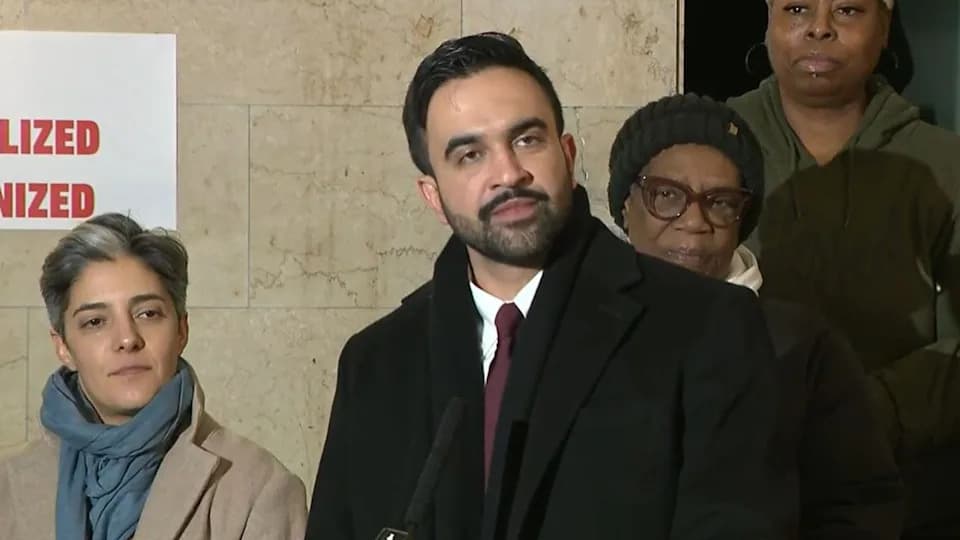
Zohran Mamdani’s first week as New York City mayor combined administrative steps to speed housing production with political signals favoring tenants that could deter private developers. His SPEED and LIFT task forces mirror previous efforts under Eric Adams but analysts say broader zoning and permitting reform is required to boost supply meaningfully. Early appointments of tenant advocates and public “rent ripoff” hearings risk souring owner incentives, while bipartisan federal proposals and lessons from Montgomery County’s rent control debate underscore the complexity of producing more housing.
Supply‑Side Socialism? The Contradictions in Zohran Mamdani’s First Housing Moves

The Contradictions of Supply-Side Socialism
Zohran Mamdani has been New York City’s mayor for less than a week, yet his administration has already issued multiple housing directives and staffed key housing roles. Those early actions capture the central tension of a self‑described socialist who promises both to freeze rents and to restart private‑sector housing development.
Early Executive Orders: SPEED and LIFT
Two of Mamdani’s first executive orders target the same objective: speed up housing production. One establishes a Streamlining Procedures to Expedite Equitable Development (SPEED) task force to identify and remove bureaucratic hurdles to construction and leasing. The other creates a Land Inventory Fast Track (LIFT) task force charged with identifying city‑owned parcels that could be used for housing.
Both ideas are sensible in principle — and not particularly novel. Mayor Eric Adams previously convened task forces with similar aims: shortening permitting timelines and cataloging municipal land for housing use. In December 2022, Adams’ Building and Land Use Approval Streamlining Taskforce (BLAST) published a “Get Stuff Built” report proposing 111 administrative reforms designed to cut permitting delays roughly in half. Roughly 90 of those changes could be enacted unilaterally by city agencies; a single six‑month status update in June 2023 listed 16 of the 111 recommendations as completed. By September 2025, the Adams administration’s land‑use push had produced 10 housing projects on city land, totaling about 1,000 units.
Why Task Forces May Not Be Enough
Analysts including Eric Kober of the Manhattan Institute argue that substantially increasing supply will require broader legislative reforms to zoning and permitting — not just administrative streamlining. The goal of those reforms is to induce private developers to add units in a city with chronic housing shortages.
Political Signaling: Tenant Advocates and Public Hearings
At the same time, several of Mamdani’s early moves risk discouraging private investment. On his first day, he appointed tenant activist and campaign adviser Cea Weaver to lead the city’s Office to Protect Tenants. Media reports highlighted a history of hard‑left commentary from Weaver, including calls to seize private property and critiques of homeownership framed as racialized. Weaver was a leading proponent of New York’s 2019 rent‑stabilization changes, which limited landlords’ ability to raise rents to finance maintenance and capital improvements. Critics (in recent lawsuits and reporting) say those constraints have contributed to declining housing quality and to empty units whose owners cannot finance required repairs.
Mamdani has also directed agencies to hold a series of public “rent ripoff” hearings that give tenants a platform to air grievances about building conditions. Elevating tenant advocates and convening high‑profile hearings early in an administration is politically potent but may be perceived by some property owners as hostile to private property protections — a dynamic that could reduce the incentive to lease existing units or develop new ones.
Federal Context: Bipartisan Supply‑Side Bills Gain Momentum
At the federal level, bipartisan housing reform stalled in Congress last year but appears to have momentum heading into 2026. The Senate Banking Committee unanimously passed the ROAD to Housing Act, which contains several pro‑supply adjustments to federal grant programs. The bill briefly seemed destined for enactment when included as an amendment to the National Defense Authorization Act (NDAA), but House Republicans on the House Financial Services Committee removed the ROAD provisions, blocking the measure. Weeks later, the House Financial Services Committee advanced a very similar bill, the Housing for the 21st Century Act, on a 50–1 vote. Given bipartisan committee support and the salience of affordability, some form of supply‑oriented reform may still clear Congress.
Local Lessons: Montgomery County’s Rent Control Experiment
Local examples offer cautionary lessons. Montgomery County, Maryland — which borders Washington, D.C. — adopted a 2023 rent control ordinance that caps annual increases at the lesser of inflation plus 3% or 6%. The law exempts buildings constructed after 2000 for 23 years to protect new supply, yet multifamily housing permits reportedly fell about 96% after the ordinance, and officials say the projects now moving forward are mainly for‑sale units. That rapid decline in multifamily permitting underscores how certain price controls can change developer behavior, even when new construction is nominally exempted.
Other Notable Housing Developments
- Immigration enforcement actions have slowed some homebuilding activity in South Texas.
- The Department of Housing and Urban Development flagged about $5 billion of questionable rent assistance spending in its most recent financial report (out of roughly $50 billion total).
- New Jersey’s Fair Share Housing Center reports broad municipal compliance with that state’s new zoning requirements for affordable housing.
- The Los Angeles Times found that seven in 10 residents displaced by the Palisades fires last January have not returned, and rebuilding has proceeded slowly despite officials’ promises to speed permitting.
For a more optimistic take on Mamdani’s opening moves, see Matt Yglesias’ column published today.
Bottom line: Mamdani’s opening week blends procedural attempts to speed housing production with political gestures that could chill private investment. Task forces like SPEED and LIFT can help, but lasting supply increases will likely require deeper zoning and permitting reforms paired with policies that preserve incentives for private developers and property owners.
Help us improve.