Jamie Blackett, a farmer with 61 years' experience, warns that Labour’s net‑zero policies could strain a fragile farming sector and push higher costs onto consumers. He disputes an immediate climate emergency for British agriculture, criticises current carbon accounting for overlooking soil sequestration, and argues farms can help deliver net zero through renewables, anaerobic digestion and new machinery such as hydrogen tractors. He urges market‑based incentives and regenerative practices rather than heavy state intervention.
Labour’s Net‑Zero Push: A Farmer’s Warning — And How Farms Could Lead The Transition
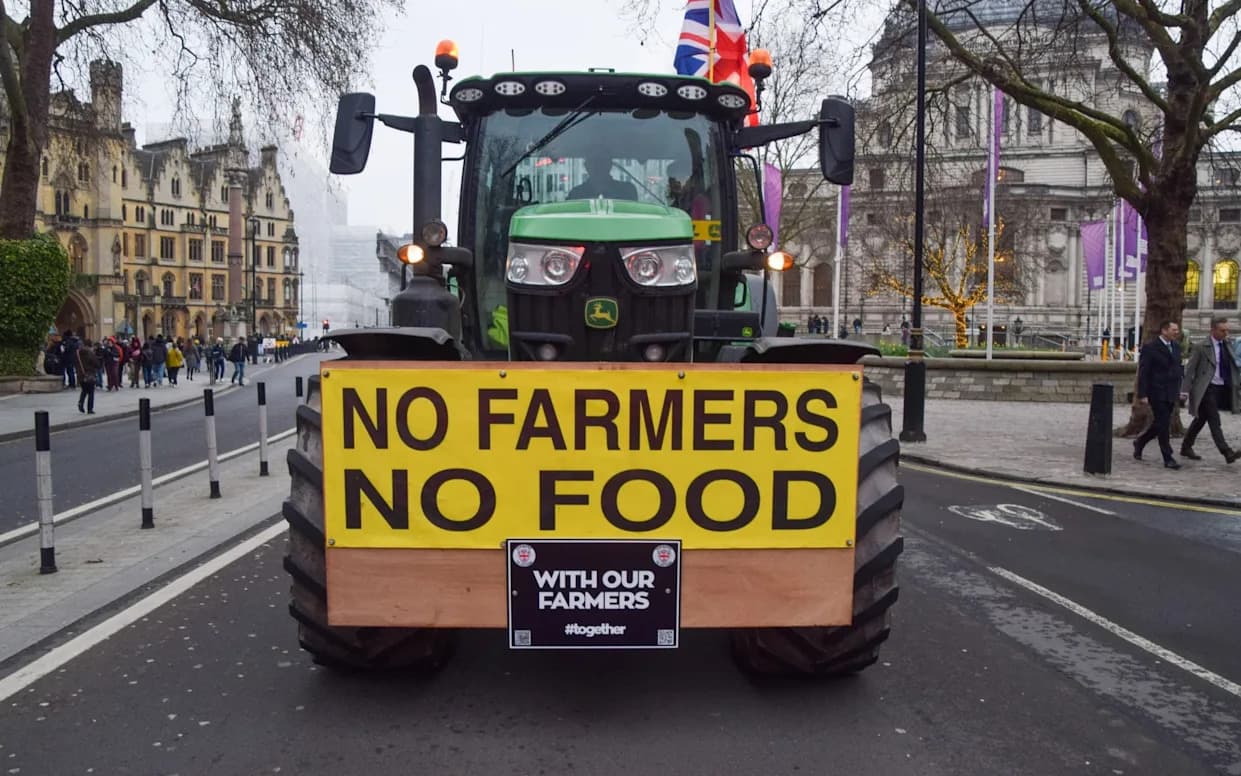
Farming should not be bearing the brunt of decarbonisation - Adie Bush
Jamie Blackett, a farmer with 61 years’ experience, warns that Labour’s net‑zero policies risk harming British agriculture unless policymakers balance decarbonisation with practical, market‑friendly incentives. He cites the Resolution Foundation’s report Green Your Eats, which acknowledges that reducing agricultural emissions will be costly and could push those costs onto consumers.
Costs And The Resolution Foundation
The Resolution Foundation, the piece notes, “concedes cutting emissions from agriculture is going to be expensive.” With the farming sector described as fragile, the author argues that farmers cannot shoulder the full financial burden and that higher food bills for consumers are a likely outcome.
Questioning The Climate Narrative
Drawing on six decades on the land, Blackett challenges the portrayal of an immediate climate emergency for British farming. He observes that extreme wet and dry seasons have long alternated and says local weather records do not show the clear long‑term trends he would expect to justify a panic‑driven call to reduce livestock numbers.
Carbon Accounting And Soil Carbon
The article criticises current carbon accounting methods, arguing they can overstate methane emissions from ruminants while undercounting carbon sequestered in grazed pasture soils. The author also highlights that soil carbon is not routinely measured across UK farms and points to examples — such as accredited carbon credits bought from Australian cattle stations practising regenerative grazing — as evidence that grazing systems can store significant carbon.
Opportunities On Farms
Rather than treating farming principally as a problem, Blackett contends it can be part of the solution. With better incentives or fewer disincentives, farms could generate exportable energy via rooftop solar, anaerobic digestion of slurry, and small‑scale hydro and wind. He also suggests enabling local micro‑grids (for example, by permitting rural segments of the grid to be more flexible) would allow farms to sell surplus power. Technological changes are already underway, he says, citing JCB’s work on hydrogen tractors as an early example of post‑diesel agricultural machinery.
Policy Risks And Political Context
The author warns against heavy state intervention and argues for market‑based approaches that encourage private enterprise, innovation and regenerative practices. He expresses concern that policy language — such as addressing the “friction between farmer choice and optimal land use” — could be used to justify large‑scale land‑use changes, including replacing productive land with energy installations. As a historical warning about the dangers of extreme state control over food, he references the Holodomor.
Conclusion
Blackett concludes that encouraging regenerative farming, investing in on‑farm energy and adopting new technologies can help Britain reach net zero without undermining food security or rural livelihoods. He argues that practical incentives and private‑sector initiative are preferable to punitive measures or wholesale state control.
Jamie Blackett is a farmer and the author of Red Rag to a Bull and Land of Milk and Honey.
Help us improve.