Overview: Federal immigration authorities are evaluating and, in several cases, purchasing warehouses nationwide to reconfigure into detention and processing centers. Local leaders, property owners and activists have pushed back — through moratoriums, resolutions and public pressure — and several owners have declined deals. ICE says it is expanding detention capacity and calls the sites “well structured detention facilities,” but it has offered few public details and federal projects often bypass local zoning rules.
ICE Scours Warehouses Nationwide — Some Bought, Many Blocked by Local Pushback
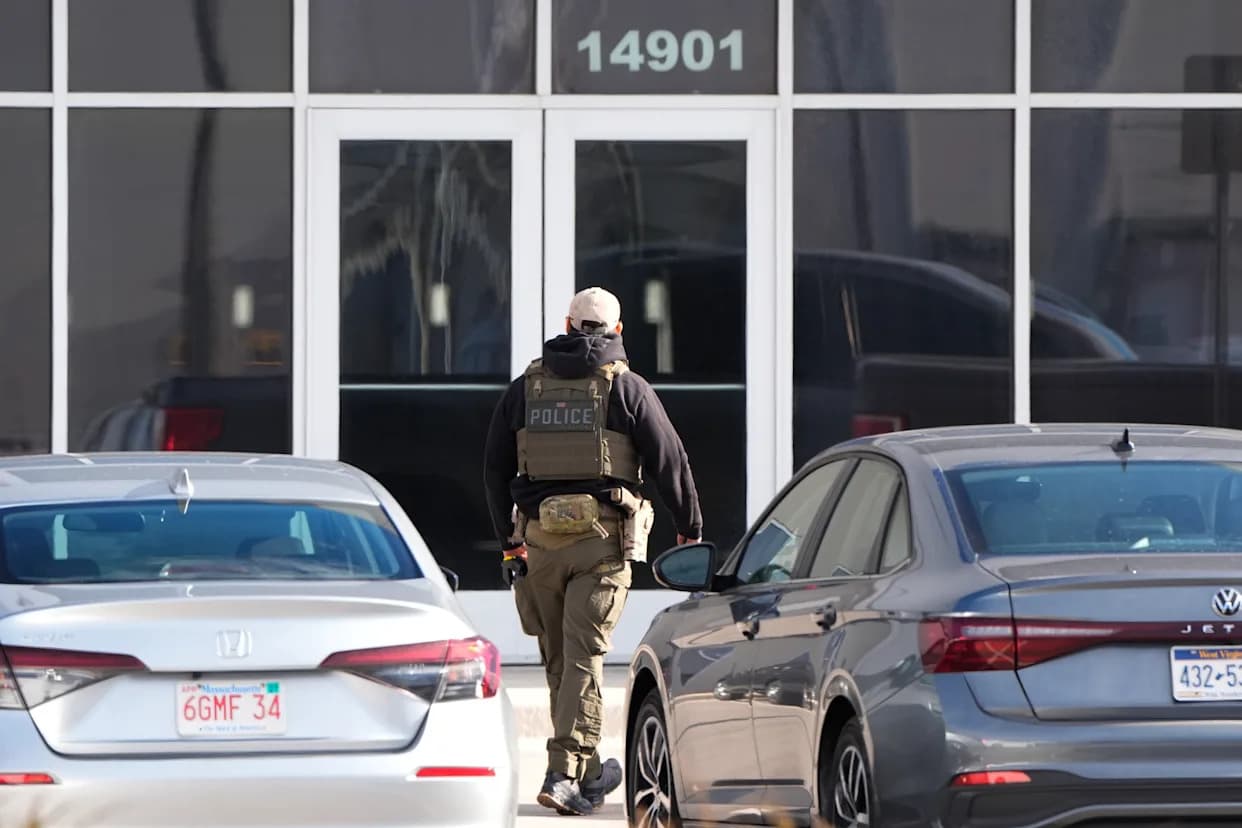
An ICE agent stands outside a warehouse as federal officials tour the facility to consider repurposing it as an ICE detention facility, Thursday, Jan. 15, 2026, in Kansas City, Mo. (AP Photo/Charlie Riedel)(ASSOCIATED PRESS)
Federal immigration authorities have been scouting warehouses across the United States and, in several cases, purchasing properties to convert into detention and processing centers. The moves have sparked swift reactions from elected officials, community groups and property owners — including moratoriums, public protests and owners choosing not to sell or lease.
Nationwide developments
U.S. Immigration and Customs Enforcement (ICE) says it is expanding detention capacity and has described targeted sites as “well structured detention facilities,” but the agency has provided limited public specifics about plans. Local leaders note that federal projects often fall outside typical municipal zoning rules, which complicates local efforts to block or shape these purchases.
State-by-state highlights
Arizona
A deed filed in Maricopa County shows ICE paid $70 million last month for a large warehouse on the northwestern edge of Phoenix. The city of Surprise said it was not notified of the transaction and reiterated that federal projects typically are not bound by local zoning.
Florida
In Orlando, city officials said they were told they lacked legal options to stop a potential ICE facility. Television reporters observed federal personnel and private contractors touring a 439,945-square-foot warehouse; ICE described the visit as “exploratory.”
Indiana
Merrillville’s town council unanimously approved a resolution opposing conversion of a newly built 275,000-square-foot warehouse into a processing or detention center. Officials said they received no advance notice from federal agencies.
Maryland
Project Salt Box, an ICE-watch group, uncovered a deed showing ICE paid $102.4 million for a warehouse roughly 60 miles northwest of Baltimore. Washington County officials said DHS had notified local historic and planning officials and described possible site elements such as cafeterias, health care spaces and guard facilities.
Minnesota
Two suburban Twin Cities warehouse owners withdrew from possible deals after public outcry. Woodbury city staff confirmed that one property will not be sold or leased to the federal government; in Shakopee the owner similarly stepped back.
Mississippi
Federal personnel were reported inspecting a privately owned building in Marshall County that is listed for sale and lease; local officials have offered limited comment amid other local priorities.
Missouri
Kansas City lawmakers enacted a five-year moratorium on non-city-run detention facilities the same day ICE was seen touring a nearly 1-million-square-foot warehouse outside the city. A county official said ICE representatives indicated they were scouting for a site that could house thousands of beds.
New Hampshire
Merrimack leaders sent a letter in January to Homeland Security Secretary Alejandro Mayorkas opposing a proposed ICE processing and detention site, citing concerns about lost property tax revenue, strain on local services and limited transparency. Public records indicate ICE has consulted state preservation officials about a possible 43-acre site.
New Jersey
Roxbury township passed a resolution opposing an ICE facility after officials observed federal representatives touring a warehouse. Township leaders say zoning currently prohibits using the property as a detention center but that they have not received formal federal notifications.
New York
DHS posted a notice proposing the purchase of a vacant warehouse in Chester for “ICE operations.” The site — a former distribution center — sits in a 100-year flood plain; proposed improvements would include a guard building and outdoor recreation area, according to the notice.
Oklahoma
Oklahoma City officials announced DHS is no longer in talks to acquire a nearly 27-acre warehouse after local opposition and a request that federal officials participate in the city’s permitting process; property owners say they ceased negotiations.
Pennsylvania
A deed recorded in Berks County shows ICE paid $87.4 million for an almost 520,000-square-foot warehouse formerly marketed as a logistics center. County officials said they were informed of the purchase only after the deed was recorded.
Texas
El Paso County commissioners formally opposed construction of detention facilities after reports that ICE was eyeing a local warehouse and said they are seeking additional information. Other Texas communities have received unconfirmed reports.
Utah
Salt Lake City Mayor Erin Mendenhall thanked the Ritchie Group after the developer announced it would not sell or lease a warehouse ICE had shown interest in, a decision that followed the mayor’s letter outlining occupancy requirements.
Virginia
Hanover County supervisors asked the county attorney to explore legal options after DHS indicated intent to purchase and operate an ICE processing facility in a mixed commercial area. Residents spoke passionately both for and against the proposal at a packed meeting.
What’s at stake
Local officials emphasize two recurring concerns: limited transparency from federal agencies about plans and the legal reality that federal acquisitions can proceed despite local zoning restrictions. Property owners, activists and elected officials are using public pressure, legal review and local ordinances (such as moratoriums) to influence outcomes where possible.
ICE maintains it is addressing operational needs and has framed its efforts as expanding necessary detention and processing capacity. Meanwhile, communities across the country are mobilizing to demand more information or to press property owners and elected leaders for alternatives.
Help us improve.