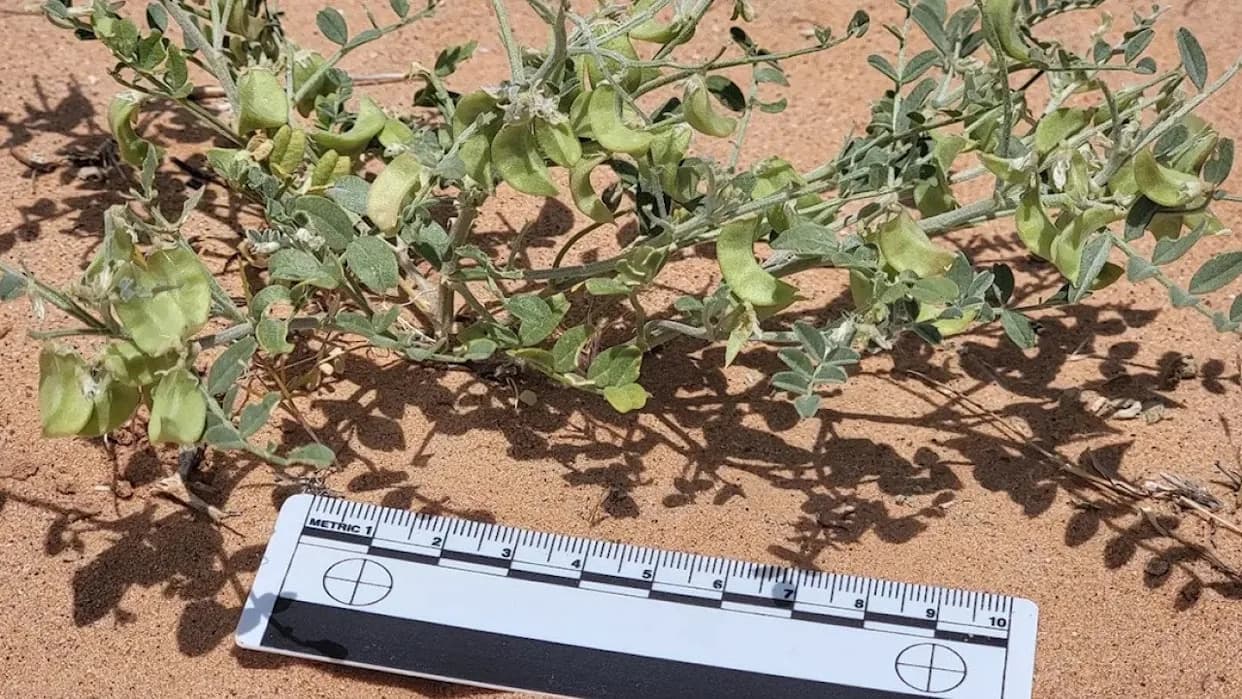
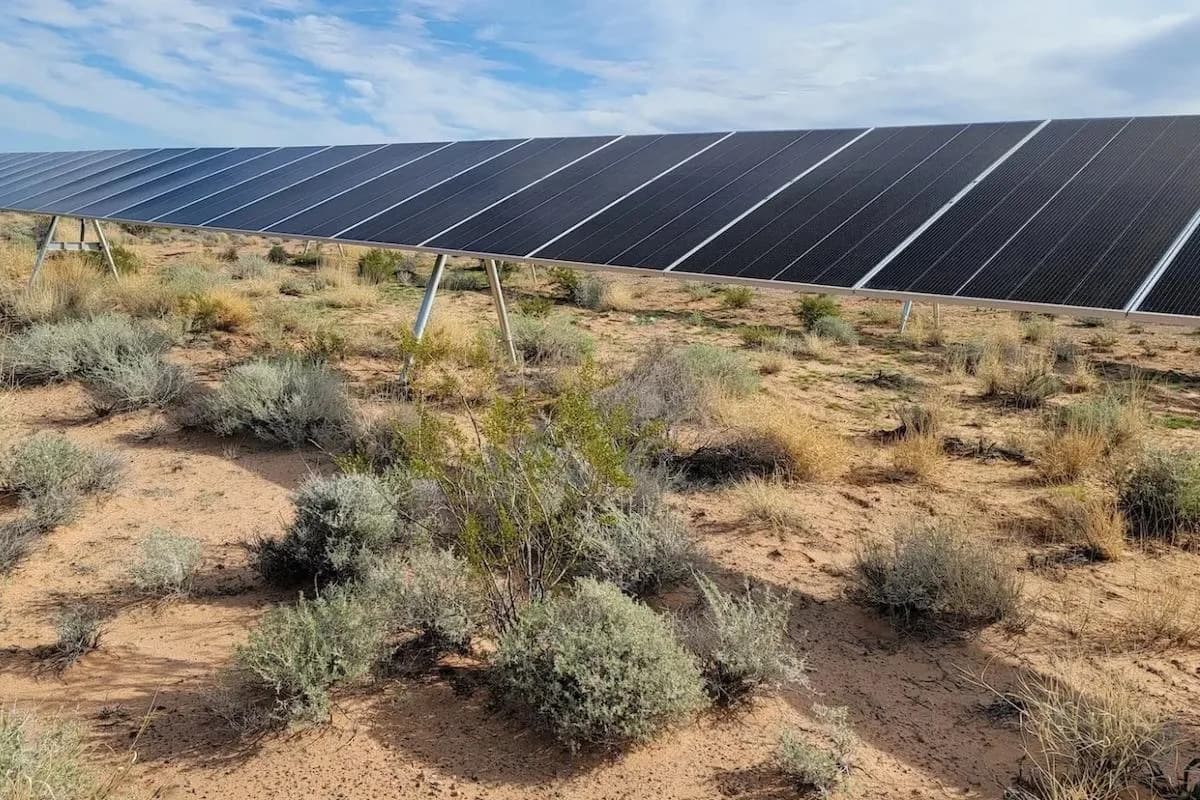
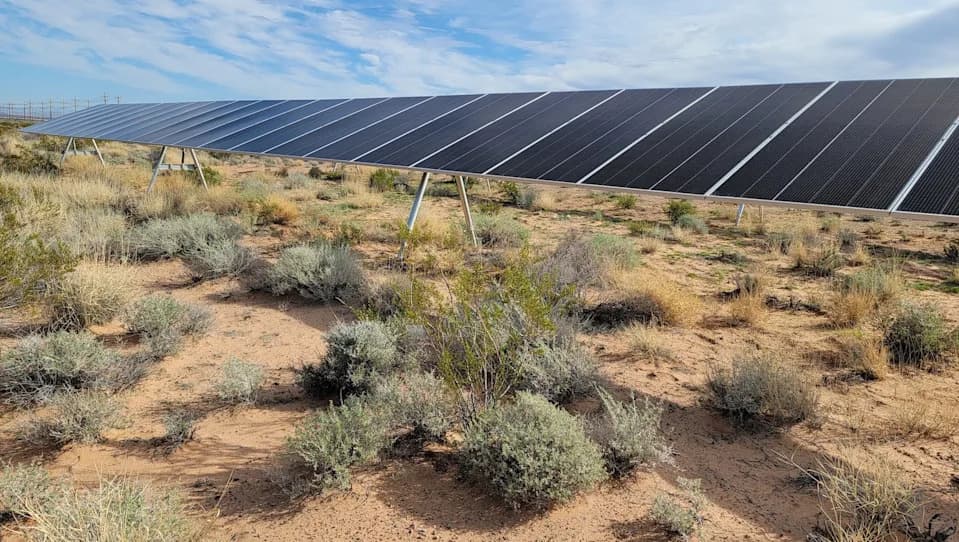
The threecorner milkvetch, a rare Mojave Desert plant, flourished after the Gemini Solar Project avoided traditional "blade‑and‑grade" clearing; researchers recorded an increase from 12 plants predevelopment to 93 in 2024. Ecovoltaic practices — retaining seed banks, using native seed mixes, and designing panel layouts with habitat in mind — can boost flowering plants, pollinators, birds, and bats. Agrivoltaics can further pair solar power with crop production and water savings, but outcomes depend on panel height, shade, and ongoing site management.
How Solar Panels Helped a Rare Mojave Plant: Threecorner Milkvetch Thrives at Gemini Project
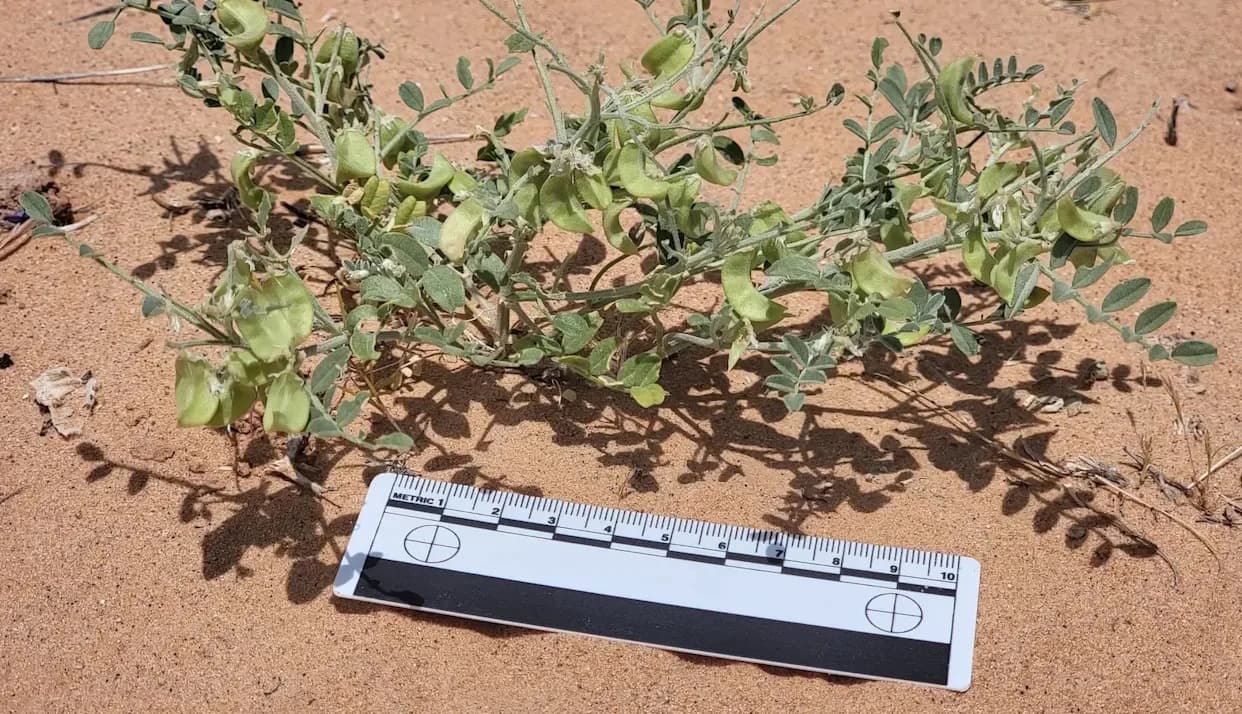
The Mojave Desert is often imagined as an empty expanse of sand and rock, but it supports a surprising diversity of life — including the rare threecorner milkvetch, a low‑growing member of the pea family that waits for seasonal rains to germinate, flower, and set seed.
Seed Banks Survive Gentle Construction
Many large solar developments use a "blade‑and‑grade" approach that clears vegetation and levels soil, which can destroy native seed banks. Near Las Vegas, however, the Gemini Solar Project used a less invasive construction method aimed at preserving existing habitat. A recent study found strong evidence the approach worked: researchers counted 12 threecorner milkvetch plants on the site before development and 93 in 2024, indicating the seed bank persisted through construction. Plants at Gemini were also wider, taller, and produced more flowers and fruits than counterparts on an adjacent parcel, likely because panel shade reduced soil evaporation and left more moisture available for growth.
“So you just have the potential for a lot more plants,” said Tiffany Pereira, an ecologist at the Desert Research Institute and lead author of the paper. “There’s seedlings of so many other species coming up as well. And so the fact that seed bank survived is phenomenal.”
Ecovoltaics: Designing Solar Sites for Nature
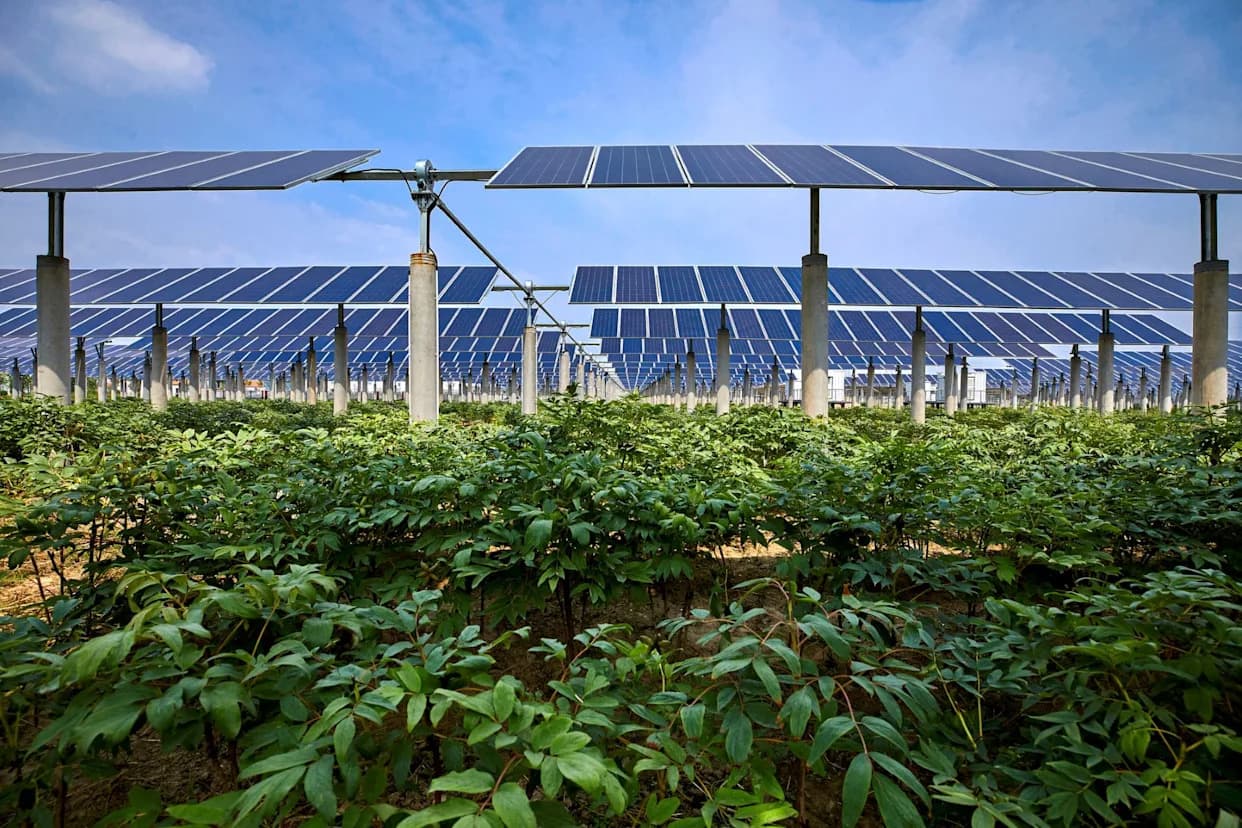
The strategy used at Gemini is part of a broader approach called ecovoltaics, which emphasizes minimizing disturbance, retaining native vegetation, and seeding with local grasses and wildflowers where appropriate. When managed with ecological goals in mind, solar sites can attract pollinators, birds, and other wildlife.
Lee Walston, an ecologist at Argonne National Laboratory, points to long‑term studies on former cropland in Minnesota that show large biodiversity gains after ecologically minded solar development. Over five years, researchers recorded a sevenfold increase in unique flowering plant species and a threefold rise in insect pollinator abundance; native bees increased roughly twentyfold. Follow‑up work across a dozen sites also found increases in grassland birds and bats, likely responding to greater insect prey and new shelter opportunities beneath panels.
Agrivoltaics: Growing Food and Power Together
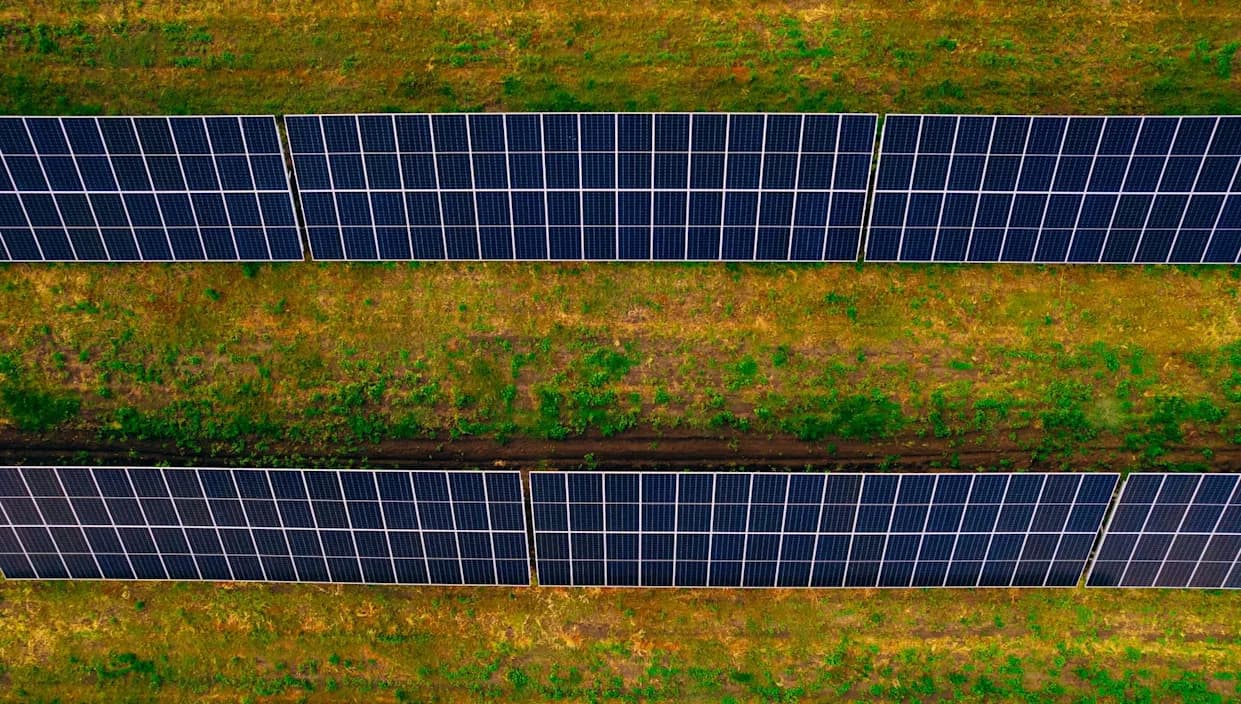
Solar infrastructure can also support crop production in a practice called agrivoltaics. Panels create a moderated microclimate that can prevent overheating in summer and extreme cold in winter, often reducing irrigation needs. Some rooftop experiments — for example, with cucumbers — show dramatically improved water efficiency, and researchers are testing which high‑value crops perform best under panels so farmers can offset installation costs.
Management Matters: Height, Shade, And Grazing
Positive ecological outcomes are not automatic. Shade levels beneath panels influence which species will thrive: in the Mojave study, only one threecorner milkvetch was found directly under a panel, with most individuals growing in sunnier strips between arrays. Taller panel mounts allow larger plants to reach full size but increase construction costs. Developers and ecologists must balance panel height, seed mixes, and management techniques such as mowing or conservation grazing — using sheep or goats to reduce invasive weeds and dead biomass that can increase fire risk.
“We’re trying to work with developers to say, ‘OK, well, if all you can do is two feet, what might be the best mix of seed mixes and management styles that could really optimize the habitat?’” Walston said.
Risks of Traditional Clearing
By contrast, blade‑and‑grade construction removes root networks that stabilize soils, increasing erosion and opening the door for opportunistic invasive plants that can outcompete natives and provide poorer resources for native pollinators. Thoughtful site design and maintenance help avoid those outcomes.
Conservation Opportunity
Taken together, evidence from the Gemini project and other studies suggests that thoughtfully designed solar developments can generate clean electricity while supporting native biodiversity and, in some cases, agricultural production. As Pereira put it, “Rather than a moonscape of invasive species and dust blowing into cities, why not strive for something better? It’s a wild and beautiful place that we live in, and it’s our job to look out for these species as well.”
Help us improve.