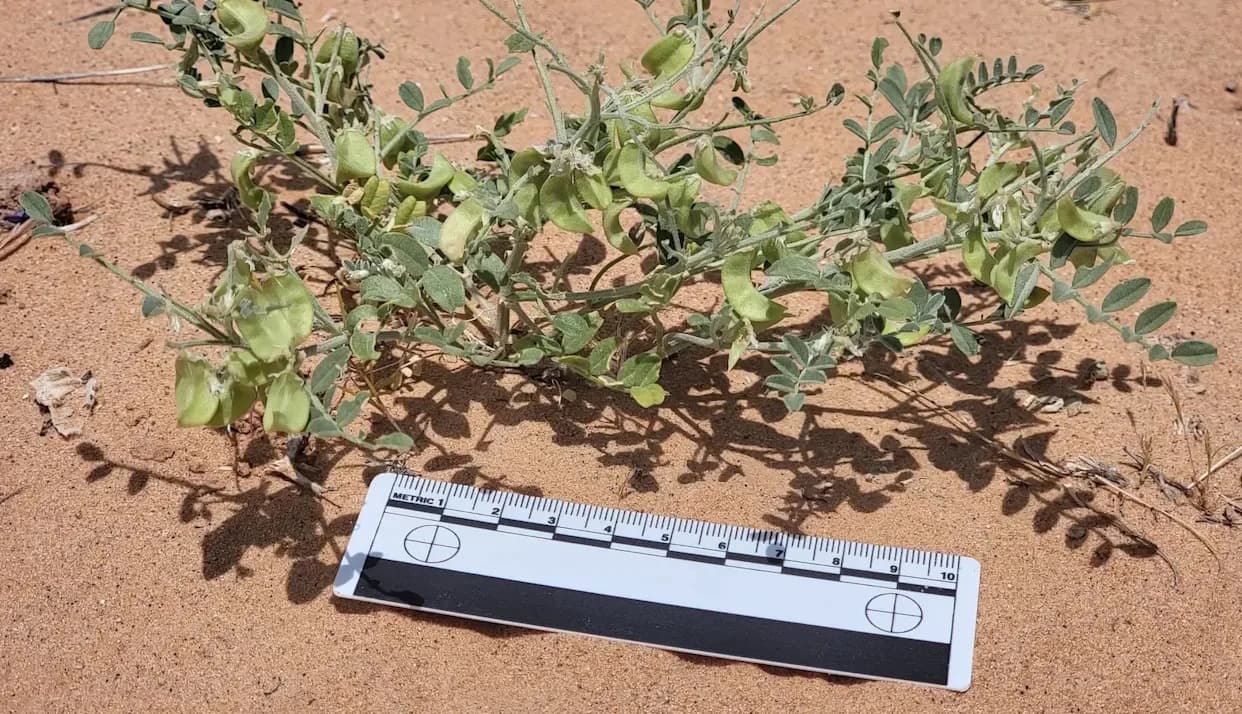
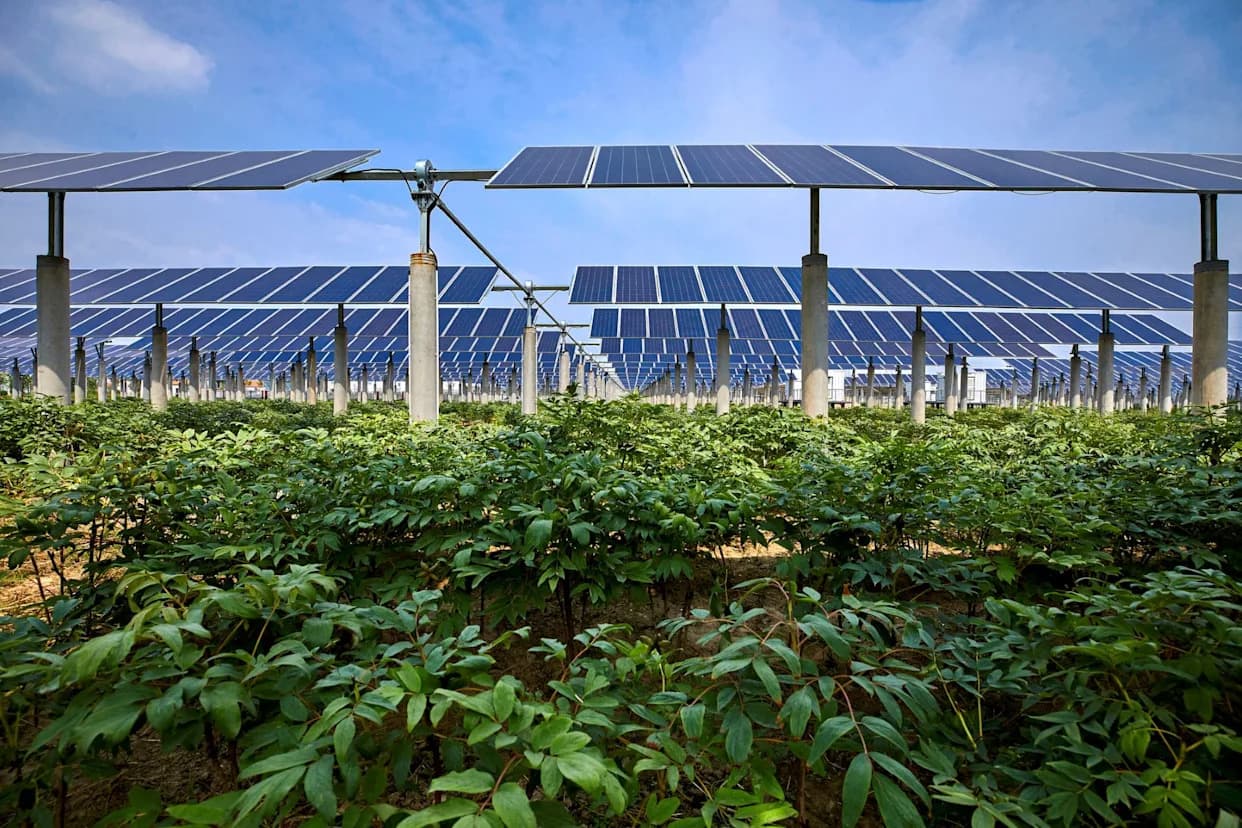
The Mojave’s threecorner milkvetch — a rare, ground-hugging plant — increased from 12 individuals before construction to 93 at the Gemini Solar Project after the site used gentler building methods. Ecovoltaics, which avoids blade-and-grade clearing and favors native seeding and careful design, helps preserve seed banks and attract pollinators and wildlife. Studies from Minnesota and elsewhere show dramatic increases in flowering plants, pollinators and bird activity at thoughtfully managed solar sites.
Solar Farms Can Shelter Rare Desert Plants — How the Gemini Project Boosted the Threecorner Milkvetch
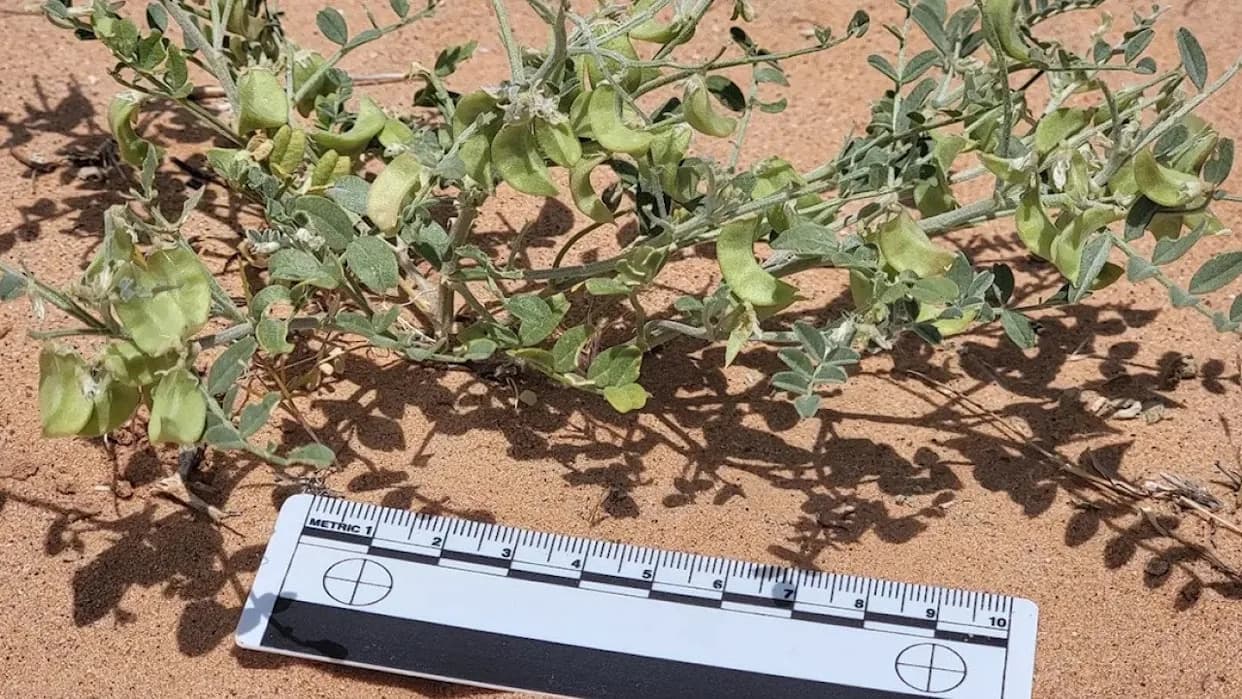
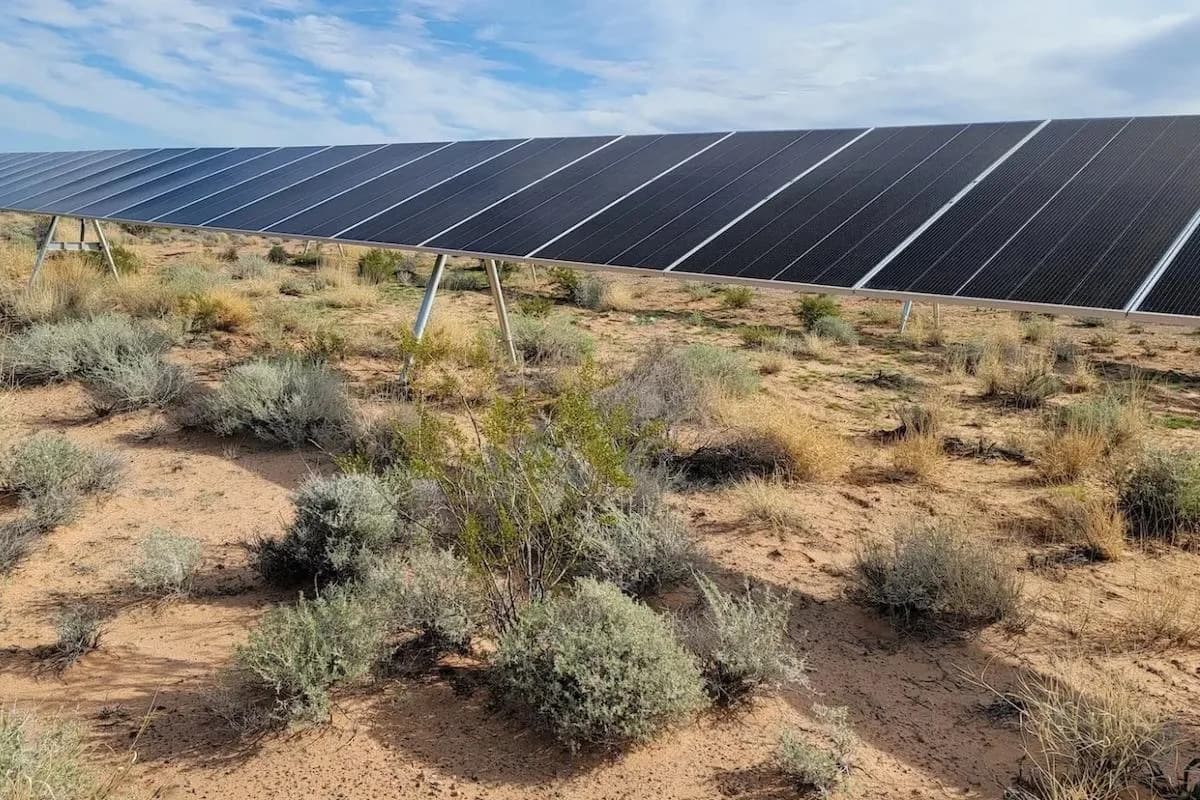
Desert plants grow among panels in the Gemini Solar Project, outside Las Vegas. - Courtesy of Tiffany Pereira
The Mojave Desert, often pictured as barren, supports a surprising diversity of life — including a rare plant called the threecorner milkvetch. This low-growing member of the pea family survives extreme aridity by remaining dormant until rains trigger germination, flowering and seed production. Though hardy, the species is vulnerable to construction-related disturbance, particularly the widespread “blade-and-grade” method that strips vegetation and evens soil, destroying the seed banks beneath the surface.
Gentler Construction, Stronger Recovery
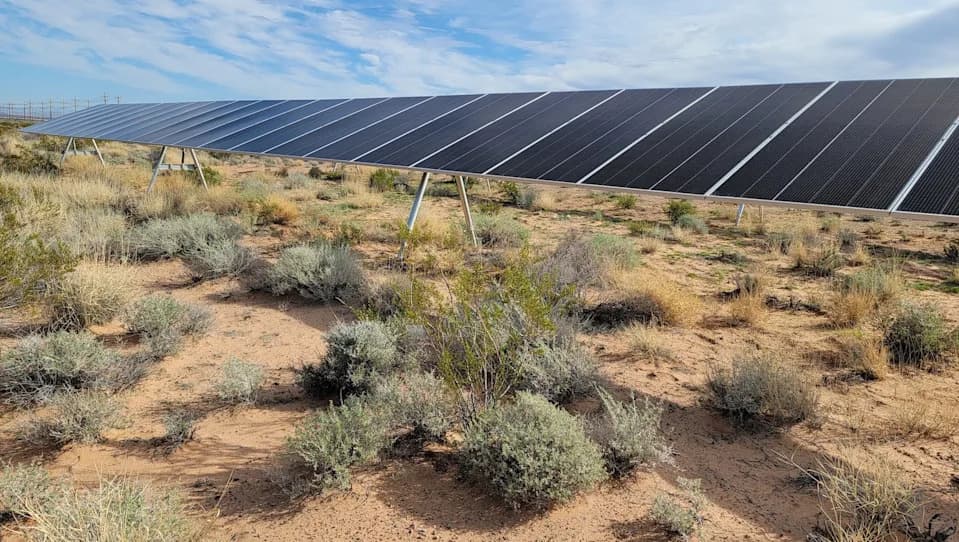
Outside Las Vegas, the Gemini Solar Project used a less destructive approach to development that prioritized preserving existing habitat. A recent study found that the number of threecorner milkvetch plants on the site rose from 12 before construction to 93 in 2024, indicating that seeds in the soil survived the build and that plants thrived afterward. Compared with a nearby control plot, plants at Gemini were broader, taller and produced more flowers and fruits — likely because the panels shade the soil, slow evaporation and leave more moisture available for growth.
Tiffany Pereira, an ecologist at the Desert Research Institute and lead author of the paper, called the survival of the seed bank "phenomenal," noting that many other native seedlings were emerging on the site.
What Is Ecovoltaics?
This gentler strategy is part of a growing practice called ecovoltaics, which designs solar facilities to preserve native plants and seed banks instead of clearing them. Managers may seed soils with native grasses and wildflowers, adjust panel layout and height for habitat needs, and use targeted mowing or grazing to manage vegetation. According to experts, these practices can attract pollinators, birds and other wildlife.
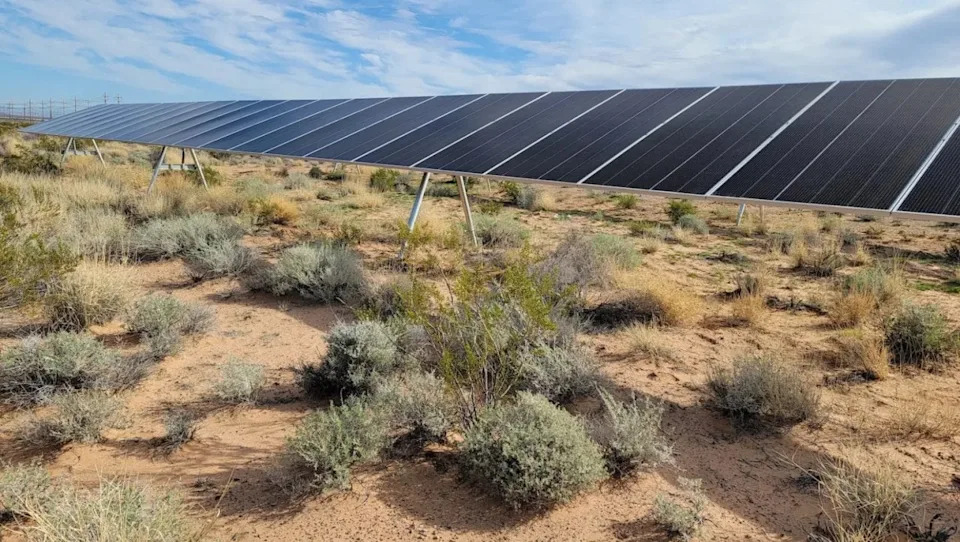
Desert plants grow among panels in the Gemini Solar Project, outside Las Vegas. - Courtesy of Tiffany Pereira
Evidence From Other Regions
Findings from Minnesota reinforce the potential benefits: in a five-year study on former cropland, researchers observed a sevenfold increase in flowering plant species and a threefold rise in insect pollinators; native bees alone increased about twentyfold. Follow-up work across a dozen sites showed more grassland birds and bats, likely drawn by greater insect abundance, and even nesting activity beneath panels where birds are sheltered from predators.
Design Trade-Offs And Management
Positive biodiversity outcomes aren’t automatic. Different species prefer different light conditions: in the Mojave study, only one threecorner milkvetch was found directly under a panel, with most individuals in sunnier gaps between arrays, while some seedlings favored shadier microhabitats. Panel height and spacing strongly influence what plants can grow — taller supports allow larger plants but increase material costs. Developers sometimes set panel height to enable conservation grazing by sheep or goats, which helps control invasive weeds and reduce fire risk.
Traditional blade-and-grade clearing not only removes native vegetation but also eliminates root networks that stabilize soil, leaving sites prone to wind erosion and invasion by fast-growing nonnative plants that can displace natives and attract fewer indigenous pollinators.
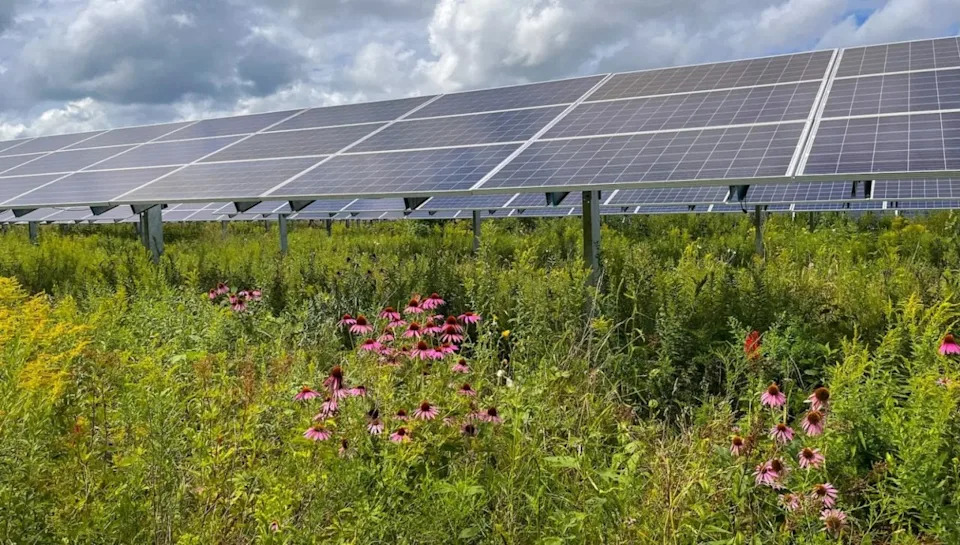
An ecovoltaic project teems with pink Echinacea flowers, which attract native pollinating species. - Courtesy of Lee Walstonk
Agrivoltaics: Growing Food Under Panels
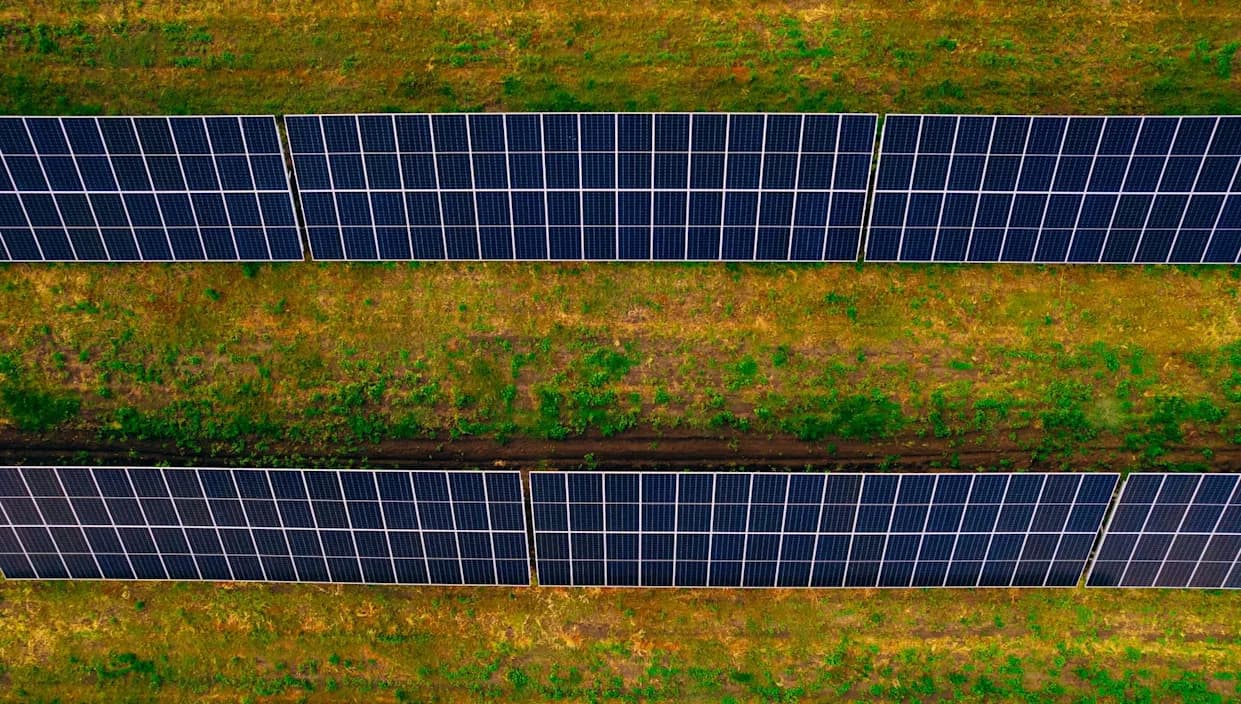
Solar installations can also be paired with agriculture in agrivoltaics. Trials show some crops — for example, rooftop cucumbers — perform very well under panels, benefiting from a moderated microclimate that reduces heat stress and saves water. In one example, shaded rooftop crops used about one-third the water compared with full-sun planting. Researchers are evaluating which high-value crops perform best under arrays to help producers recoup installation costs.
Conclusion
When designed and managed thoughtfully, solar farms can provide clean energy while supporting biodiversity and even food production. The Gemini example suggests that avoiding blade-and-grade clearing and working with native seed banks can turn solar developments into havens for rare plants and pollinators rather than ecological losses.
Note: The company behind Gemini, Primergy, did not respond to requests for comment. This story is based on a recent peer-reviewed study and related expert commentary.
Help us improve.