The pause of ICE’s enforcement operation in Maine eased immediate tensions but did not resolve the broader political and community damage. Gov. Janet Mills and challenger Graham Platner have seized the moment to demand reforms and target Sen. Susan Collins, who said talks with DHS helped prompt the drawdown. Lawmakers and local leaders are seeking information on more than 200 arrests and are pursuing protections that would require warrants for ICE searches in schools and health-care facilities.
ICE Pauses Maine Sweep After 200+ Arrests — Political Fallout Could Shape 2026 Race
BANGOR, Maine — The federal immigration sweep that unsettled communities across Maine has paused, but its political and community consequences are expected to reverberate into the 2026 campaign season.
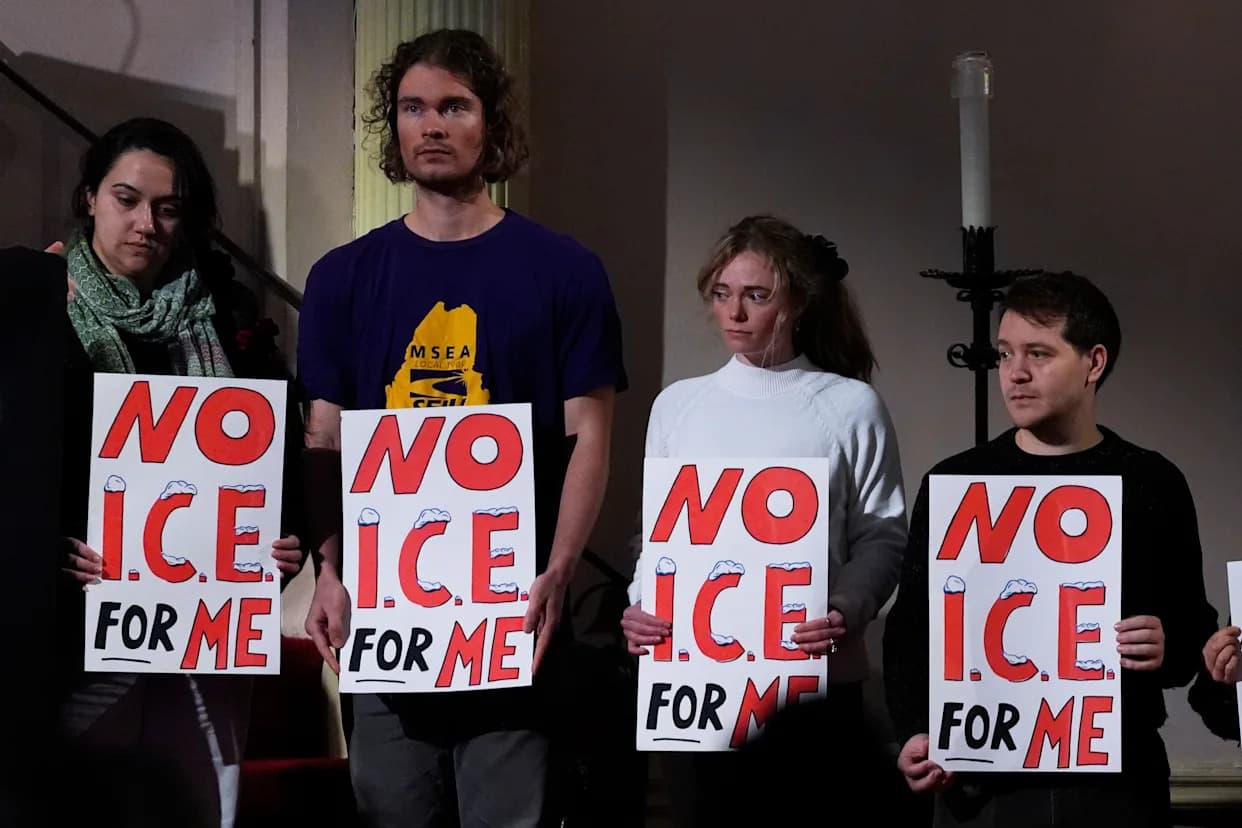
Democratic Gov. Janet Mills launched her first Senate campaign ad on Friday and centered the message on Immigration and Customs Enforcement (ICE). Political newcomer Graham Platner, who is also seeking the Democratic nomination, staged anti-ICE protests at Sen. Susan Collins’ offices and urged her to block funding for the agency.
What Happened
Sen. Collins announced Thursday that ICE would end its enforcement campaign in Maine — an operation the Department of Homeland Security had informally called “Operation Catch of the Day.” The operation, which ran for more than a week, resulted in over 200 arrests and triggered widespread protests, fear among immigrant communities and disruptions to daily life in parts of southern Maine.
Community Impact
Local leaders described the sweep as deeply destabilizing: school attendance fell in some areas, legal immigrants were afraid to go to work, and many residents stayed home for days. Activists and community members tracked ICE activity across the state and reported scenes that left long-lasting emotional and civic damage.
“ICE operations in Maine have failed to improve public safety and have caused lasting damage to our communities,” said Carl Sheline, mayor of Lewiston, a city with a large Somali American population.
Political Fallout
Democrats quickly turned the sweep into a campaign issue. Gov. Mills used the episode to press for federal reforms and to criticize what she called the potential "weaponization" of federal law enforcement. Platner staged protests at Collins’ Portland and Bangor offices, accusing the senator of taking credit for the drawdown and calling for an end to ICE funding.
Collins framed her role differently, saying her conversations with Homeland Security leadership helped produce the drawdown — a narrative she uses to highlight her influence in Washington and to present herself as a pragmatic center able to deliver results for Maine.
Calls For Answers And Reform
Mills and Maine Attorney General Aaron Frey sent a letter demanding details about those arrested and where they are now. State lawmakers and local leaders are pressing to know who was detained, the reason for each detention, and the current locations of detainees — information that many say remains unclear.
On Thursday in Augusta, lawmakers also heard testimony on a bill that would require ICE to obtain judicial warrants before searching private spaces inside schools, health-care facilities and similar locations. Mills publicly backed the measure, citing the destabilizing effect of the recent operation.
Outlook
Activists and many Democrats say the reported pause is only a first step. They are pushing for deeper oversight, congressional action to curtail ICE funding and administrative changes at DHS. Local officials, meanwhile, are focused on tracking detainees and rebuilding trust with immigrant communities that have been frightened and disrupted by the operation.
Notable detail: Lawmakers, activists and community leaders continue to seek transparency about more than 200 arrests and are pursuing both state-level protections and federal accountability.
Help us improve.