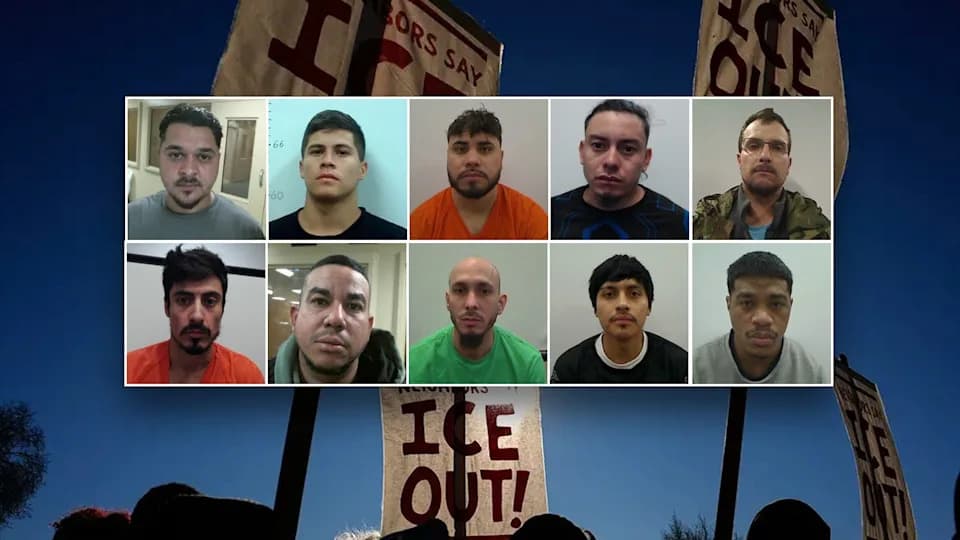
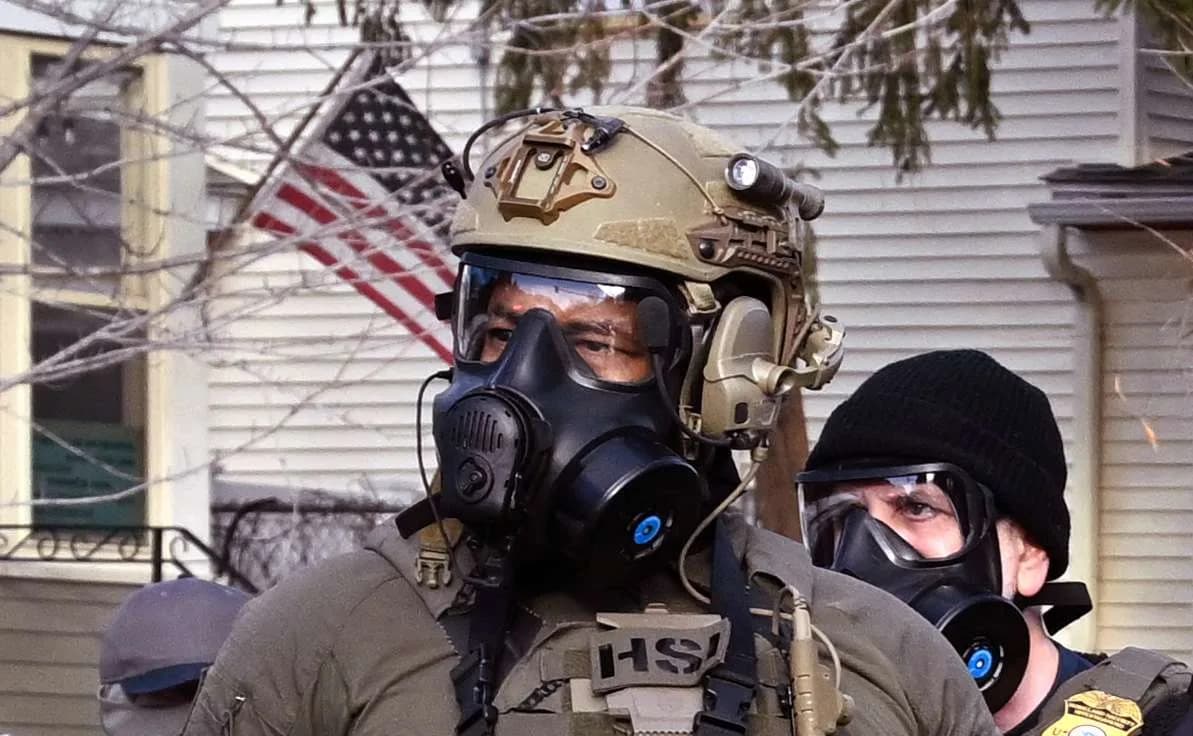
ICE recently touted a Maine sweep as arresting the "worst of the worst," but court records show a mixed group of detainees. Some have violent felony convictions, while others have pending immigration cases or dismissed charges. Legal advocates say rapid transfers disrupted access to counsel and ongoing proceedings; several habeas petitions have been filed. Notable cases cited by ICE include Dominic Ali and Ambessa Berhe, though other named detainees had less-clear or vacated records.
Court Records Challenge ICE’s Claim That Maine Detainees Were the 'Worst of the Worst'
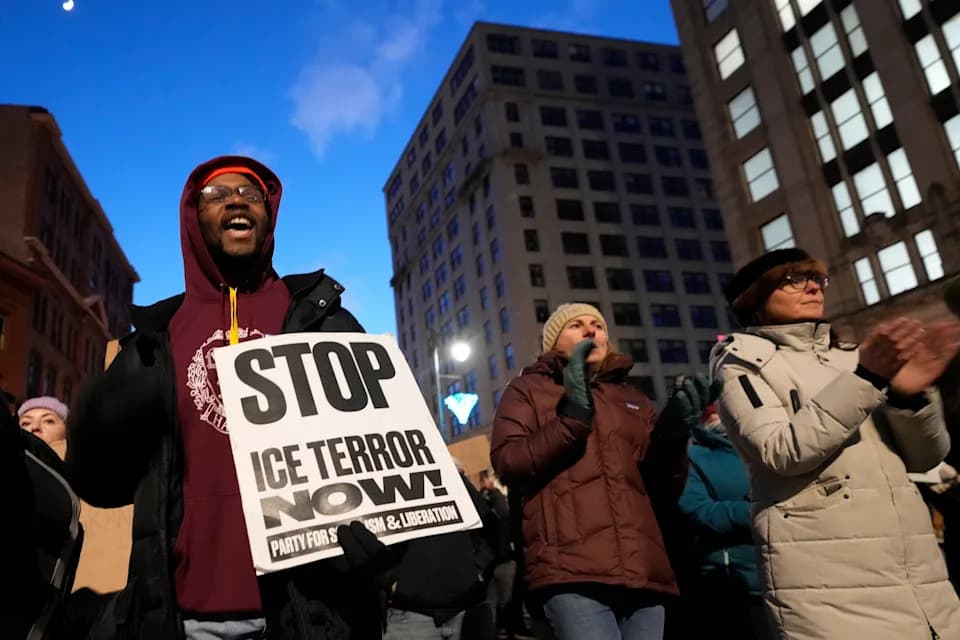
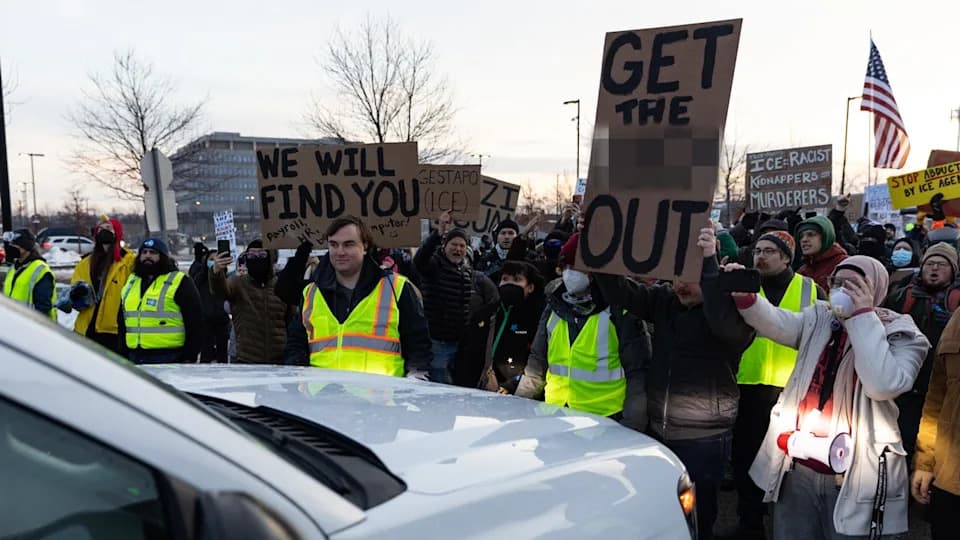
Protesters rally against the presence of U.S. Immigration Customs Enforcement in Maine, Friday, Jan. 23, 2026, in Portland, Maine. (AP Photo/Robert F. Bukaty)(ASSOCIATED PRESS)
PORTLAND, Maine — Federal Immigration and Customs Enforcement (ICE) has presented a recent enforcement surge in Maine as the apprehension of some of the state’s most dangerous criminals, but a review of court and immigration records paints a more complicated picture.
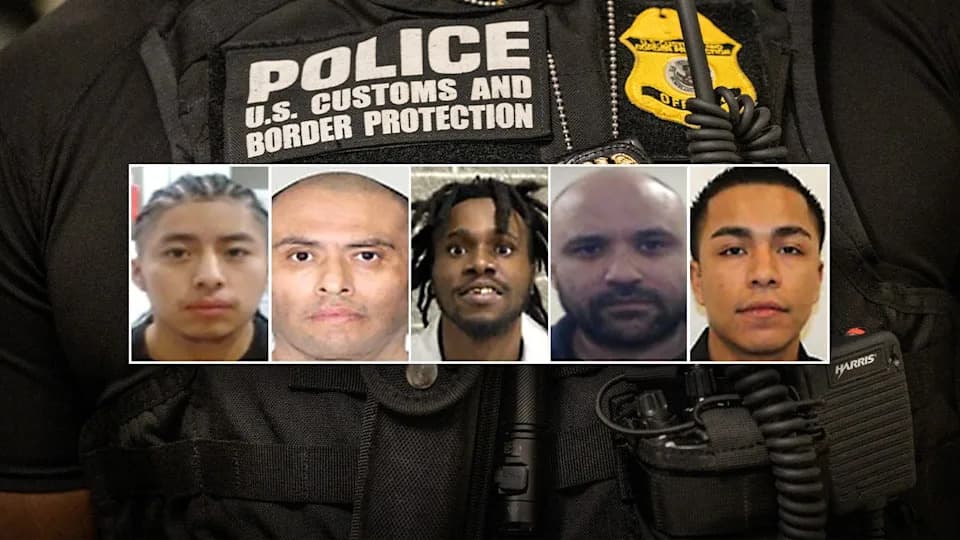
ICE said more than 100 people were detained statewide as part of "Operation Catch of the Day," a name referencing Maine’s fishing industry, and asserted the sweep included the "worst of the worst," such as "child abusers and hostage takers." Court documents, however, show a mix of outcomes: some detainees have violent felony convictions, others face unresolved immigration cases, and some were arrested but never convicted.
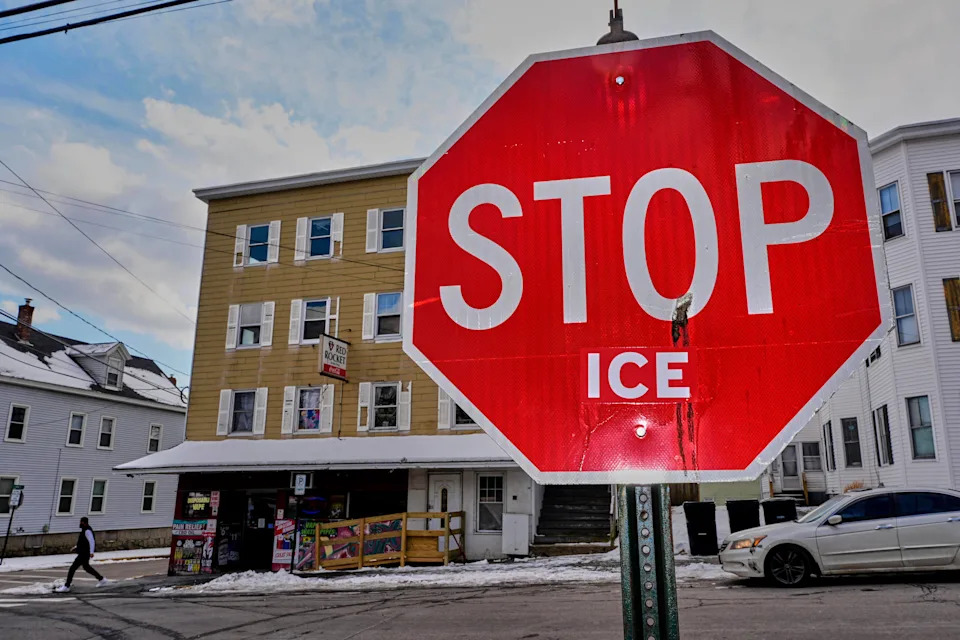
Anti-ICE sentiment is expressed on a traffic sign, Friday, Jan. 23, 2026, in Biddeford, Maine.(AP Photo/Robert F. Bukaty)(ASSOCIATED PRESS)
High-Profile Examples Highlight Complexity
Dominic Ali, a Sudan native, is among the cases ICE cited that includes serious felony convictions. Court records show Ali was convicted in 2004 of violating a protective order and in 2008 of second-degree assault, false imprisonment and obstructing the reporting of a crime. Prosecutors said he threw his girlfriend to the floor of her New Hampshire apartment, kicked her and broke her collarbone. When sentencing him in 2009, Judge James Barry said,
"His conduct amounted to nothing less than torture."
Ali was later paroled to ICE custody, and an immigration judge ordered his removal in 2013. Publicly available records do not make clear what followed that removal order.
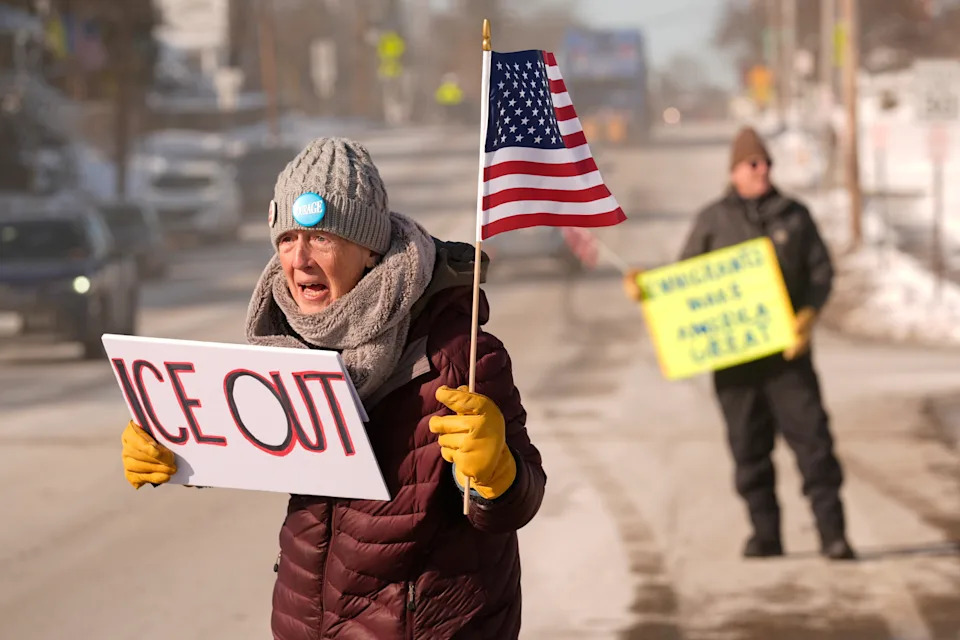
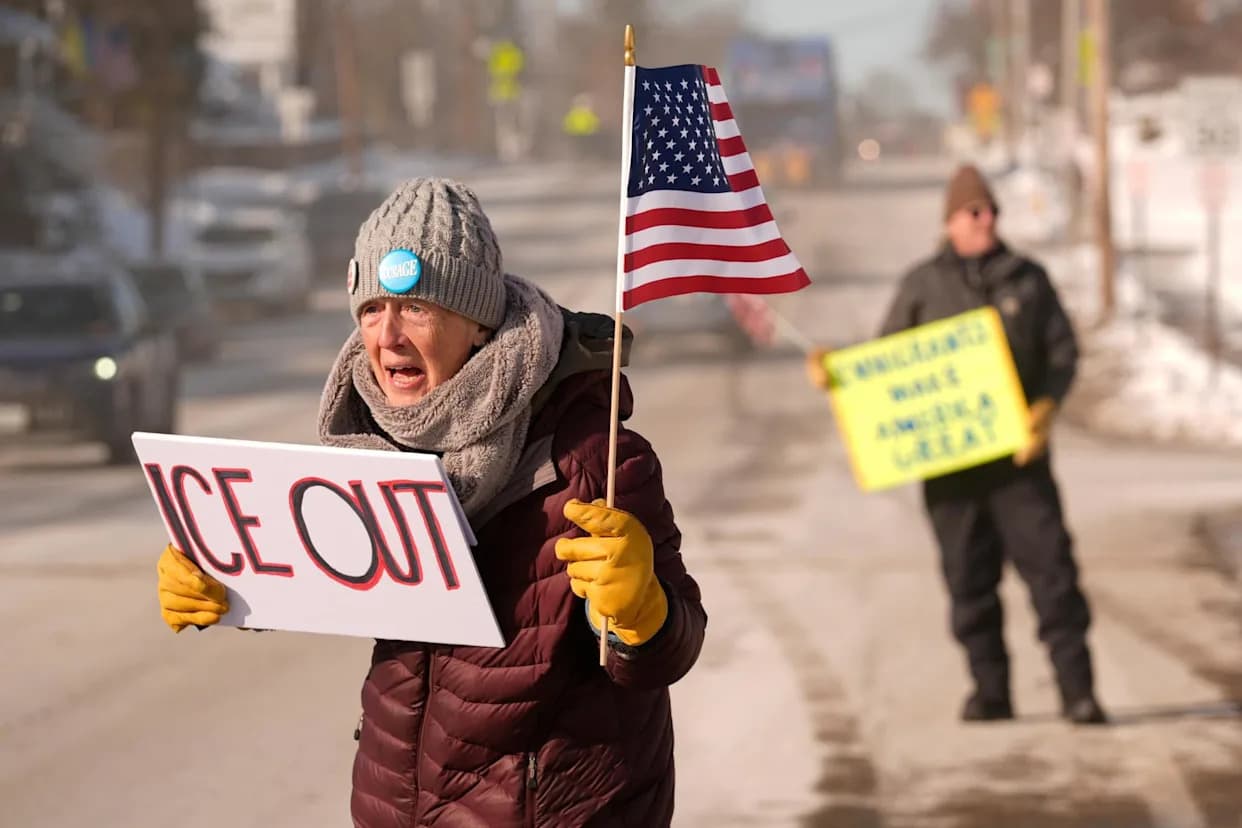
Rosie Grutze protests the presence of the U.S. Immigration and Customs Enforcement, Wednesday, Jan. 21, 2026, in Portland, Maine. (AP Photo/Robert F. Bukaty)(ASSOCIATED PRESS)
Ambessa Berhe is another individual whose mug shot was circulated by ICE. Records show convictions for cocaine possession and assaulting a police officer in 1996 and a cocaine possession conviction in 2003. In 2006, a federal appeals court in Boston vacated a removal order for Berhe and remanded the case to the Board of Immigration Appeals for further review. Court files also note that Berhe was admitted to the United States as a refugee in 1987.
Cases That Raise Questions
Other ICE-highlighted cases appear less clear-cut. Elmara Correia, identified by the agency as having been "arrested previously for endangering the welfare of a child," is associated in Maine court records with a 2023 charge tied to learner's-permit rules for new drivers — a case that was later dismissed. Correia filed a petition challenging her detention, and a judge issued a temporary emergency order barring authorities from transferring her out of Massachusetts, where she is being held. Her attorney says she entered the United States on a student visa about eight years ago and has not been subject to expedited removal.
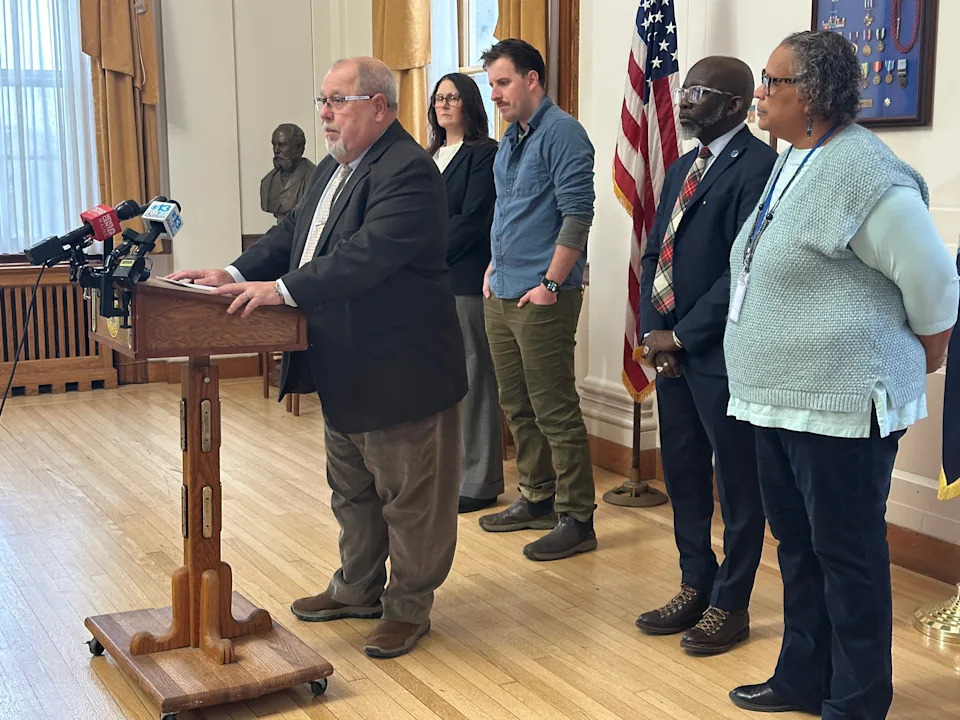
Mayor Mark Dion speaks at a news conference about ICE activity Wednesday, Jan. 21, 2026, in Portland, Maine. (AP Photo/Patrick Whittle)(ASSOCIATED PRESS)
Portland Mayor Mark Dion questioned ICE’s public characterization of those detained, asking whether officials were equating arrest with conviction and whether sentences — where relevant — had been served. He also noted ICE’s inclusion of Dany Lopez-Cortez, described by the agency as a "criminal illegal alien" from Guatemala convicted of operating under the influence, and questioned whether such a common but serious offense fits ICE’s "worst of the worst" label.
Legal Pushback And Concerns About Transfers
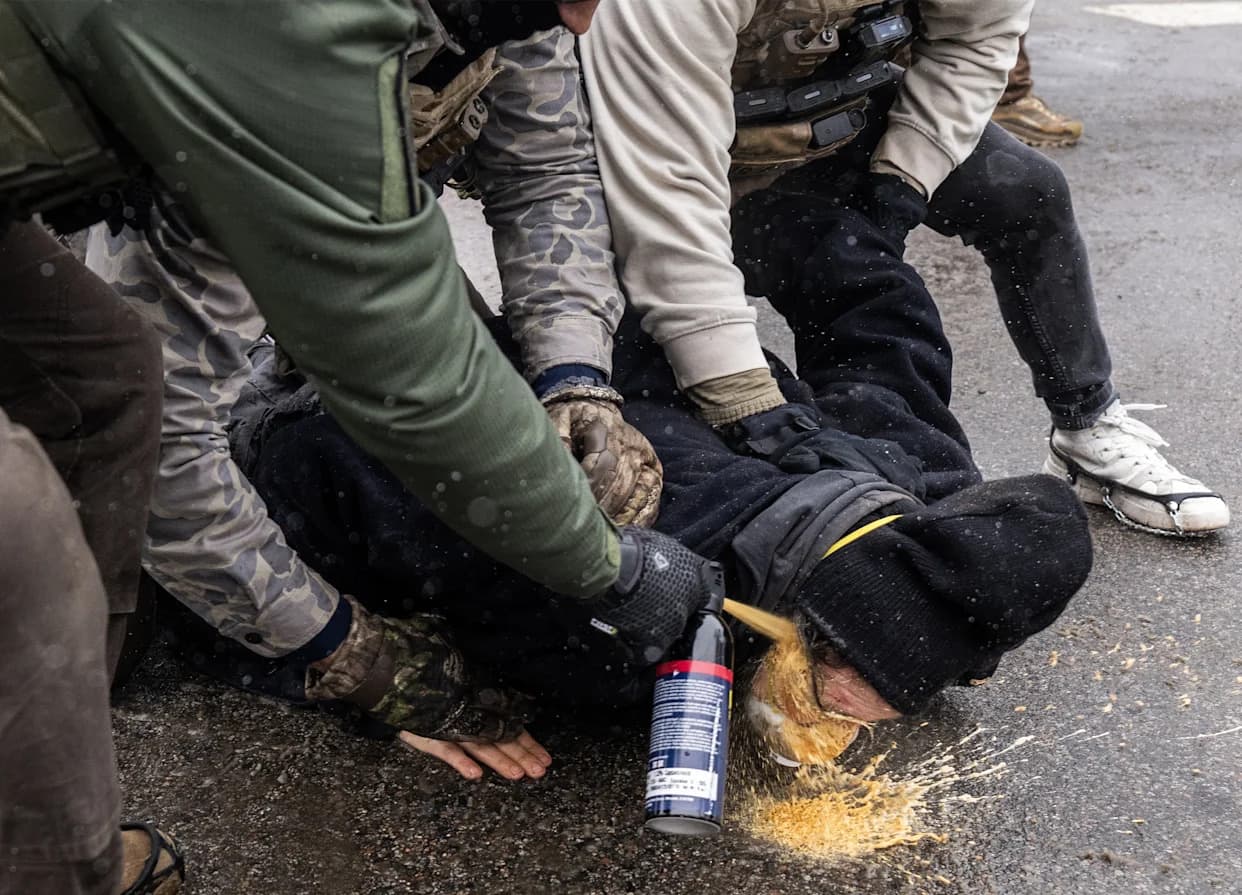
Immigration attorneys say rapid transfers and mass sweeps can sever access to counsel and disrupt pending immigration proceedings. Boston attorney Caitlyn Burgess said her office filed habeas petitions on behalf of four clients detained in Maine and transferred to Massachusetts; the most serious charge among them, she said, was driving without a license. Attorney Samantha McHugh said she filed multiple habeas petitions for Maine detainees and represented eight clients who, she said, had no criminal records and were detained while at work or eating lunch.
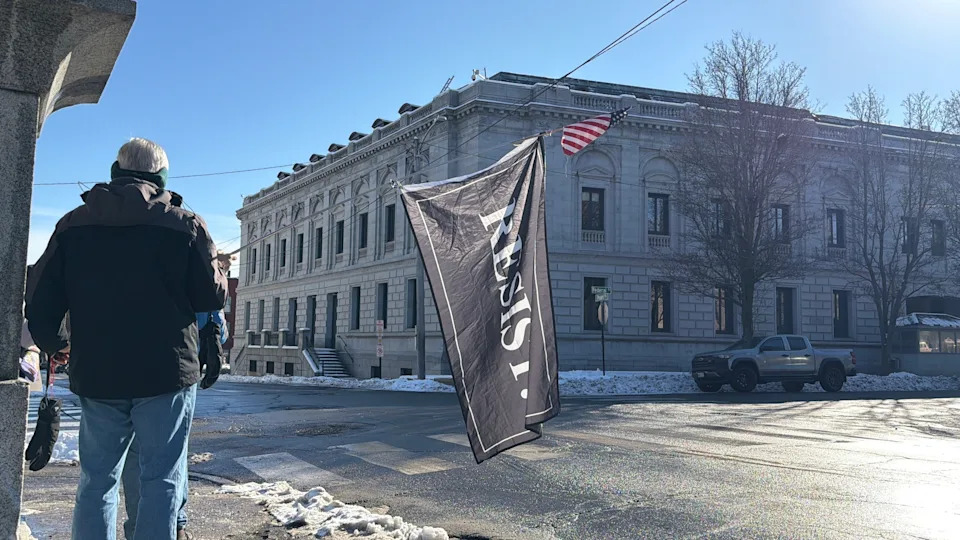
A protester holds a "Resist" flag in front of federal court in Portland, Maine as Immigration and Customs Enforcement conduct operations in the state, Thursday, Jan. 22, 2026. (AP Photo/Rodrique Ngowi)(ASSOCIATED PRESS)
Federal court history also shows that immigration cases tied to criminal convictions can remain unresolved for years or be reopened, underscoring the legal complexity behind ICE’s public narrative.
Context: ICE said the operation targeted roughly 1,400 immigrants in Maine, a state of about 1.4 million people, roughly 4% of whom are foreign-born.
Bottom Line: While ICE emphasized violent offenders in its messaging, court records and legal filings reveal a broader mix of detainees — from people with longstanding convictions to individuals with dismissed charges or pending immigration matters — prompting concern from attorneys and local officials about how targets were selected and how detentions are being handled.
Help us improve.