Spain has launched a broad regularization program offering residency and work permits to undocumented migrants who arrived before Dec. 31, 2025, have lived in the country at least five months and have no criminal record. The move could affect more than 500,000 people working in agriculture, caregiving and tourism, sectors that rely heavily on informal immigrant labor. Migrants in Barcelona — from Colombia, Chile and Pakistan — welcomed the change but warned of bureaucratic hurdles, tight deadlines and overwhelmed consulates. Spanish officials say they will add resources to process the surge of applications.
Spain Opens Fast-Track Path To Legal Residency For Hundreds Of Thousands Of Undocumented Migrants

A crowd of Pakistanis gathers at the entrance of the Pakistani consulate in Barcelona, Spain, Thursday, Jan. 29, 2026, following the Spanish government's decision to grant residency and work permits to potentially hundreds of thousands of immigrants. (AP Photo/Emilio Morenatti)(ASSOCIATED PRESS)
More than half a million people are believed to be living in Spain without legal authorization, often performing jobs many Spaniards avoid: harvesting fruit and vegetables, caring for children and the elderly, and cleaning private homes and hotel rooms. Known in Spanish as the 'sin papeles' (literally 'without papers'), these migrants frequently face exploitation, marginalization and homelessness.
This week the Spanish government announced a sweeping regularization measure that could change that reality. Under the plan, foreigners who entered Spain before Dec. 31, 2025, have lived in the country at least five months and have no criminal record will be eligible for residency and work permits. Prime Minister Pedro Sánchez framed the policy as opening a legal route for 'people who have, together with us, built progress in this country.' The move contrasts with tougher rhetoric and stepped-up deportations in the United States and several other European Union countries.
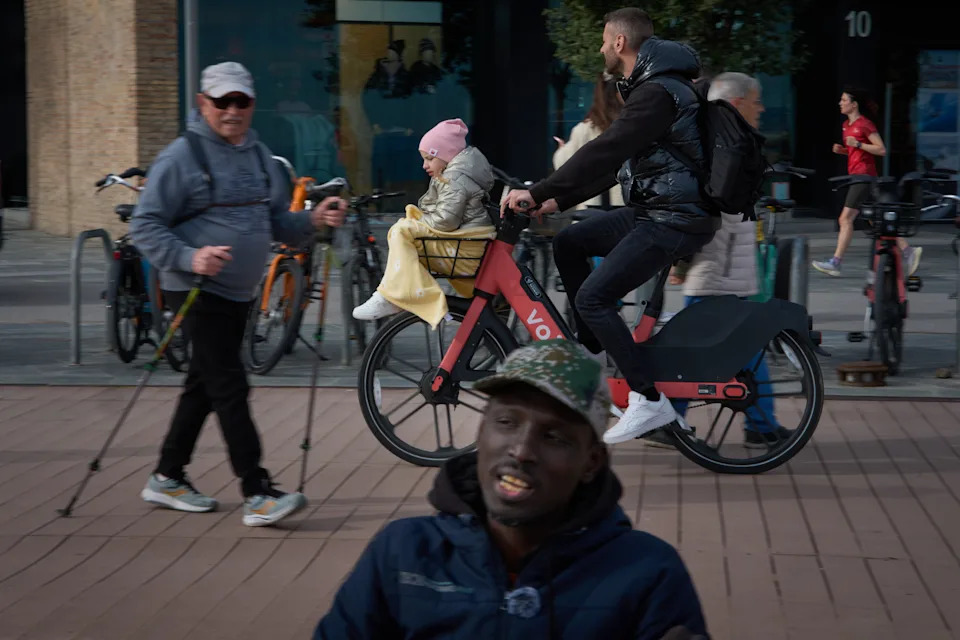
Alioune Beye, originally from Senegal, speaks during an interview with The Associated Press, while people stroll along the Barcelona seafront promenade, Spain, Thursday, Jan. 29, 2026. (AP Photo/Emilio Morenatti)(ASSOCIATED PRESS)
What The Program Requires And Why It Matters
The basic eligibility requirements announced by the government are straightforward: arrival before Dec. 31, 2025; at least five months of residence in Spain; and a clean criminal record. Spanish officials say the application window will be brief — running from April through the end of June — and that ministries will add staff and resources to handle the surge of claims.
But migrants and advocates warn that practical barriers remain. Booking appointments at immigration offices is notoriously difficult; the system has been so strained that criminal groups reportedly sell appointment slots for about 50 euros. Consulates are also being overwhelmed as applicants rush to obtain required documents such as criminal-record certificates.
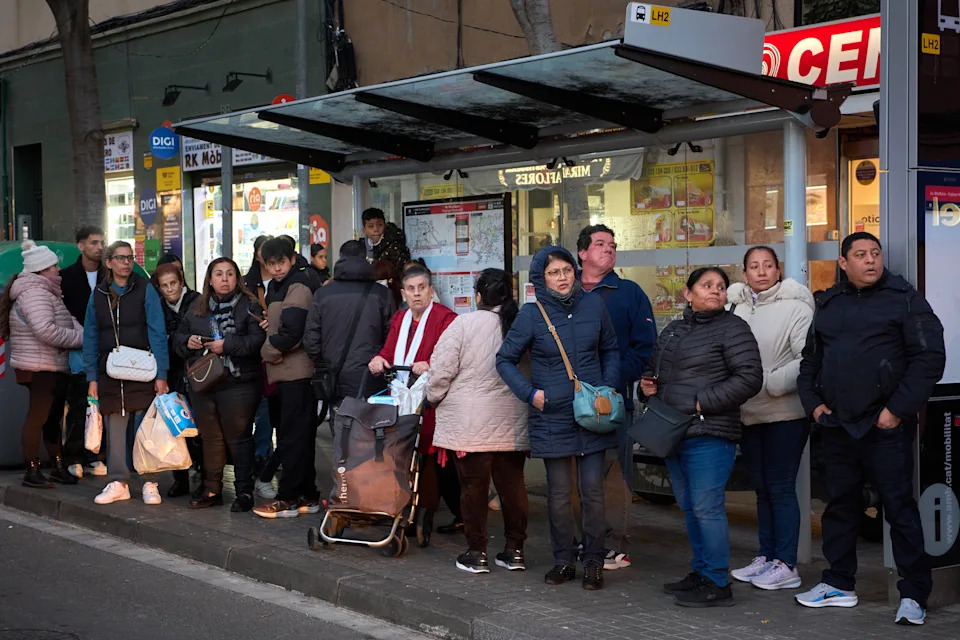
People from several Latin American countries, including Colombia, Peru and the Dominican Republic, along with Spaniards, wait at a bus stop in L'Hospitalet de Llobregat, near Barcelona, Spain, Friday, Jan. 30, 2026. (AP Photo/Emilio Morenatti)(ASSOCIATED PRESS)
Faces Behind The Policy
A Colombian Asylum Seeker
'A week ago, I was living with constant anxiety,' said Ale Castañeda, a Colombian asylum applicant in Barcelona whose temporary permit was about to expire. If his asylum application is denied, Spain's new regularization route could allow him to remain and work legally. He said his priorities are to obtain a bank account, a steady job and basic stability — and he emphasized he does not plan to rely on public benefits.
Castañeda arrived on a tourist visa, as many Latin American migrants do, after fleeing discrimination in Colombia and a violent attack in Argentina. He called the announcement 'the best news of 2026,' but he and others remain cautious until the full legal text appears in the official state bulletin and administrative processes are clarified.
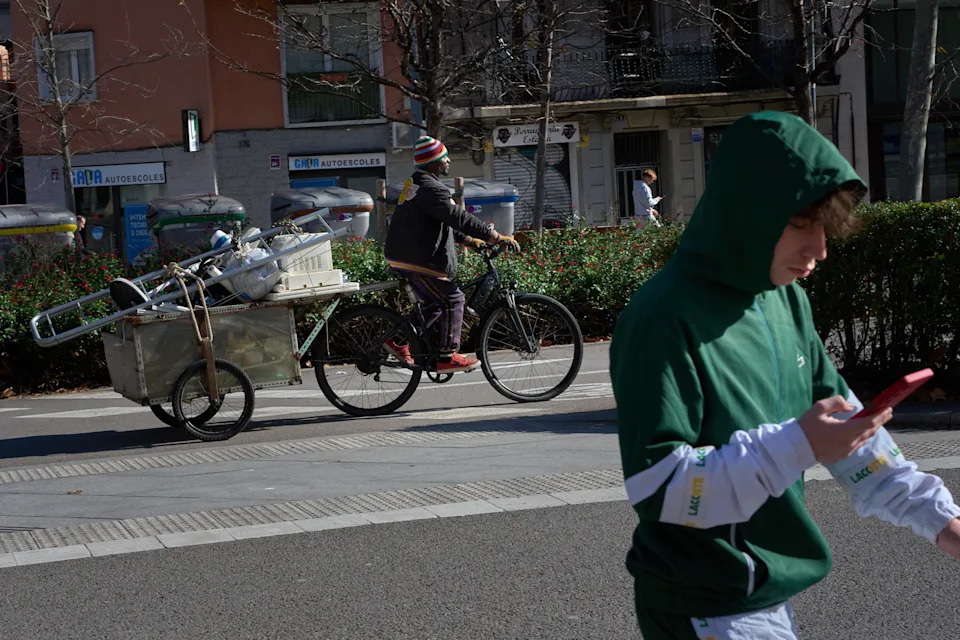
Mamadou, from Senegal, transports scrap metal and discarded electrical appliances on his bicycle after salvaging them from trash containers, as he heads to sell them by weight in Barcelona, Spain, Friday, Jan. 30, 2026. (AP Photo/Emilio Morenatti)(ASSOCIATED PRESS)
Former Architect From Chile
Paulina Valenzuela, a trained architect who lost her job in Chile, said the announcement left her smiling. She has spent three years trying to regularize her status in Spain, falling victim to scams and seeing applications rejected without clear explanation. Forced into low-paid cleaning work — at one point she cleaned 40 Airbnb apartments — Valenzuela became physically and emotionally exhausted and has relied on social services to get by.
Valenzuela hopes legal status will allow her to use her professional skills and escape poverty, but she admitted skepticism: 'There's always an obstacle at the last minute.' Still, she said, the plan has given her a renewed sense of hope.
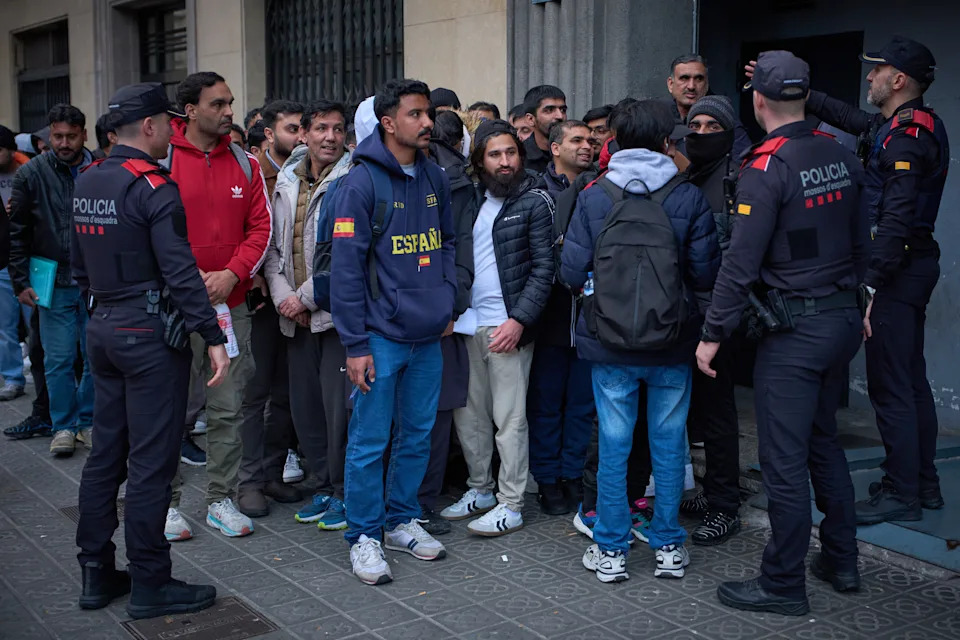
A crowd of Pakistanis gathers at the entrance of the Pakistani consulate in Barcelona, Spain, Thursday, Jan. 29, 2026, following the Spanish government's decision to grant residency and work permits to potentially hundreds of thousands of immigrants. (AP Photo/Emilio Morenatti)(ASSOCIATED PRESS)
Young Man From Pakistan
Hussain Dar, 30, arrived in Spain nearly a year ago after failing to stay in the United Kingdom. Without documentation he has exhausted his savings, sold belongings and slept on the street. He described waiting in an eight-hour line outside the Pakistani consulate in Barcelona, where demand for clean-record certificates has surged; Pakistan's consul general estimates roughly 15,000 Pakistani nationals live in Catalonia without authorization.
Dar said a permit would let him work legally, pay taxes and visit family back home. 'Viva España! Viva Pedro Sánchez!' he shouted, reflecting the relief many migrants say they feel at the prospect of legalization.
Economic And Administrative Stakes
Spain's booming tourism sector — a record 97 million visitors last year who spent more than 130 billion euros — relies heavily on informal immigrant labor, while migrants receive only a small share of the economic gains. Officials say bringing undocumented workers into the formal economy would expand tax revenues and improve workplace protections, but successful implementation depends on whether authorities can process a very large number of applications quickly and transparently.
Migration Minister Elma Saiz pledged additional resources to ensure the plan's success, saying the ministry 'wants this to be a success.' Still, advocates and migrants caution that the policy's outcome will hinge on administrative details and the speed with which the government and consulates can act.
Follow AP’s global migration coverage at https://apnews.com/hub/migration
Help us improve.