The article outlines the harsh everyday realities facing migrants in Russia: routine bribery, mandatory digital surveillance via the Amina app, and a surge in xenophobic violence and rhetoric. New immigration rules and strict language tests have blocked many migrant children from state schools, while inclusion on an official "register" can lead to frozen accounts, job loss and deportation. Growing anti-migrant sentiment has bolstered nationalist politics and increased fears among migrants about conscription and safety.
Surveillance, Bribes and Harassment: Inside Migrants' Daily Struggles in Russia
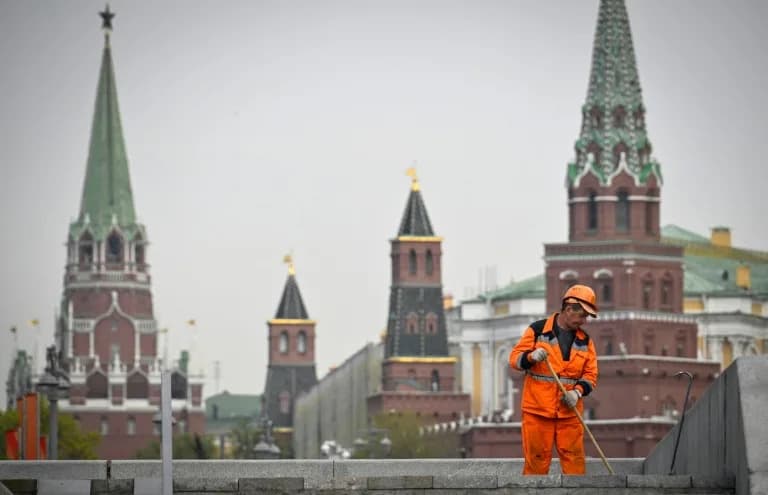
Migrant workers are vital for Russia's economy, which is facing labour shortages amid the Ukraine offensive (Alexander NEMENOV)(Alexander NEMENOV/AFP/AFP)
Facing constant digital monitoring, routine extortion and rising xenophobia, millions of migrants in Russia navigate a precarious daily life. Kyrgyz taxi driver Alym — a 38-year-old father of two working near Moscow — describes an existence shaped by fear, bureaucracy and humiliation.
Daily Pressures: Bribes, Apps and Blacklists
"We have to pay, pay, pay for everything," Alym told AFP. He says police regularly demand bribes for basic paperwork and stamps — registration, a patent and work permits — with some payments reaching as much as $300 off the books. At the same time, migrants face intensive digital surveillance: many must keep the state-run Amina app installed and report their location daily.
"If you don't do it for three days in a row, you're put on a blacklist that's hard to get off," Alym explained.
Being entered on the official "register of monitored persons" can lead to frozen bank accounts and increases the risk of losing a job, expulsion from university, or deportation.
New Rules and Barriers to Education
Authorities have tightened immigration rules in recent policy changes intended to "limit the presence of migrants' family members in Russia" and to reduce pressure on social and healthcare services. One notable element is the introduction of strict Russian-language tests for migrant children seeking state-school entry. A federal regulator reported that, combined with other administrative hurdles, 87% of migrant children were blocked from entering school in 2025.
Anna Orlova, a Russian-language teacher involved with the Migratory Children project, criticized the exams and argued migrants contribute to the economy: "We should, on the contrary, be glad that migrants come to us. It means the Russian economy is growing." Alym's young daughter, currently in kindergarten, is likely to face the same testing requirement.
Violence, Xenophobia and Political Fallout
Social hostility has escalated into physical attacks. Alym's school-aged son was recently beaten by classmates, and in December a 10-year-old Tajik boy was fatally stabbed at a school near Moscow by a teenager reportedly holding neo-Nazi views. Such incidents, and a March 2024 concert-hall massacre that killed 149 people and whose alleged perpetrators are from Tajikistan, have intensified anti-migrant sentiment.
Svetlana Gannushkina of migrant-rights group Civic Assistance (labelled a "foreign agent" by authorities) warned that migrants have become scapegoats for broader social discontent: "A migrant becomes an enemy on whom the discontent in society is funnelled." The political climate has also helped boost nationalist groups; leaders have amplified concerns about illegal immigration and cultural disruption.
Uncertainty and Plans to Leave
Against this backdrop, many migrants are reconsidering long-term plans. Alym says he hopes to leave Russia by 2030, when he expects to have paid off a mortgage in Kyrgyzstan. After four years in Russia he no longer wants Russian citizenship, partly because of fears about conscription linked to Moscow's military mobilization: "I don't want to be drafted," he said.
Context
The article draws on interviews and reporting by AFP and comments from migrant-rights advocates and educators. It highlights how administrative controls, economic pressure and social hostility combine to make life difficult for an estimated 6.5 million foreign citizens in Russia, many of them labor migrants from Central Asia.
Help us improve.