Paleontologists led by Cassius Morrison used fossils from the Morrison Formation to reconstruct a Jurassic food web, combining tooth-wear analysis, chemical signatures, and fossilized gut contents. Their results, published in the New Mexico Museum of Natural History and Science Bulletin, show that small, unattended sauropod hatchlings were a common prey item for predators such as Allosaurus. The team also argues that a long-term decline in sauropod abundance later in the Mesozoic may have driven evolutionary shifts that helped produce large apex predators like Tyrannosaurus rex.
Baby Sauropods: Jurassic 'Potato Chips' That Fueled Predators
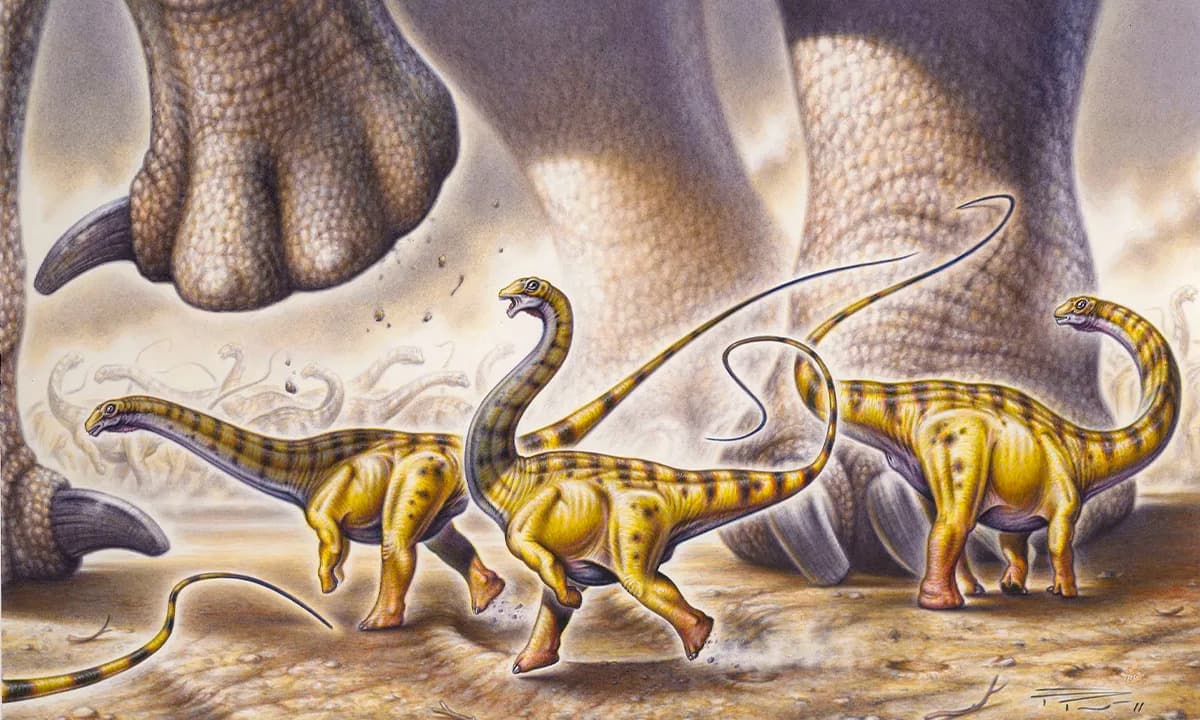
Apatosaurus ajax - running babies. Credit: Fabio pastori / Wikimedia Commons.(Apatosaurus ajax - running babies. Credit: Fabio pastori / Wikimedia Commons.)
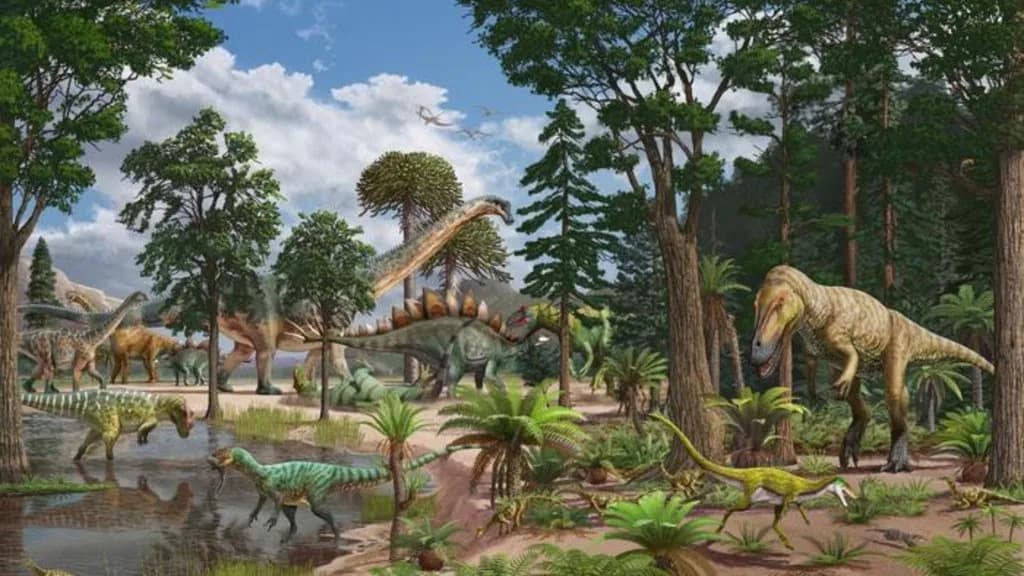
The Morrison Formation is the closest thing we have to a real-life Jurassic Park: a vast, fossil-rich set of sedimentary deposits spanning several Southwestern U.S. states. For more than a century paleontologists have excavated spectacular dinosaurs from those rocks, and a new study uses that material to paint a fuller picture of the ancient food web that sustained them.
Reconstructing a Jurassic Menu
A team led by Cassius Morrison of University College London analyzed specimens and data from the Morrison Formation to build a Jurassic food web. The researchers combined multiple lines of evidence — tooth-wear patterns, chemical signatures preserved in bones and teeth, and fossilized stomach or gut contents — to infer who ate whom in this ecosystem. Their findings appear in the New Mexico Museum of Natural History and Science Bulletin.
Key Finding: Baby Sauropods Were Common Prey
Contrary to sentimental portrayals in children’s media, the study finds that vulnerable sauropod hatchlings were a frequent and important food source for several predators. Although adult sauropods grew to enormous sizes, hatchlings were relatively small and, the evidence suggests, received little or no parental care — a combination that made them easy targets for carnivores roaming the landscape.
“Size alone would have made it difficult for sauropods to tend their eggs without destroying them, and evidence suggests that, much like baby turtles today, young sauropods were not looked after by their parents,” Morrison said. “Life was cheap in this ecosystem, and predators such as Allosaurus were likely fuelled in part by the consumption of these juvenile sauropods.”
Methods and Evidence
The researchers triangulated multiple datasets: tooth microwear and breakage patterns that indicate diet and feeding behavior, isotopic and chemical signatures that reveal long-term dietary signals, and direct traces of last meals preserved in stomach or gut regions. Taken together, these lines of evidence strengthen the case that juvenile sauropods were a predictable and accessible resource for carnivores like Allosaurus.
Long-Term Evolutionary Implications
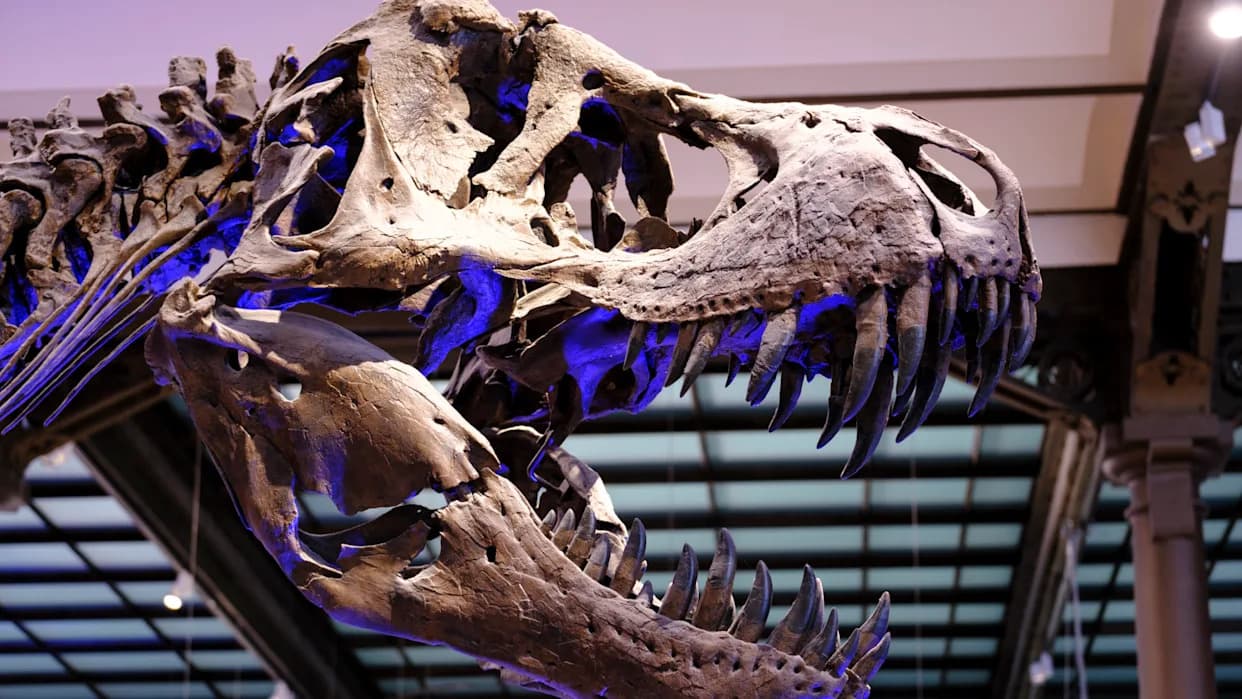
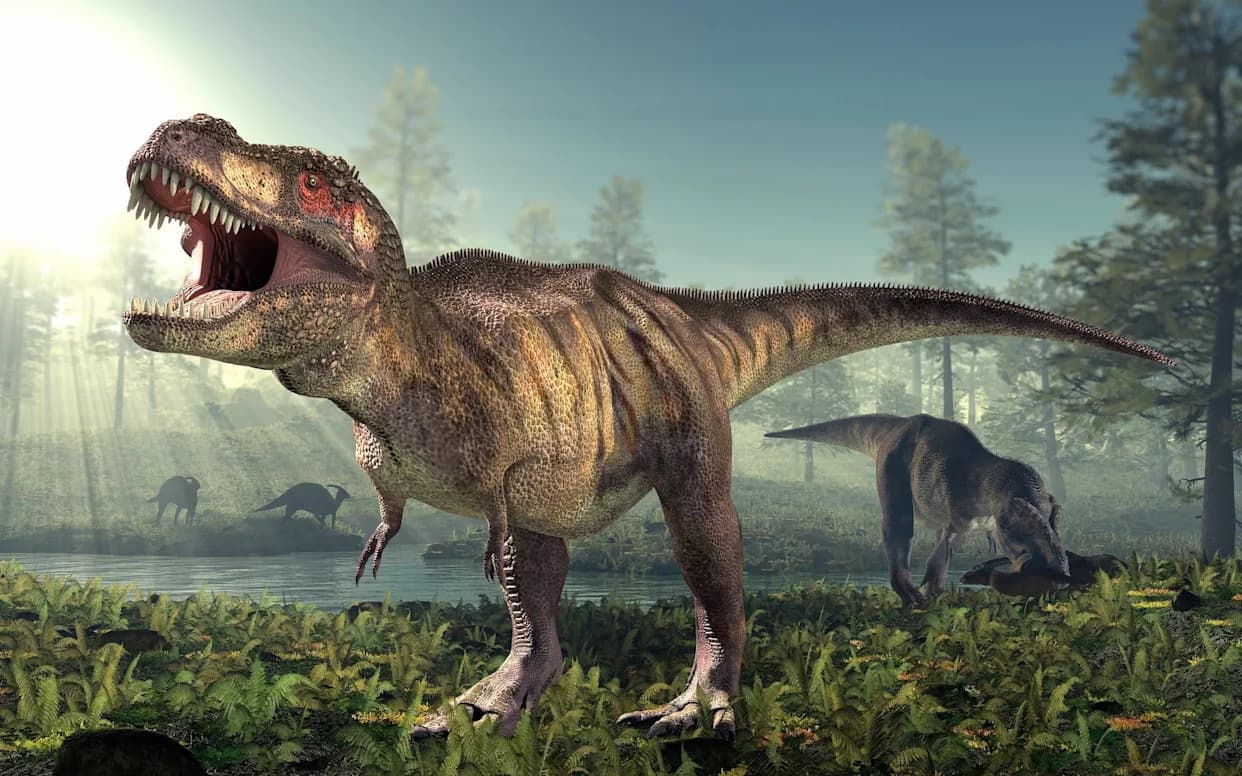
The team also suggests a broader evolutionary story: as sauropod populations declined much later in the Mesozoic (into the Late Cretaceous), predators may have faced shifting prey landscapes. With fewer small, easy sauropod targets available, natural selection could have favored traits that allowed predators to tackle larger, better-defended prey — for example, stronger bite forces, larger body size, and improved vision. Those pressures may have contributed to the emergence of specialized apex predators such as Tyrannosaurus rex.
Although the study focuses on the Jurassic Morrison ecosystem, it highlights how changes in prey availability can reshape predator anatomy and behavior over deep time.
Lead image: Fabio Pastori / Wikimedia Commons. This summary is based on reporting originally published in Nautilus.
Help us improve.