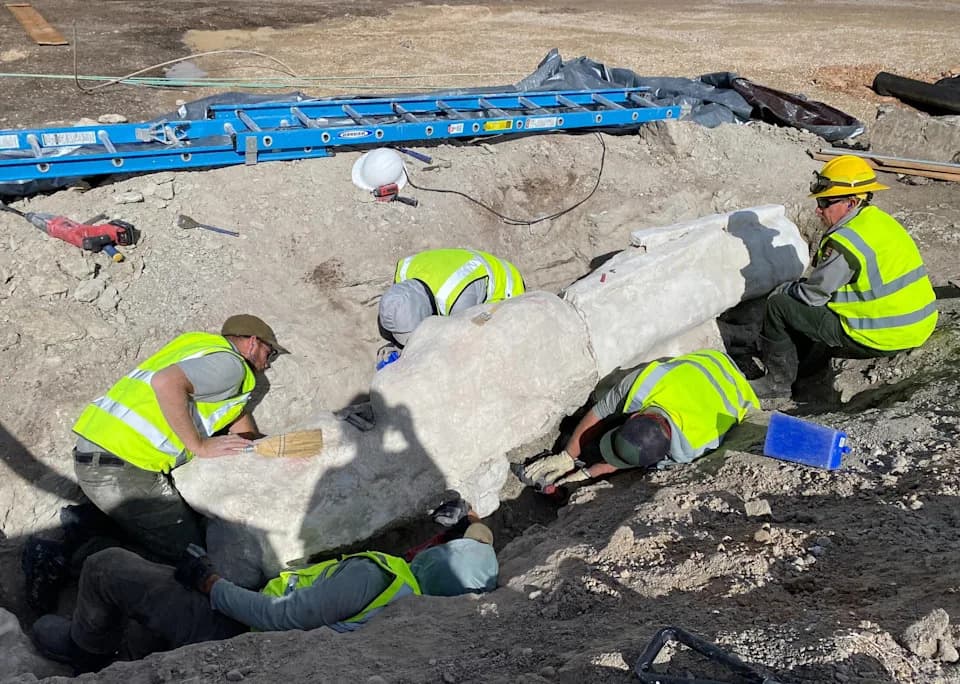
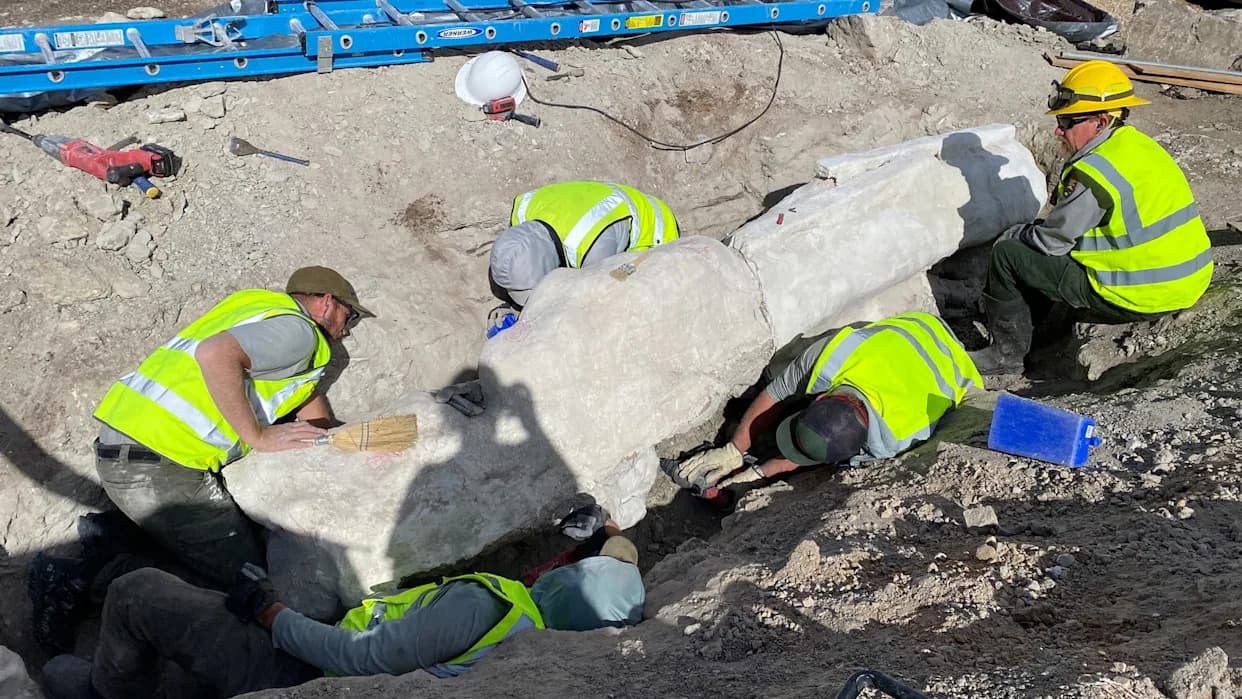
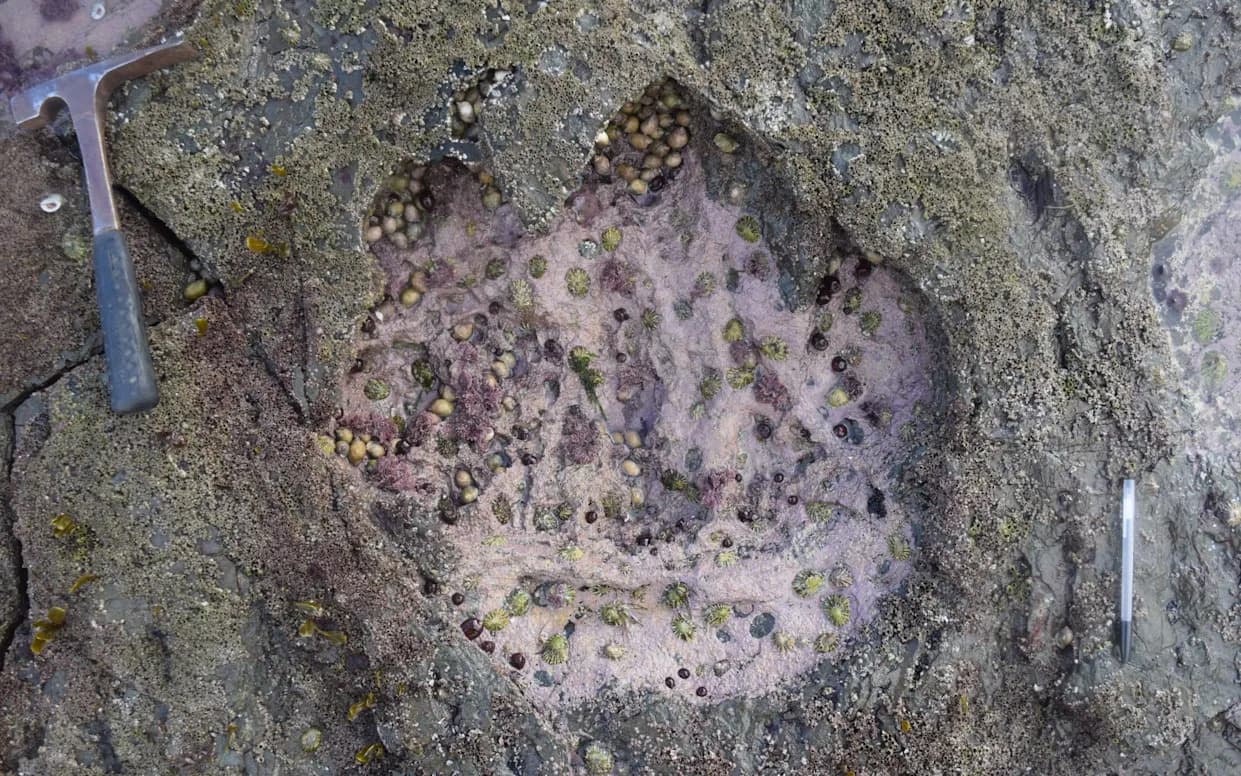
The 7-inch footprint Bruce Runnegar found as a teenager in 1958 has been formally studied and identified as the oldest dinosaur fossil known in Australia. Dated to about 230 million years ago (earliest Late Triassic), the print likely came from a small, two-legged early sauropodomorph. The sandstone slab—cut from a Brisbane quarry and later used as building stone—is now held at the Queensland Museum for continued research.
Teen’s 1958 Quarry Find Confirmed As Australia’s Oldest Dinosaur Fossil — 230 Million Years Old
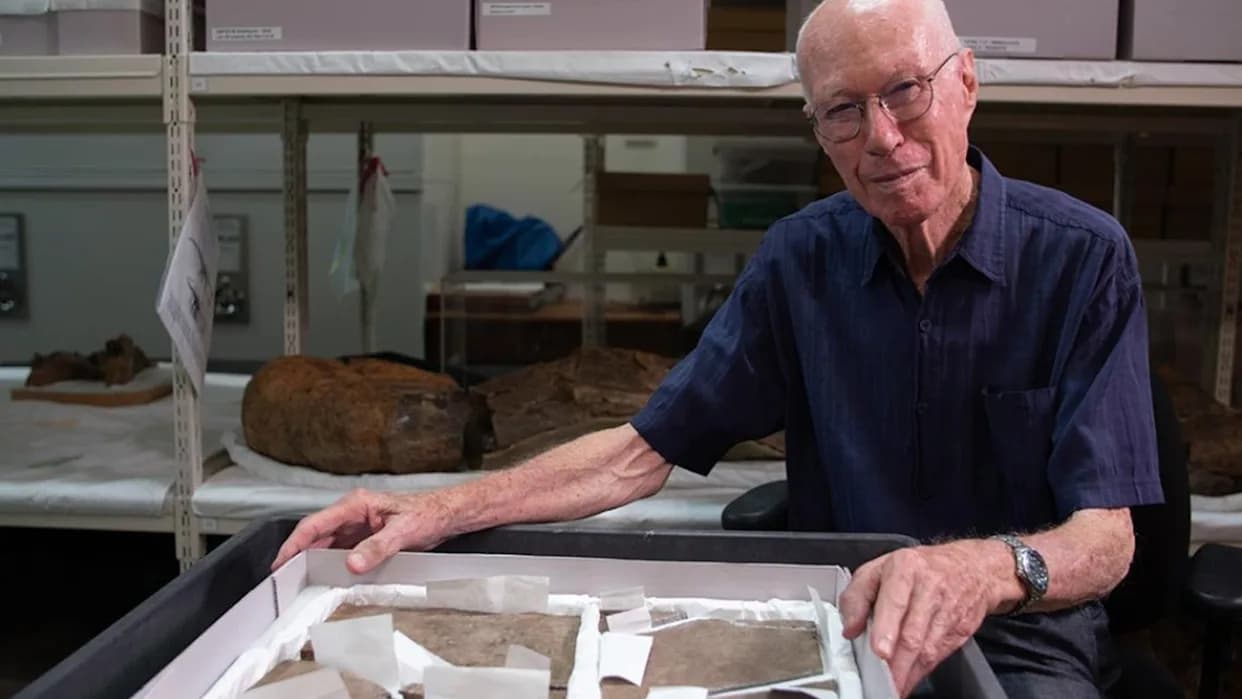
Bruce Runnegar with the fossil he found while visiting a quarry with school friends in 1958.
In 1958, Australian schoolboy Bruce Runnegar discovered an unusual fossilized footprint while visiting a quarry with classmates. He kept the roughly 7-inch slab for decades and later trained as a paleontologist. More than sixty years after that childhood find, the print has now been formally examined and identified as the oldest known dinosaur fossil in Australia.
Discovery and Investigation
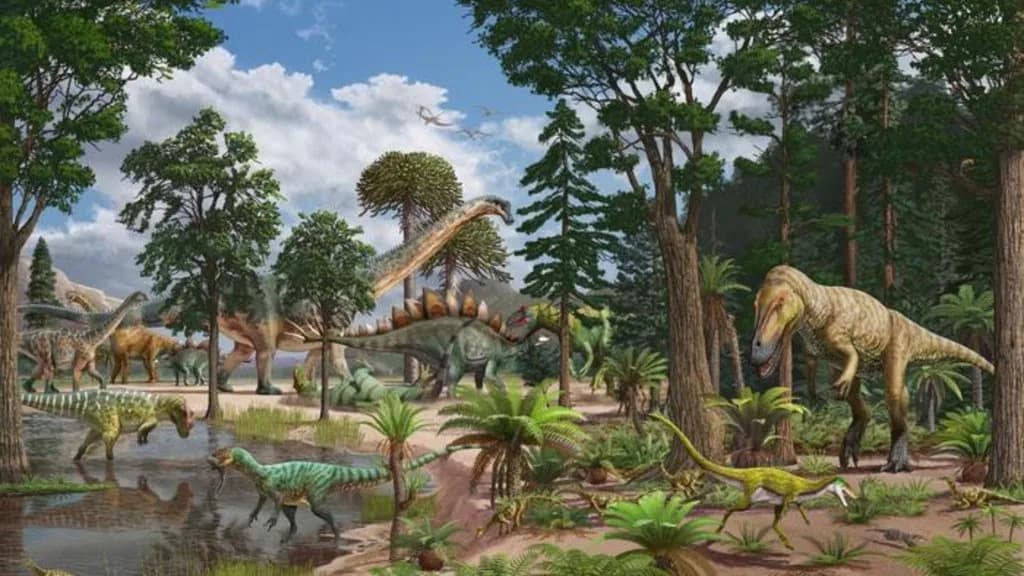
Runnegar handed the slab to researchers at the University of Queensland’s Dinosaur Lab, where scientists conclude the impression was made by a small, two-legged dinosaur—most likely an early sauropodomorph, a primitive relative of the later long-necked sauropods. The footprint is dated to about 230 million years ago, placing it in the earliest part of the Late Triassic when Australia formed part of the supercontinent Gondwana.
Significance
The analysis, published in the journal Alcheringa, identifies this impression as the oldest dinosaur fossil discovered in Australia and suggests dinosaurs inhabited the continent earlier than previously believed. The researchers also note this is the only dinosaur fossil recovered from an Australian capital city: the original quarry site in Brisbane has been lost to later urban development, leaving the slab as the sole surviving evidence from that locality.
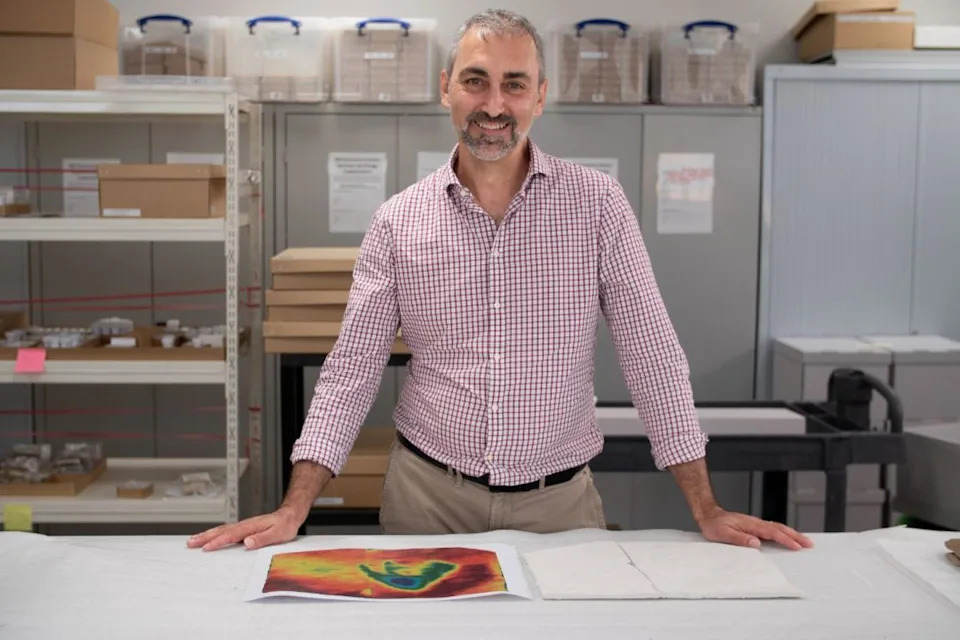
Dr. Anthony Romilio used software to recreate a cast of what the dinosaur footprint would have looked like.Image: The University of Queensland.
“This is the only dinosaur fossil to be found in an Australian capital city and shows how globally significant discoveries can remain hidden in plain sight,” said Dr. Anthony Romilio, co-author of the study. “Subsequent urban development has made the original site inaccessible, leaving this footprint as the only surviving dinosaur evidence from the area.”
Ancient Context and Preservation
The team believes the animal was walking alongside a waterway when it left the track. The impression was preserved in sandstone for millions of years. Later, stone from that same quarry was cut and used in buildings across Brisbane—ironically preserving the footprint within construction material until Runnegar’s slab resurfaced in modern collections.
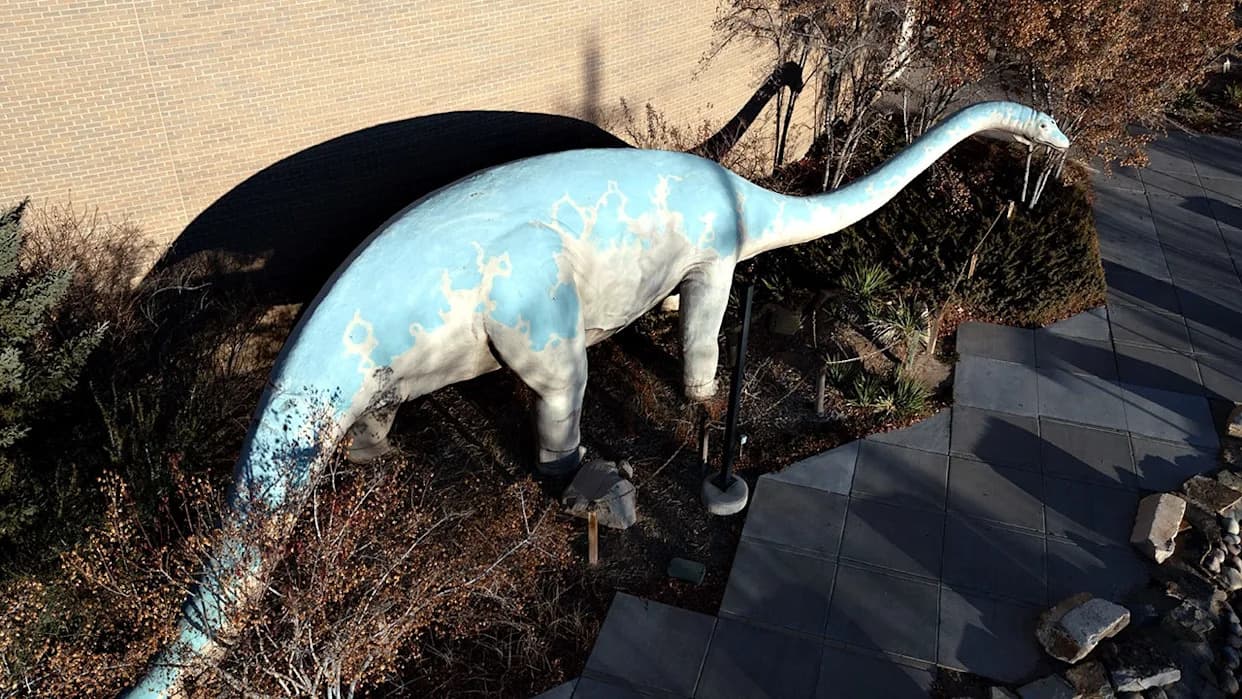
From the footprint’s dimensions, researchers estimate the sauropodomorph would have stood roughly 2.4 to 2.6 feet tall at the hip and weighed just over 300 pounds. While compact by later dinosaur standards, this animal represents an early chapter in the evolution of the group that would eventually produce giant, long-necked sauropods.
Runnegar, now an honorary professor at the University of Queensland after an academic career that included positions at the University of New England and UCLA, said: “At the time, we suspected the marks might be dinosaur tracks but could not have imagined their national significance. It was a special kind of trace fossil—an impression made in sediment by a heavy animal—and when I saw Dr. Romilio’s ability to reconstruct and map dinosaur footprints I reached out to have the fossil formally documented.”
The slab is now held at the Queensland Museum, where it will be available for ongoing research and public study.
Help us improve.