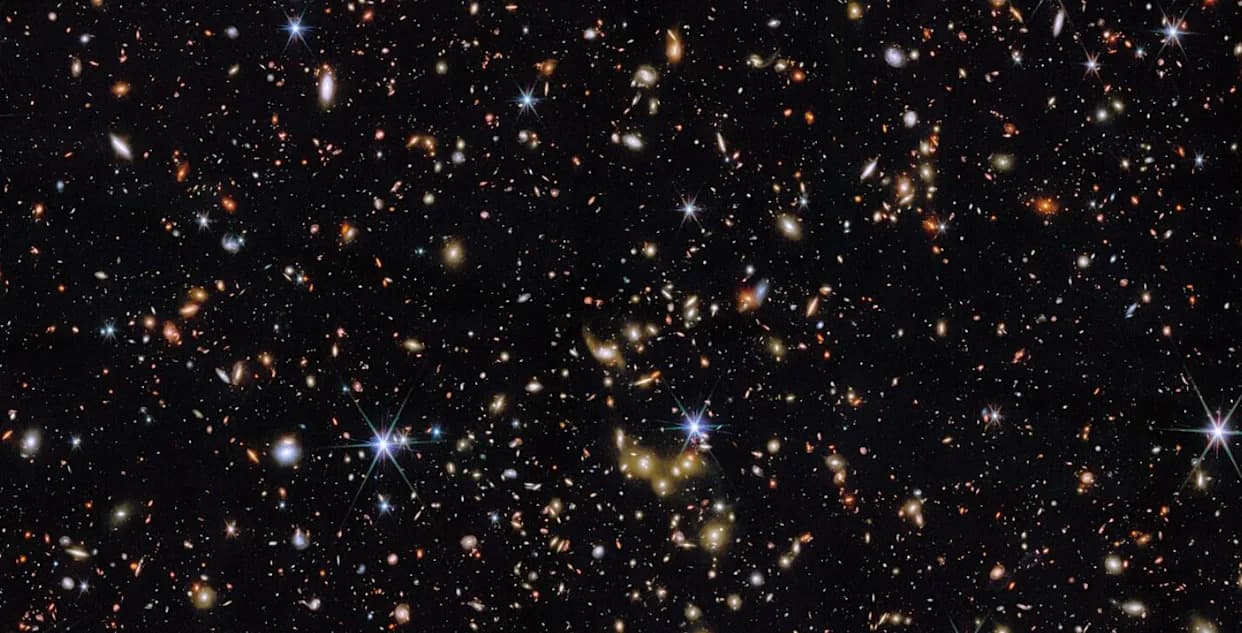
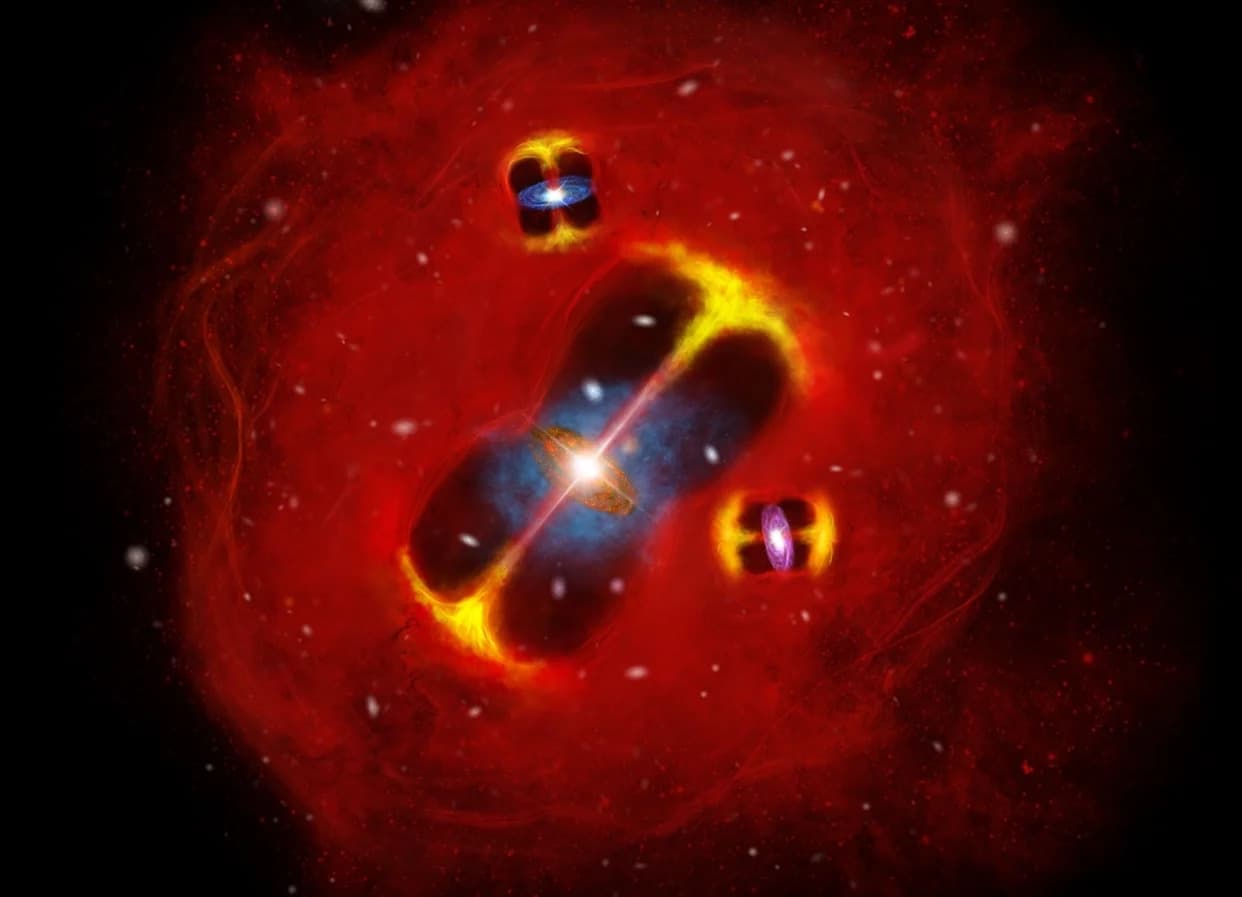
An AI pipeline called AnomalyMatch scanned some 100 million Hubble image cutouts and flagged about 1,300 unusual cosmic sources in two days, roughly 800 of which are newly reported. Findings published Dec. 16, 2025, include merging galaxies, 'jellyfish' galaxies with gaseous tentacles, gravitational lenses, and edge-on planet-forming disks, plus several dozen objects that defy classification. Researchers say the method highlights AI's potential to accelerate discoveries in current archives and upcoming large surveys.
AI Unearths 1,300 Cosmic 'Anomalies' in Hubble Archive — 800 Previously Unknown
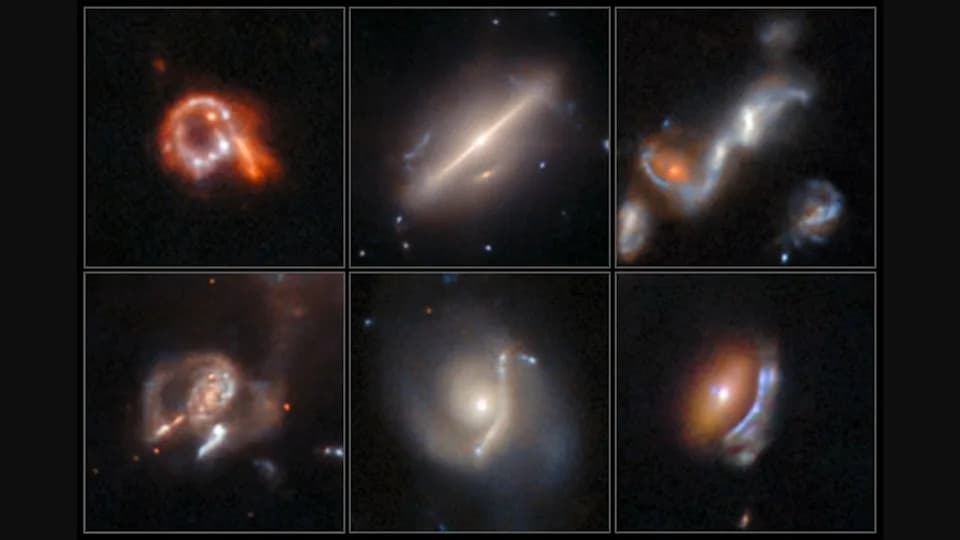
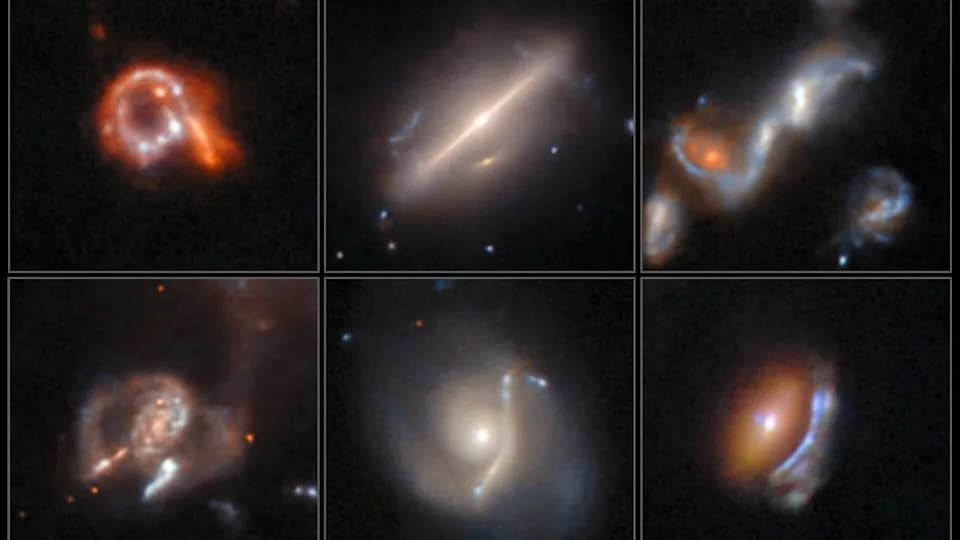
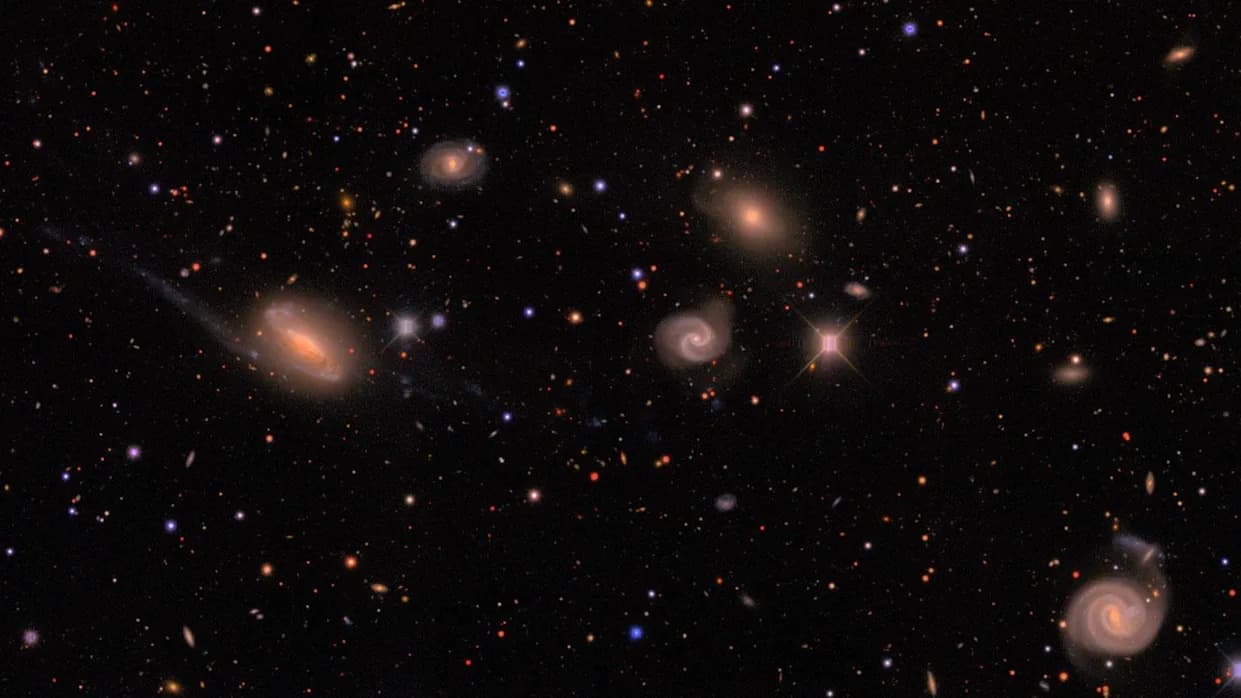
Six of the hundreds of ‘anomalies’ discovered in the Hubble telescope archives, including three unusual galaxies and three gravitationally lensed objects. | Credit: ESA/Hubble & NASA, D. O’Ryan, P. Gómez (European Space Agency), M. Zamani (ESA/Hubble)
An artificial intelligence pipeline has scanned the Hubble Legacy Archive and flagged about 1,300 unusual cosmic sources in just two days, roughly 800 of which appear to be previously undocumented, researchers report. The full results were published Dec. 16, 2025, in the journal Astronomy & Astrophysics.
What the search revealed
European Space Agency (ESA) research fellows David O'Ryan and Pablo Gómez developed the AI system, called AnomalyMatch, to examine roughly 100 million small image cutouts drawn from Hubble's archive. Each cutout is only a few dozen pixels across and covers a tiny sliver of sky on the order of a thousandth of a degree.
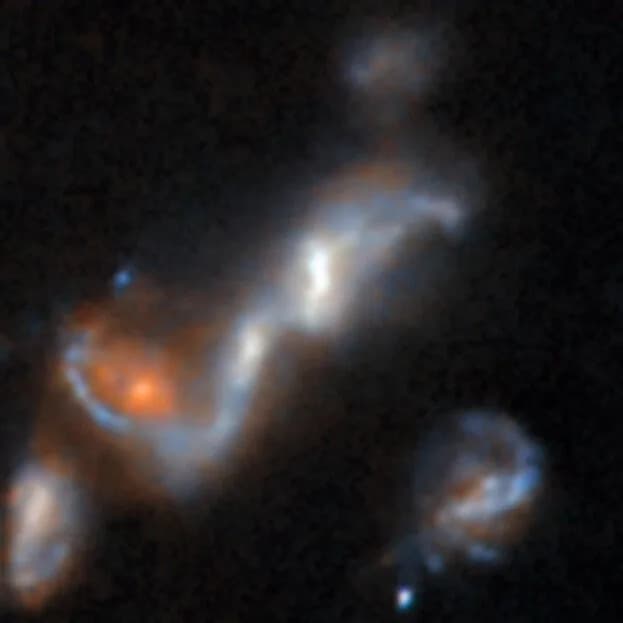
The anomalies include chaotic, merging galaxies; galaxies with massive star-forming clumps; so-called 'jellyfish' galaxies with gaseous tentacles; edge-on planet-forming disks in our own galaxy that resemble stacked 'hamburgers'; gravitational lenses that bend background light into arcs or rings; and elongated streams of stars and gas. The team also identified several dozen sources that do not fit existing classification schemes.
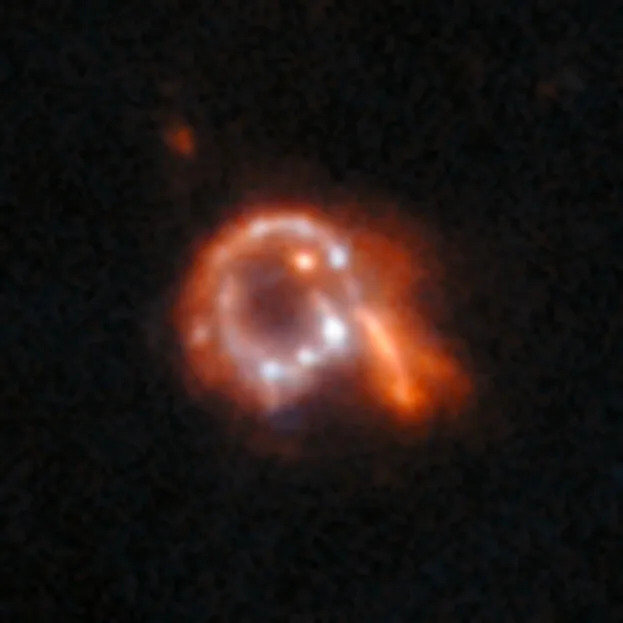
One of the new Hubble anomalies is a 'collisional ring' galaxy, formed when one galaxy smashes into the center of another. | Credit: ESA/Hubble & NASA, D. O’Ryan, P. Gómez (European Space Agency), M. Zamani (ESA/Hubble)
How AnomalyMatch works
AnomalyMatch learned typical and atypical patterns from a training dataset, then applied that knowledge across millions of cutouts to flag unusually structured or rare objects. The approach accelerates discovery compared with traditional manual inspection, which is impractical given the sheer volume of Hubble data even when aided by citizen-science projects.
'Archival observations from the Hubble Space Telescope now stretch back 35 years, providing a treasure trove of data in which astrophysical anomalies might be found,' O'Ryan wrote in the paper.
Why this matters
NASA and ESA officials say the project demonstrates how AI can enhance the scientific return of archival datasets and help manage the impending 'data deluge' from next-generation surveys. Missions such as ESA's Euclid, NASA's Nancy Grace Roman Telescope, and the Vera C. Rubin Observatory will produce massive datasets where automated anomaly detection could speed the discovery and characterization of rare or novel objects.
Beyond accelerating identification, AI-flagged anomalies provide targets for follow-up observations and statistical studies that could reveal new astrophysical processes or challenge existing models.
Help us improve.