ESA researchers used an AI tool to scan nearly 100 million image cutouts from the Hubble Legacy Archive—observations spanning about 35 years—and completed the search in two and a half days. The algorithm flagged more than 1,300 anomalous objects, about 800 of which appear to be previously undescribed. Detections include galaxy mergers, jellyfish galaxies and numerous candidate gravitational lenses. The results were published in Astronomy & Astrophysics, and ESA says the method can be applied to other large space-science datasets.
AI Mines Hubble Archive, Reveals 800+ Previously Unknown Cosmic Anomalies
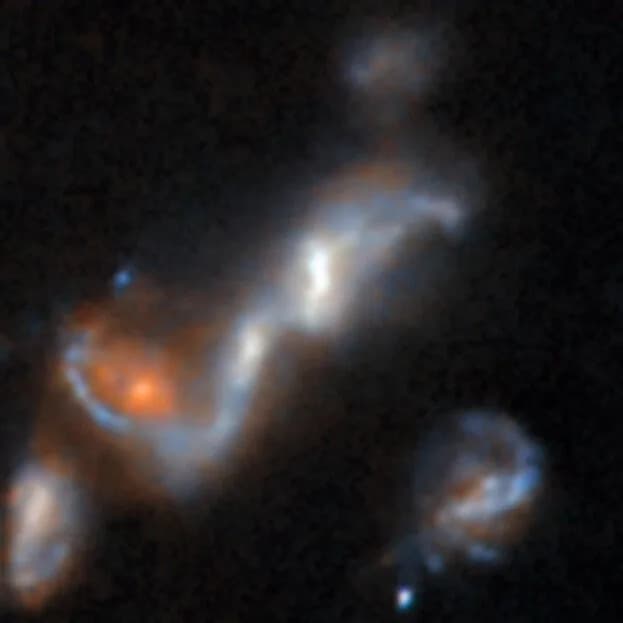
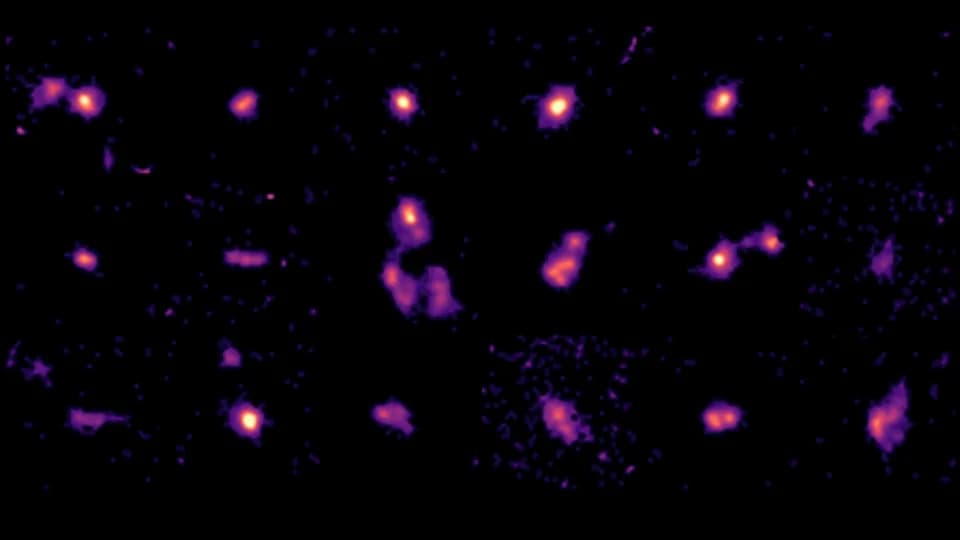
Merging galaxies from Hubble’s archive.Sign up for Today in Science, a free daily newsletter from Scientific American and join a community of science-loving readers.ESA/Hubble/NASA/D. O’Ryan/P. Gómez/European Space Agency/M. Zamani/ESA/Hubble
The vastness of the cosmos makes a complete census of interesting objects all but impossible by eye—but artificial intelligence is changing that. Researchers at the European Space Agency (ESA) developed an AI tool that scanned nearly 100 million image cutouts from the Hubble Legacy Archive, a dataset spanning roughly 35 years of observations, and uncovered hundreds of unusual objects hidden in archival data.
Rapid, Large-Scale Search
The AI completed a full sweep of the archive in just two and a half days—a task that would have taken a human team exponentially longer. The search flagged more than 1,300 "anomalous objects," of which roughly 800 appear not to have been described previously in the literature.
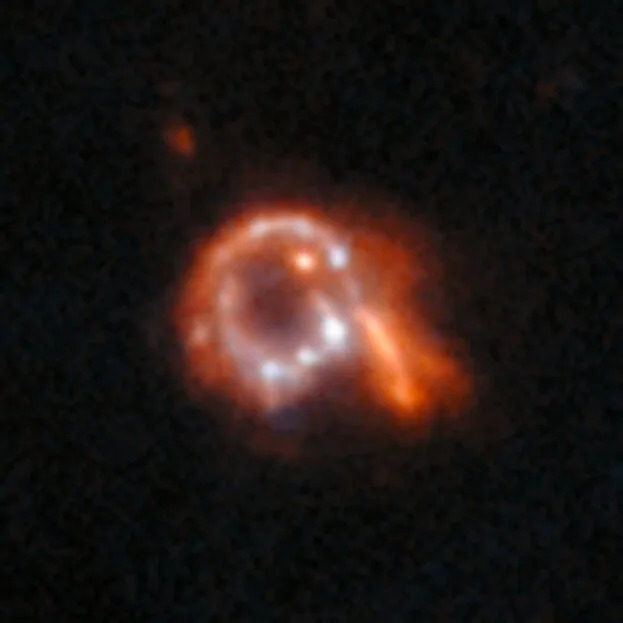
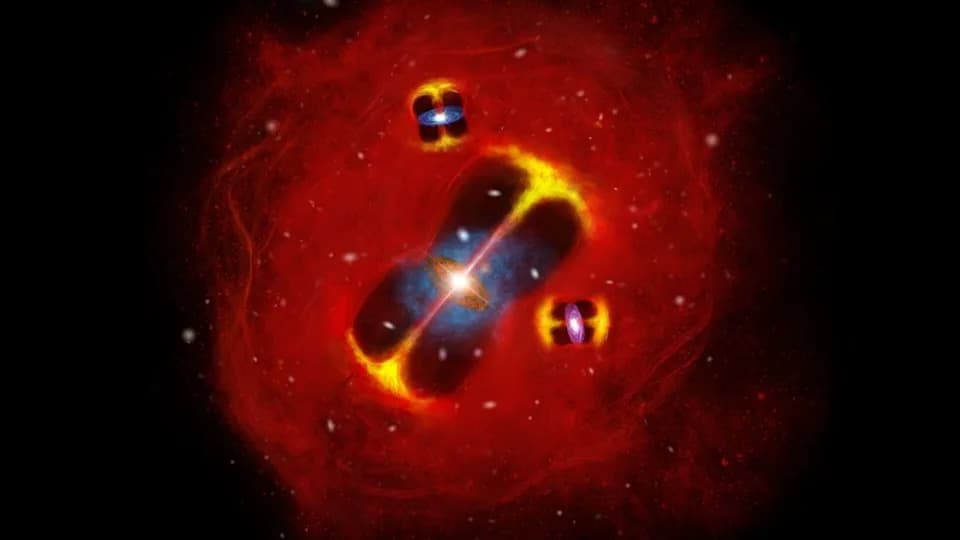
A collisional ring galaxy from Hubble’s archive.ESA/Hubble/NASA/D. O’Ryan/P. Gómez/European Space Agency/M. Zamani/ESA/Hubble
What Was Found
Detected objects include galaxy mergers, so-called "jellyfish" galaxies with trailing streams of gas, collisional ring galaxies, and scores of candidate gravitational lenses—regions where a massive foreground object bends the light of a background source. The dataset also contains dozens of additional oddball detections that currently defy straightforward classification.
Pablo Gómez, ESA data scientist and co-author of the study, said the approach could serve as a model for mining other large space-science archives. "It shows how useful this tool will be for other large datasets," he said.
The work was published last month in the journal Astronomy & Astrophysics. Beyond the immediate discoveries, the study demonstrates how AI can accelerate the discovery of rare and unexpected phenomena in existing astronomical archives, helping astronomers prioritize targets for follow-up observations and analysis.
Help us improve.