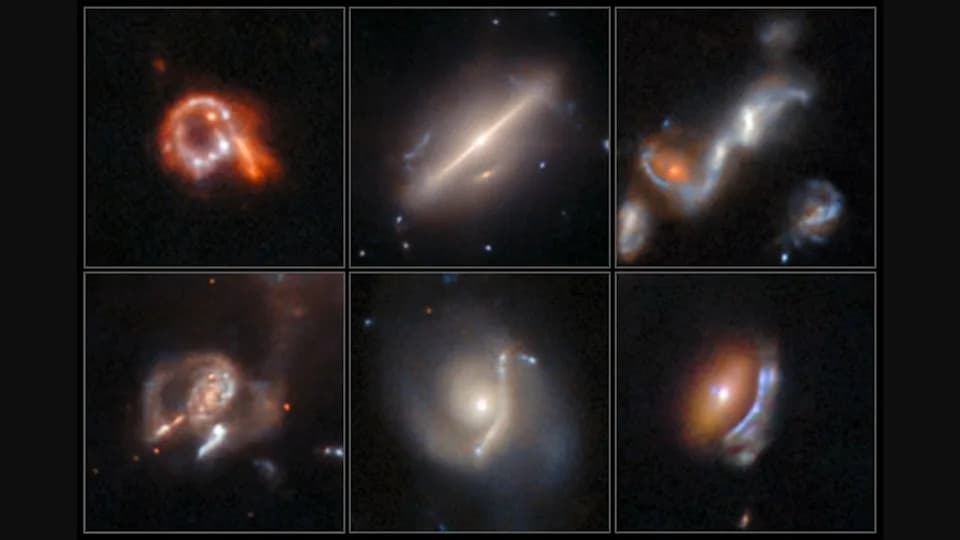
Researchers at the European Space Agency used an AI system called AnomalyMatch to scan the Hubble Legacy Archive and flagged about 1,300 unusual objects, hundreds of which were previously undocumented. The model processed nearly 100 million image cutouts in under three days, identifying unusual galaxies and planet-forming disks that defy simple classification. The findings — published in Astronomy & Astrophysics in December 2025 — mark the first systematic search for astrophysical anomalies across the entire Hubble archive and highlight AI's potential to unlock discoveries in archival data.
AI Spots 1,300 Previously Unseen 'Cosmic Anomalies' in Hubble Archive
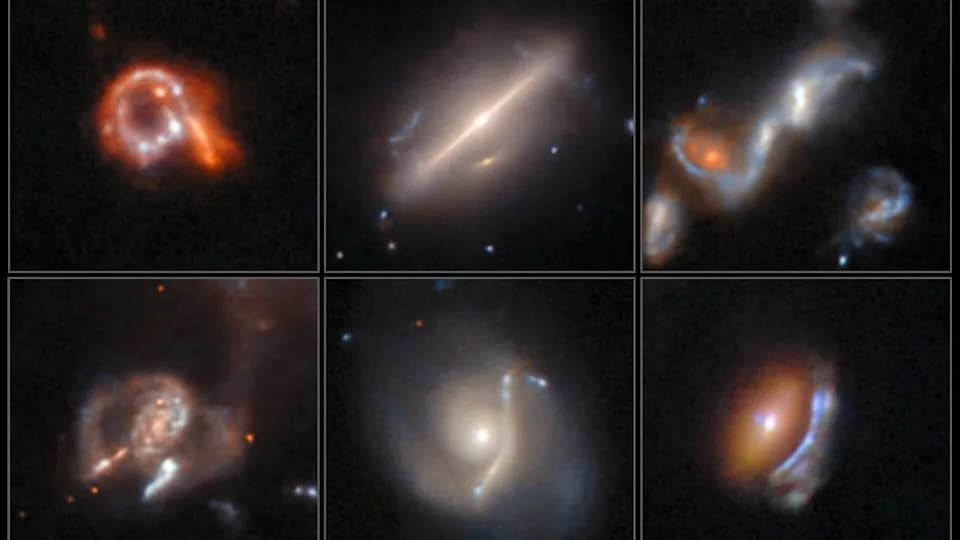
Credit: ESA/Hubble & NASA, D. O’Ryan, P. Gómez (European Space Agency), M. Zamani (ESA/Hubble)
The Hubble Space Telescope has built an immense photographic record since its 1990 launch — roughly 1.7 million images, according to NASA. That volume makes a complete human review effectively impossible, so researchers are turning to artificial intelligence to mine the archive for unexpected discoveries.
Two scientists at the European Space Agency (ESA) developed an AI system called AnomalyMatch to scan the Hubble Legacy Archive. The tool flagged about 1,300 anomalies — objects or structures with unusual appearances — and the team confirmed that hundreds of those had not previously been catalogued.
What the AI Found
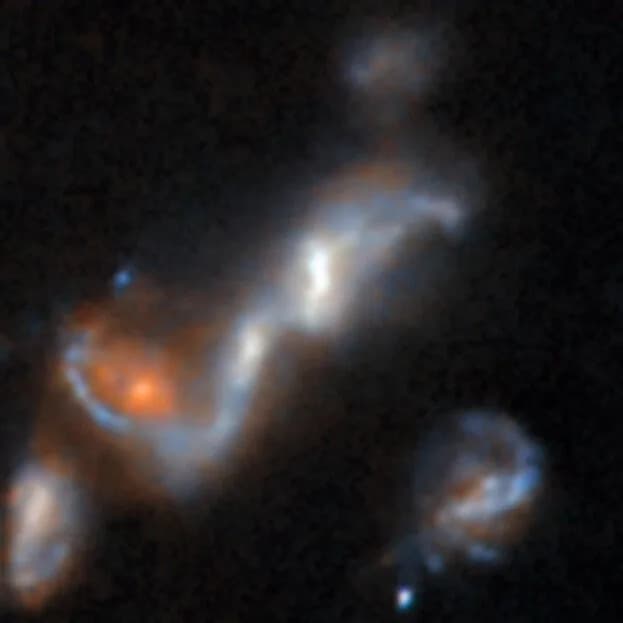
Many of the newly identified objects resist straightforward classification. Most are distant galaxies undergoing dynamic changes as they merge or interact. Researchers highlighted striking examples such as galaxies with massive star-forming clumps, "jellyfish" galaxies with gaseous "tentacles," and edge-on, planet-forming disks in our own galaxy that resemble stacked hamburgers.
How AnomalyMatch Works
The researchers trained AnomalyMatch to recognize unusual patterns and structures in image cutouts, modeling its visual processing to mimic certain aspects of human perception. Using pattern recognition and similarity-matching techniques, the system groups images by visual features and flags outliers for further human inspection.
Pablo Gómez, one of the ESA researchers who built the model: "This is a powerful demonstration of how AI can enhance the scientific return of archival datasets."
The speed of the system is notable: the team reports that AnomalyMatch reviewed nearly 100 million image cutouts in under three days, a task that would be prohibitively slow for human reviewers alone.
Significance and Publication
NASA calls the project a major step forward: it's the first systematic search for astrophysical anomalies across the entire Hubble Legacy Archive, covering decades of deep-space observations. "Archival observations from the Hubble Space Telescope now stretch back 35 years, providing a treasure trove of data in which astrophysical anomalies might be found," said David O'Ryan, lead author of the research paper.
The research describing AnomalyMatch and its discoveries was published in the journal Astronomy & Astrophysics in December 2025. The work demonstrates how AI can help astronomers prioritize unusual or scientifically interesting targets for follow-up study and future surveys.
What Comes Next
Identified anomalies will undergo further human-led analysis, including follow-up observations and spectral study where possible, to determine their physical nature. The success of AnomalyMatch suggests similar AI-assisted searches could be applied to other large astronomical archives and future survey datasets.
Help us improve.