New research from The Century Foundation (November 2025) finds strong family support for bilingual education in California. A survey of 1,000 families, informed by six focus groups with 64 Latino households, shows 94% of non-English-speaking homes and 55% of monolingual English homes want children to grow up bilingual. Average interest in dual-language K–12 programs was 7.9/10. Federal actions in March and July 2025 prioritizing English risk weakening popular immersion programs and reducing classroom linguistic diversity.
New Poll: Families Strongly Support Bilingual Education Amid White House 'English-Only' Push
The Trump administration’s renewed effort to prioritize English in government services and schools has reignited a decades-old debate about language policy in the United States. New research from The Century Foundation, published in November 2025, shows strong family support for bilingualism and widespread interest in dual-language K–12 programs — results that run counter to the administration’s recent directives.
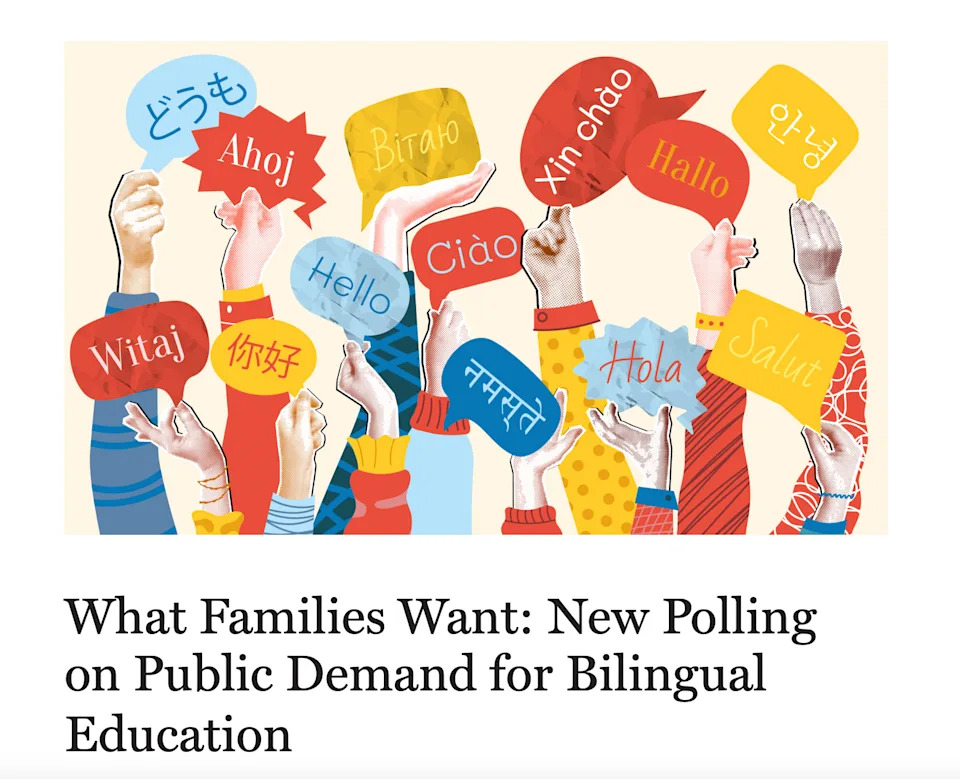
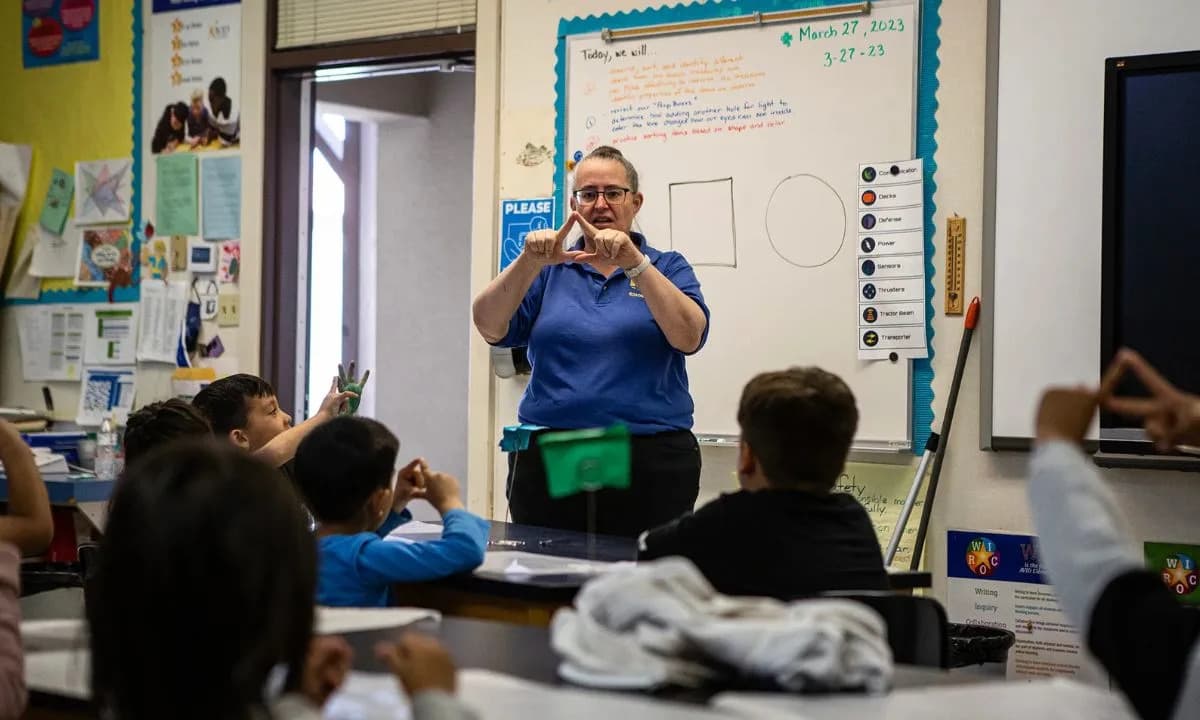
The Century Foundation’s recent report on public demand for bilingual education. (The Century Foundation)
Key Findings
Researchers conducted six focus groups (in English and Spanish) with 64 Latino families across California and used those conversations to design a representative survey of 1,000 California families. The survey revealed robust demand for bilingual education and strong beliefs in the value of children growing up fluent in more than one language.
- 94% of families that speak a language other than English at home said it was “very” or “extremely” important for their child to grow up bilingual.
- 55% of monolingual English-speaking households also said bilingualism was very or extremely important.
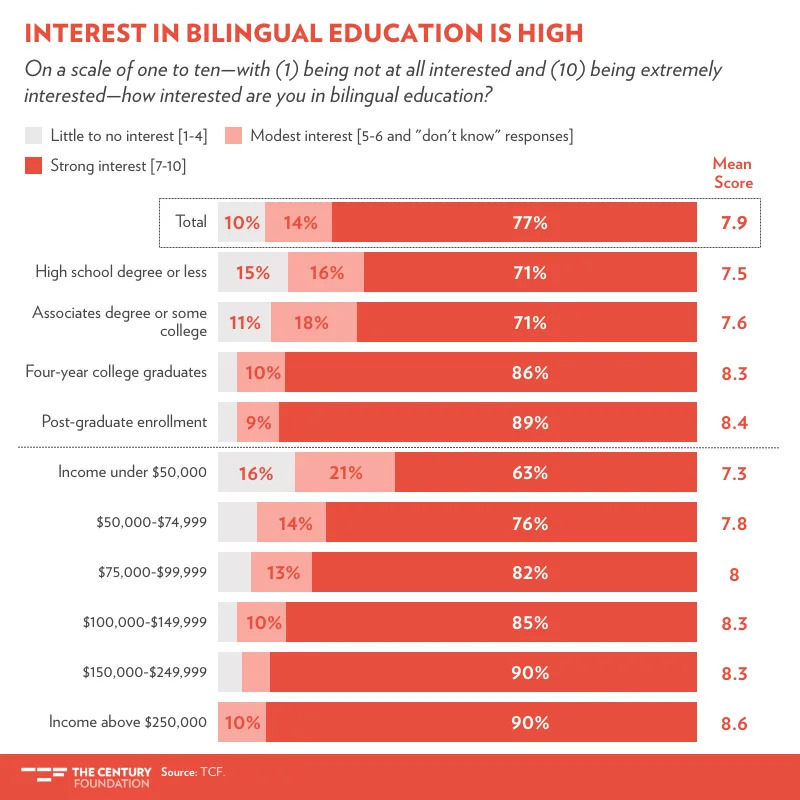
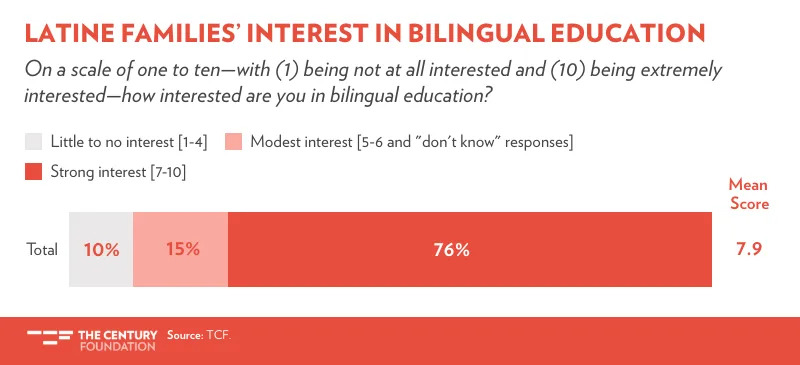
- On a 1–10 interest scale, the average rating for bilingual education was 7.9, with more than three-quarters rating their interest a 7 or higher. Among Latino families, 40% rated their interest a 10 out of 10.
Policy Context
California — chosen for the study because it and other states (such as Massachusetts and Arizona) experienced a wave of English-only political campaigning around the turn of the century — remains a crucial test case for language policy. Many 1990s-era English-only measures were later reversed, but federal action in 2025 has revived the debate.
The Century Foundation
In March 2025, the president signed an executive order designating English as the official language of the United States and rescinding non-binding guidance that had encouraged federal agencies to provide services in multiple languages. In July 2025, the administration issued further guidance discouraging translation and instructing agencies to “prioritize English.”
“With all the divisive forces tearing at our country, we need the glue of language to help hold us together,” Republican Sen. Bob Dole said in 1995, reflecting the rhetoric behind earlier English-only campaigns.
Why This Matters For Schools
Attacks on multilingualism are not merely symbolic. They can erode programs families value and depend on. The administration’s aggressive enforcement and immigration policies are already linked to higher absenteeism among children of immigrants and English learners, reducing day-to-day linguistic diversity in classrooms.
Dual-language immersion programs rely on linguistically diverse student populations to function well; fewer multilingual students can jeopardize program quality and district enrollment levels. The study’s data suggest that the current federal push to prioritize English could undermine the multilingual vision many families actively support.
Bottom Line
The Century Foundation’s November 2025 findings show broad, cross-linguistic family support for bilingual education in California. Policymakers weighing language and immigration rules should consider that these preferences cut across language backgrounds and are tied to concrete educational programs that communities value.
Help us improve.