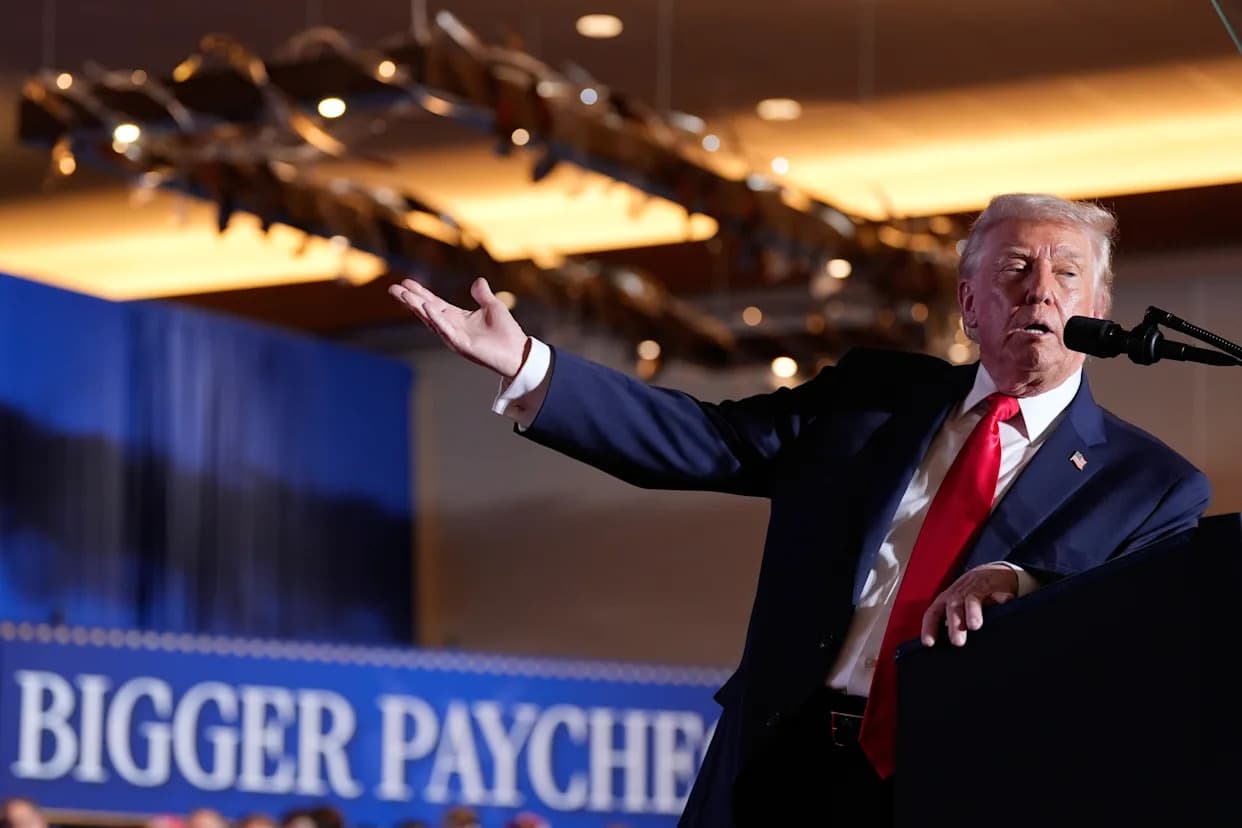
Latino voters who helped elect Donald Trump in 2024 are increasingly dissatisfied with his administration’s handling of the economy and immigration. A U.S. Hispanic Business Council survey found 42% of Hispanic business owners say their situation is worse and 70% list the cost of living among the top three national problems. Multiple polls show falling approval among Hispanic voters as concerns about prices and deportation rise, and recent local election results suggest the shift may have political consequences.
Latino Voters Who Helped Elect Trump Are Growing Disillusioned With His Economic Record

In 2024, economic anxiety and immigration concerns helped propel many Latino voters to support President Donald Trump. One year into his return to the White House, those same issues are now eroding that support among Hispanic business owners and communities that were key to his victory.
Survey And Polling Paint A Bleak Picture
A recent survey of Hispanic business owners by the U.S. Hispanic Business Council, shared exclusively with POLITICO, found that 42% of respondents say their economic situation is getting worse while just 24% say it is improving. Seventy percent ranked the cost of living as a top-three national issue — more than double the number naming any other concern.
Polling from POLITICO, Pew Research Center and The Economist/YouGov shows similar trends: in a November POLITICO poll, 48% of Hispanic respondents said the U.S. cost of living is "the worst I can ever remember it being," and 67% said the president bears responsibility. Pew found 68% of U.S. Hispanics say their situation is worse than a year earlier, 65% disapprove of the administration’s immigration approach, and 52% said they feared that they or someone close could be deported — up 10 points since March. Trump’s net favorability among Hispanic adults has fallen to 28% in a recent Economist/YouGov survey, down 13 points from the prior year.
Local Impacts: Businesses And Communities
Hispanic business leaders point to several pressures: continued high prices, tariffs that have pushed up costs, labor shortages, and the economic ripple effects of immigration enforcement actions. Monica Villalobos, president and CEO of the Arizona Hispanic Chamber of Commerce, described a South Phoenix restaurant hit by tariffs and staffing gaps that then lost customers and employees after ICE conducted parking-lot raids — forcing temporary closure.
"The broader Hispanic community certainly feels let down," said Javier Palomarez, president and CEO of the U.S. Hispanic Business Council. "It would be different if immigration and the economy had not been principal talking points for [Trump]. On both fronts, we didn't get what we thought we were going to get."
In Chicago and other cities where enforcement operations were highly publicized, Hispanic-run businesses report sharp declines in customers and revenue. Sam Sanchez, CEO of Third Coast Hospitality, called 2025 the hardest year for his restaurants in four decades outside the COVID-19 pandemic.
Political Consequences And Reactions
Trump and Republican officials argue their policies are repairing problems left by the previous administration and cite slowing inflation in recent consumer price index reports. "Republicans are putting in the work to fix the Bidenflation mess we inherited," said RNC spokeswoman Delanie Bomar. The White House has dispatched the president and Vice President J.D. Vance on affordability-focused appearances in working-class areas to counter negative sentiment.
But business owners and local leaders say cooler headline inflation does not yet translate into lower grocery, rent or utility bills. "I hear the inflation number and I don’t translate it to my going to the grocery store," said Massey Villarreal, a Houston business executive and former chair of the Republican National Hispanic Assembly. "People feel it where it matters: eggs, gas, rent, meat."
Political strategists note early signs of a shift. Latino voters who narrowly backed Trump in 2024 delivered Democratic wins in some recent local races: in parts of New Jersey and Miami — where more than 70% of residents are Hispanic — Democrats won competitive contests, prompting analysts to call those elections a referendum on economic and enforcement policies.
"Small business owners are becoming a swing constituency," said Tayde Aburto, president and CEO of the Hispanic Chamber of E-Commerce. "Not because their values have changed — it's because their costs did."
Outlook
The combination of rising costs, enforcement actions that disrupt local economies, and declining approval among Hispanic voters presents a political challenge for Republicans in key communities. Whether these trends persist will depend on whether households feel relief in their daily budgets and whether enforcement policies and economic measures change course before upcoming elections.
Help us improve.