President Trump’s March 2025 proposal to close the U.S. Department of Education would remove federal protections that have helped correct long-standing state inequities affecting Black and disabled students. Created under President Jimmy Carter (1979–1980), the department enforces civil-rights rules and administers programs like Title I and IDEA that sustain under-resourced schools. The author — a former teacher and grandparent of an autistic Black child — warns that dismantling federal oversight will widen resource gaps, weaken special-education services and allow states to adopt divergent policies that harm vulnerable students.
Opinion: Returning Education To The States Risks Leaving Black Children Behind
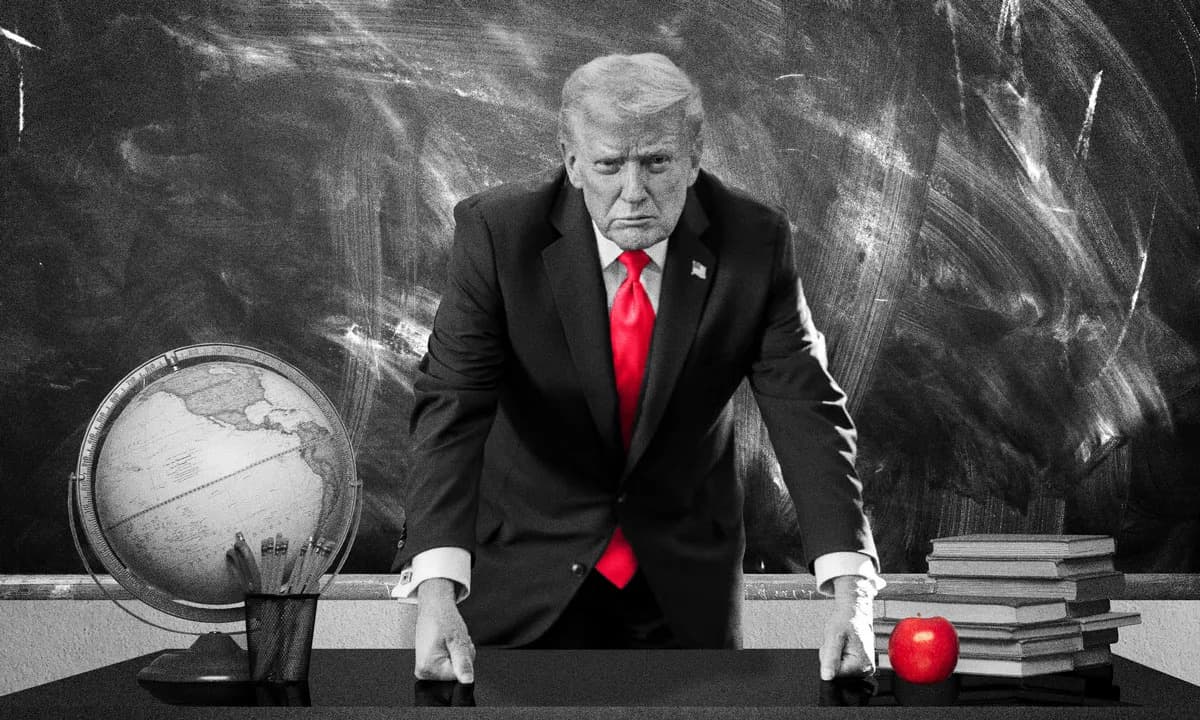
President Donald Trump’s March 2025 call to “return education to the states” by closing the U.S. Department of Education is more than political theater — it signals a rollback of federal protections that have long helped correct state-by-state inequities, especially for Black and disabled students.
After emancipation, freed Black communities built schools with their own labor and scarce resources, insisting their children learn to read despite violent backlash: schools burned, teachers terrorized, and state budgets diverted to perpetuate inequality. Decades of uneven state action prompted federal intervention. The Department of Education was created under President Jimmy Carter in 1979 and began operating in 1980 to help ensure a baseline of access and civil-rights enforcement for all students.
Personal stakes make the policy urgent. As a former public school teacher and the grandparent of an autistic Black grandson who depends on an Individualized Education Program (IEP) and the Individuals with Disabilities Education Act (IDEA), I know what losing federal safeguards would mean: reduced services, evaporating specialized funding and, ultimately, children left without access to an appropriate education.
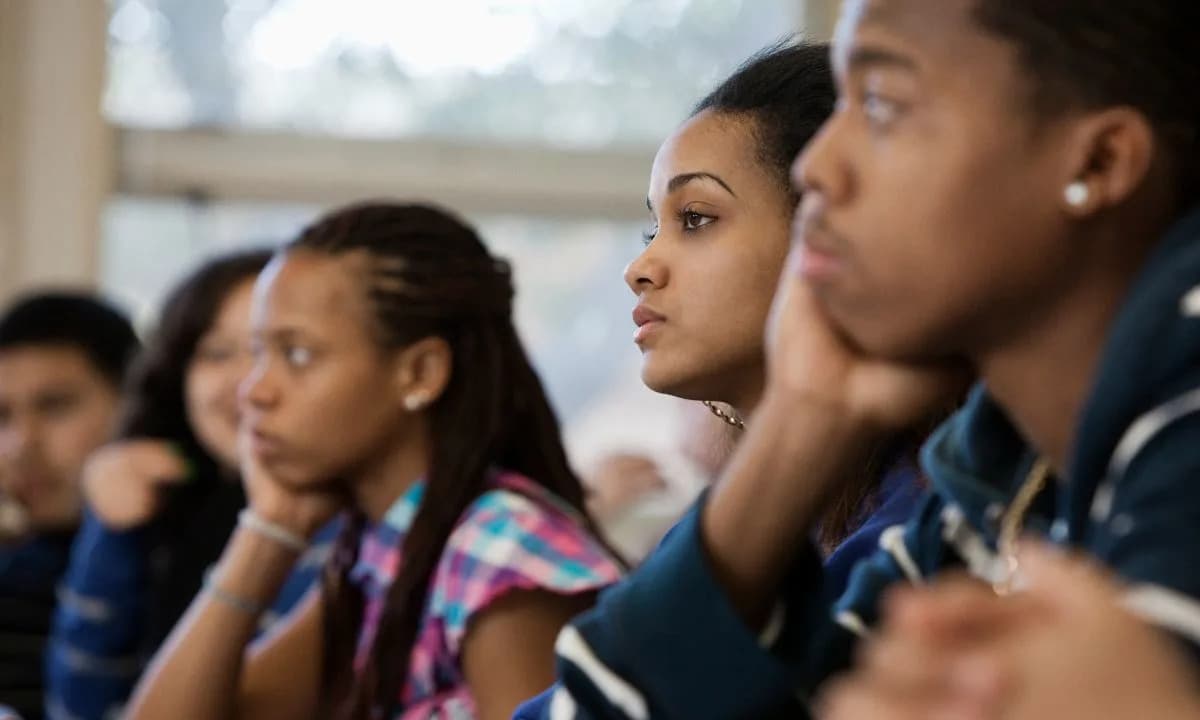
When schooling is governed by ZIP code rather than by common standards, affluent, predominantly white districts continue to attract resources while many schools that serve Black and brown children remain underfunded — with leaking roofs, oversized classes and textbooks that predate the teachers. Federal programs such as Title I and IDEA help keep those schools functioning and hold states accountable for civil-rights violations.
What’s Happening Now
In 2025 several shifts are already reshaping how students are protected. Thousands of education workers have been furloughed or let go, and civil-rights offices have been pared back. The Department of Education’s Office for Civil Rights has seen seven of its 12 regional offices shut and staffing chaos that threatens the agency’s ability to investigate discrimination, examine punitive discipline practices and enforce equal-access requirements. Those rollbacks matter most to Black students, who are suspended and expelled at rates two to three times higher than their white peers.
Meanwhile, appeals to “local control” have often translated into policies that erase or sanitize the history and experiences of marginalized communities. Recent state-level actions include bans on diversity, equity and inclusion initiatives and efforts to remove or rewrite lessons about Black history. Examples cited in public debates include Florida’s dispute over AP African American Studies and curriculum controversies in Texas that minimized the realities of slavery.
Stripping federal guardrails does not create freedom for students; it creates 50 different systems that value children differently depending on geography and politics.
The consequence of dismantling federal oversight is predictable: fragile protections for the most vulnerable, wider resource gaps, fewer special-education services, swollen class sizes, and an exodus of experienced teachers. These are not hypothetical outcomes — they are the foreseeable results of turning enforcement and funding over to governors with wildly different priorities.
We should ask what kind of country we want: one where a child’s opportunity depends on a ZIP code and the whims of a governor, or one where federal standards and civil-rights enforcement guarantee a baseline of fairness and access for every student.
Help us improve.