The EU is accelerating efforts to diversify trade and strategic ties, exemplified by a major free-trade agreement with India that could affect up to 2 billion people and eliminate tariffs on roughly 97% of EU exports and 99% of Indian exports to the bloc. Brussels is simultaneously boosting defense capacity with €150 billion in loans and seeking to diversify energy supplies to avoid new dependencies. Collectively, these moves aim to increase Europe’s strategic autonomy amid fracturing trans‑Atlantic relations and rising global competition.
Why the EU Is Racing to Secure New Trade Partners — From India to Mercosur
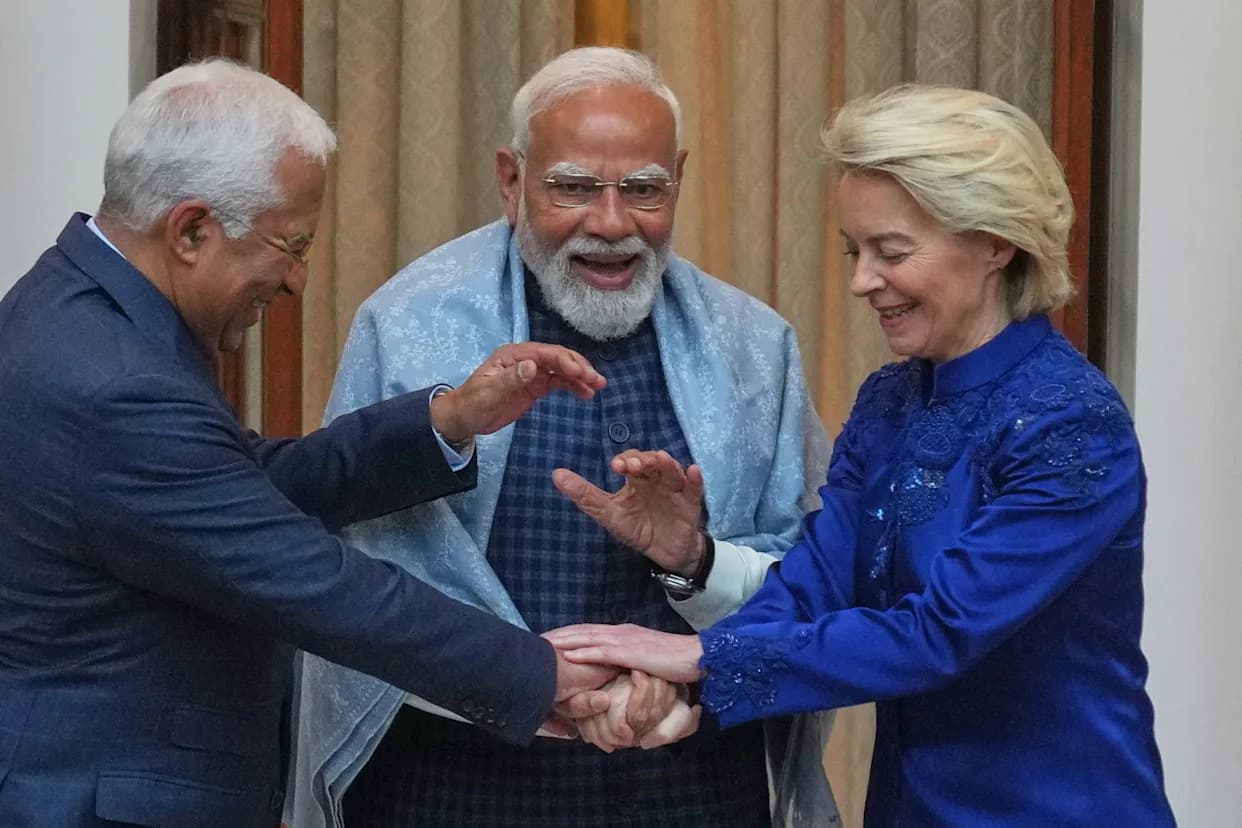
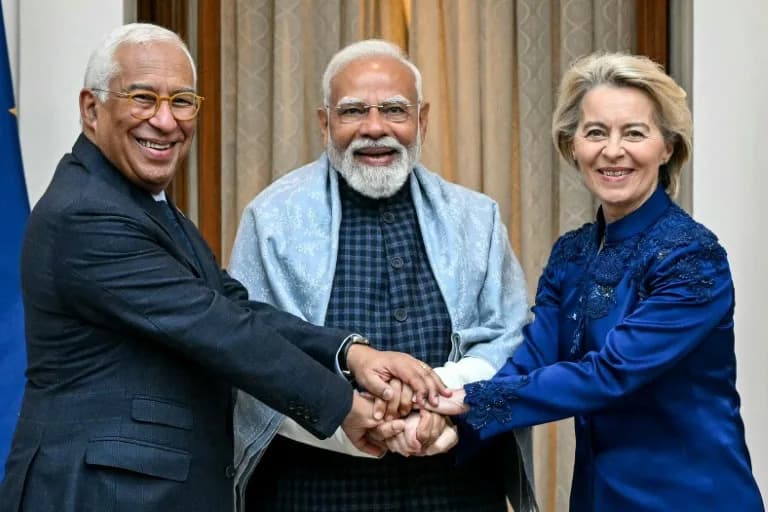
Indian Prime Minister Narendra Modi, center, welcomes European Council President Antonio Costa, left and European Commission President Ursula von der Leyen before their meeting in New Delhi, India, Tuesday, Jan. 27, 2026. (AP Photo/Manish Swarup)
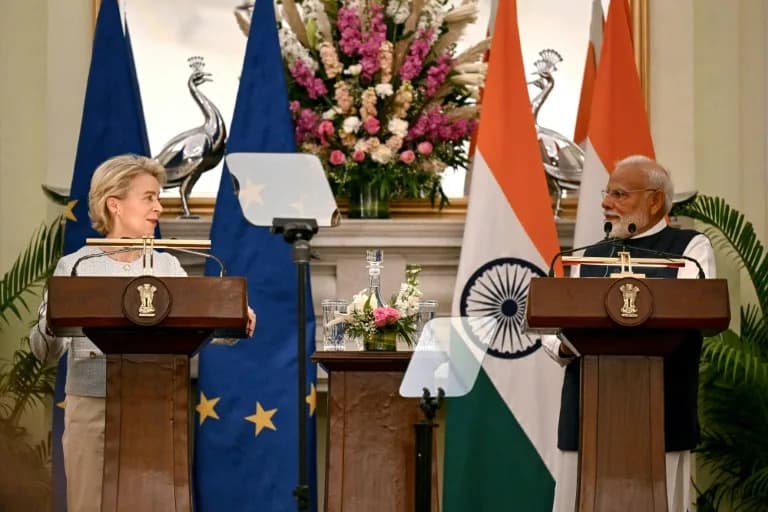
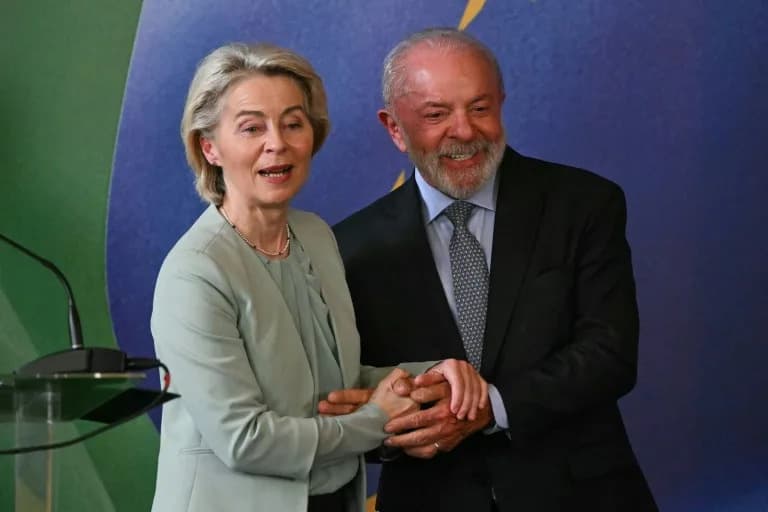
The European Union has stepped up a global push to diversify trade and strategic ties, highlighted by a landmark free-trade agreement with India. The pact, signed in New Delhi by European Commission President Ursula von der Leyen, reflects a broader effort by the 27-member bloc to reduce reliance on a single partner and to strengthen Europe’s economic and geopolitical autonomy amid rising global tensions.
Deals Driving a New Global Strategy
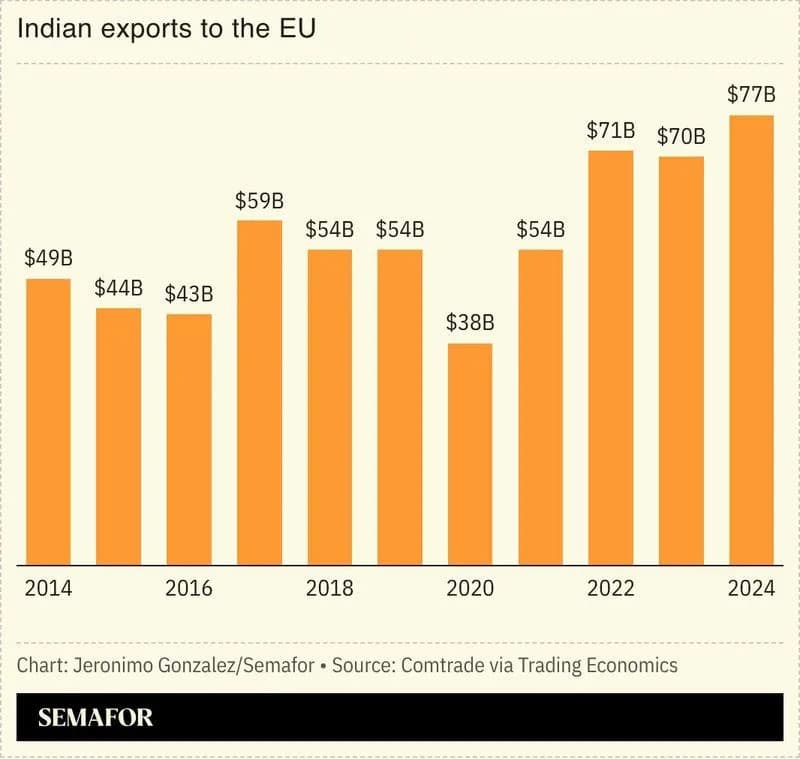
The EU’s agreement with India — described by leaders as among the most significant the bloc has negotiated — could touch as many as 2 billion people and would eliminate tariffs on roughly 97% of EU exports to India (including cars and wine) and about 99% of Indian exports to the EU (including textiles and medicines).
Brussels has pursued or upgraded trade relationships across several regions over the past year, including pacts or talks with Indonesia, Japan, Mexico, the Mercosur countries of South America, South Korea, Australia and prospective discussions with the UAE and Canada. Officials say these moves aim to diversify supply chains and create strategic alternatives to both Beijing and Washington.
Political Context
“The international order we relied upon for decades is no longer a given,” said Nikos Christodoulides, president of Cyprus, reflecting a widely shared view in the EU that more autonomous, united action is needed.
Leaders cite recent tensions in trans-Atlantic relations and growing competition from China as catalysts for faster, more ambitious trade diplomacy.
Defense And Industrial Shifts
Russia’s invasion of Ukraine and concerns about U.S. policy have spurred the EU to mobilize new financial tools to bolster defense capacity and infrastructure. EU leaders have earmarked about €150 billion in loans for projects including air and missile defenses, artillery, ammunition, drones, transport, cyber systems, AI and electronic warfare. European defense firms such as Leonardo, Rheinmetall, Thales and Saab have seen their shares rise amid these efforts.
Energy Diversification
As Brussels reduces reliance on Russian energy, it has increased imports of U.S. liquefied natural gas — a shift that carries its own risks. According to Eurostat, the EU now imports roughly 14.5% of its oil and about 60% of its LNG from the U.S. European energy officials stress the need to avoid substituting one dependency for another by investing in domestic production and new supplier relationships in the eastern Mediterranean, the Gulf and elsewhere.
What This Means
The EU’s strategy combines trade diplomacy, defense investment and energy diversification to build strategic autonomy without severing key alliances. By expanding partnerships, Brussels aims to strengthen Europe’s bargaining power with major powers — Beijing, Moscow and Washington — while shoring up its economic resilience and security.
Help us improve.