The European Union has restarted internal talks on a long-delayed free-trade pact with Mercosur countries — Brazil, Argentina, Bolivia, Paraguay and Uruguay — following recent regional tensions. EU Agriculture Ministers met in Brussels to balance protections for farmers with projected economic gains; EU trade commissioner Maroš Šefčovič said agrifood exports could rise up to 50%. Italy’s position may be decisive, while France remains strongly opposed and the European Parliament must still approve any final deal.
EU Revives Landmark Mercosur Free-Trade Talks As Jan. 12 Signing Is Discussed
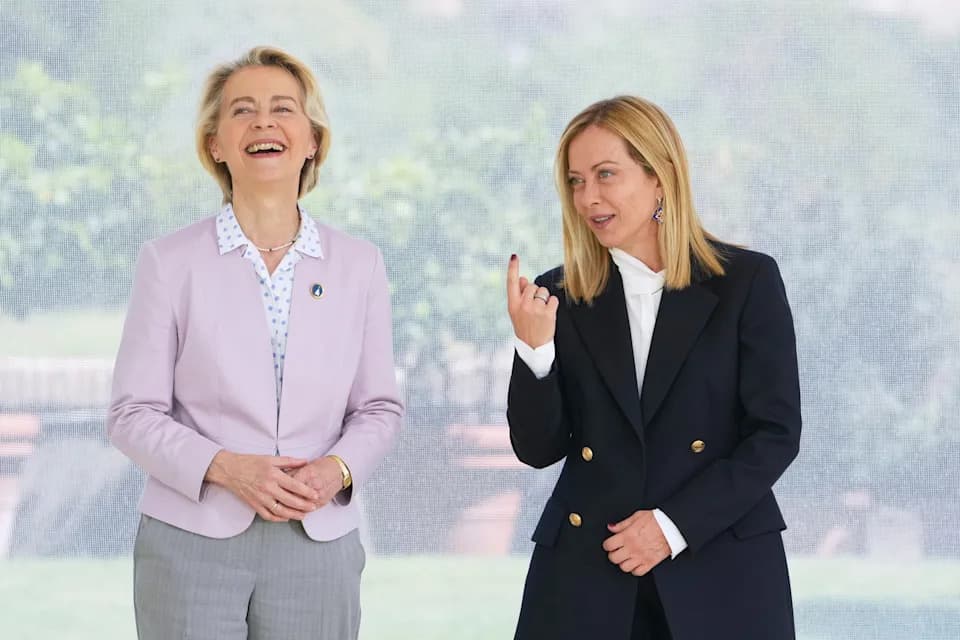
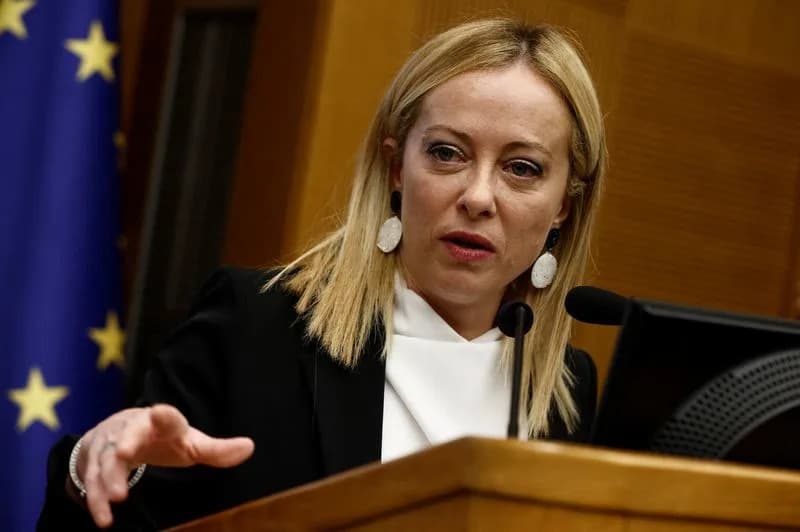
FILE - Italy's Prime minister Giorgia Meloni, right, and President of the European Commission Ursula von der Leyen, share a word before the start of a summit in Rome, Friday, June 20, 2025. (AP Photo/Alessandra Tarantino, file)(ASSOCIATED PRESS)
Brussels has reopened internal European Union discussions on a long-stalled free-trade agreement with several South American Mercosur members — Brazil, Argentina, Bolivia, Paraguay and Uruguay — a week after a reported U.S. operation in Venezuela aimed at detaining President Nicolás Maduro.
Ministers of Agriculture from the EU’s 27 member states met in Brussels to weigh how best to protect European farmers while pursuing the economic and geopolitical benefits of a Mercosur pact. EU trade commissioner Maroš Šefčovič said after the meeting that the agreement could raise EU agrifood exports by as much as 50%.
“It’s a landmark one. This is the biggest free trade agreement we ever negotiated,” Šefčovič said, adding that trading partners prize the EU’s credibility and that the bloc must remain a trusted, reliable partner.
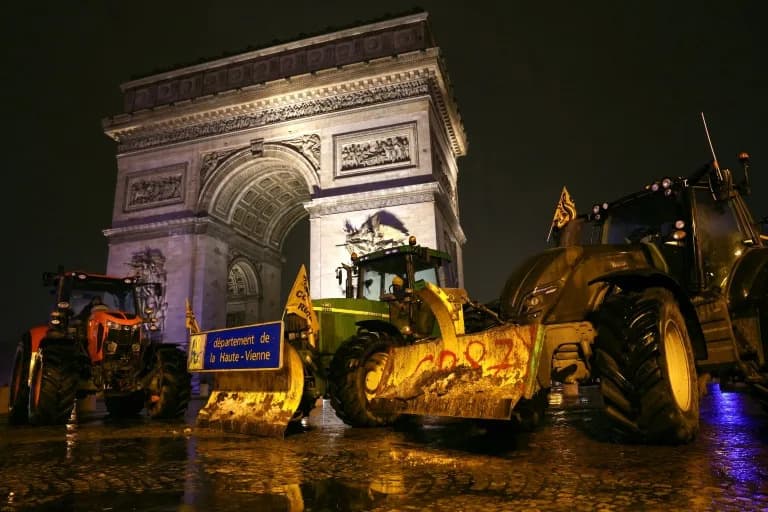
Šefčovič said talks would resume on Friday, and speculation persists that the deal could be signed in Paraguay on Jan. 12. The negotiations collapsed in December after fierce opposition in France — driven in large part by angry farmers — forced European Commission President Ursula von der Leyen to cancel a planned trip to Brazil. The breakdown came after roughly 26 years of intermittent talks on an EU–Mercosur text.
Italy is widely viewed as pivotal. If Prime Minister Giorgia Meloni sides with Germany and other supporters, the agreement could advance despite objections from France and Poland. Meloni welcomed von der Leyen’s proposal to fast-track funds to farmers, but stopped short of pledging formal backing.
The proposed pact would link the EU to a market of roughly 780 million people and cover about one-quarter of global gross domestic product. It would progressively remove duties on most goods traded between the two blocs, offering a major expansion in market access for both sides and a European-led model of economic engagement in South America.

A French farmer drives his tractor to block a main road during a protest against the Mercosur trade deal with South American nations, Thursday, Dec. 18, 2025 in Portet-sur-Garonne, southwestern France. (AP Photo/Fred Scheiber)(ASSOCIATED PRESS)
Supporters say the deal would diversify the EU’s trade relationships amid tensions with the United States and China and would restore momentum after December’s setback, which critics said dented the bloc’s negotiating credibility. Detractors warn it could undermine the EU’s agricultural sectors and environmental standards.
French President Emmanuel Macron has been a leading political opponent, arguing the pact risks boosting far-right sentiment and demanding stronger safeguards to limit economic disruption. His government has called for tighter controls on agricultural inputs in Mercosur countries (including pesticides) and more stringent inspections of imports at EU ports.
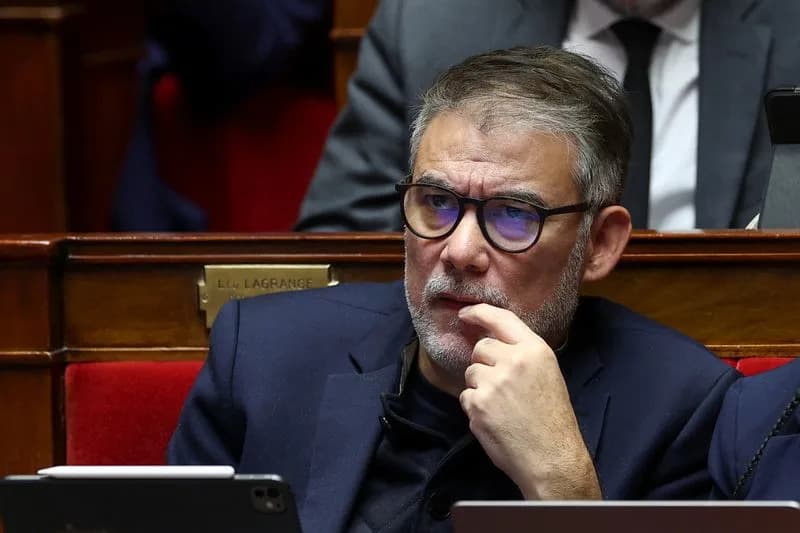
French Agriculture Minister Annie Genevard reiterated France’s opposition, saying the deal threatens domestic producers of beef, poultry, sugar, ethanol and honey. She cautioned that even if the European Commission signs the agreement, it must still be debated and approved by the European Parliament — a vote that is not guaranteed to pass.
EU negotiators say new internal safeguards have been introduced, including "semi-automatic triggering thresholds" that would activate if Mercosur imports are found to significantly undercut EU products. Additional measures under discussion include targeted financial support for farmers and phased liberalization to limit market shocks.
Political tensions inside Mercosur — notably between Argentina’s President Javier Milei and Brazil’s president Luiz Inácio Lula da Silva — have not stopped South American leaders from pursuing closer ties with Europe to benefit agricultural exports. Venezuela, which was suspended from Mercosur in 2016, remains a sensitive regional issue.
The talks in Brussels included reporting contributions from AP writers Sylvie Corbet in Paris and Giada Zampano in Rome.
Help us improve.