Indian Prime Minister Narendra Modi and German Chancellor Friedrich Merz met in Gandhinagar to sign multiple agreements aimed at strengthening economic and security ties. Deals cover defense-industry collaboration (including a Thyssenkrupp-led submarine project), skills and education, and easier mobility for Indian health-care professionals in Germany. Both leaders emphasized the need to deepen trade and pursue a roadmap for joint defense production while advancing cooperation on climate, energy and rare-earths.
India and Germany Sign Sweeping Deals to Deepen Economic and Security Partnership
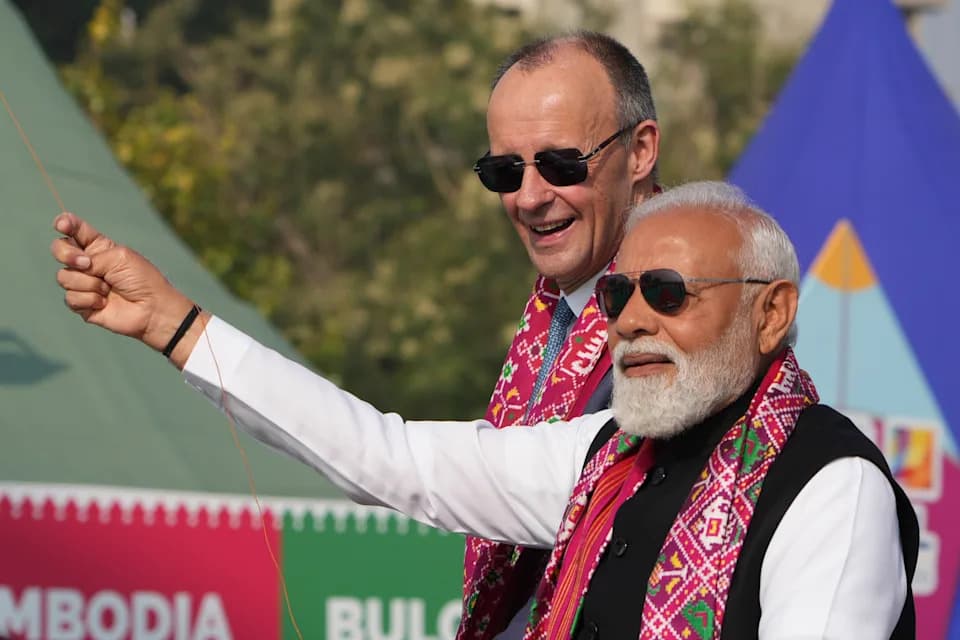
Indian Prime Minister Narendra Modi, right, and German Chancellor Friedrich Merz fly kites during the inauguration of International kite festival in Ahmedabad, India, Monday, Jan. 12, 2026. (AP Photo/Ajit Solanki)(ASSOCIATED PRESS)
Indian Prime Minister Narendra Modi and German Chancellor Friedrich Merz met in Gandhinagar, Gujarat, to sign a series of agreements designed to expand economic, industrial and security cooperation between India and Germany.
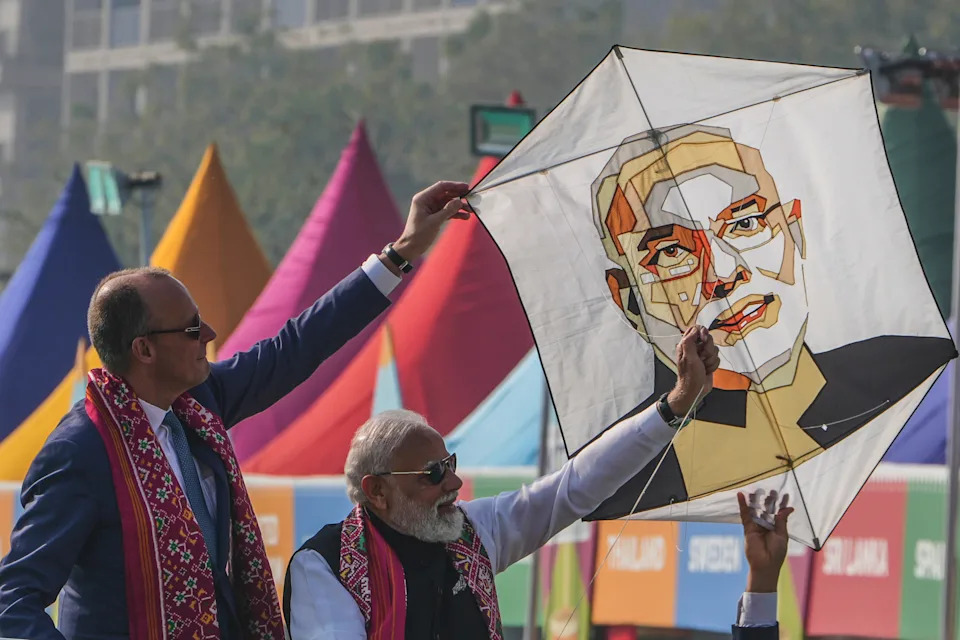
German Chancellor Friedrich Merz, left, and Indian Prime Minister Narendra Modi prepare to fly a kiteduring the inauguration of International kite festival in Ahmedabad, India, Monday, Jan. 12, 2026. (AP Photo/Ajit Solanki)(ASSOCIATED PRESS)
Agreements and Strategic Areas
The two leaders signed accords covering defense industry cooperation, skills development, health-care workforce mobility and education. They agreed on a road map to deepen defense-industrial collaboration for joint development and production, and pledged new projects in climate action, energy and the mining of rare-earth elements.
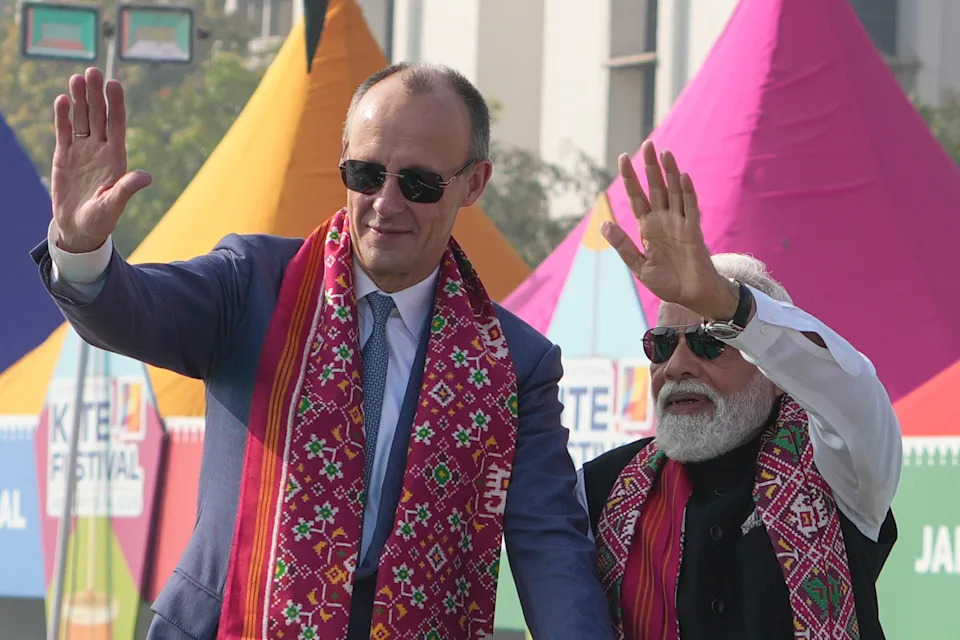
German Chancellor Friedrich Merz, left, and Indian Prime Minister Narendra Modi waves as they arrive for the inauguration of the International Kite Festival in Ahmedabad, India, Monday, Jan. 12, 2026. (AP Photo/Ajit Solanki)(ASSOCIATED PRESS)
Defense Collaboration: Germany’s Thyssenkrupp is expected to partner with Indian firms to build six advanced conventional submarines in India, part of New Delhi’s broader naval modernization program. Officials emphasized this marks a significant strengthening of defense ties, which historically have been limited.
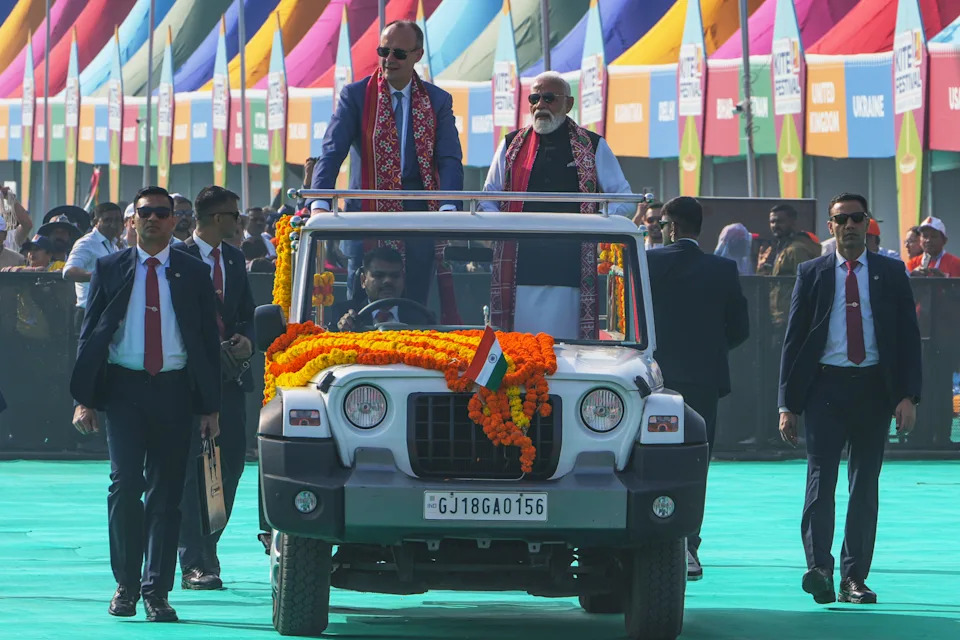
German Chancellor Friedrich Merz and Indian Prime Minister Narendra Modi ride together in a vehicle during the inauguration of International kite festival in Ahmedabad, India, Monday, Jan. 12, 2026. (AP Photo/Ajit Solanki)(ASSOCIATED PRESS)
Mobility for Health Professionals: The leaders signed an agreement intended to make it easier for qualified Indian health-care workers to take up jobs in Germany’s medical sector, addressing workforce needs while enabling professional mobility.
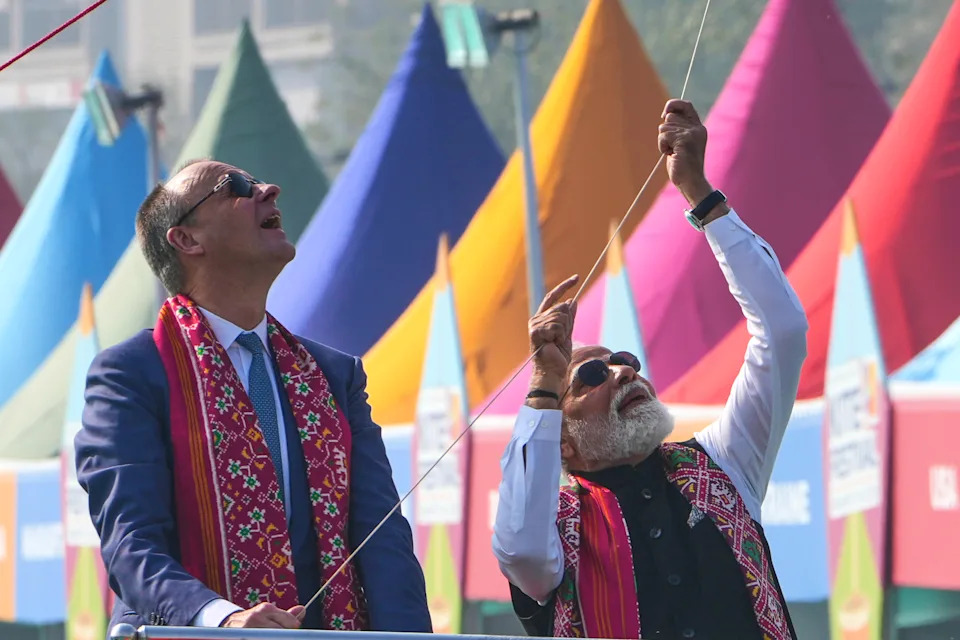
German Chancellor Friedrich Merz, left, and Indian Prime Minister Narendra Modi fly a kite during the inauguration of International kite festival in Ahmedabad, India, Monday, Jan. 12, 2026. (AP Photo/Ajit Solanki)(ASSOCIATED PRESS)
Economic Outlook and Trade
Modi described Germany as India’s most important trading partner within the European Union and said both governments are working to expand commercial ties. Chancellor Merz called India “a desired partner, a partner of choice for Germany” and urged progress on concluding a free trade agreement between India and the EU to unlock greater economic potential.
Both sides framed the engagements as part of a broader push to diversify supply chains and reduce excessive dependence on any single country, while strengthening economic resilience amid global trade tensions.
Visit Highlights
Merz’s visit — his first to Asia since taking office — included a tour of the Sabarmati Ashram and participation in the Sabarmati International Kite Festival, where he and Modi flew kites together. Merz, accompanied by a sizable business delegation, is scheduled to travel to Bengaluru to meet Indian and German business and technology leaders.
Why it matters: The agreements signal a closer strategic and economic alignment between India and Europe’s biggest economy, expanding cooperation in defense, high-skilled labor mobility and critical industries such as energy and rare-earths.
Help us improve.