The European Union and Mercosur have finalised a 25-year trade agreement that removes tariffs on more than 90% of bilateral trade and links markets representing about 30% of global GDP and 700 million consumers. Leaders say the pact reaffirms multilateral cooperation and will boost exports on both sides, though European farmers have voiced strong opposition over competition and standards. The signing in Asunción will be attended by EU chief Ursula von der Leyen, while political talks on critical raw materials and broader trade diplomacy continue.
EU and Mercosur Seal 25-Year Trade Pact — A Boost for Multilateralism and Commerce
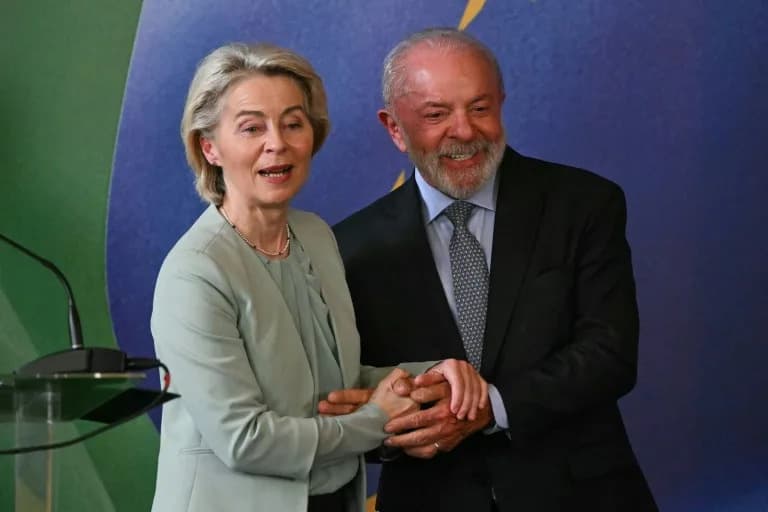
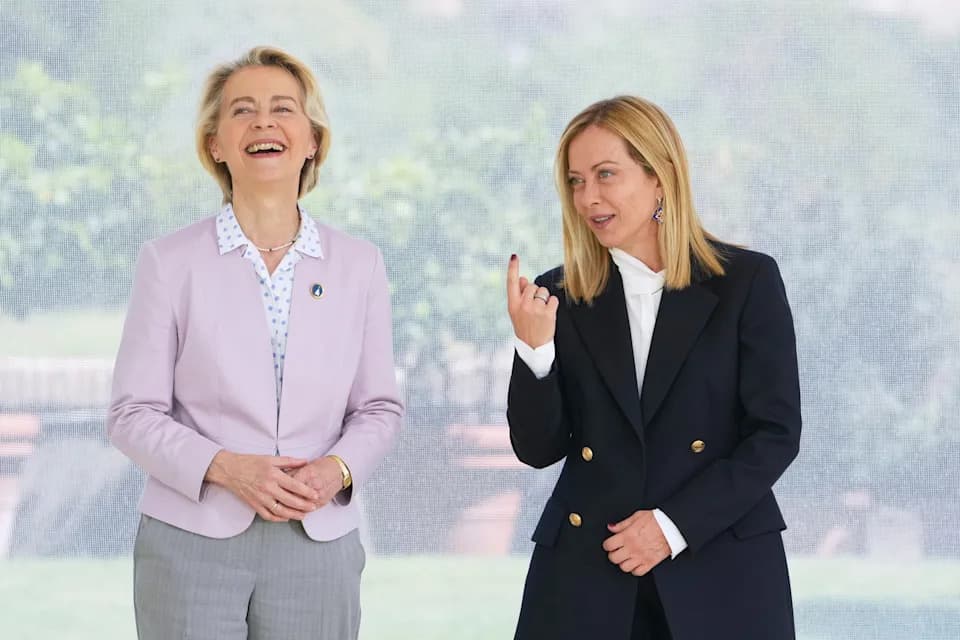
President of the European Commission Ursula von der Leyen praised Brazil's President Luiz Inacio Lula da Silva for his role in negotiating the EU-Mercosur deal (Mauro PIMENTEL)(Mauro PIMENTEL/AFP/AFP)
Leaders from the European Union and South America's Mercosur bloc celebrated a long-awaited trade agreement on Friday, framing the accord as a victory for multilateral cooperation at a time of heightened global economic uncertainty.
The deal — more than two decades in the making — was finalised after talks in Brussels and is scheduled to be formally signed in Asunción, Paraguay. Together the EU and Mercosur account for roughly 30% of global GDP and some 700 million consumers, making this one of the world's largest free-trade arrangements.
Political Signal and Economic Gains
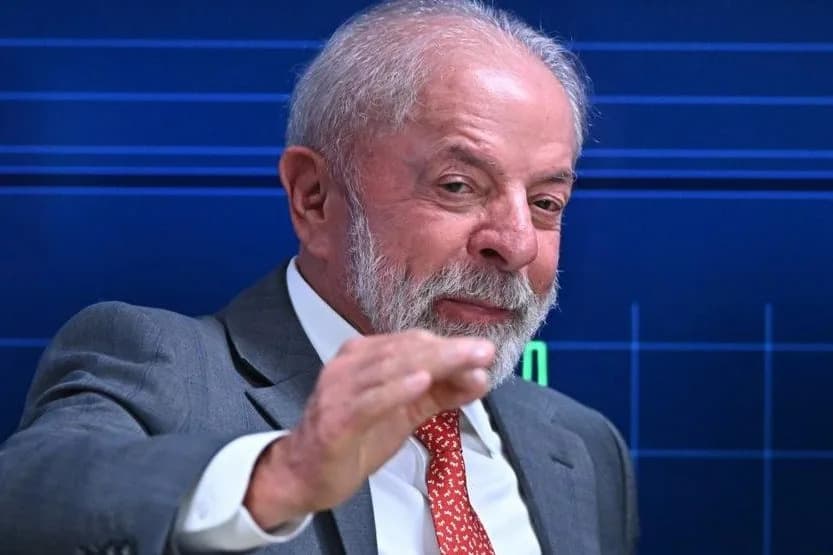
Brazilian President Luiz Inácio Lula da Silva described the signing as "very good, especially for the democratic world and for multilateralism," while European Commission President Ursula von der Leyen praised Lula's role in advancing the negotiations. Von der Leyen said the pact "sends a powerful message" about the benefits of partnership and openness.
"The European Union and Mercosur share values such as respect for democracy, the rule of law, and human rights," Lula said.
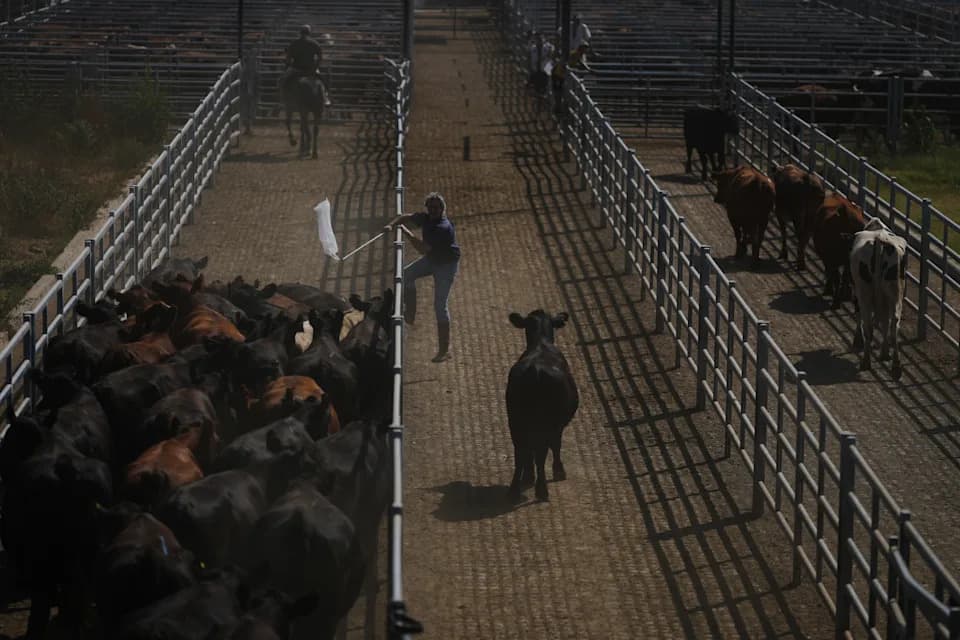
The treaty eliminates tariffs on more than 90% of bilateral trade, a change expected to boost EU exports such as cars, wine and cheese and to open EU markets to South American commodities including beef, poultry, soybeans, sugar, rice and honey.
Opposition and Standards Concerns
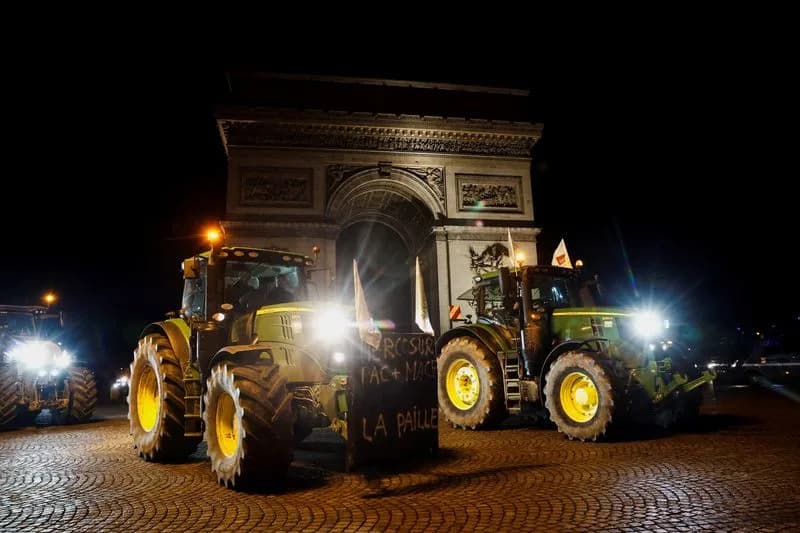
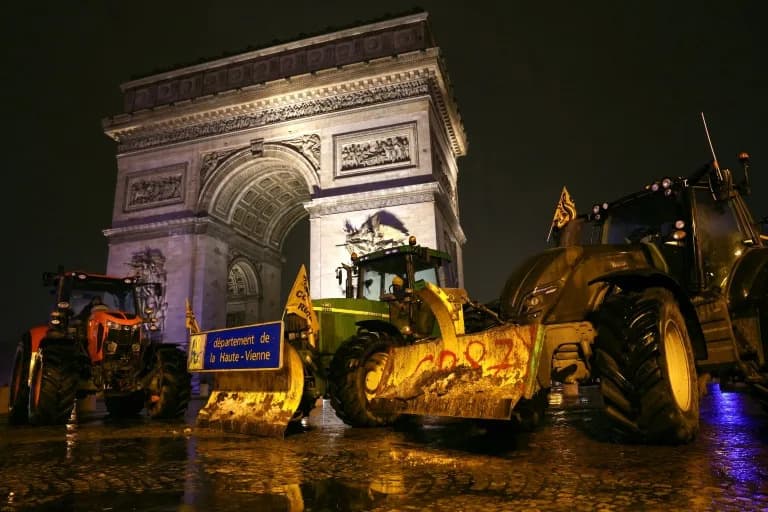
The agreement was reached despite strong opposition from many European farmers, who fear an influx of cheaper imports produced under different regulatory and environmental standards. Negotiators have said safeguards and phased openings will be part of implementation, but concerns among agricultural stakeholders remain a major political challenge.
Signing, Attendees and Wider Diplomacy
Von der Leyen will travel to Asunción for the signing ceremony; President Lula will not attend. Paraguay's President Santiago Peña and Uruguay's President Yamandú Orsi are set to attend, while Argentina's Javier Milei had not been confirmed at the time of reporting.
Officials also emphasized the pact's geopolitical dimension: it is part of broader trade outreach by Brazil — which is pursuing partnerships with Canada, Mexico, Vietnam, Japan and China — and ongoing EU negotiations with other partners, including India.
Von der Leyen noted parallel talks with Brazil on political cooperation around critical raw materials such as lithium, nickel and rare earths, resources that are increasingly important to supply chains and geopolitical strategy.
Reporting note: This article has been edited to correct earlier inaccuracies and to focus on confirmed developments related to the EU–Mercosur agreement.
Help us improve.