Artemis II, scheduled for February 2026, will carry four astronauts on a far-side lunar loop to validate life-support and navigation systems and to signal U.S. commitment to sustained lunar operations. The mission marks a shift from Cold War-style "firsts" toward long-term presence, partnerships and predictable operating practices. China’s centralized lunar program — with far-side landings, sample returns and plans for a crewed landing by 2030 — contrasts with the U.S. model of openness and coalition-building. How Article IX of the 1967 Outer Space Treaty is interpreted near the lunar south pole will shape who can operate where and how.
Artemis II Signals U.S. Shift From Apollo-Era 'Firsts' To Sustained Moon Presence — Contrasting China’s State-Led Program

As part of the Artemis II mission, humans will fly around the Moon for the first time in decades.Roberto Moiola/Sysaworld via Getty Images
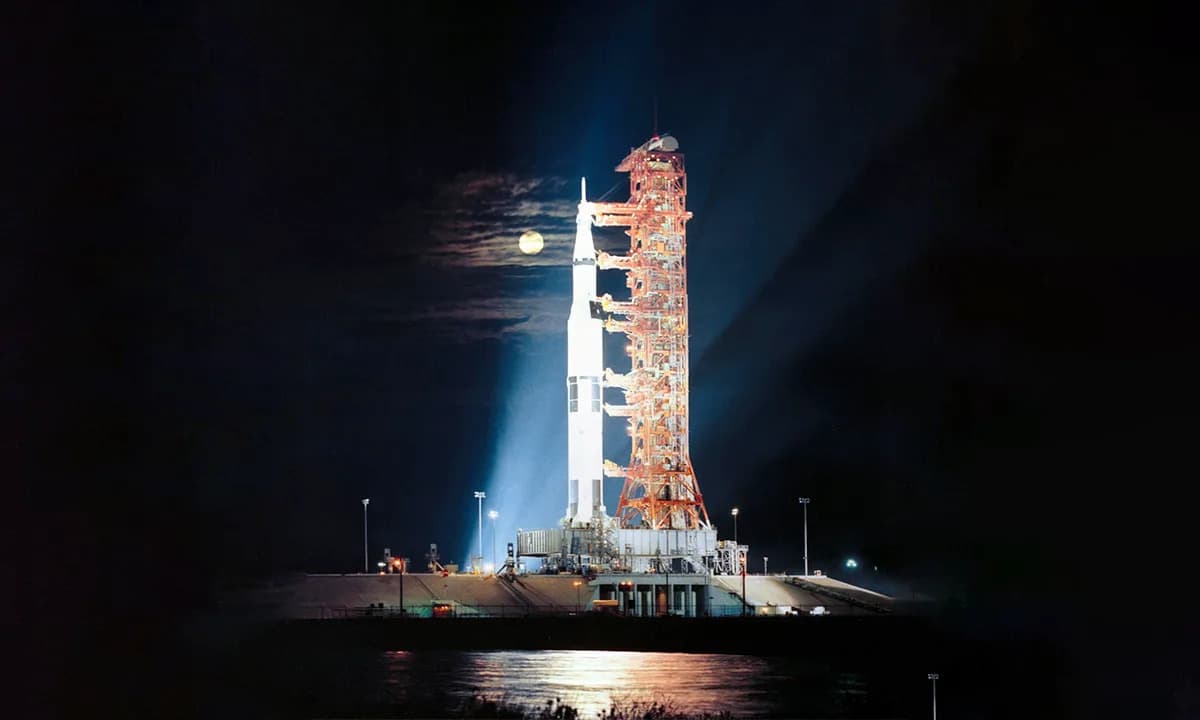
When Apollo 13 looped around the Moon in April 1970, more than 40 million people watched the United States turn a near-disaster into a safe return. An oxygen-tank explosion transformed a planned landing into an urgent exercise in problem-solving; the three astronauts used the Moon’s gravity to sling themselves home. The episode was at once gripping human drama and a Cold War geopolitical demonstration.
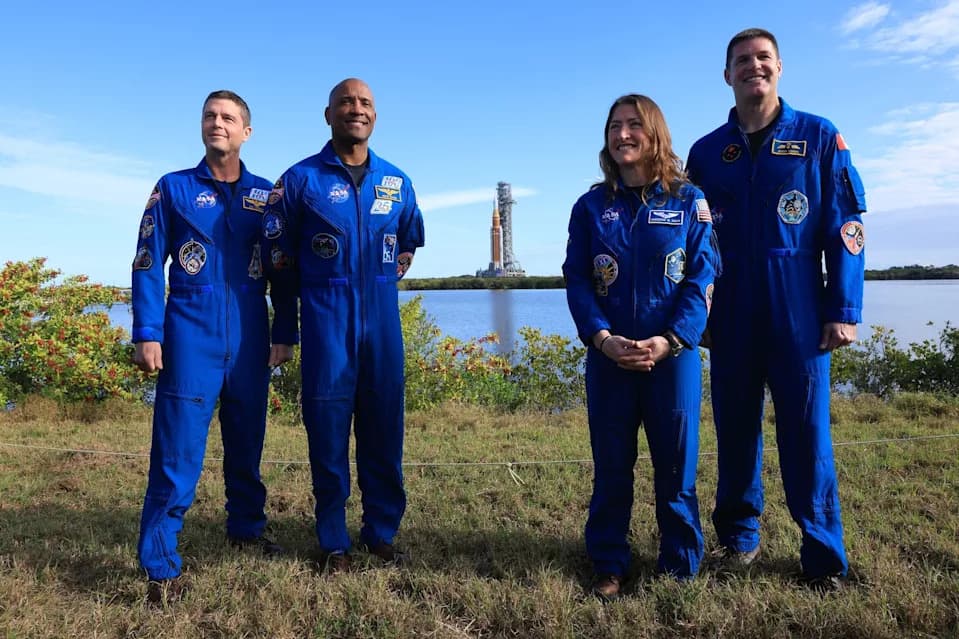
More than half a century later, NASA’s Artemis II — scheduled for February 2026 — will deliberately send humans on a lunar flyby. At first glance the mission is modest: a four-person crew will loop around the Moon’s far side, test life-support and navigation systems, and return to Earth without landing. Strategically, however, Artemis II carries significance far beyond a systems check.
From Symbolic Firsts To Sustained Presence
During the Cold War, the space race was largely a two-player contest between the United States and the Soviet Union, focused on headline-grabbing achievements that conferred prestige. Today’s lunar competition looks very different. The emphasis has shifted from single, symbolic firsts to building enduring presence, predictable operating practices and international coalitions that can sustain activity over decades.
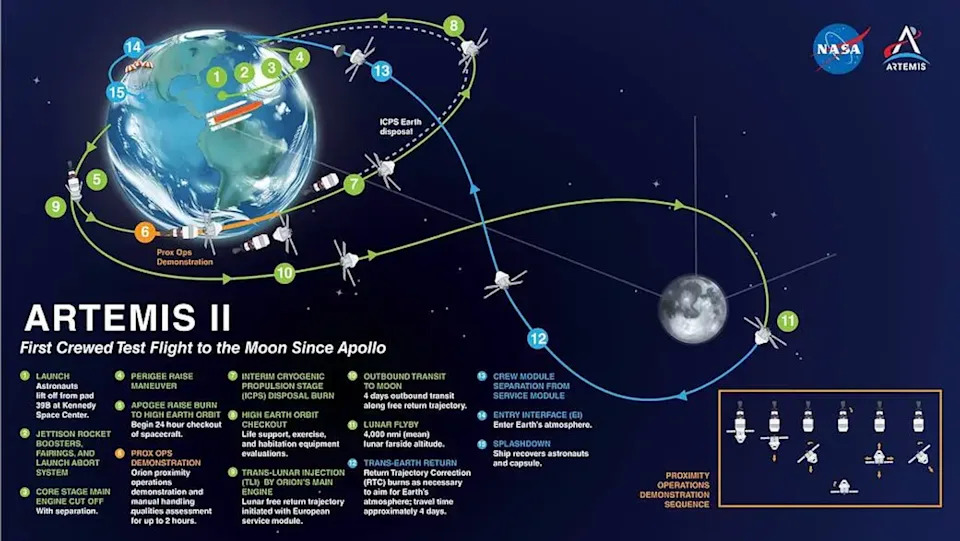
Artemis II’s four-person crew will circle around the Earth and the Moon.NASA
Artemis II is a strategic signal: sending people beyond low Earth orbit requires long-term political commitment, stable funding and operational reliability that allow sovereign and commercial partners to plan around U.S. capabilities. As a bridge to Artemis III — NASA’s planned crewed landing near the lunar south pole, currently targeted for 2028 — Artemis II is meant to demonstrate credibility and continuity, not just technical prowess.
Different Models: U.S. Openness Versus China’s Centralized Approach
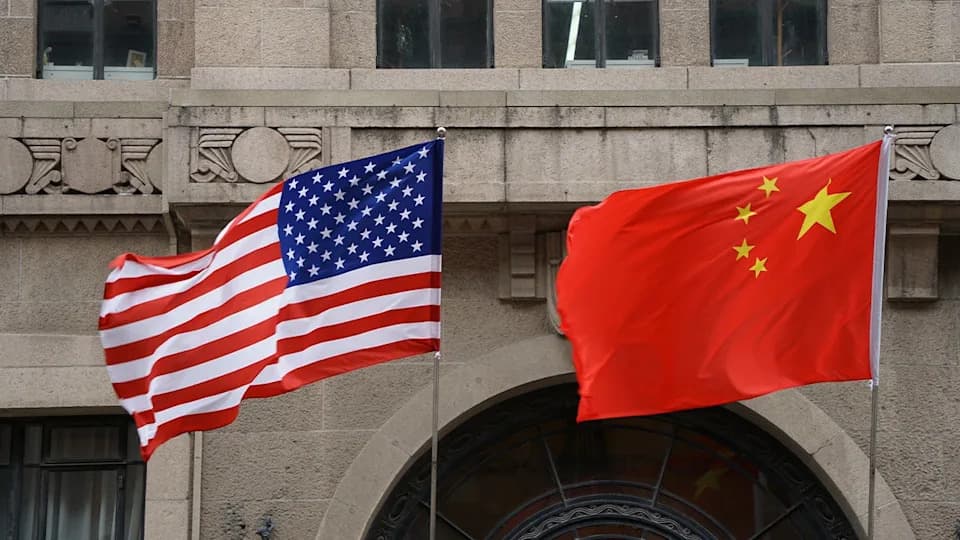
China has developed a deliberate, well-resourced lunar program focused on incremental capability and long-term presence, including robotic milestones such as a far-side landing and sample returns, plus announced ambitions for a crewed lunar landing by 2030 and plans for a research station. Beijing’s program is centrally directed, selectively partnered, and tightly controlled.
By contrast, the U.S. Artemis approach emphasizes openness and coalition building. Commercial companies play central roles in designing and operating spacecraft, and international partners are invited to operate within shared frameworks for exploration, surface activity and resource use. This openness is strategic: coalitions expand collective capability and help shape norms and expectations for safe, predictable lunar operations.
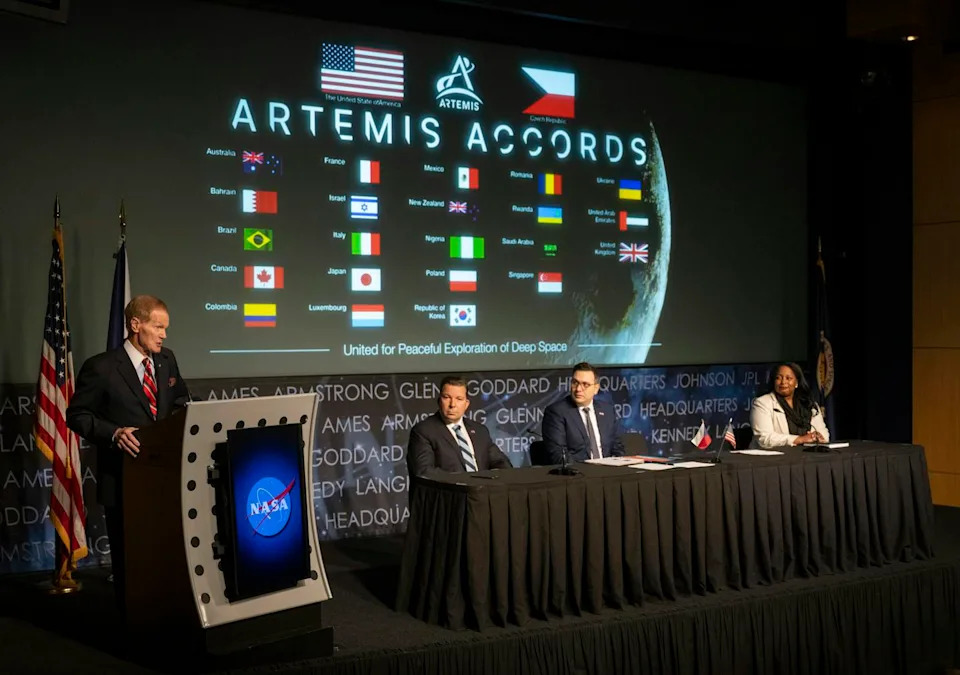
The U.S. approach to spaceflight is emphasizing international cooperation.Joel Kowsky/NASA via Getty Images
Law, Practice, And The Importance Of 'Due Regard'
International space law offers a baseline. Article IX of the 1967 Outer Space Treaty obliges nations to act with “due regard” for the interests of others and to avoid harmful interference. For decades that obligation was mostly theoretical. But as activity concentrates near resource-rich regions — especially the lunar south pole — interpreting and operationalizing "due regard" becomes an immediate question: does it mean minimal non-interference, or active coordination and deconfliction?
How states interpret this duty will shape who can operate where, under what conditions, and how commercial and scientific activities coexist. The evolution of these expectations will be driven not only by treaties and national policy, but by repeated practice: the states and companies that show up consistently and demonstrate reliable, transparent operating habits will help write the rules by example.
Policy Signals And Strategic Competition
Recent U.S. statements and policy actions underline continuity as a strategic priority. In congressional hearings, NASA leadership has emphasized keeping U.S. efforts on a steady course. The U.S.-China Economic and Security Review Commission’s 2025 report frames space as a domain of strategic competition and stresses expanding human spaceflight and deep-space infrastructure over time. A recent executive order also affirms federal support for long-term lunar operations, commercial participation and cross-agency coordination.
Leadership Is Less About One-Off Triumphs And More About Reducing Uncertainty. True leadership will come from approaches that foster cooperation, predictability and stable operating practices that others can rely on over years and decades.
Artemis II will not decide the Moon’s future, but it illustrates the U.S. model: transparent partnerships, commercial integration and efforts to shape shared expectations. If sustained, that model could influence how the next era of lunar — and eventually Martian — exploration is governed and conducted.
Author: Michelle L.D. Hanlon, Professor of Air and Space Law, University of Mississippi. The author is affiliated with For All Moonkind, Inc., a nonprofit focused on protecting human cultural heritage in outer space.
Help us improve.