The NTSB met Tuesday, Jan. 27, 2026, to announce its probable cause for the Jan. 29, 2025 midair collision over the Potomac River that killed 67 people. Investigators scrutinized why the Army Black Hawk was operating with ADS‑B turned off, why Reagan National tower did not warn the regional jet, and discrepancies in the helicopter’s altitude readouts. The probe included 32 hours of testimony and uncovered procedural and technical lapses that may prompt regulatory and operational changes. A final report and formal recommendations are expected in the coming weeks.
NTSB To Announce Probable Cause Of Potomac Midair Collision That Killed 67 — ADS‑B And Tower Lapses Under Scrutiny
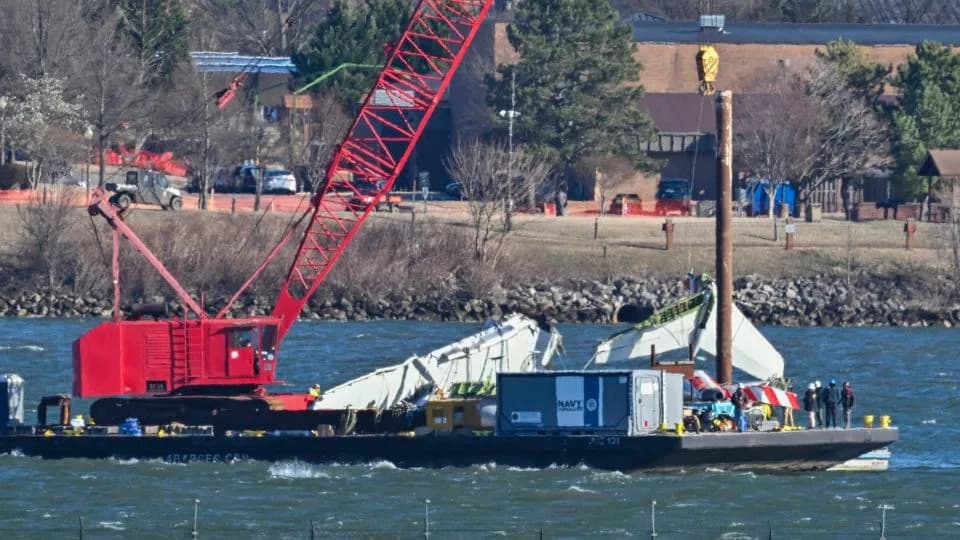
US Navy recovery teams lift the back wing section of an American Airliners plane from the Potomac in Arlington, Virginia on February 4, 2025. - Roberto Schmidt/AFP/Getty Images
Two days before the one-year anniversary of the Jan. 29, 2025 midair collision over the Potomac River, the National Transportation Safety Board (NTSB) convened a public meeting on Tuesday, Jan. 27, 2026, to announce its probable cause and safety recommendations. The collision between an Army Black Hawk helicopter and an American Airlines regional jet (operated as American Eagle Flight 5342) killed 67 people — 64 on the jet and three soldiers aboard the helicopter — and prompted renewed scrutiny of aviation procedures around Washington, D.C.
What the NTSB Examined
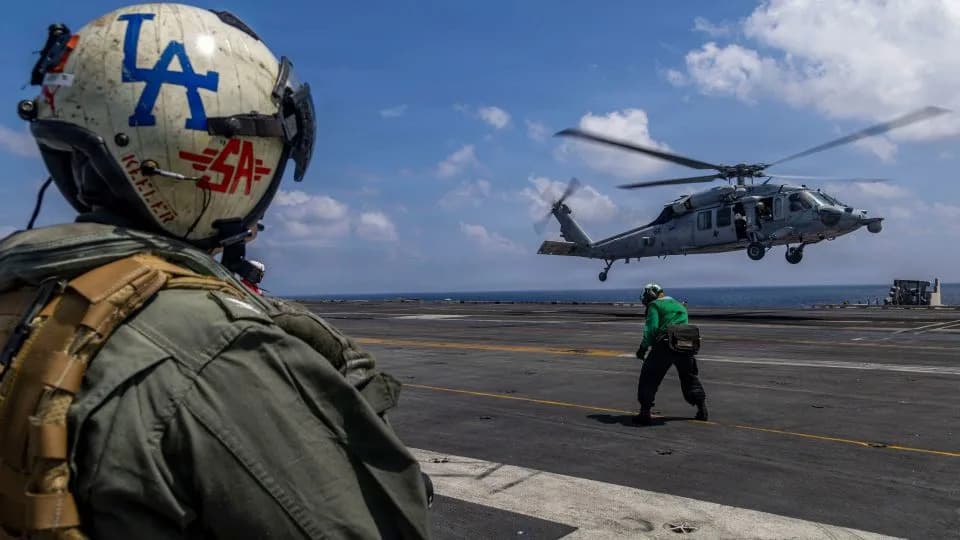
The investigation reviewed 32 hours of testimony heard over three days, cockpit voice recorder transcripts, air traffic control audio and technical data from both aircraft. Key subjects included the Army’s decision to operate the Black Hawk under an FAA memorandum that allowed its Automatic Dependent Surveillance–Broadcast (ADS‑B) system to be turned off, discrepancies in the helicopter’s altitude readouts, and the Reagan National tower’s handling of traffic in the minutes before the accident.
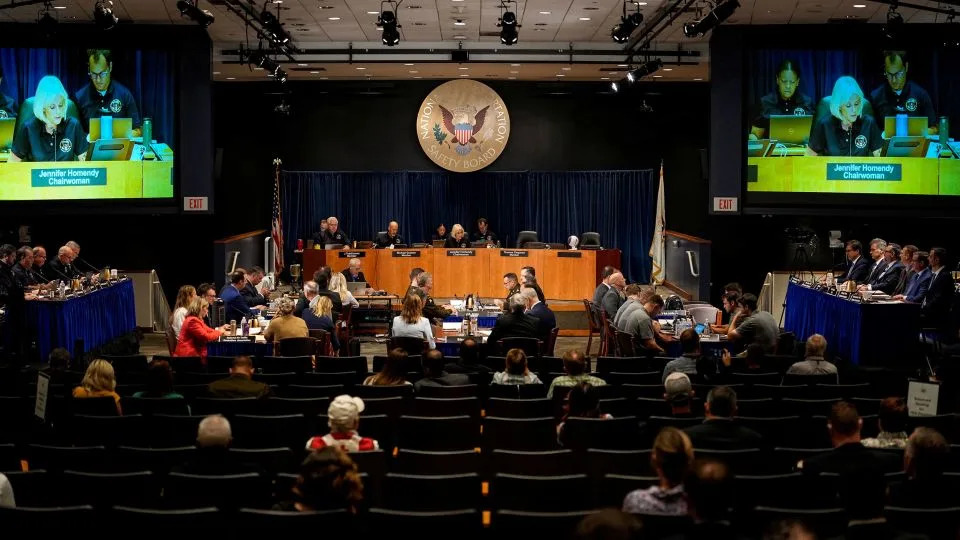
National Transportation Safety Board Chairwoman Jennifer Homendy presides over day three of an NTSB investigative hearing on the January 29 mid-air collision of an Army Sikorsky UH-60L Black Hawk helicopter and American Airlines flight 5342 over the Potomac River near Ronald Reagan Washington National Airport, at NTSB headquarters in Washington, DC, on August 1, 2025. REUTERS/Kent Nishimura - Kent Nishimura/Reuters/File
ADS‑B and Flight Rules
ADS‑B Out broadcasts an aircraft’s GPS position, altitude and ground speed once per second and is a central safety technology for traffic awareness. Investigators focused on why the Black Hawk was permitted to operate without ADS‑B active and why policy allowed certain military helicopter flights to be exempt. ADS‑B has become a legislative priority: the bipartisan ROTOR Act, which passed the Senate in December, aims to tighten requirements for helicopter surveillance and is now pending in the House.
Tower Communication and Procedural Lapses
Transcripts and testimony revealed that Reagan National tower did not issue a safety alert to the regional jet crew about nearby helicopter traffic — an omission the FAA acknowledged. The tower did, however, warn the Black Hawk crew about the approaching jet; the soldiers acknowledged and said they would take evasive action. Acting FAA official Nick Fuller testified, “No safety alerts” were given to the regional jet crew, and he agreed the local controller should have warned them.
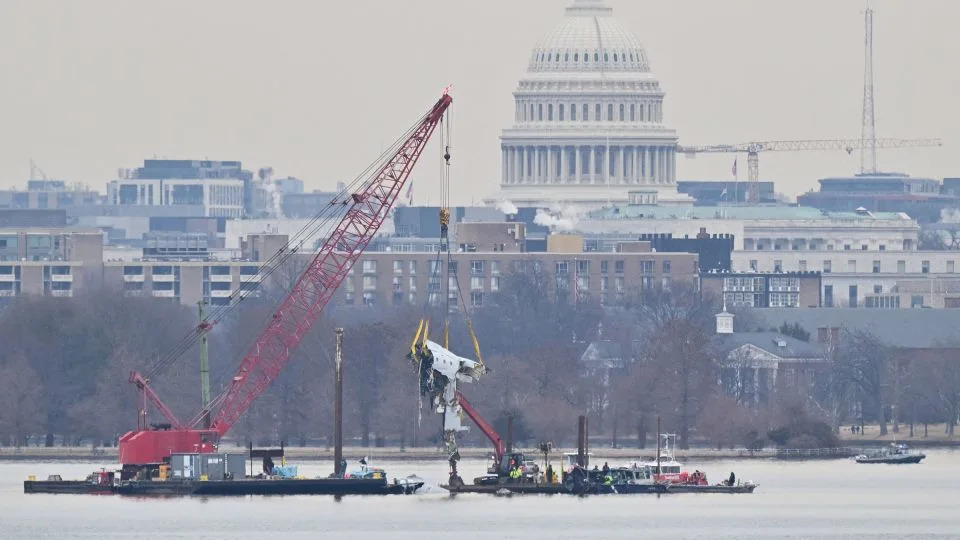
A crane removes airplane wreckage from the Potomac River, where American Airlines flight 5342 collided with a US Army military helicopter, near Ronald Reagan Washington National Airport in Arlington, Virginia, on February 3, 2025. - Roberto Schmidt/AFP/Getty Images/File
Altitude Readouts and Route Design
The NTSB reported significant discrepancies in the Black Hawk’s altitude readouts that could have led the crew to believe they were lower over the Potomac than they actually were. The route authorized at the time permitted the Black Hawk to operate as close as 75 feet below aircraft descending to Runway 33 at Reagan National. When combined with allowable instrument errors and Army guidance expecting pilots to maintain altitude within roughly 100 feet, those margins can produce dangerously small vertical separation.
Legal and Institutional Implications
In December court filings, the Department of Justice acknowledged failures by the Black Hawk crew and by a Reagan National air traffic controller in a wrongful-death suit filed by a passenger’s family. Government attorneys characterized the crew’s decisions as a “cause-in-fact and a proximate cause of the accident and the death,” while also arguing the tower controllers cannot be held solely liable. Commercial carriers named in the suit continue to seek dismissal and have not made the same admissions.
What Comes Next: The NTSB is expected to publish a full final report and formal recommendations in the coming weeks. The board’s findings could influence military flight rules, FAA procedures and pending legislation targeting helicopter surveillance and air-traffic safety.
Who Was Involved: The hearing included representatives from the Army, the FAA, PSA Airlines (the American Eagle operator), NTSB investigators, legal counsel and family members of victims.
For the safety community and the families of the victims, the NTSB’s final determinations and recommendations will be decisive for future policy, technology adoption and operational oversight around busy mixed-use airports such as Ronald Reagan Washington National Airport.
Help us improve.