Experts warn that a surge of AI-generated images and fabricated stories is eroding public memory of the Holocaust ahead of International Holocaust Remembrance Day. AFP Fact Check has identified viral fabrications, including invented personas such as "Hannelore Kaufmann" and a fictional violinist, "Hank." Memorials say content farms exploit the emotional power of Holocaust imagery to drive reach, while platforms are urged to label, remove and block monetisation of misleading material.
Clickbait and 'AI Slop' Are Distorting Holocaust Memory — Experts Warn
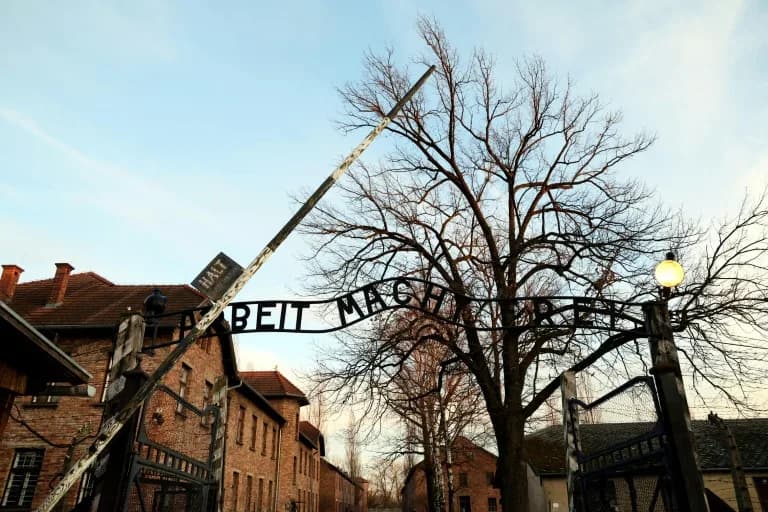
The Auschwitz concentrationm camp -- seen here in a genuine AFP photo -- was liberated in January 1945 (Dominique JACOVIDES)(Dominique JACOVIDES/POOL/AFP)
As the world observes International Holocaust Remembrance Day, historians and memorial officials warn of a worrying rise in AI-generated imagery and fabricated stories that distort the history of Nazi persecution. AFP's Fact Check team has documented a surge of such content across social platforms, ranging from emotionally manipulative clickbait to politically motivated revisionism.
Several viral images and profiles have been confirmed as fabricated. One widely shared photo purports to show a little girl, presented as "Hannelore Kaufmann," a 13-year-old Berliner who supposedly died at Auschwitz — yet no archival record supports her existence. Another invented narrative about a Czech violinist called "Hank" at Auschwitz was publicly discredited by the Auschwitz-Birkenau State Museum. An emotive image claimed to be from Flossenbürg camp was also identified as AI-generated.
Exploiting Emotional Impact
Memorial organisations and historians say content farms and bad actors are producing "AI slop": mass‑generated, low-effort posts designed to exploit the emotional weight of the Holocaust for clicks, views and political influence. These posts can deliberately blur facts, shift victim and perpetrator roles, or promote revisionist narratives that trivialise or deny Nazi crimes.
Confusion, Consequences and Behaviour at Memorials
Officials warn that the spread of falsified imagery has concrete consequences for historical understanding. Curators report seeing provocative behaviour at memorial sites — including Hitler salutes and disrespectful comments — often from a small but increasingly confident and aggressive minority. Historians say these attitudes are sometimes linked to communities where far‑right ideas have gained traction.
Calls For Platform Action And Ethical Standards
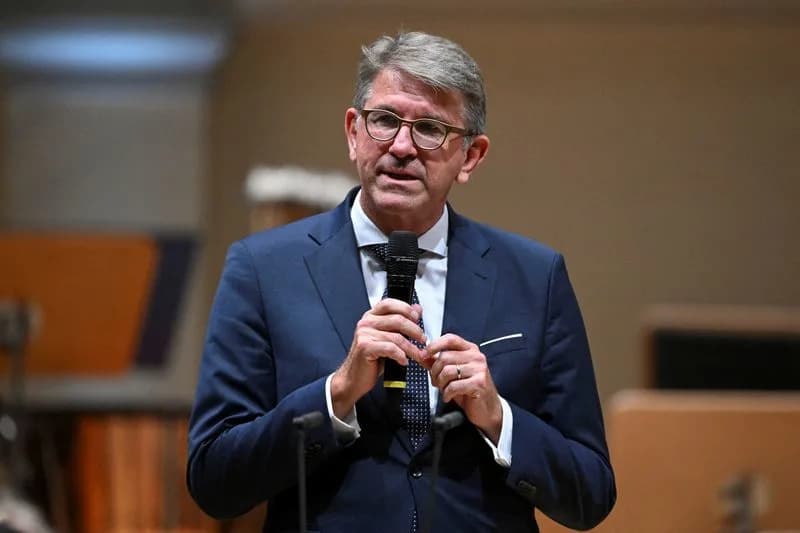
In an open letter, Holocaust memorials urged social platforms to proactively identify and remove AI content that distorts history, to clearly label AI‑generated images, and to exclude offending accounts from monetisation programmes. German Culture Minister Wolfram Weimer publicly supported the call for clear labelling and removal where necessary, arguing that profiting from such imagery is profoundly disrespectful to victims and runs counter to obligations under the EU Digital Services Act.
“I support the memorials' call to clearly label AI-generated images and remove them when necessary,” said Culture Minister Wolfram Weimer, urging platforms to prevent monetisation of such content.
Platform responses have varied. According to memorial staff, major US social media companies did not reply to the open letter, while TikTok said it would seek to exclude offending accounts from monetisation and explore automated verification measures. Some fake posts remained online on the eve of Holocaust Remembrance Day, underscoring the ongoing challenge.
Experts say the broader task for society is to develop clear ethical and historically responsible standards for AI content, and for platform operators to take practical steps to prevent the spread and monetisation of material that misrepresents or trivialises the Holocaust.
Help us improve.