Doctors Without Borders (MSF) has said it will, as an exceptional measure, share a defined list of some Palestinian and international staff names with Israeli authorities after licences for 37 aid groups were revoked. MSF says it faced an "impossible choice" between providing limited data under strict safeguards or being expelled and halting operations; Palestinian staff reportedly agreed after discussion. Critics warn the move could endanger aid workers and may breach data-protection norms, while Israel says many organisations have accepted new registration rules. Humanitarian needs in Gaza remain acute amid restricted access and blocked supplies.
MSF Agrees to Share Staff Names With Israel Amid Licences Row — Critics Warn of Risk to Aid Workers
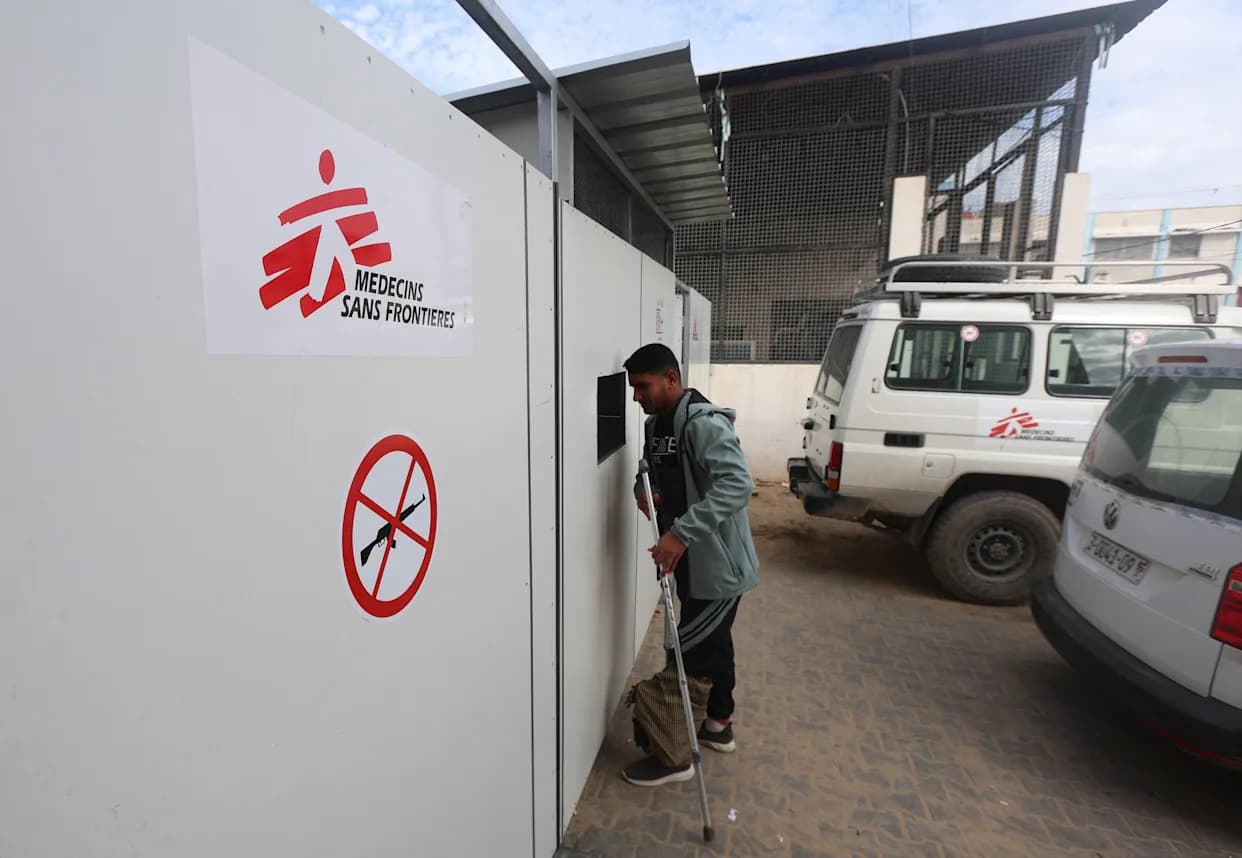
A Palestinian war-wounded man attends a clinic run by MSF, amid shortages of medical supplies, in Khan Younis, southern Gaza Strip, December 31, 2025 [Ramadan Abed/Reuters]
Doctors Without Borders (MSF) has told Israeli authorities that, as an exceptional measure, it is prepared to share a defined list of some Palestinian and international staff names working in Gaza and the occupied Palestinian territory. The decision follows Israel’s revocation of licences for dozens of aid groups and has prompted sharp criticism from humanitarian workers, former staff and rights advocates who say the move could expose personnel to danger.
Why MSF Says It Took This Step
On 1 January, Israel withdrew the licences of 37 aid organisations, including MSF, the Norwegian Refugee Council, the International Rescue Committee and Oxfam, citing non-compliance with new "security and transparency" rules. MSF says it faced an "impossible choice": hand over limited staff information under strict parameters, or be forced to suspend operations entirely.
What Information Israel Is Seeking
According to rules issued by Israel's Ministry for Diaspora Affairs, organisations should provide detailed personal and operational information. The list of requested items reportedly includes passports, CVs and the names of family members, including children. The ministry also said it would bar organisations suspected of incitement, denying Israel’s existence or the Holocaust, or of supporting "an armed struggle by an enemy state or a terrorist organisation against the State of Israel."
MSF’s Position And Safeguards
MSF has said any sharing would be limited to a defined list of names and would be subject to "clear parameters with staff safety at its core." The charity added that Palestinian staff took part in the decision after extended internal discussions and that it expects the information to be used in a way that does not harm staff or obstruct medical humanitarian operations. MSF also stated that since 1 January 2026, arrival of its international staff into Gaza has been denied and deliveries of its medical supplies have been blocked.
Concerns From Critics And Former Staff
"It is extremely concerning, from a duty of care perspective, from a data protection perspective, and from the perspective of the most foundational commitment to humanity, that MSF would make a decision like this," a former MSF employee told Al Jazeera, speaking anonymously.
Critics warn that sharing personal details could enable targeting of humanitarian personnel. British surgeon Ghassan Abu Sittah, who has volunteered in Gaza, said the decision appeared to assume Palestinians could freely consent under coercive conditions and suggested the measure may contravene European data-protection laws. Hanna Kienzler, professor of global health at King’s College London, questioned whether Palestinian staff were being treated as expendable to preserve MSF’s presence.
Accusations And Denials
Israel has publicly accused some humanitarian organisations, including MSF, of links to armed actors; MSF rejects these claims and says it would "never knowingly" employ people engaged in military activity. Critics note that Israel has not produced evidence to substantiate some of its allegations.
Humanitarian Context In Gaza
Humanitarian needs in Gaza remain severe. While some immediate famine risks have been reduced, large-scale displacement, a collapsed health system and ongoing attacks continue to drive urgent needs. Local sources say roughly 200 aid trucks are entering Gaza daily, far short of Israel’s public commitment of up to 600 trucks per day. Independent monitoring and wider access to supplies and personnel remain central concerns for aid groups.
What Comes Next
The decision has been polarising within the humanitarian community. Israel says 23 organisations have agreed to the new registration rules; others are still deciding. Observers and advocates are calling for independent guarantees, legal safeguards and clear evidence that any shared data will not be used to harm staff or undermine humanitarian neutrality.
Why This Matters: The dispute highlights tensions between state security requirements and humanitarian principles of staff protection and neutrality. How this issue is resolved will affect not only MSF but the ability of multiple aid organisations to operate and deliver care to civilians in a context of ongoing violence and constrained access.
Help us improve.