The drying of East Africa since the end of the African Humid Period appears linked to faster fault motion in the East African Rift. Researchers analyzing sediments from Lake Turkana found increased fault slip after lake levels fell and used models to show two drivers: removal of the lake's weight and enhanced magma production beneath a nearby volcano. The study highlights a climate–tectonics feedback and the team is now applying the method to Lake Malawi.
Drying Lakes May Be Accelerating East Africa's Rift — New Study Links Climate to Faster Faulting
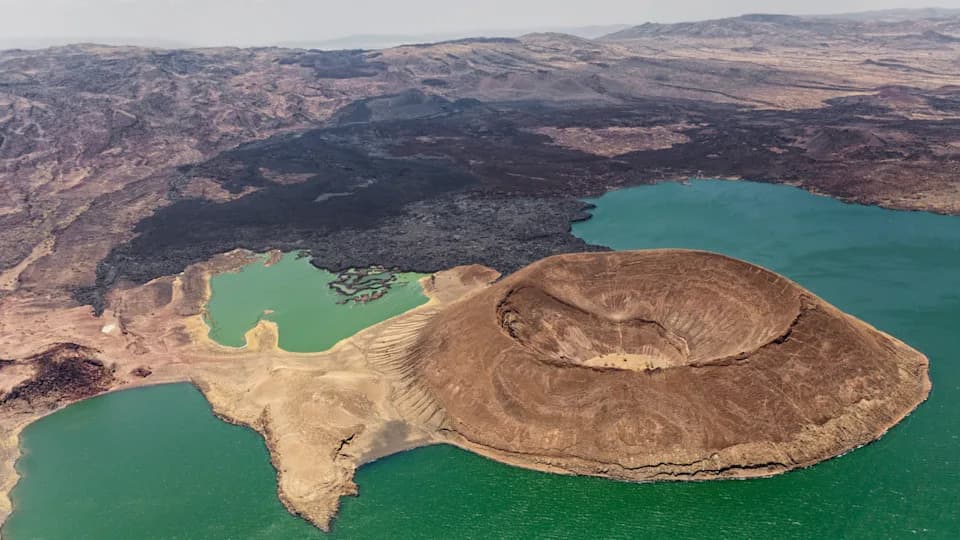
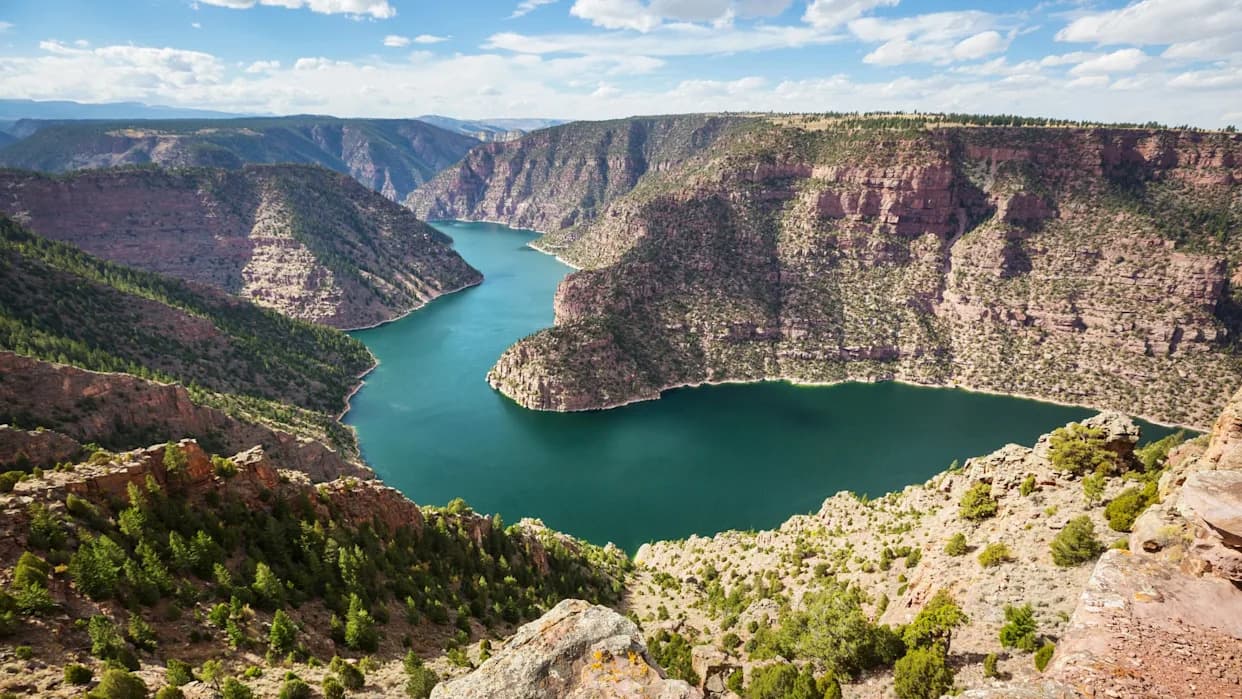
Credit: Paul & Paveena Mckenzie/Getty Images
Over roughly the last 5,000 years East Africa has become noticeably drier. New research suggests that this long-term drying — and the resulting shrinkage of large rift lakes — may be speeding the tectonic pull-apart of the region.
Key Findings
A team led by Christopher Scholz (Columbia University) examined lake-bed sediments from Lake Turkana in northern Kenya and found abundant evidence of small faults and ancient earthquakes. By reconstructing past lake levels and combining those records with numerical models, the researchers concluded that fault slip rates in the Lake Turkana area increased after the end of the African Humid Period.
“Usually it is something we think about the other way around: mountains build, and that changes the local or regional climate. But it can work the other way around too,” Scholz said.
What the Study Shows
Lake Turkana today is about 155 miles (250 km) long, 19 miles (30 km) wide and up to 400 feet (120 m) deep in places. Sediment records indicate that more than 5,000 years ago the lake stood roughly 500 feet (150 m) higher during the African Humid Period (about 9,600–5,300 years ago). After the lakes receded, faults near Lake Turkana increased their slip by an average of ~0.007 inches (0.17 mm) per year. For context, the broader East African rift system opens at about 0.25 inches (6.35 mm) per year.
Mechanisms: Two Linked Effects
The team’s models point to two complementary mechanisms that explain the acceleration in fault movement:
- Loss of Surface Load: Large lakes exert significant downward pressure on the crust. When lake levels drop, that load is removed, releasing vertical constraint on faults and allowing more slip (analogous to loosening a vise around two blocks of wood).
- Enhanced Magmatism: Reduced surface loading also decompresses the mantle beneath volcanic systems. Atop the rift, melt production can increase and migrate into shallow magma chambers, inflating them and boosting stress on adjacent faults — which further promotes faulting and earthquakes.
Methods and Implications
The researchers combined field observations (sediment stratigraphy and fault traces) with numerical simulations to quantify how changing lake volumes influence fault slip and magmatic response. Their results highlight a two-way climate–tectonics feedback: climate-driven lake changes can alter crustal stresses and magmatic activity, which in turn affect rifting and seismicity.
Next Steps
The team is extending their approach to Lake Malawi, reconstructing lake-level changes over the last 1.4 million years to better understand long-term links between hydrology, magmatism, and continental breakup.
Bottom line: Long-term regional drying and lake drawdown in East Africa appear to have contributed to a modest but measurable speedup in rift faulting, illustrating how climate change over millennia can influence the mechanics of plate separation and earthquake activity.
Help us improve.