The American Academy of Pediatrics published an updated childhood vaccine schedule that adds an RSV immunization and maintains broad routine recommendations. Many pediatricians and a coalition of major medical organizations are endorsing the AAP guidance rather than a recent CDC overhaul that narrowed routine recommendations and shifted some vaccines to shared clinical decision-making. A KFF analysis shows 28 states deviating from federal guidance, raising questions about school requirements, parental confidence, and public-health implications.
Doctors Reject CDC Overhaul, Follow AAP Vaccine Guidance as States Diverge

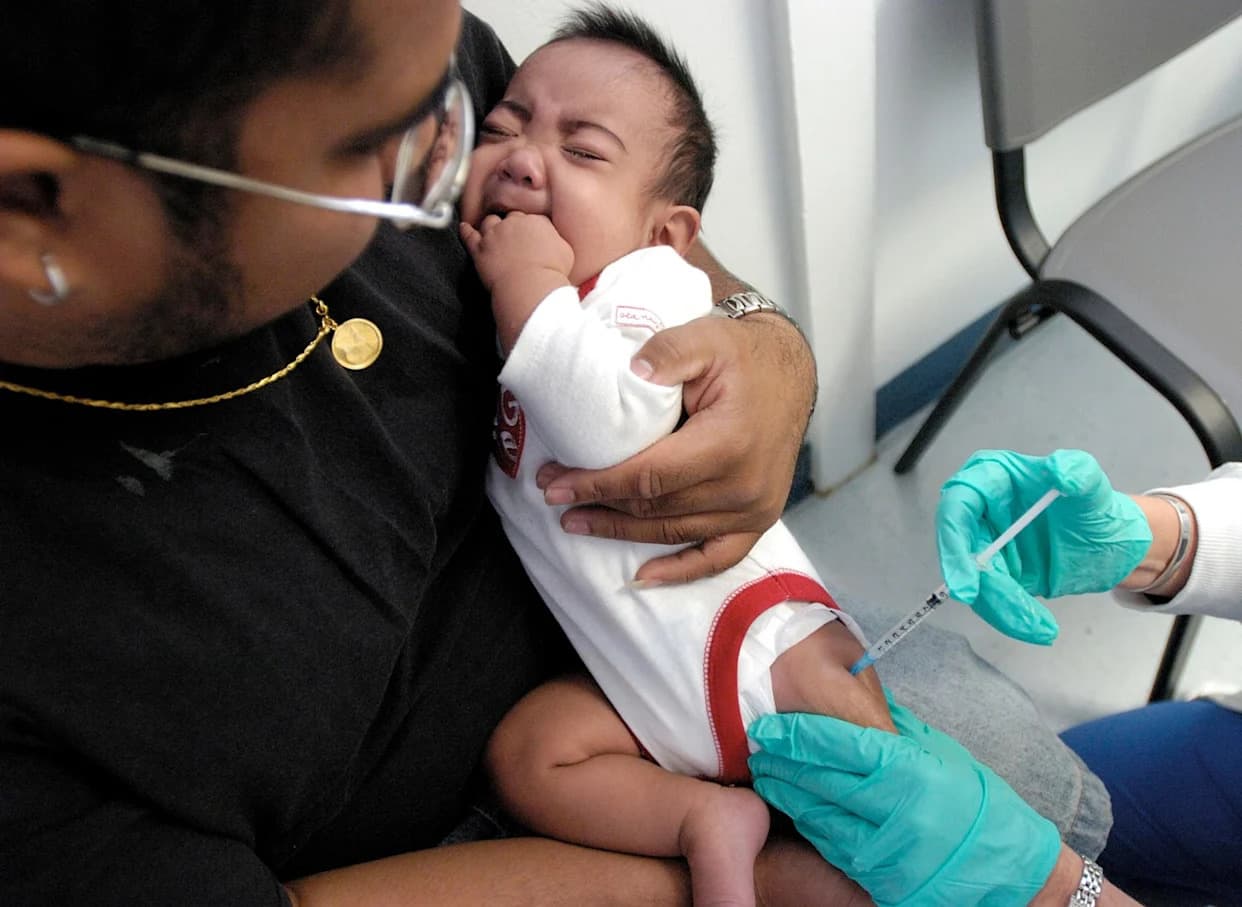
A child is vaccinated during an immunization event in the Panorama City neighborhood of Los Angeles, California, on October 24, 2025. - Patrick T. Fallon/AFP/Getty Images/File
The American Academy of Pediatrics (AAP) has released an updated childhood vaccine schedule that many clinicians and states are choosing to follow instead of a recent, controversial overhaul by the U.S. Centers for Disease Control and Prevention (CDC).
What Changed — And Why It Matters
The AAP’s latest guidance is largely routine and adds a recommended immunization for respiratory syncytial virus (RSV) alongside modest adjustments to existing recommendations. In contrast, the CDC’s new schedule narrowed routine recommendations for protection against meningococcal disease, hepatitis A and hepatitis B to children at higher risk, and recategorized influenza, Covid-19 and rotavirus vaccines as matters for "shared clinical decision-making" between clinicians and families.
Clinicians Respond
Many pediatricians told CNN they will continue to follow the AAP schedule. Dr. Claudia Hoyen, a pediatric infectious disease specialist and director of pediatric innovation at UH Rainbow Babies and Children’s Hospital, said, "The science hasn’t changed. We will continue to follow the science." Dr. Sean O’Leary, chair of the AAP’s Committee on Infectious Diseases, urged parents to trust pediatricians and professional societies rather than the recent federal guidance.
“For now, unfortunately, we have to ignore everything about vaccines that is coming from our federal government,” — Dr. Sean O’Leary.
Wider Endorsements and State Reaction
Twelve major medical and health-care organizations, including the American Medical Association, the National Medical Association and the American Academy of Family Physicians, have formally endorsed the AAP’s recommendations. According to a KFF analysis dated January 20, 28 states were already issuing guidance that deviated from the CDC schedule for some or all childhood vaccines, and many state decisions have followed partisan lines.
What This Means For Families
Pediatricians say the divergence between CDC and AAP guidance has led to confusion and concern among parents. Clinicians report more questions in clinics and emphasize clear, evidence-based conversations with families. Dr. Sarah Elizabeth DeRoo of Children’s National in Washington, D.C., said she continues to reassure parents that vaccines are safe and effective and that the AAP schedule remains evidence-based.
Medical experts highlight the very real consequences of reduced vaccination: before routine childhood immunizations, clinicians regularly encountered severe outcomes from diseases such as meningitis, mumps and rotavirus. Many physicians warn that relaxing broad routine recommendations risks reversing decades of public-health progress.
Looking Ahead
How state-level divergence will affect school vaccination requirements and public-health policy remains unclear. Health systems, clinicians and families will likely continue to rely on professional societies and local health authorities as they navigate changing federal guidance. For now, many pediatricians and several states are prioritizing the AAP’s evidence-based approach.
Sources: AAP updated schedule, CDC announcement, KFF analysis (as of Jan. 20), and interviews with pediatric specialists.
Help us improve.