Researchers used public earthquake network data to detect the sonic booms of the 2 April 2024 Shenzhou‑15 reentry and reconstructed its final flight. Seismoacoustic analysis produced estimates of speed (Mach 25–30, ≈7.8 km/s), altitude band, size and fragmentation timing. The method can narrow likely debris fields, improve breakup and aerosol‑dispersal models, and offers a low‑cost complement to existing tracking systems.
Earthquake Sensors Detect Sonic Booms From Falling Space Junk — A New Low‑Cost Way To Track Reentries
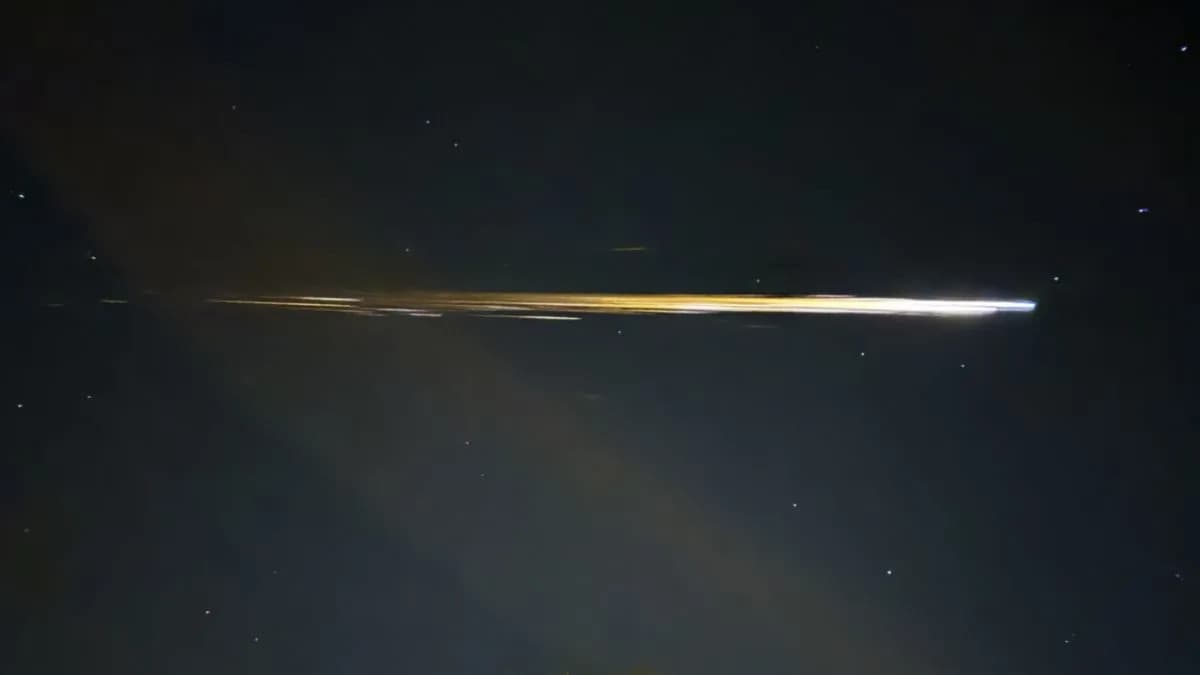
Earthquake Sensors Detect Sonic Booms From Incoming Space Junk
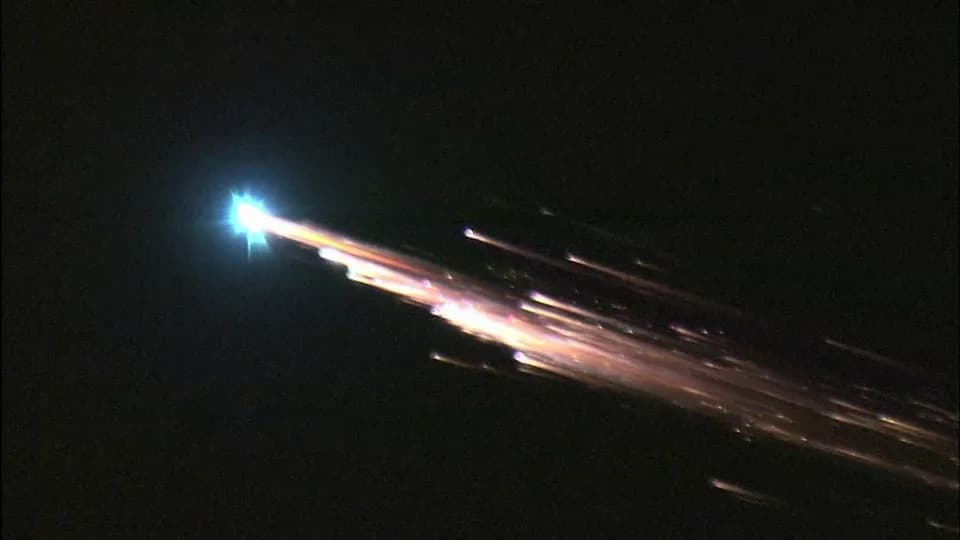
Researchers have repurposed ground-based seismic networks to detect the sonic booms produced by reentering space debris, showing these systems can do more than listen for earthquakes. By analyzing records from public seismic arrays, scientists reconstructed the breakup and terminal flight of the Shenzhou-15 orbital module and derived precise details about its speed, altitude, fragmentation and likely debris distribution.
How Seismic Stations Hear Falling Objects
A sonic boom is produced when an object travels faster than sound, forming a conical shock wave (the Mach cone) that sweeps across the ground. While seismic stations are built to measure vibrations in the Earth, they can also record the ground-coupled acoustic energy from such shock waves. In effect, a reentering object leaves a measurable seismoacoustic footprint.
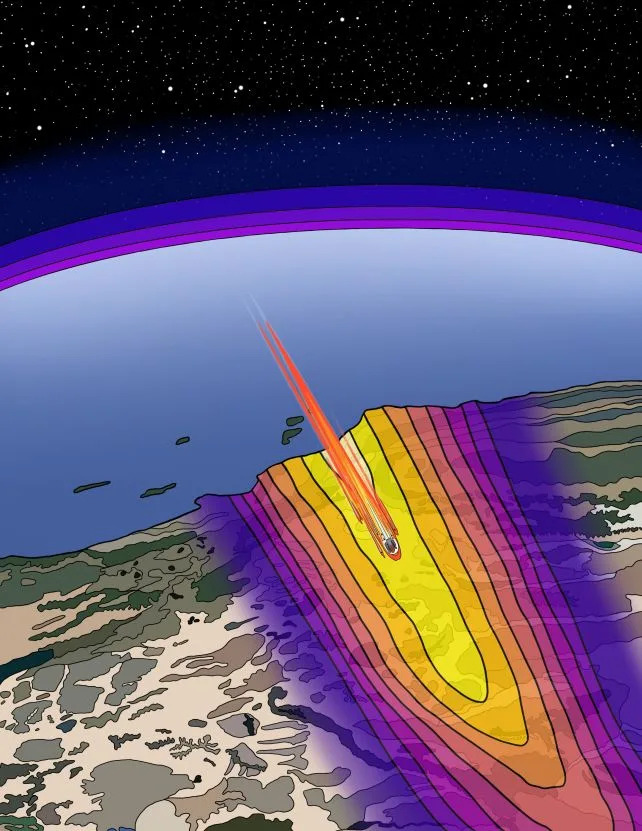
An illustration of the falling object's sonic wake. (Sophia Economon and Benjamin Fernando)
The Shenzhou‑15 Case Study
On 2 April 2024 the discarded Shenzhou‑15 orbital module reentered over southern California. At roughly 2.2 meters in diameter and about 1.5 metric tons, the module was large enough to pose a hazard and thus made an ideal test case. Planetary scientist Benjamin Fernando (Johns Hopkins University) and engineer Constantinos Charalambous (Imperial College London) accessed publicly available data from the Southern California Seismic Network and the Nevada Seismic Network to search for the event.
Their seismoacoustic analysis detected a signature consistent with a Mach cone striking the ground. From the signal timing and geometry they estimated the module's speed at about Mach 25–30 (≈7.8 km/s, ≈4.8 miles/s, ≈28,000 km/h), located the altitude band that generated the strongest signatures, inferred the descent angle, and timed when the object began fragmenting.
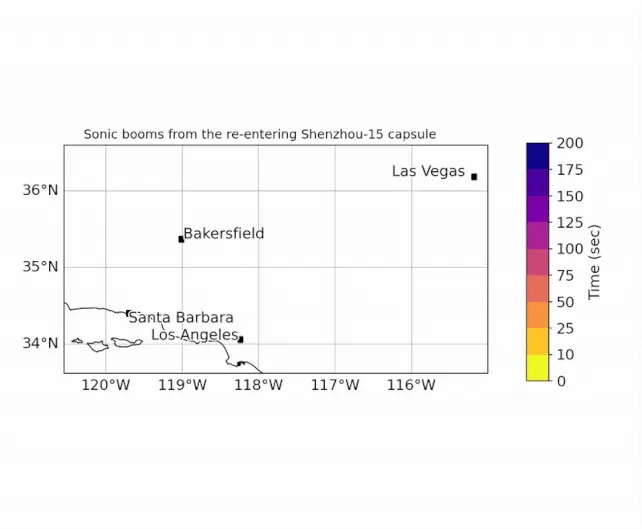
An animation showing how the shock waves were recorded at different locations over time. (Benjamin Fernando)
Fragmentation, Signals, And Practical Value
Early in the descent the seismic records showed a single, strong boom; later the signal broke into a complex train of smaller booms—matching ground reports of fragmentation. These cascading signatures give insight into disintegration dynamics and improve modeling of where surviving fragments and burned material might land.
"Observations of cascading, multiplicative fragmentation offer insight into debris disintegration dynamics, with clear implications for space situational awareness and debris hazard mitigation," the authors write in their paper published in Science.
Beyond locating surviving pieces, seismoacoustic data can help model dispersal of aerosol‑sized particles released during breakup—an environmental and public-health consideration when certain materials are involved.

Audition now for ScienceAlert's Casting Call
Why This Matters
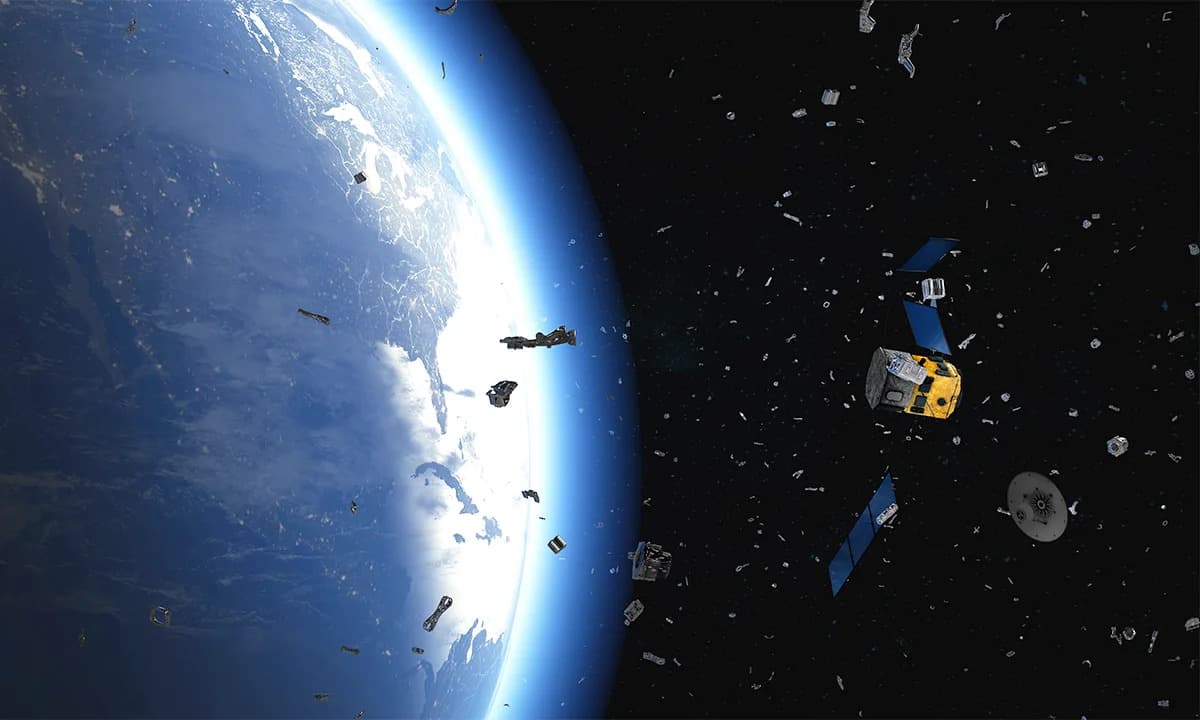
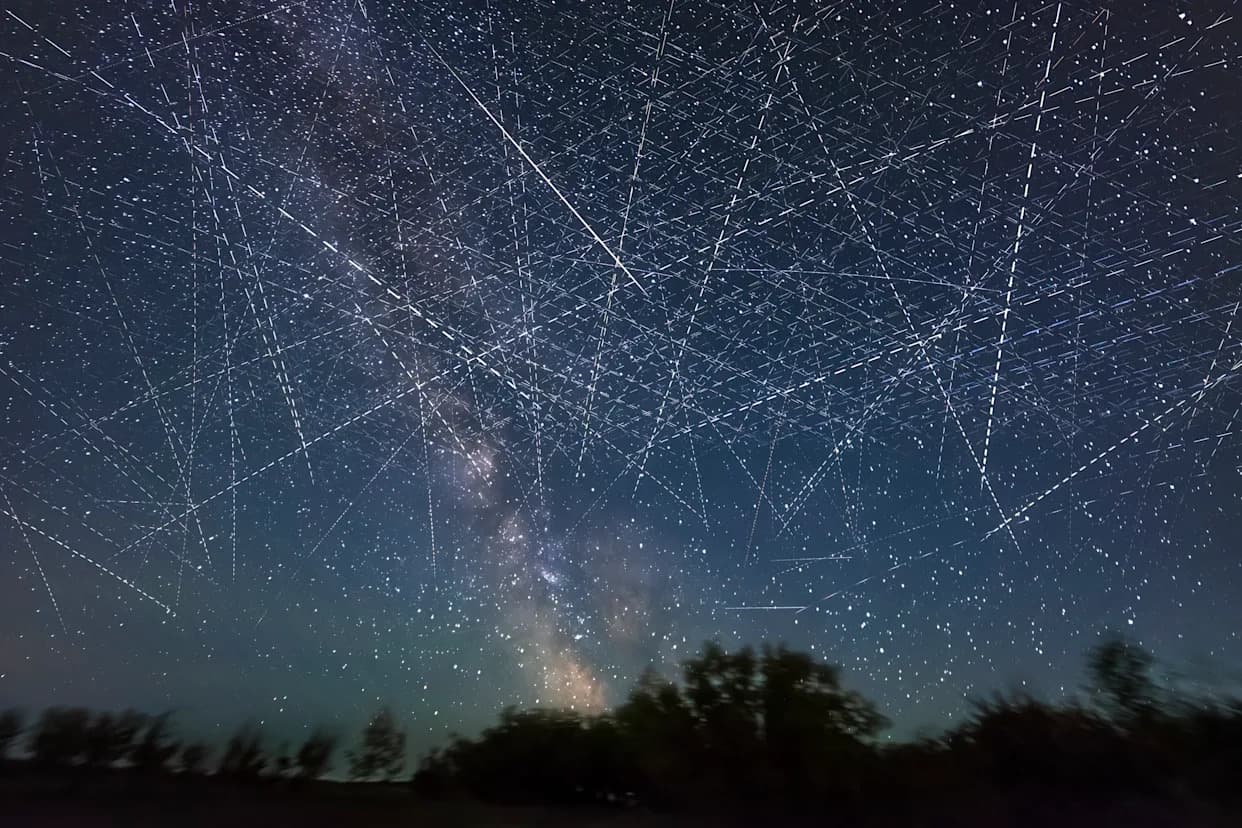
Space debris is a growing global challenge. An April 2025 European Space Agency report estimated roughly 1.2 million potentially hazardous pieces of orbital debris, a number that will grow as more satellites reach end of life. While many reentries are uncontrolled, the study shows publicly available seismic networks can be repurposed to provide timely, precise information about reentry events at low cost—helping responders narrow search areas and refine risk assessments.
The Shenzhou‑15 module ultimately ablated in the atmosphere and did not produce hazardous ground impacts. Still, the work demonstrates a new observational tool for space situational awareness that complements radar, infrasound arrays and observational reports.
Help us improve.