Human-rights attorneys say a 21-year-old woman who is eight months pregnant and in medical distress was deported to Colombia on Wednesday despite a temporary restraining order issued too late to block her removal. U.S. District Judge Sarah Geraghty issued the order around 6 p.m. to bar Immigration and Customs Enforcement (ICE) from deporting her before 30 January and to require medical care, but attorneys say she had already been boarded onto a plane. Attorneys say Ortiz and her mother crossed the U.S. border in November seeking asylum; the mother was allowed to apply for asylum after a credible-fear finding, while Ortiz was given expedited removal. Advocates say existing policies intended to protect pregnant detainees are not being consistently applied and that Ortiz was denied requested medical attention.
Eight-Month Pregnant Migrant Deported to Colombia Despite Late Court Order, Attorney Says

A 21-year-old woman who is eight months pregnant and reportedly in medical distress was deported to Colombia on Wednesday afternoon despite a court order issued too late to stop her removal, a human-rights attorney said.
Legal Order Issued Too Late
Anthony Enriquez, vice-president for US advocacy and litigation at the Kennedy Human Rights Center, said his client, Zharick Daniela Buitrago Ortiz, was returned to Colombia after a U.S. district judge issued a temporary restraining order intended to halt the deportation.
“We are trying to get her the medical attention she needs immediately,” Enriquez said.
U.S. District Judge Sarah Geraghty held a hearing Wednesday and issued a temporary restraining order at about 6 p.m. that enjoined Immigration and Customs Enforcement (ICE) from deporting Ortiz before 30 January and required ICE to provide adequate medical care while she remained in custody. Enriquez said the order came after Ortiz had already been boarded onto a plane.
Medical Concerns and Family Statements
Enriquez said Ortiz’s mother reported that her daughter remained in physical distress after arrival in Colombia, experiencing shooting pains in her abdomen and back coupled with nausea and vomiting. "She has asked for medical care and has been denied it," Enriquez said, adding that Ortiz was not receiving the medical attention her attorneys say she required while in custody.
Transport And Deportation
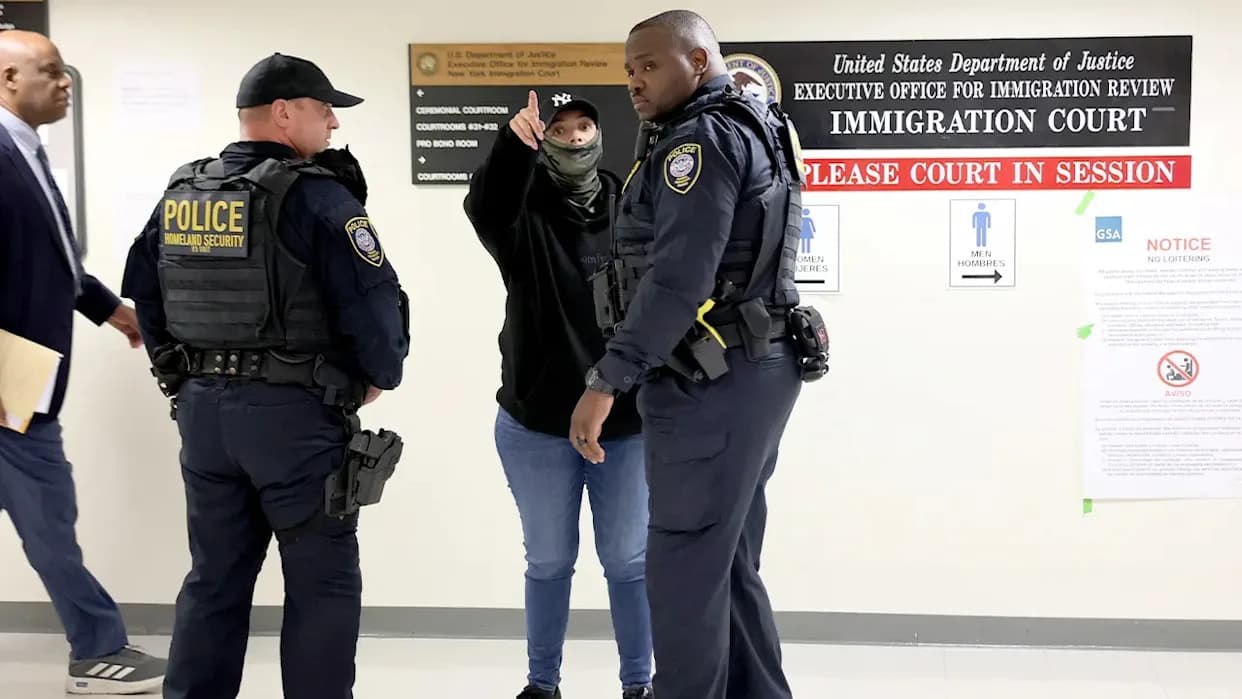
Attorneys say ICE moved Ortiz from a detention facility in Louisiana to Hartsfield-Jackson Atlanta International Airport before carrying out the deportation. Enriquez described that step as puzzling, raising questions about how an airline allowed a woman so late in pregnancy and in distress to fly.
An ICE spokesperson in Atlanta confirmed earlier on Wednesday that the deportation was imminent and that Ortiz was at the airport; the agency referred further inquiries to its El Paso office. The Guardian has sought additional details.
Asylum Background And Policy Context
Enriquez said Ortiz and her mother crossed the U.S. border in Texas in November seeking asylum. At the credible-fear screening that is part of the asylum process, they said Ortiz’s father had been killed after publicly confronting corruption. The mother was found to have credible fear and was permitted to pursue an asylum application; Enriquez said Ortiz was not and was given an order of expedited removal.
Advocates say that, despite a written policy that pregnant women generally should not be detained by ICE, that guidance is not always followed. Enriquez and civil-rights groups argue that reports since the Trump administration include incidents of inadequate medical care for pregnant detainees.
“There is an existing policy that pregnant women normally shouldn’t be detained by ICE,” Enriquez said. “That policy, although it exists on paper, is not being applied.”
Civil-rights organizations have long raised concerns about the quality of medical care for pregnant people in immigration custody, reporting accounts of bleeding, miscarriages, shackling during labor and other instances of alleged medical neglect.
Next Steps
Ortiz’s legal team says it is seeking immediate medical attention and exploring legal options following the deportation. Enriquez said Ortiz’s family is considering how to obtain care now that she is back in Colombia.
Help us improve.