A lawyer for 19-year-old Babson freshman Lucia Lopez Belloza has asked a federal judge to order the government to produce a plan to return her after she was mistakenly deported to Honduras just before Thanksgiving. Government attorneys admitted violating an emergency Nov. 21 order meant to keep her in the U.S. for 72 hours but argued the court lacks jurisdiction. The filing requests a plan within 14 days and suggests options such as a temporary return to restore the status quo, pursuing a T visa, or seeking a student visa despite complications from a prior removal order. Judge Richard Stearns called the episode a "tragic" mistake but questioned whether he can compel a remedy.
Lawyer Asks Judge To Order Return Of Babson Freshman Mistakenly Deported To Honduras
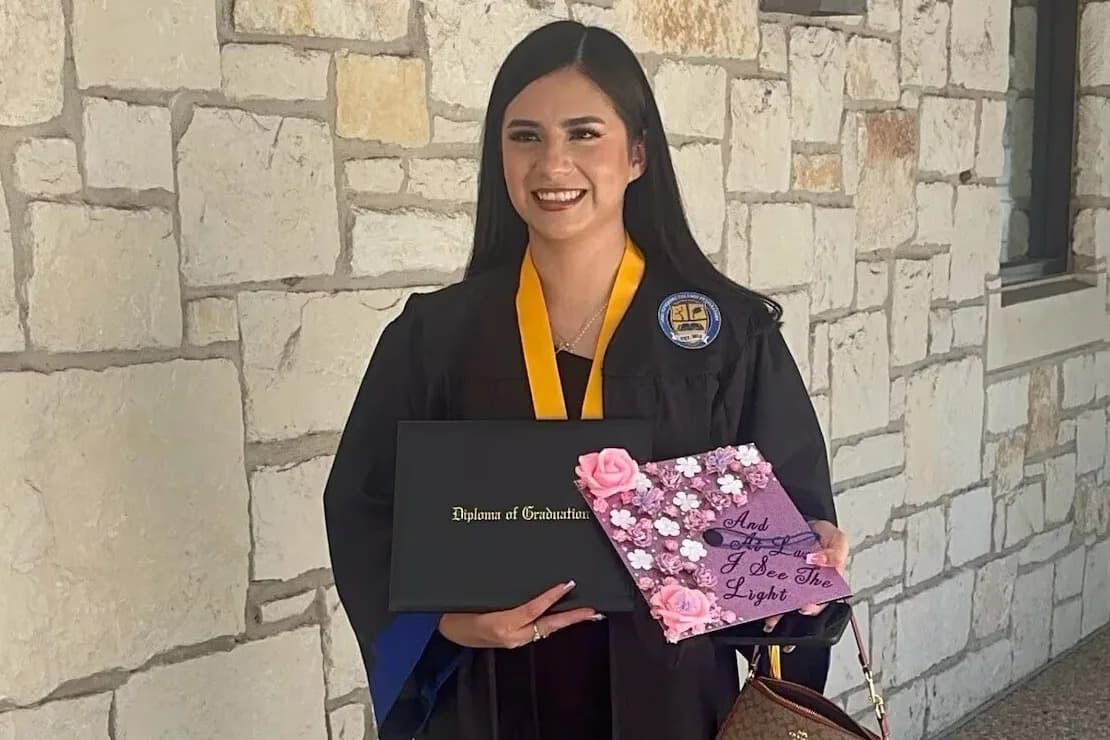
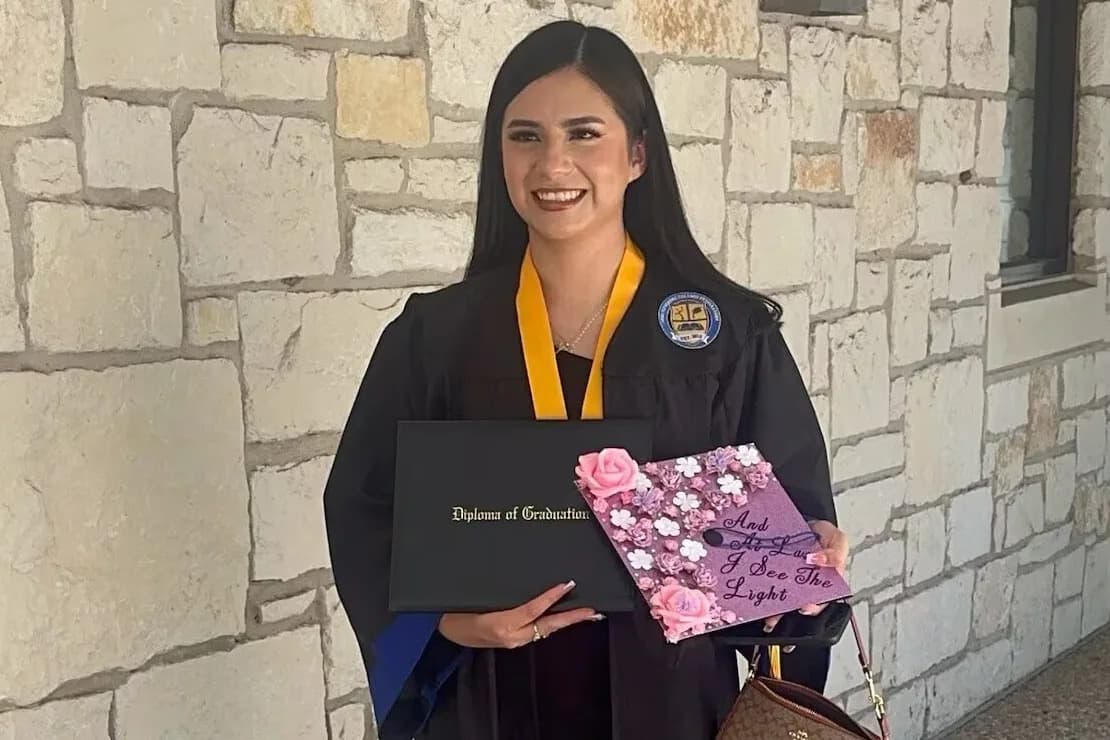
In this undated photo provided by her attorney, Todd Pomerleau, in January 2025, Any Lucia Lopez Belloza celebrates her high school graduation in Texas. (Any Lucia Lopez Belloza's attorney via AP)(ASSOCIATED PRESS)
A federal judge should require the U.S. government to produce a concrete plan to return Lucia Lopez Belloza, a 19-year-old Babson College freshman who was mistakenly deported to Honduras just before Thanksgiving, her attorney argued in a court filing on Friday.
Lopez Belloza was detained at Boston’s Logan Airport on Nov. 20 while preparing to fly to Texas to surprise family for the holidays. Two days later, she was flown to Honduras despite an emergency court order issued Nov. 21 that was intended to keep her in the United States for at least 72 hours. Government attorneys acknowledged in court that they violated that order but argued the federal court lacks jurisdiction to compel a remedy.
Lawyer’s Request: Attorney Todd Pomerleau asked U.S. District Judge Richard Stearns to direct the Department of Homeland Security and other relevant agencies to identify and pursue steps to return Lopez Belloza. "Petitioner is not asking this court to micromanage foreign affairs or dictate outcomes beyond the Government's power," Pomerleau wrote. "Instead, the petition asks for a bounded, transparent and practical process: require the Government to identify and pursue steps available to it — across DHS components and, if necessary in coordination with the Department of State — to return petitioner to the United States." He asked the court to require a plan within 14 days.
Possible Remedies Outlined: The filing lists several options, including:
- Temporarily returning Lopez Belloza to the U.S. "for the limited and urgent purpose of restoring the status quo ante and allowing Petitioner to pursue appropriate immigration proceedings."
- Allowing her to continue to pursue a pending T visa, available to certain victims of human trafficking.
- Pursuing a student visa, though Pomerleau noted consular processing may be complicated by a prior final order of removal and related inadmissibility issues.
Government Position: Government lawyers say the removal was lawful because an immigration judge ordered the removal of Lopez Belloza and her mother in 2016 and the Board of Immigration Appeals dismissed their appeal in 2017. They also contend the court lacks jurisdiction in part because Lopez Belloza’s lawyers filed their action several hours after she arrived in Texas while en route out of the country. Nonetheless, the government acknowledged it violated the emergency court order.
Background And Current Status: Lopez Belloza, whose family moved from Honduras to the United States in 2014, is not detained. She is reportedly staying with grandparents and studying remotely, and has recently visited an aunt in El Salvador.
Related Cases: Pomerleau cited prior instances in which deportations were carried out despite court orders, including the case of Kilmar Abrego Garcia, who was deported to El Salvador despite a ruling that should have prevented it and was later returned after the U.S. Supreme Court intervened, and a Guatemalan man identified as O.C.G., who was returned to the U.S. after a judge found his removal from Mexico likely lacked due process.
At a recent hearing, Judge Stearns called the episode a "tragic" bureaucratic mistake and said he appreciated the government’s acknowledgment of error. He appeared reluctant, however, to hold the government in contempt and questioned whether the court has jurisdiction to order specific relief.
A Department of Homeland Security spokesman did not immediately respond to requests for comment.
Help us improve.