Donald Trump has repeatedly misstated basic economic facts, citing implausible figures such as a 600% drop in drug costs and a claim that U.S. wealth peaked in 1887. He also suggested fourth-quarter GDP could exceed 5% and even reach 20% — an assertion that is historically unsupported and economically dangerous. Quarterly growth near 5–7% has occurred in recent years, but a 20% leap would likely trigger runaway inflation. Inflated expectations damage credibility and can produce harmful policy pressure.
What Trump Gets Wrong About Economic Growth — Why 20% GDP Is Implausible

Donald Trump often touts his economic expertise, but his recent public claims show a shaky grasp of basic economic math and history. Several of his statements — from a purported 600% cut in prescription drug prices to a claim that U.S. wealth peaked in 1887 — are either factually doubtful or demonstrate a misunderstanding of how percentages and macroeconomic measures work.
Unrealistic Numbers and Misused Percentages
In a News Nation interview and later at a press conference marking the anniversary of his second inauguration, Trump made several striking claims. He said fourth-quarter GDP could “pass perhaps much more than 5%” and even suggested it “could be 20% if we do it right.” He also claimed prescription drug costs fell by 600% — a numerical impossibility in ordinary terms, since a 100% reduction would already reduce a cost to zero.
"I think it could be 20% if we do it right." — Donald Trump
Why 5% Quarterly Growth Is Not Unheard Of
Contrary to the president’s suggestion that 5% quarterly growth is unheard of, U.S. quarterly GDP growth has reached roughly that range in recent years. The country has experienced quarters with growth near or above 5–7% in the post-pandemic recovery period, so describing 5% as unprecedented is simply incorrect.
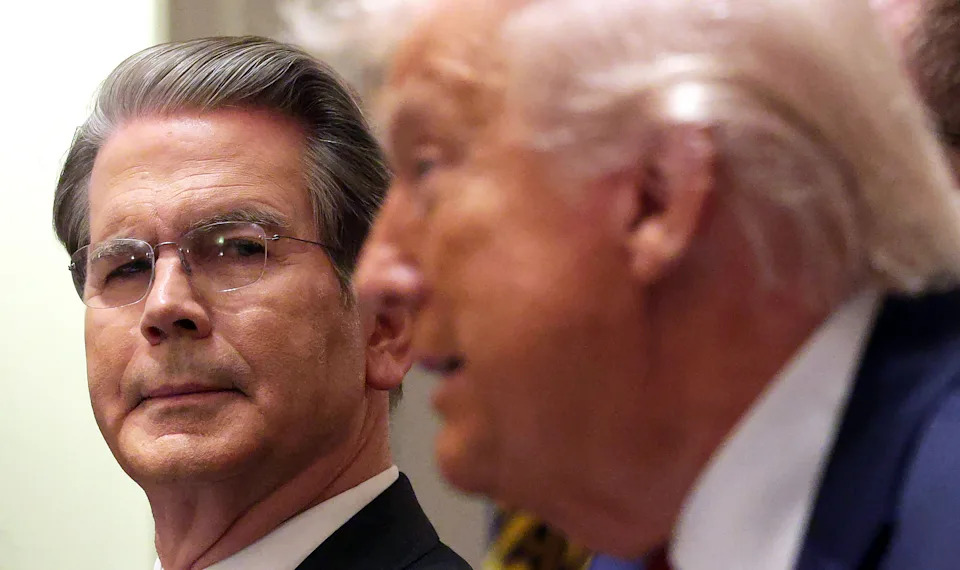
Treasury Secretary Scott Bessent looks on as President Donald Trump during a roundtable discussion on Dec. 08, 2025 in the Cabinet Room of the White House.(Alex Wong / Getty Images)
Why 20% Quarterly Growth Is Implausible — And Undesirable
Historically, the United States has never posted sustained quarterly GDP growth remotely close to 20%. The closest recorded surge occurred during World War II, when wartime production pushed quarterly growth to nearly 19% in 1942 — a wartime anomaly driven by mobilization, not normal peacetime policy. A sudden jump to 20% in peacetime would almost certainly cause runaway inflation and destabilize the economy rather than benefit ordinary Americans.
Political Consequences Of Inflated Expectations
Economists and communicators typically recommend under-promising and then over-delivering. Repeatedly raising public expectations for extraordinary growth sets a dynamic in which even objectively strong outcomes can be framed as failures. That mismatch between promises and delivered results helps explain skepticism about political economic claims.
Other Factual Problems
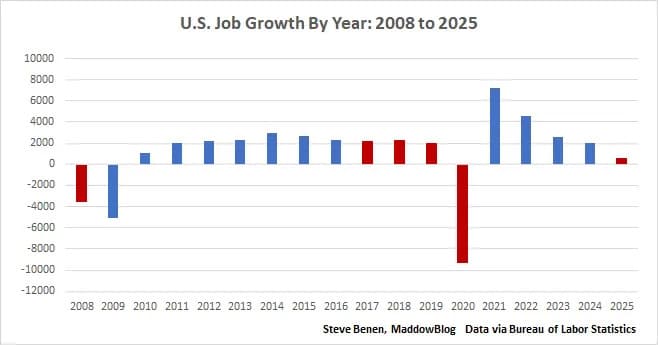
Claims that U.S. wealth peaked in 1887 are historically suspect and lack supporting evidence. Likewise, saying prescription drug costs fell by 600% misuses percentage arithmetic in a way that renders the statement meaningless. And assertions that all fired federal workers quickly landed high-paying private-sector jobs ignore current weakness in private hiring.
Bottom line: The dramatic numbers cited by Trump are either incorrect, misleading, or would be economically harmful if taken literally. Clear, modest, evidence-based forecasts are preferable to headline-grabbing but unrealistic claims.
Help us improve.