Greece and Israel have agreed to expand defence cooperation on anti-drone systems and cybersecurity after ministerial talks in Athens. They will share expertise to counter drone swarms and unmanned subsea vehicles and coordinate to intercept cyber threats. Greece has approved purchasing 36 Israeli-made PULS rocket systems for €650 million (about $763 million) and is discussing a multi-layer air-and-drone defence system estimated at €3 billion (roughly $3.5 billion). Ministers did not identify specific adversaries, though regional tensions—particularly with Turkey—remain a contextual concern.
Greece and Israel Deepen Security Ties With Anti-Drone and Cyber Cooperation
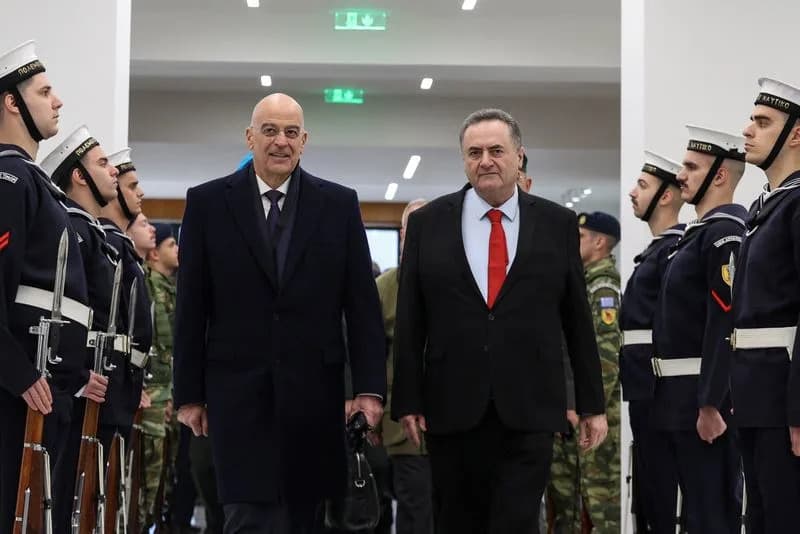
Israel's Defence Minister Israel Katz and his Greek counterpart Nikos Dendias proceed for their meeting in Athens Greece, January 20, 2026. REUTERS/Louisa Gouliamaki
Athens, Jan 20 — Greece and Israel have agreed to deepen defence cooperation on anti-drone technologies and cybersecurity following talks between Greek Defence Minister Nikos Dendias and his Israeli counterpart Israel Katz in Athens.
The ministers said the two countries will exchange expertise and technical know-how to counter aerial drone swarms and groups of unmanned subsea vehicles, and will coordinate efforts to detect and intercept cyber threats.
"We agreed to exchange views and know-how to be able to deal with drones and in particular swarms of unmanned aerial vehicles and groups of unmanned subsea vehicles," Dendias said in a joint statement with Israel Katz.
"We will also work together in order to be ready to intercept cyber threats," Dendias added.
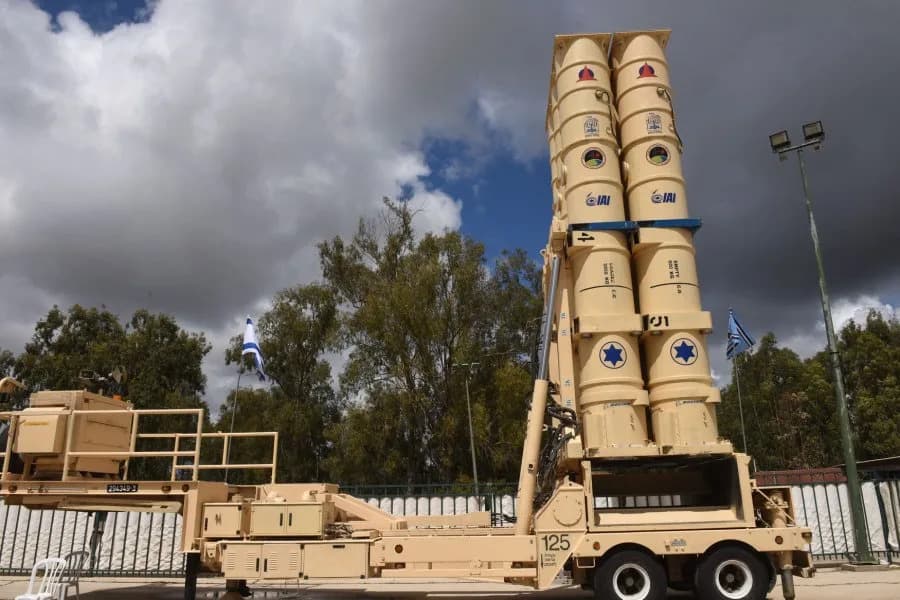
Greece and Israel already maintain close defence ties: they operate a joint air training centre on Greek territory and have conducted combined military exercises in recent years. Last year Athens approved the purchase of 36 Israeli-made PULS rocket artillery systems for about €650 million (roughly $763 million).
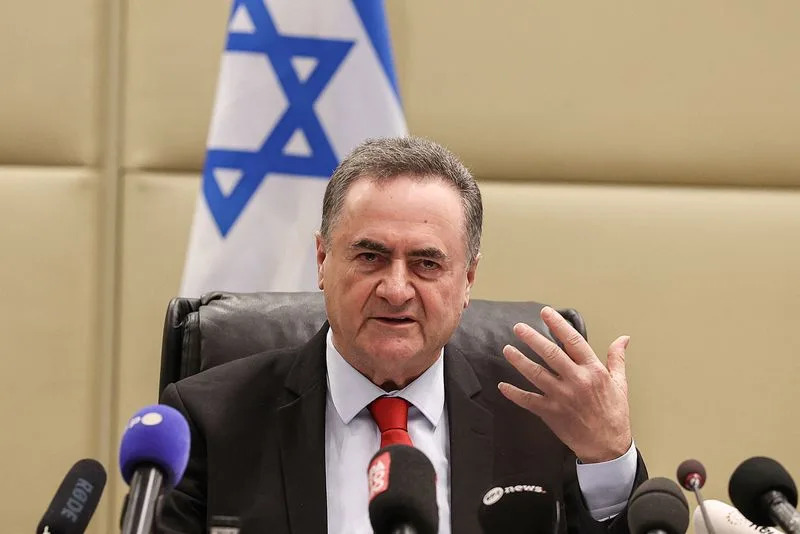
Israel's Defence Minister Israel Katz talks during a meeting with his Greek counterpart Nikos Dendias, in Athens, Greece, January 20, 2026. REUTERS/Louisa Gouliamaki
Officials also said Athens and Tel Aviv are in talks to develop a multi-layer anti-aircraft and anti-ballistic air-and-drone defence network. The proposed system has been estimated at about €3 billion (approximately $3.5 billion), though details and a formal agreement have not been announced.
Asked about potential adversaries, Dendias and Katz did not name specific actors. Media and analysts note that both countries regard Turkey as a significant regional security concern, but the ministers framed their cooperation as broadly aimed at protecting regional stability and countering asymmetric threats.
This cooperation comes amid strengthened economic and diplomatic links between Athens and Tel Aviv as they seek to bolster deterrence and resilience against emerging threats in the eastern Mediterranean and beyond.
Reporting by Elefterios Papadimas in Athens; additional reporting by Omri Taasan in Jerusalem; writing by Angeliki Koutantou; editing by Sharon Singleton and Mark Heinrich. ($1 = €0.8524)
Help us improve.