Researchers at the Jülich Research Centre plan to run human-scale brain simulations on the JUPITER exascale supercomputer, leveraging advances following the 2024 mapping of a fruit fly brain. Led by Markus Diesmann, the team has already scaled a spiking neural network on JUPITER to roughly 20 billion neurons and about 100 trillion connections. While this is a major technical milestone, experts caution that size alone does not equate to recreating a real human brain or its full biological complexity.
Jülich Team Aims To Simulate a Human Brain on the JUPITER Exascale Supercomputer
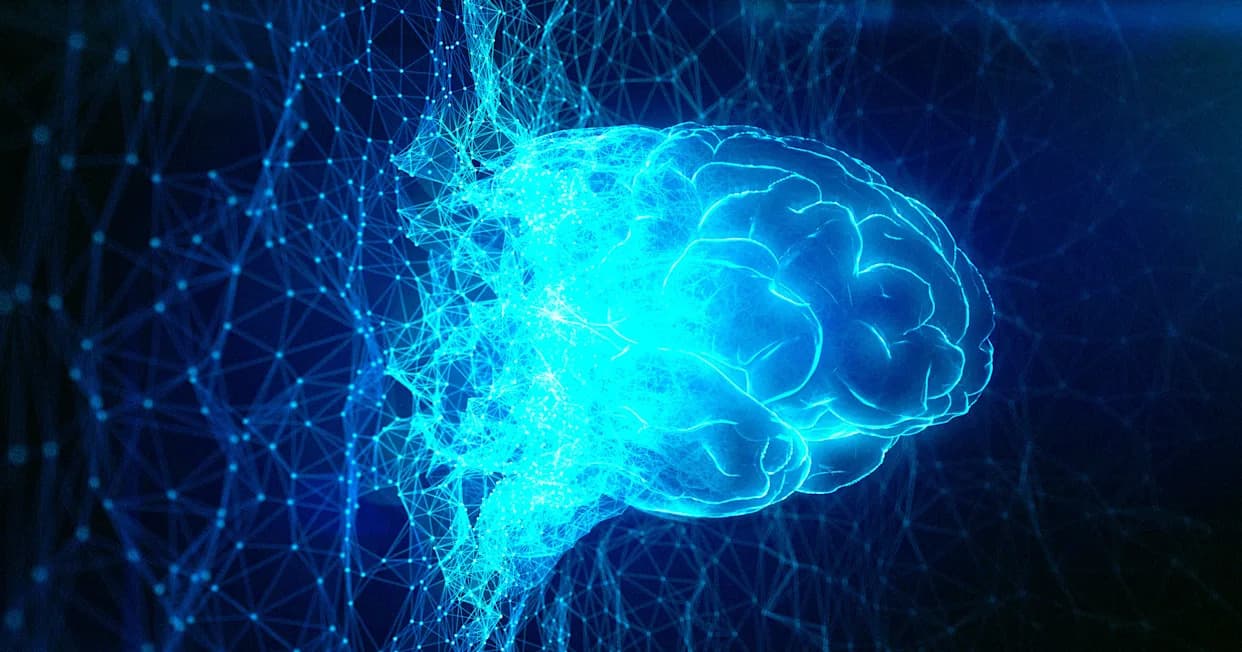
Researchers at the Jülich Research Centre in Germany are working on a simulation at the scale of the entire human brain.
In 2024, researchers completed the first full wiring map of a fruit fly brain — a tiny organ that nevertheless contains roughly 500 feet of neural wiring and about 54.5 million synapses packed into a space no larger than a grain of sand. That milestone has given neuroscientists a clearer window into how signals travel through brain circuits.
Building on that progress and on dramatic advances in supercomputing, a team at Germany’s Jülich Research Centre is now pursuing a far more ambitious goal: simulating a human brain at scale on the JUPITER exascale supercomputer.
The effort is led by Jülich neurophysics professor Markus Diesmann. Their strategy is to integrate multiple, high-resolution models of smaller brain regions and run them together on a powerful machine so the interactions of billions of neurons can be simulated in concert.
Why This Matters
Earlier projects of similar ambition, such as the decade-old Human Brain Project, delivered mixed results despite large investments. The Jülich team believes that more mature models and vastly more powerful hardware make their attempt more feasible. JUPITER — currently ranked fourth on the TOP500 list — offers thousands of graphical processing units and the parallel performance required for these very large simulations.
Last month the researchers demonstrated that a spiking neural network architecture could be scaled and executed on JUPITER to reach an estimated scale comparable to the human cerebral cortex: roughly 20 billion neurons and on the order of 100 trillion synaptic connections. That demonstration is an important proof of concept for running brain-scale models on modern exascale systems.
"We know now that large networks can do qualitatively different things than small ones," Diesmann told New Scientist. "It's clear the large networks are different."
Limits and Cautions
Despite the scale of these simulations, experts stress important caveats. Simulating numbers of neurons and connections does not mean reproducing the full biological complexity, development, or function of a living brain. "We can't actually build brains," University of Sussex mathematical physics professor Thomas Nowotny told New Scientist. "Even if we can make simulations of the size of a brain, we can't make simulations of the brain."
In short, achieving human-scale simulation is a major technical milestone that will expand researchers' ability to test hypotheses about large-scale neural dynamics, but it will not automatically yield a complete model of cognition, consciousness, or individual brain function.
What’s Next: The Jülich team will continue refining regional models, improving biological realism where possible, and exploring what new behaviors emerge when many regions interact at scale on JUPITER.
Help us improve.