Joe Rogan compared U.S. Immigration and Customs Enforcement (ICE) to the Gestapo, prompting strong reactions online. Many users criticized the historical analogy while others reminded Rogan that his wide-reaching platform has been blamed for elevating the president tied to expanded ICE powers. The exchange reignited debates about public figures’ responsibility, the use of charged historical comparisons, and how media influence can affect policy outcomes.
Joe Rogan Compares ICE To The Gestapo — Critics Say His Platform Helped Elevate The President Behind Those Policies
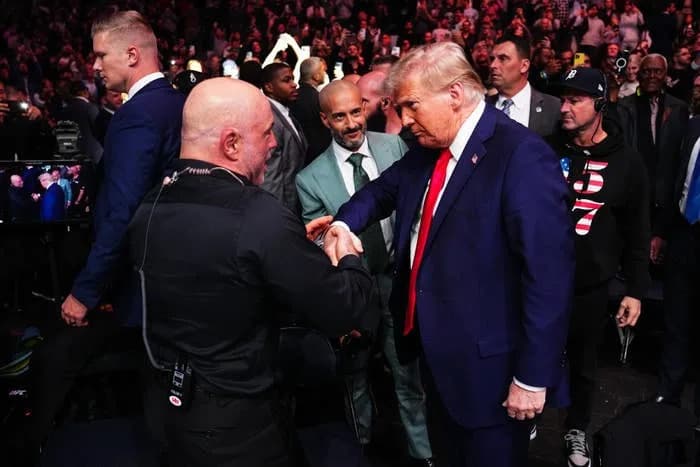
Jeff Bottari / Zuffa LLC
Comedian and podcaster Joe Rogan sparked a wave of online reaction after likening U.S. Immigration and Customs Enforcement (ICE) to the Gestapo. The remark quickly generated debate across social platforms, where users not only contested the historical comparison but also reminded Rogan of his political influence and the role critics say his platform played in elevating the president associated with strengthened ICE enforcement.
Social Media Backlash
Many commenters rejected the analogy as inflammatory or historically inappropriate, while others defended Rogan’s right to criticize government agencies. At the same time, numerous users highlighted perceived hypocrisy: they argued that Rogan’s large audience and past interviews helped amplify political messages that ultimately supported the administration now linked to aggressive immigration enforcement.
Broader Debate
The exchange reopened familiar arguments about the responsibilities of high-profile media figures. Observers debated whether public personalities should be held accountable for how their platforms influence voters, and whether drawing comparisons to totalitarian regimes is a useful or harmful rhetorical tactic when discussing domestic policy.
Context And Consequences
Beyond the immediate headlines, the incident underscores how a single remark from a prominent host can shift public conversation toward accountability, media influence, and the ethics of historical analogies. It also illustrates how online discourse rapidly layers criticism, defense, and political context—often turning one comment into a wider argument about policy outcomes and civic responsibility.
Takeaway: The debate is less about one sound bite and more about how public figures shape political narratives and how the public responds when those narratives clash with policy realities.
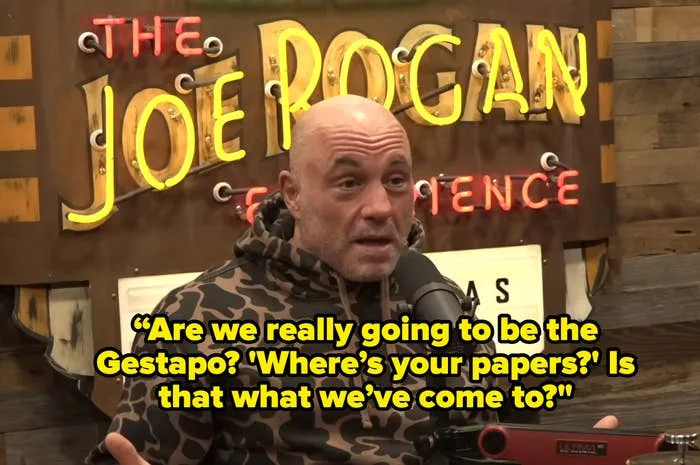
PowerfulJRE / Viayoutube.com
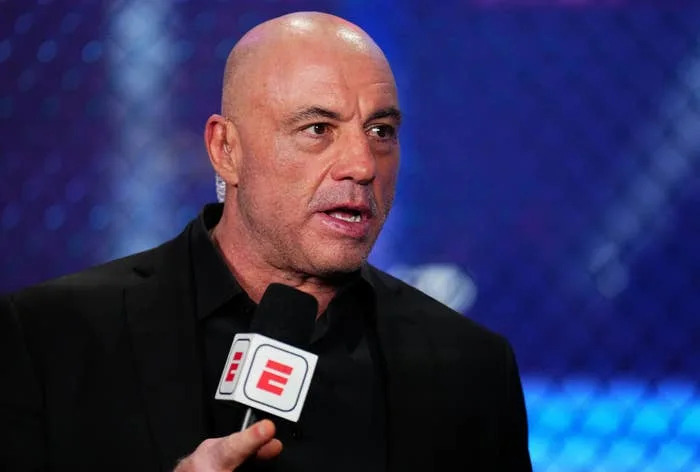
Chris Unger / Zuffa LLC / Getty Images
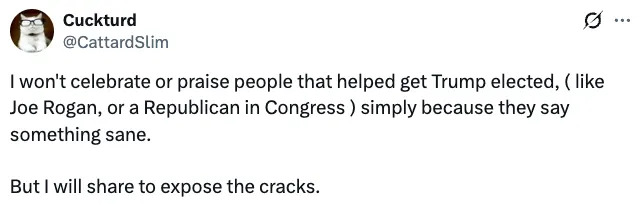
@CattardSlim / Viax.com
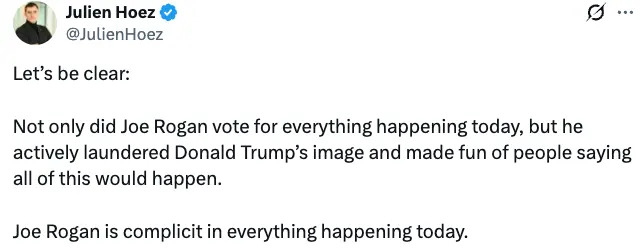
@JulienHoez / Viax.com
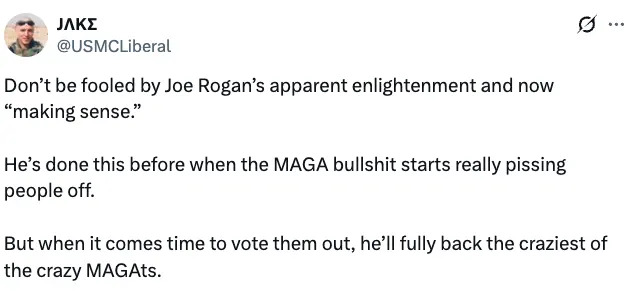
@USMCLiberal / Viax.com
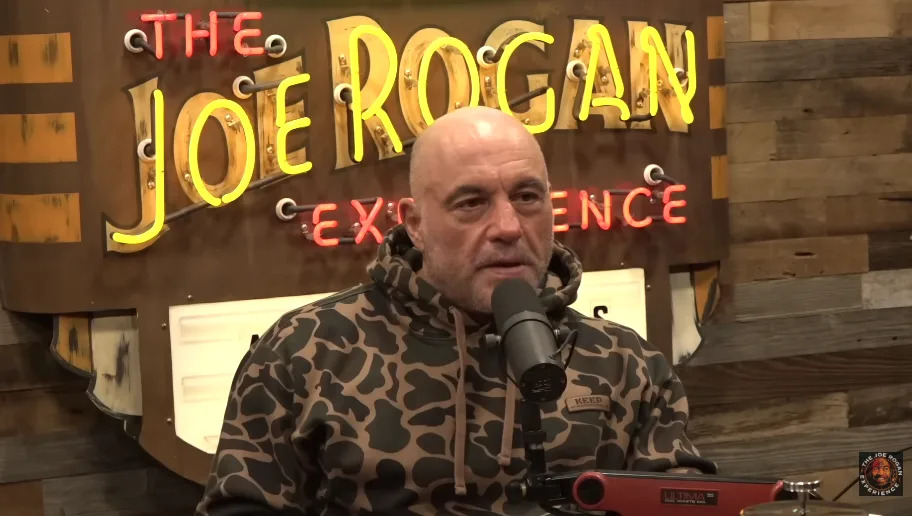
PowerfulJRE / Viayoutube.com
Help us improve.