Volunteer archaeologists in eastern Sweden discovered two Celtic gold coins dated to about 2,300 years ago, making them some of the oldest such finds in the country. The larger is a 0.28-ounce stater and the smaller a 0.06-ounce quarter-stater; both show Apollo and a two-horse chariot. Found during a 2025 follow-up dig by Archaeology Baselland, the coins may have been votive offerings rather than everyday currency. The pair will go on display in Basel in March 2026.
Volunteer Archaeologists Unearth Two 2,300-Year-Old Celtic Gold Coins in Sweden
Archaeology Baselland
Two volunteer archaeologists patrolling a bog in eastern Sweden have uncovered two exceptionally old Celtic gold coins, a discovery announced by Swiss and local archaeologists that places the pieces among the country’s earliest known Celtic coin finds.
What Was Found
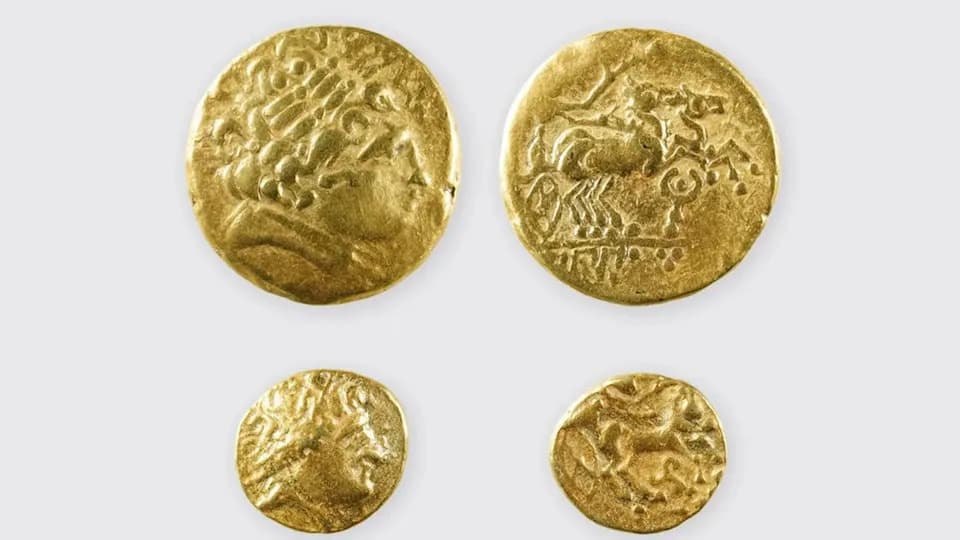
The coins date to roughly 2,300 years ago (mid-third century B.C.). The larger is a stater weighing about 0.28 ounces (7.8 grams) and the smaller a quarter-stater weighing about 0.06 ounces (1.86 grams). Both coins bear a portrait of the Greek god Apollo on one face and a two-horse chariot (a biga) on the reverse. The name "stater" comes from ancient Greek and originally meant a coin.
Historical Context
Archaeologists note that during — and up to the end of — the fourth century B.C., Celtic warriors on the European mainland were often paid with Greek coinage for mercenary service. These Greek issues later inspired locally produced Celtic coinage, which began to be struck at the start of the third century B.C.
Excavation And Interpretation
The gold coins were recovered during a follow-up excavation in spring 2025 by volunteer teams working with Archaeology Baselland. The discovery followed an earlier volunteer-led recovery of 34 Celtic silver coins between 2022 and 2023 at the same site. According to the archaeologists’ statement, the coins were unlikely to have been used in everyday transactions because of their high value. Instead, experts suggest they may have been deposited as votive offerings, or reserved as gifts for dowries or followers.
"This pair makes them part of a very small group of just over 20 known examples of the oldest Celtic coins from Switzerland," Swiss archaeologists said in their Dec. 18 statement.
Public Display
Both gold coins will be displayed together in a special exhibition in Basel beginning in March 2026, where visitors will be able to view them alongside related finds and interpretive material from the site.
Credit: Archaeology Baselland and the Swiss archaeological team that announced the find.
Help us improve.