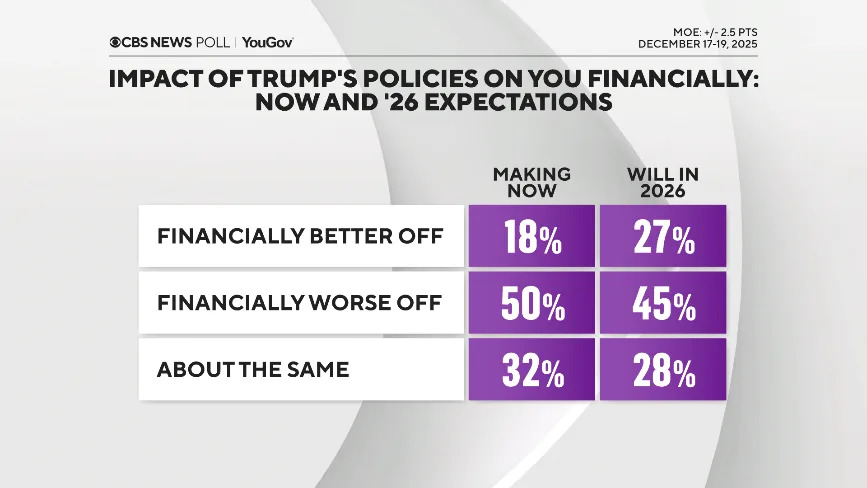
Most Americans end 2025 viewing the economy negatively, particularly because housing and health care are seen as hard to afford. Less than 1 in 5 say President Trump’s policies helped them financially in 2025; expectations for improvement in 2026 are higher but remain limited. Voters express strong concerns about AI's job impact, are divided over deportation efforts, and broadly support extending ACA tax credits. The findings come from a CBS News/YouGov poll of 2,300 adults conducted Dec. 17-19, 2025 (±2.5 pts).
Poll: Most Americans See Cost of Living as High, Doubt Trump’s Economic Impact Heading Into 2026

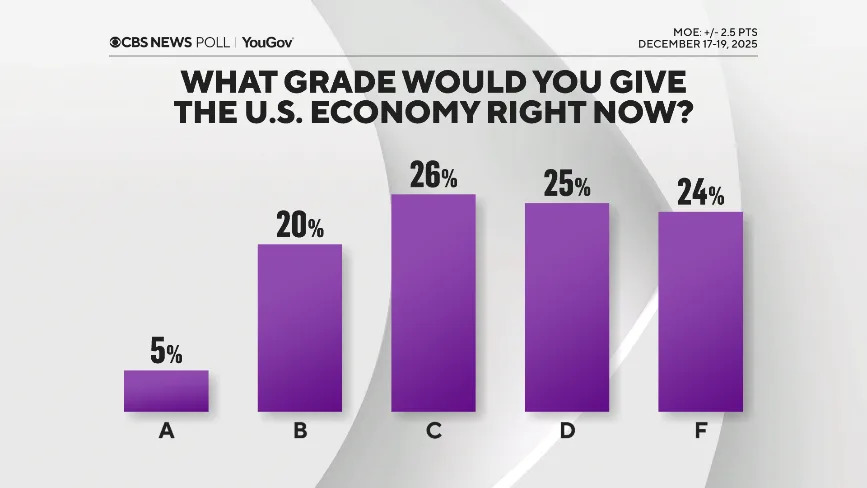
As 2025 draws to a close, a new CBS News/YouGov poll finds most Americans remain pessimistic about the economy, citing high costs for essentials such as food, housing and health care. Those concerns are likely to shape debates and voter sentiment as 2026 approaches.
Affordability Is the Central Concern
Relatively few respondents say basic necessities are easy to afford. Housing and health care stand out: more people describe those essentials as "difficult" to afford than "easy." That widespread financial strain frames public reactions to administration policy and political messaging.
Views on the President’s Economic Impact
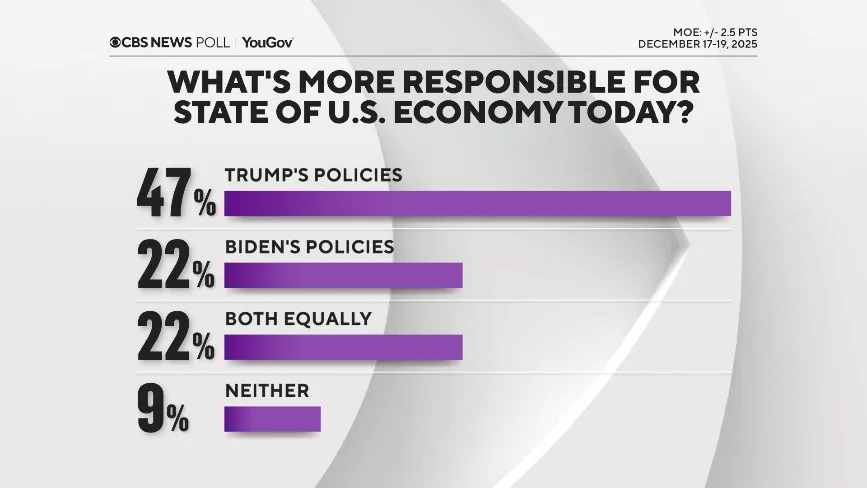
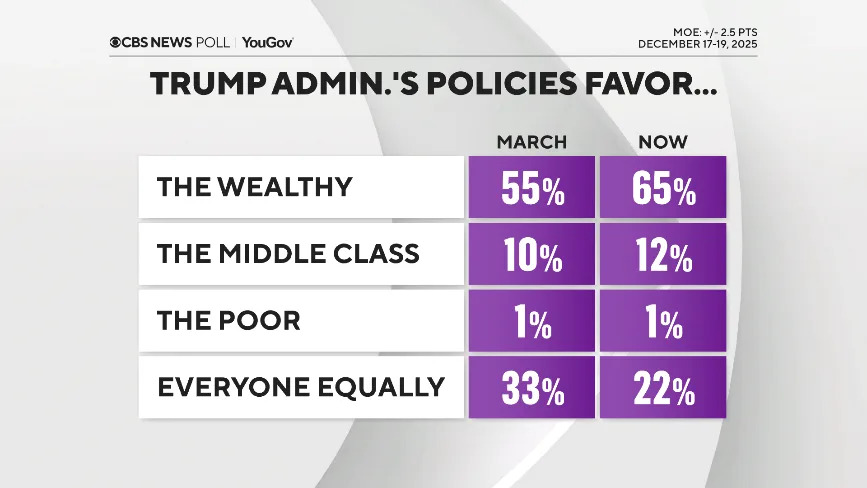
Fewer than one in five Americans say President Trump’s policies made them financially better off in 2025. While somewhat more people expect his policies to improve their finances in 2026, that optimism is limited and falls short of the expectations recorded just before his inauguration. In general, the public associates the current economy more with Mr. Trump than with former President Biden—especially among those who give the economy poor grades.
Blame, Policy and Perception
Those who give the economy bad grades are particularly likely to hold Mr. Trump responsible. That sentiment reflects both objections to actions he has taken (for example, some opposition to new tariffs) and to perceived inaction—many say he has not done enough to bring down rising prices.
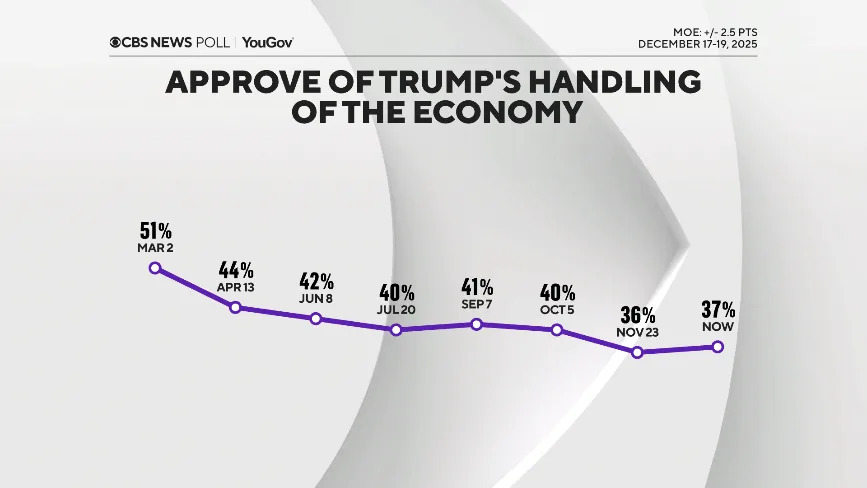
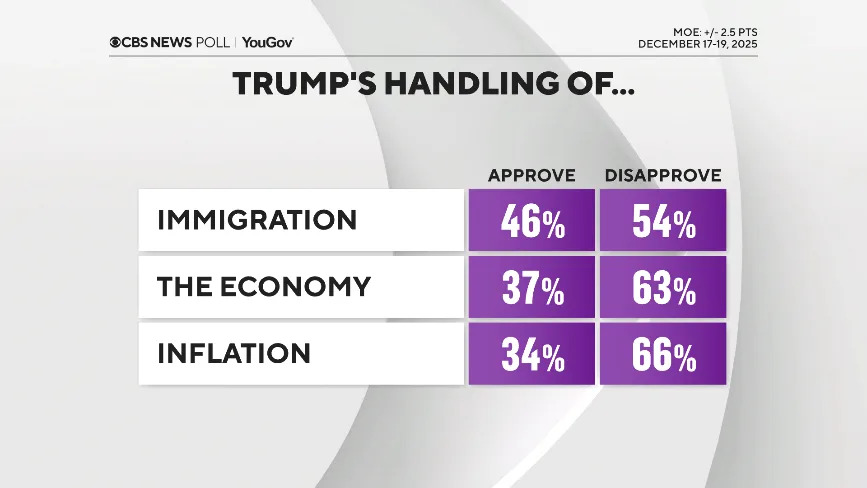
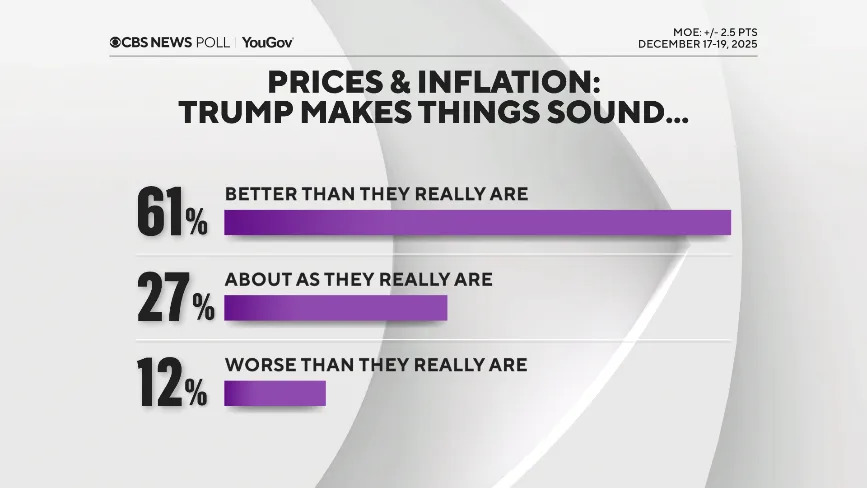
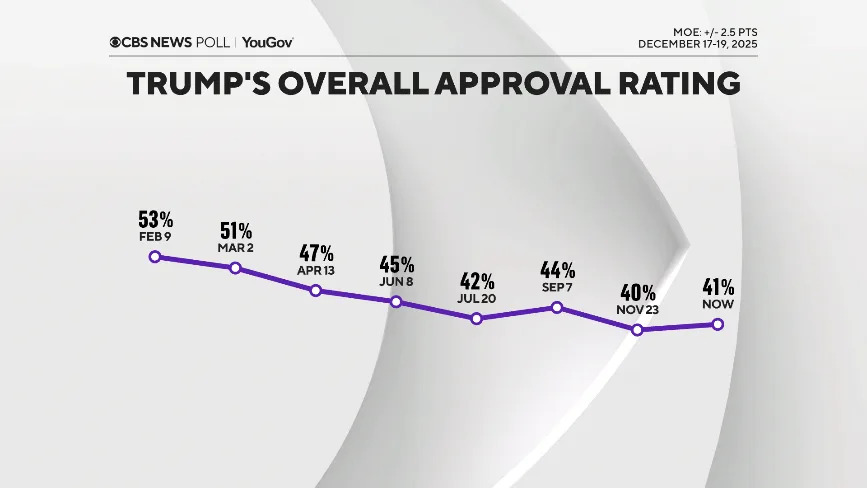
The poll shows Mr. Trump halted a months-long slide in public ratings for his handling of the economy and inflation: both measures ticked up slightly from November lows, and his overall approval rose by one point. Still, most Americans say the president paints a rosier picture of conditions than they experience.
Persuadable Voters and the Economy
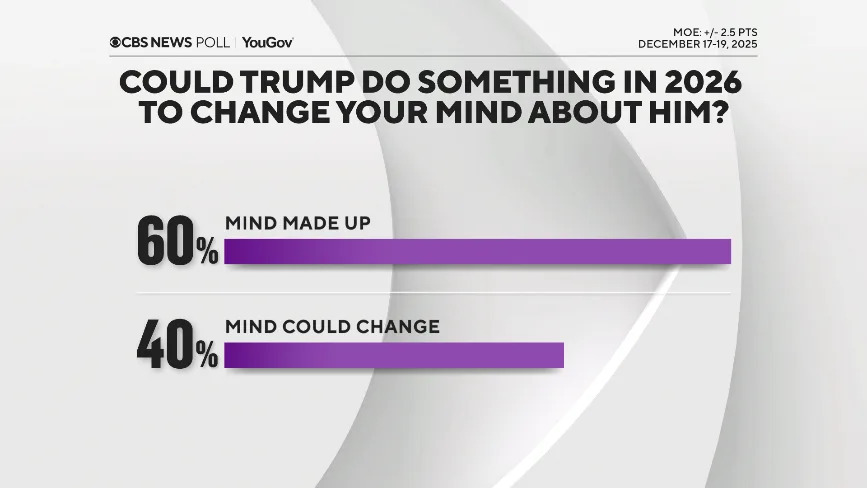
Many respondents say their view of the president could change in 2026 if he takes actions that affect their finances; roughly one-quarter of current disapprovers say they are persuadable, and most of those cite economic outcomes as the key factor.
Other Voter Concerns: AI, Immigration, Health Care
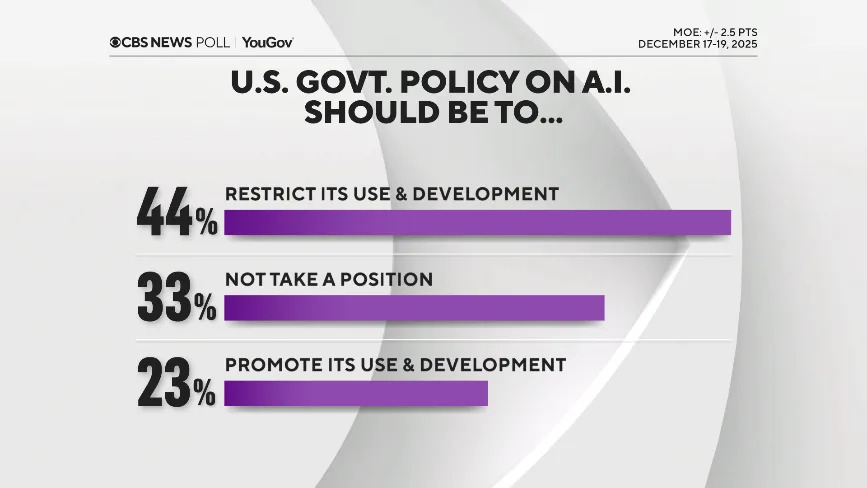
Technology is a relative bright spot: Americans are more optimistic about the tech sector than about housing or manufacturing. Yet a majority believe artificial intelligence will reduce U.S. jobs rather than add them, and on balance the public favors government limits on AI over policies that actively promote it.
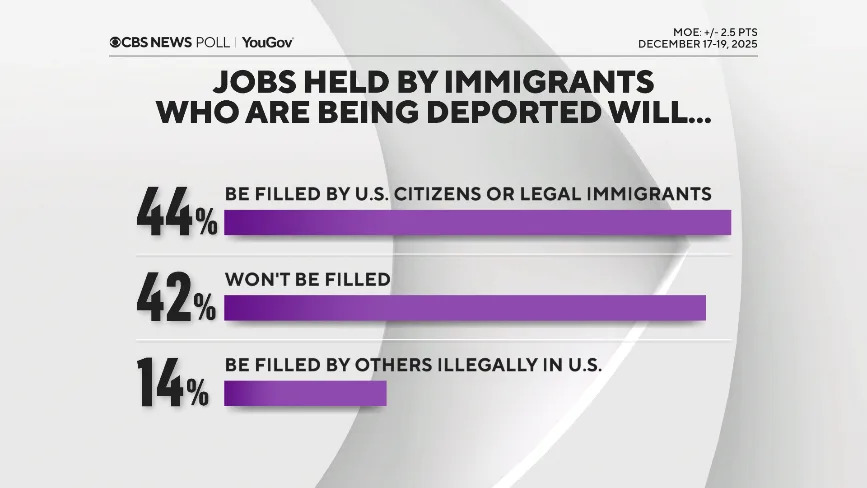
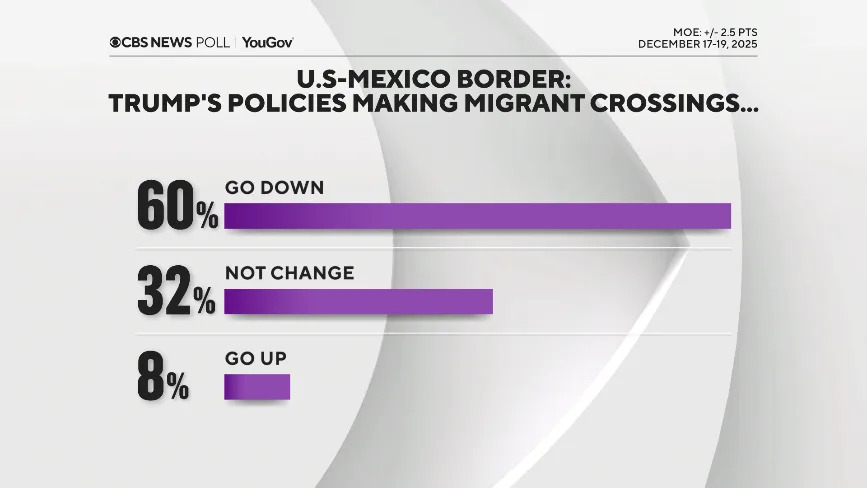
Immigration enforcement, including deportation efforts, remains divisive and connected to perceptions of the labor market. Supporters of deportation generally expect displaced jobs to be filled by citizens or legal immigrants; opponents tend to expect those jobs will go unfilled. Most respondents say border crossings have fallen this year, helping explain why Mr. Trump’s immigration approval ratings are stronger than his economic ratings.
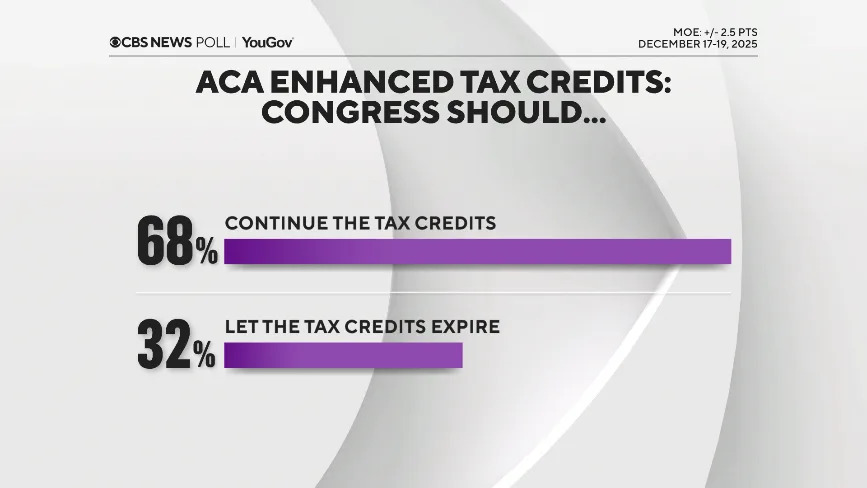
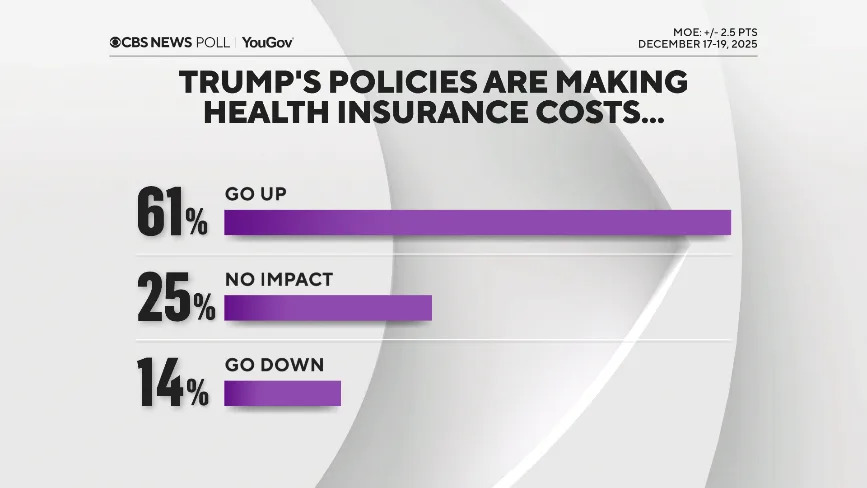
Health care also ranks high among voter concerns. A majority favor extending Affordable Care Act (ACA) tax credits—including more than four in 10 Republicans. A large share of the public believes current administration policies are driving up health insurance costs, and more people thought the president’s drug-pricing approach raised costs than believed it lowered them prior to his latest drug-pricing announcement.
International Issues
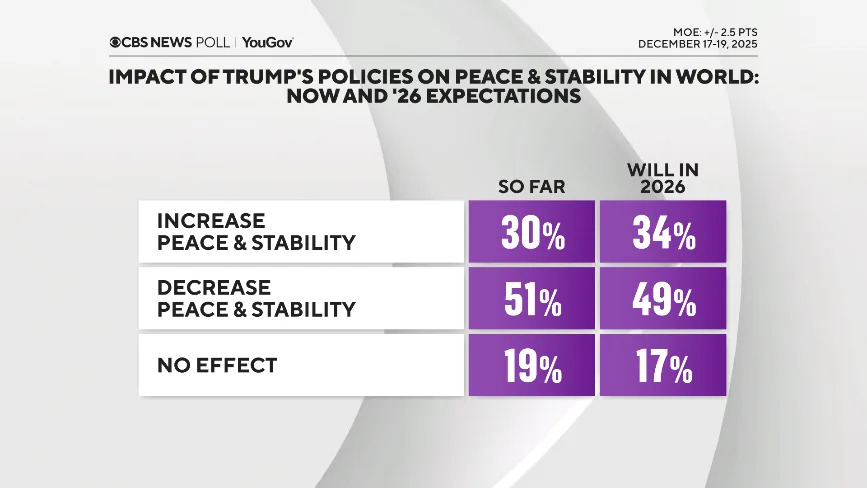
Respondents do not expect a major change in peace or stability from Mr. Trump’s policies compared with 2025 levels, and a substantial majority says the president needs to be clearer about U.S. policy toward Venezuela.
Poll Methodology
This CBS News/YouGov survey interviewed a nationally representative sample of 2,300 U.S. adults between December 17-19, 2025. The sample was weighted by gender, age, race and education using U.S. Census American Community Survey and Current Population Survey benchmarks and by 2024 presidential vote. The poll’s margin of sampling error is ±2.5 percentage points. All interviewing took place after the president’s address to the nation on Wednesday night.