A University of Oregon–co-led study finds that photographing or recording live events can make others view you as less engaged and lower the odds of future invitations. Researchers from UO, DePaul and Vanderbilt ran online experiments and analyzed New York Times comment threads to reach their conclusions. The so-called "documenting penalty" appears regardless of physical distance and affects both smartphone and camera users. The team emphasizes moderation: a few photos followed by full attention reduces the negative social impact.
Recording Live Events May Cost You Invitations, Study Finds
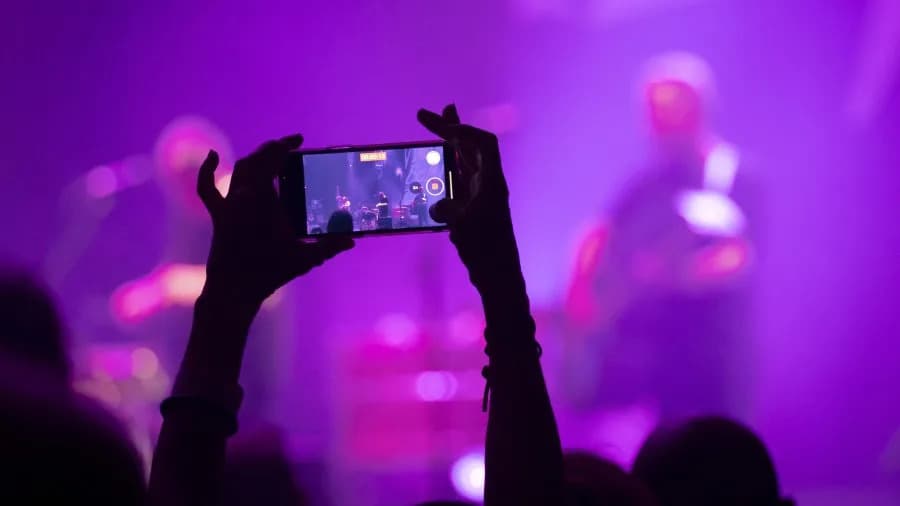
PORTLAND, Ore. — Think twice before lifting your phone at the next concert or comedy show: a study co-led by the University of Oregon suggests that documenting live events with photos or video can harm how others perceive you and may reduce the chances you'll be invited to future gatherings.
Assistant Professor Freeman Wu of the University of Oregon worked with researchers from DePaul University and Vanderbilt University to investigate whether capturing moments during shared experiences affects social relationships. Using a series of online experiments and an analysis of public comments on a New York Times article about filming at live shows, the team explored observers' reactions to people who record events.
Their findings, published last fall in the paper How to Lose Friends and Influence No One: The Documenting Penalty in Experiential Consumption, showed that many observers view people who document events as less engaged. That perception makes observers less likely to invite recorders to future social outings.
What the Study Found
Contrary to the authors' expectations that proximity to a recorder might matter, the experiments revealed a consistent "documenting penalty" regardless of physical distance between the recorder and other attendees. The effect was observed for both smartphone users and people using digital cameras.
"It's not all or nothing," said Wu. "People will take photos, but the degree matters. Taking a few pictures early or midway through an event and then putting the device away tends not to produce the same negative consequences."
Practical Takeaways
The authors note that documenting an experience can still have benefits — for example, improving memory for the event — but social costs arise when recording signals disengagement. Simple moderation strategies, such as taking a couple of photos and then putting the device away, appear to reduce negative effects on social perception.
For attendees who want to capture moments without risking social friction: be discreet, limit the time spent recording, and follow venue etiquette (and performers' rules). Being mindful of others' sightlines and the shared nature of the experience helps preserve both memories and relationships.
Study source: Freeman Wu et al., "How to Lose Friends and Influence No One: The Documenting Penalty in Experiential Consumption."
Help us improve.