Many people report feeling stuck in the present and unable to imagine a future, a trend experts say is worsened by overlapping, interacting crises — a 'polycrisis.' Research links this to how the brain constructs imagined futures (episodic future thinking) and shows reminders of uncertainty reduce people's ability to picture future events. Anthropologists and psychologists recommend focusing on values, shortening horizons with achievable goals, staying flexible, and leaning on community. Historical examples suggest societies can adapt and even emerge stronger.
Feeling Trapped In The Present? How A 'Polycrisis' Is Blurring Our Sense Of The Future

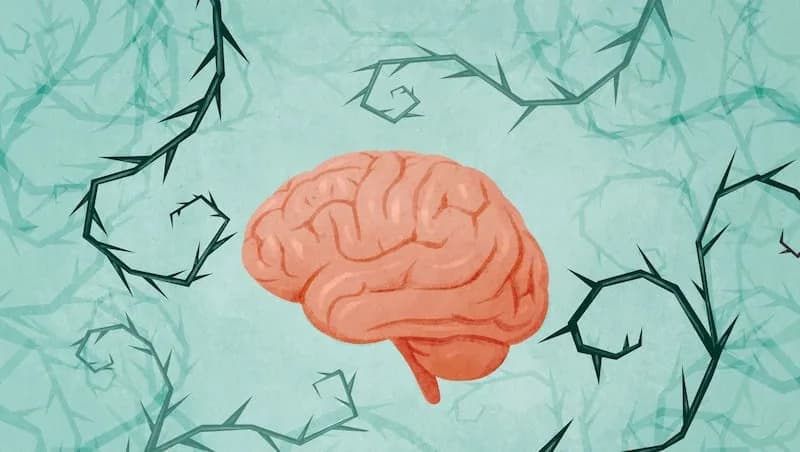
‘People are feeling overwhelmed and overstimulated, bombarded with bad news each day.’Illustration: Raven Jiang/The Guardian
A new year usually prompts forward-looking plans and hopeful daydreams. Yet many people I know — and many patients reported by clinicians — say they are finding it hard to imagine anything beyond the next few days or weeks. Instead of a mindful, calm present, they feel boxed into an anxious now, unable to picture a brighter tomorrow.
Why So Many People Say They've 'Lost The Future'
I shared this observation on social media in the final days of 2025 and received a flood of replies. Many described a paralyzing sense of stagnation: alive but not looking ahead. My therapist, Dr Steve Himmelstein, a clinical psychologist in New York City with nearly 50 years in practice, told me the same thing: most of his clients have 'lost the future.'
'The consensus is that people don’t seem to feel that good about their lives now. There’s a lot of despair,' Himmelstein said. 'When I ask my clients what they're looking forward to, most have no answer.'
Daily exposure to worrying headlines — economic and political instability, rising living costs, job disruption from new technologies, and increasingly severe weather — amplifies anxiety and makes it harder to sustain long-term plans. The cumulative effect of these interacting crises is what social scientists call a polycrisis, and it produces intense, widespread uncertainty.
What's Going On In The Brain
Part of the difficulty is biological. The human capacity to imagine future selves relies on networks in the prefrontal cortex, a comparatively recent evolutionary development. As Dr Daniel Gilbert of Harvard explains, we’re not very good at picturing events accurately, and worse still, we often misjudge who we’ll be when those events happen.
Dr Hal Hershfield of UCLA describes how imagining the future is like creating a memory of something that hasn’t happened yet — a process called episodic future thinking. That process helps with planning and emotional regulation, but it breaks down when radical uncertainty is pervasive. In one recent study, reminding people that the future is uncertain caused them to list 25% fewer possible future events for themselves and to take longer doing it; they also regarded those thoughts as less reliable.
How People And Societies Respond
Human beings have seen wide uncertainty before. Hershfield points to the Cuban missile crisis as a moment of existential doubt. Anthropologist Dr Daniel Knight observed a different response during Greece’s 2008–2010 debt crisis: people shortened their time horizons and leaned on local communities, creating 'micro-utopias' such as cycling clubs, neighbourhood groups and mutual aid networks.
Knight is also researching Europe from 1644 to 1660, a period of plague, wars and economic collapse that, after enormous upheaval, contributed to more democratic governance and public investment in science — a historical example of adaptation arising from crisis.
Practical Steps Experts Recommend
- Focus On Values: Use core values to guide decisions even when details are uncertain. Values are more stable than specific plans.
- Narrow Your Time Horizon: Set short-term, achievable goals to rebuild a sense of agency and forward momentum.
- Plan Flexibly: Make plans but accept they may need adjusting. Flexibility reduces paralysis when conditions change.
- Prioritize Likely Events: When overwhelmed, concentrate on outcomes that are most probable — these are easier to imagine and prepare for.
- Reconnect Locally: Strengthen community ties; collective action and social support restore meaning and make futures feel more real.
Hershfield cautions against getting stuck in regret about past choices — that backward-looking paralysis is common in times of uncertainty. Instead, he recommends gentle self-compassion and pragmatic adjustments to current plans.
A Note On Resilience
There is reason for guarded optimism. Viktor Frankl’s idea of 'tragic optimism' — finding meaning amid suffering — remains relevant. As Gilbert reminds us, humans are often more resilient than we expect: many who endure trauma recover to roughly their prior level of well-being.
Polycrises can overwhelm our ability to imagine the future, but history shows societies adapt: by shortening time horizons, leaning on community, and investing in institutions and expertise. Focusing on values, short-term goals, and flexible planning can help restore our capacity to imagine—and build—a future worth living for.
Help us improve.